Building lightning safety: protect your facility effectively
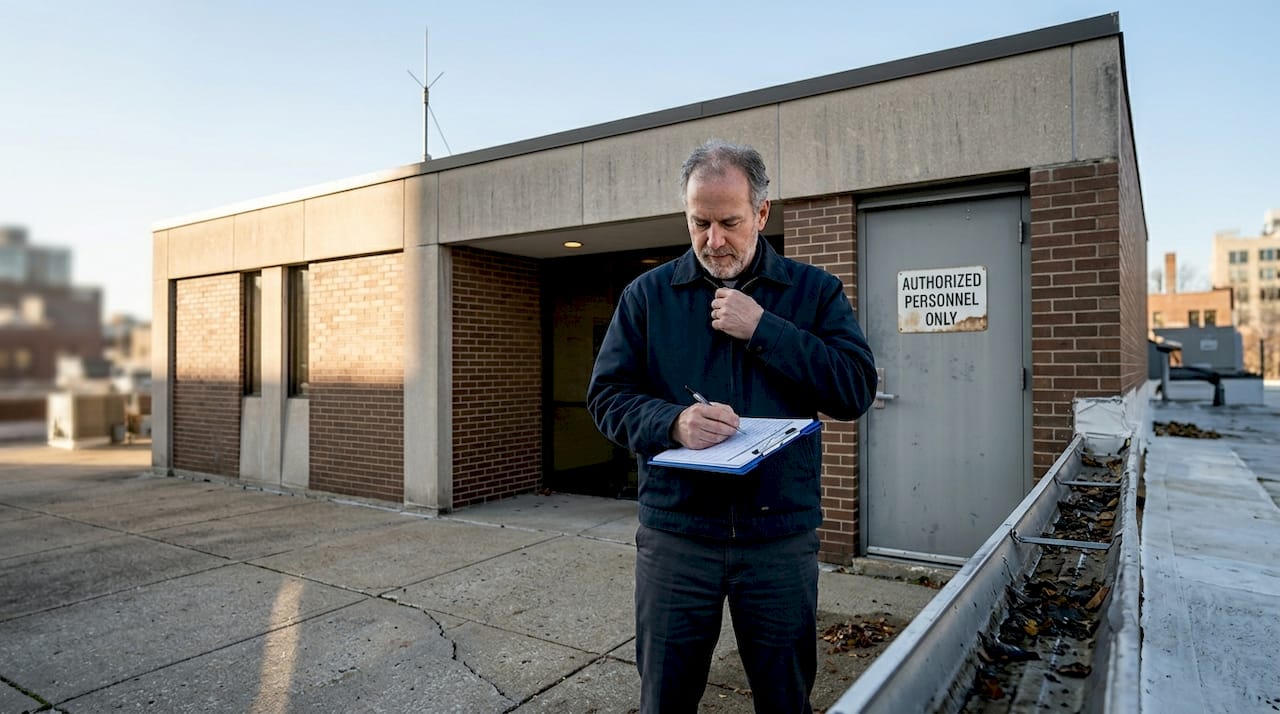
Lightning causes billions of dollars in infrastructure damage every year, yet many facilities remain exposed simply because the protection systems are misunderstood or improperly implemented. For facility managers and safety officers, that gap between awareness and action is where catastrophic losses happen. Lightning strikes cause major infrastructure damage annually, and the frustrating part is that proven, code-compliant solutions exist to prevent most of it. This guide cuts through the confusion around standards, system components, and risk assessment so you can move from uncertainty to a clear, actionable protection plan for your site.
Table of Contents
- Why building lightning safety matters
- Core components of lightning protection systems
- Lightning safety standards: NFPA 780 vs. IEC 62305
- Steps to assess lightning risk for your facility
- Special cases: complex roofs, sensitive sites, and tall structures
- Inspection, maintenance, and emerging best practices
- Connect with experts for advanced lightning protection
- Frequently asked questions
Key Takeaways
| Point | Details |
|---|---|
| Assess risk first | Start with an IEC or NFPA lightning risk assessment specific to your facility. |
| Know core LPS parts | Effective protection depends on well-designed air terminals, conductors, grounding, and bonding. |
| Follow compliance standards | NFPA 780 and IEC 62305 provide the basis for safe, code-compliant systems. |
| Tailor for complex sites | Special cases such as tall structures and sensitive areas require custom lightning protection design. |
| Inspect annually | Regular inspections and maintenance are essential for maintaining protection and meeting code. |
Why building lightning safety matters
To understand how serious this risk is, consider the following impacts. A single direct strike can ignite fires, destroy electrical infrastructure, corrupt critical data systems, and halt operations for days or weeks. Indirect strikes, which travel through power lines and communication cables, are just as destructive and far more frequent. The financial consequences extend well beyond repair costs: insurance claims, regulatory penalties, and operational downtime can dwarf the original investment in protection.
Certain buildings carry significantly higher exposure. Complex roofs and tall structures face heightened risk of lightning-related failures, particularly when rooftop equipment like HVAC units, antennas, or solar arrays create irregular strike points. You can review facility protection examples to see how different building types translate risk into real-world system requirements.
Key insight: Indirect lightning effects account for the majority of equipment damage in commercial and industrial facilities. External protection alone is not enough without internal surge mitigation.
The risks break down into three primary categories:
- Fire and structural damage from direct strikes
- Equipment failure and data loss from electromagnetic pulses and conducted surges
- Operational downtime and liability from inadequate or non-compliant systems
Core components of lightning protection systems
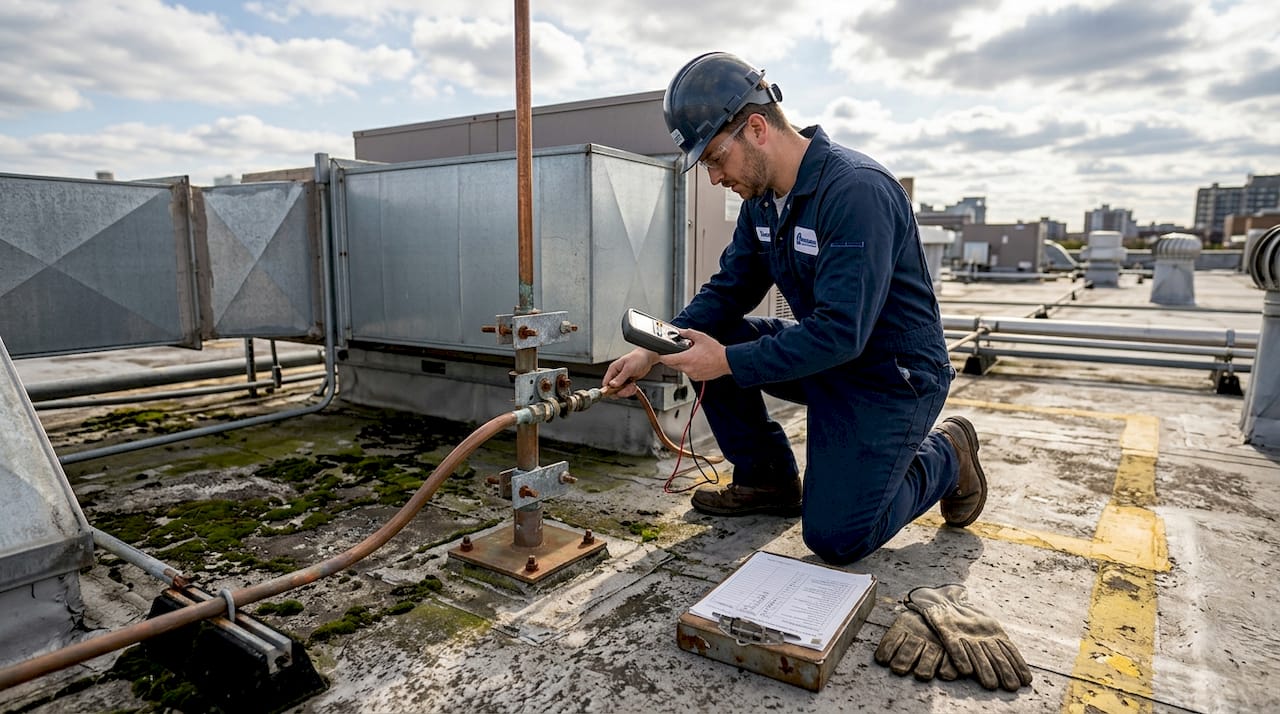
Understanding the impact of lightning leads directly into how protection systems work. An external Lightning Protection System (LPS) is not a single device. It is an engineered network of coordinated components, each with a specific function.
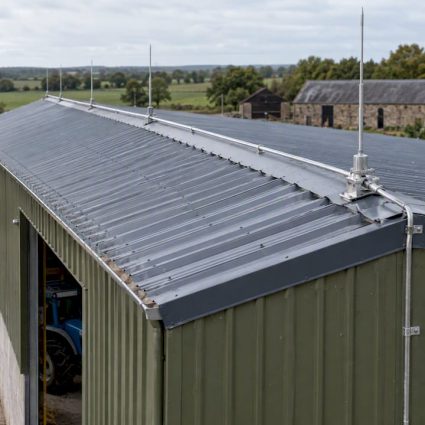
The LPS consists of air terminals, down conductors, grounding, and bonding components working together to intercept a strike, carry the current safely to ground, and equalize electrical potential across the structure.
| Component | Function | Common materials |
|---|---|---|
| Air terminals (lightning rods) | Intercept and capture the strike | Copper, aluminum, stainless steel |
| Down conductors | Channel current from roof to ground | Copper tape, round conductors |
| Grounding system | Dissipate current safely into earth | Ground rods, ring electrodes |
| Bonding connectors | Equalize potential, prevent side flashing | Clamps, bonding bars |
Each component must be correctly sized, spaced, and connected. A weak link anywhere in the chain compromises the entire system. For facilities with challenging roof layouts, air terminal placement requires careful engineering to ensure full coverage without creating unprotected zones.
Key installation requirements:
- Air terminals must be positioned at roof edges, ridges, and high points
- Down conductors must follow the shortest practical path to ground
- Grounding resistance must meet code thresholds, typically below 10 ohms
- All metallic structures on the roof must be bonded into the system
Pro Tip: Never treat bonding as an afterthought. Unbonded metallic elements like HVAC frames, pipe penetrations, and cable trays become dangerous side-flash points during a strike event.
Lightning safety standards: NFPA 780 vs. IEC 62305
With the basics understood, the next challenge is navigating standards and compliance. Two frameworks dominate the field, and knowing which applies to your facility is non-negotiable.
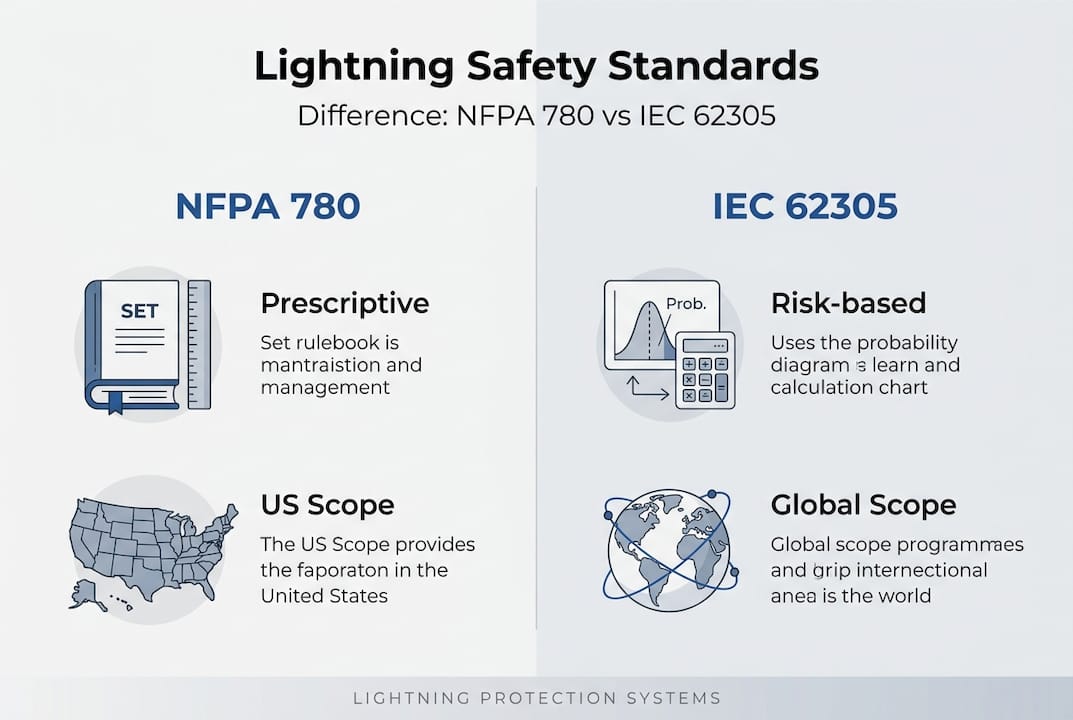
NFPA 780 and IEC 62305 are primary standards for LPS design globally. NFPA 780 is the governing code in the United States. It specifies UL-listed components, prescriptive installation methods, and mandatory surge protective device (SPD) integration. IEC 62305 takes a different approach: it is risk-based, with Lightning Protection Levels I through IV, where the required protection intensity scales with calculated risk to life, property, economic assets, and cultural heritage.
How to choose the right standard:
- Identify your regulatory jurisdiction. US-based facilities default to NFPA 780.
- Determine if your facility has international operations or partners requiring IEC 62305 compliance.
- Assess whether a risk-based approach (IEC 62305) offers more flexibility for your site’s specific profile.
- Consult with a certified lightning protection specialist before finalizing your design basis.
| Feature | NFPA 780 | IEC 62305 |
|---|---|---|
| Approach | Prescriptive | Risk-based |
| Geographic scope | United States | International |
| Protection levels | Not tiered | LPL I to IV |
| SPD requirements | Mandatory | Risk-dependent |
| Risk assessment | Recommended | Required |
Facilities like airports, which operate under strict safety mandates, often reference both frameworks. You can explore how airport protection standards are applied in practice to understand how complex sites reconcile multiple compliance requirements.
Steps to assess lightning risk for your facility
Deciding which standards to follow, you will need to assess your facility’s specific risk. A structured risk assessment is not optional. It is the foundation of every effective LPS design.
Risk assessment is the first step recommended for facility managers before any system design begins. IEC 62305 Part 2 focuses specifically on risk assessment to determine the required Lightning Protection Level (LPL) and whether protection is even mandatory for a given structure.
Follow this stepwise process:
- Collect site data: Building dimensions, construction materials, occupancy type, geographic location, and local ground flash density (GFD).
- Identify critical assets: Power systems, data infrastructure, process control equipment, and any explosive or flammable storage zones.
- Map hazard zones: Determine which areas of the facility face the highest exposure based on height, roof geometry, and surrounding terrain.
- Calculate risk values: Use IEC 62305 Part 2 formulas or NFPA 780 methodologies to quantify risk against acceptable thresholds.
- Determine LPL and system scope: The output of your risk calculation tells you which protection level is required and which components are mandatory.
- Document and review: Risk assessments must be updated whenever the facility undergoes significant structural or operational changes.
Pro Tip: AI-powered risk modeling tools are now available that can process GFD data, building geometry, and asset criticality simultaneously, cutting assessment time significantly for large or complex sites. Review the facility assessment workflow to see how this process applies across different infrastructure types.
Special cases: complex roofs, sensitive sites, and tall structures
Not all sites face the same risk, especially when you add architectural complexity. Standard air terminal layouts designed for simple rectangular roofs simply do not translate to multi-level industrial facilities, data centers, or structures with dense rooftop equipment.
Edge cases like complex roofs and explosive zones require tailored solutions that go beyond prescriptive code minimums. For these sites, custom air terminal positioning, enhanced bonding strategies, and zone-specific shielding calculations are essential.
Key challenges for atypical structures include:
- Multi-level roofs: Each level creates its own strike exposure zone and requires independent air terminal coverage
- Hazardous zones: Fuel storage, chemical processing, and explosive material areas demand intrinsically safe bonding and specialized grounding configurations
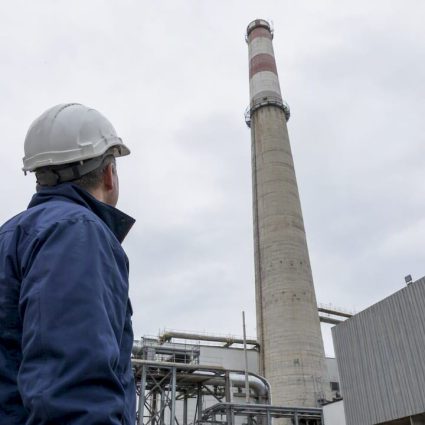
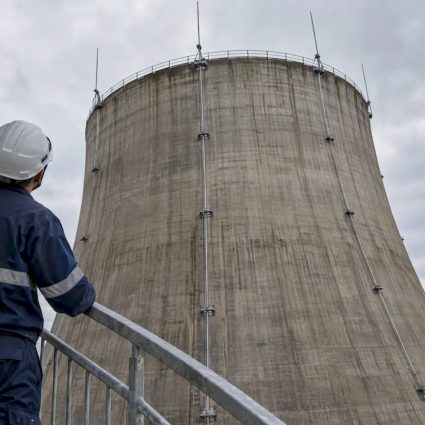
- Tall structures: Buildings above 60 meters face lateral strike exposure on their upper facades, not just the roof
- Sensitive facilities: Data centers, hospitals, and control rooms require tighter electromagnetic shielding and more robust SPD coordination
Design principle: For tall structures, the upper 20% of the building height is statistically the most vulnerable zone for lateral strikes. Air terminals and bonding must account for this, not just the roofline.
You can examine a case study on sensitive sites to see how these principles translate into real design decisions. For architectural complexity specifically, multi-level roof solutions demonstrate how creative engineering resolves coverage gaps without compromising aesthetics.
Inspection, maintenance, and emerging best practices
After installation, ongoing vigilance is essential. A lightning protection system that was compliant at installation can degrade over time due to corrosion, physical damage, building modifications, or changes in rooftop equipment.
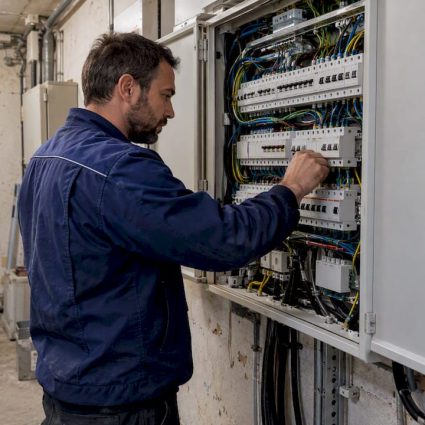
Annual inspections and SPD integration are required by code under both NFPA 780 and UL 96A. These inspections must verify conductor continuity, grounding resistance, bonding integrity, and SPD functionality. Skipping a single inspection cycle can leave your facility exposed without your knowledge.
A robust maintenance program should address:
- Visual inspection of all air terminals, conductors, and clamps for corrosion or physical damage
- Continuity testing of down conductors and bonding connections
- Ground resistance measurement to confirm values remain within code limits
- SPD status verification to ensure surge protection devices have not been consumed by prior events
- Documentation updates reflecting any structural or equipment changes since the last inspection
On the technology front, innovative system advancements are reshaping how facilities monitor and manage their LPS. Smart SPDs with remote monitoring capabilities, AI-driven lightning risk forecasting, and sensor-based conductor health monitoring are moving the industry from reactive maintenance to predictive protection.
Connect with experts for advanced lightning protection
Ready to safeguard your facility? Here is how professional support makes a difference. Navigating standards, designing for complex geometries, and maintaining compliance over time is a significant technical undertaking. Getting it right the first time prevents losses that no insurance policy fully covers.

At Indelec, we have been engineering lightning protection solutions since 1955, working across industrial, commercial, and critical infrastructure sectors worldwide. Whether you are starting from a blank risk assessment or upgrading an aging system, our specialists guide you through every phase: design, installation, certification, and ongoing maintenance. Understanding that lightning protection is not optional is the first step. The second is working with a team that brings both the technical depth and the global project experience to deliver systems that perform when it matters most. Explore our system application expertise to see how we approach facilities like yours.
Frequently asked questions
What are the four main components of a building lightning protection system?
A complete system includes air terminals, down conductors, grounding, and bonding connectors, each playing a distinct role in safely channeling lightning current to earth.
How often should lightning protection systems be inspected?
Annual inspections are required by code under UL 96A and NFPA 780 to verify system integrity, grounding resistance, and SPD functionality.
What is the difference between NFPA 780 and IEC 62305?
NFPA 780 is the prescriptive US installation code, while IEC 62305 is an international, risk-based framework that assigns protection levels based on calculated risk to life and assets.
Do all buildings require surge protective devices for lightning?
NFPA 780 mandates SPDs to address indirect lightning effects, protecting sensitive equipment from conducted surges that travel through power and communication lines.
Can emerging technologies improve lightning risk assessment?
Yes. AI-powered tools now support more accurate risk analysis and LPS design, particularly for complex facilities where manual calculations struggle to capture the full exposure profile.