5 Lightning Protection Myths Every Facility Manager Must Know

TL;DR:
- Repeated lightning strikes to tall or isolated structures are common and increase risk.
- Rubber tires and shoes offer no real protection from lightning’s high voltage and current.
- Proper lightning protection requires grounding, bonding, and compliance with recognized standards, not just metal or surge protectors.
Lightning protection myths are not harmless folklore. When facility managers and safety officers base decisions on outdated beliefs, the consequences show up in failed inspections, denied insurance claims, damaged equipment, and in the worst cases, preventable injuries. The gap between what most people believe about lightning and what the evidence actually shows is wide enough to create serious compliance gaps. This article works through five of the most persistent lightning protection myths, backed by technical evidence and standards, so you can build a safety strategy grounded in reality rather than comfortable assumptions.
Table of Contents
- Myth 1: Lightning never strikes the same place twice
- Myth 2: Rubber tires (or shoes) protect against lightning
- Myth 3: Metal structures and roofs provide full lightning protection
- Myth 4: Surge protectors alone safeguard facilities from lightning
- Myth 5: Early Streamer Emission (ESE) lightning rods outperform conventional systems
- The uncomfortable truth: Why most lightning protection mistakes cost facilities millions
- Protect your facility with proven, standards-compliant solutions
- Frequently asked questions
Key Takeaways
| Point | Details |
|---|---|
| Lightning hits repeatedly | No site is immune from multiple lightning strikes over time, so ongoing protection is essential. |
| Myths increase risk | Relying on common lightning misconceptions puts facilities, people, and compliance at risk. |
| Standards matter | Effective protection depends on code-compliant systems, not shortcuts or unproven alternatives. |
| Comprehensive approach | Combining LPS, bonding, grounding, and SPDs is the only way to minimize lightning damage. |
| Proper documentation | Keeping records of protection systems supports insurance, audits, and regulatory compliance. |
Myth 1: Lightning never strikes the same place twice
This is the most widely repeated lightning myth, and it’s one of the most dangerous for facility managers to accept. The phrase has become cultural shorthand for unlikely repetition, but physics doesn’t care about folklore. Lightning strikes the path of least resistance. If your facility sits on elevated terrain, houses tall antenna towers, or operates large metal structures, it becomes a preferred target, repeatedly.
Common lightning myths like this one persist because they feel intuitively true. The reality is that tall structures like the Empire State Building are hit up to 100 times per year. Industrial facilities with similar profiles, including communication towers, processing plants, and warehouses, face the same physics.
Several factors increase the likelihood of repeat strikes at commercial and industrial sites:
- Height above surrounding terrain: Taller structures intercept more stepped leaders, the initial electrical channels that precede a full strike.
- Conductive materials: Sites with large exposed metal components, pipelines, or rail infrastructure offer natural conductivity that attracts current.
- Isolated location: Facilities on open land or near water have no competing structures to distribute risk.
- Existing strike history: A site that has been struck before has already proven it’s in a favorable strike zone.
“A single strike event does not reset your risk profile. Every storm is a new probability calculation, and your facility’s physical characteristics define that probability, not past events.”
The practical implication is straightforward. Post-strike inspections are essential, but they are not a substitute for ongoing risk management. A facility strike risk assessment examines terrain, structure height, occupancy type, and local storm frequency to produce an accurate picture of real exposure. Pair that with regular review of your lightning safety for buildings protocols and you replace assumption with actual data. Waiting to see if lightning strikes again is not a risk management strategy.
Myth 2: Rubber tires (or shoes) protect against lightning
This myth is surprisingly common in facility safety briefings. The logic seems reasonable: rubber is an insulator, so rubber tires on vehicles or rubber-soled boots must offer some protection. But the voltage involved in a lightning strike destroys that assumption almost instantly.
A lightning bolt can carry up to 300 million volts. Standard rubber tires are rated for a few thousand volts at most. The insulating value of rubber, which works perfectly well for household electrical systems, is irrelevant at lightning-scale energies. Protection comes from the vehicle’s metal shell, not rubber tires, which are easily overwhelmed by lightning’s voltage.
Vehicles offer protection through the Faraday cage effect: the metal body of the vehicle channels current around the occupants and into the ground. The rubber tires play no meaningful role in that process. This distinction matters for how you train facility staff.
Common misunderstandings that circulate in facility environments include:
- Assuming that rubber-floored control rooms provide meaningful protection during a strike.
- Believing that rubber gloves or boots are sufficient personal protective equipment during outdoor electrical storms.
- Thinking that forklift operators or vehicle drivers are automatically safe because of tire material.
- Treating rubber mats near electrical panels as storm protection rather than standard electrical PPE.
“The Faraday cage principle is real, but it only applies when the metal enclosure is continuous and properly grounded. A vehicle with an open window or a cab without a complete metal shell does not provide the same protection.”
For common lightning hazards in facilities, more lightning safety facts reinforce a consistent message: personal gear is not a substitute for structural safety systems. Train your teams to seek designated shelter zones with proper lightning protection systems installed, not to rely on footwear or vehicle tires.
Pro Tip: Review your storm emergency procedures to confirm that staff shelter locations have verified structural lightning protection. Remove any reference to rubber footwear or tires as protective measures from your safety briefings.
Myth 3: Metal structures and roofs provide full lightning protection
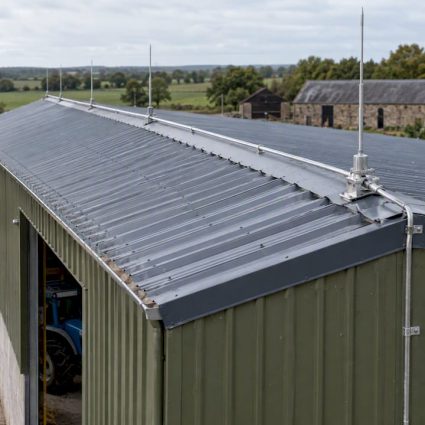
Metal roofs and steel frames look like they should handle lightning well. They’re conductive, they cover large areas, and they’re physically connected to the building. But conductivity alone does not equal protection. Without proper bonding and grounding, a metal roof can actually make a strike more dangerous by creating unexpected current paths through the structure.
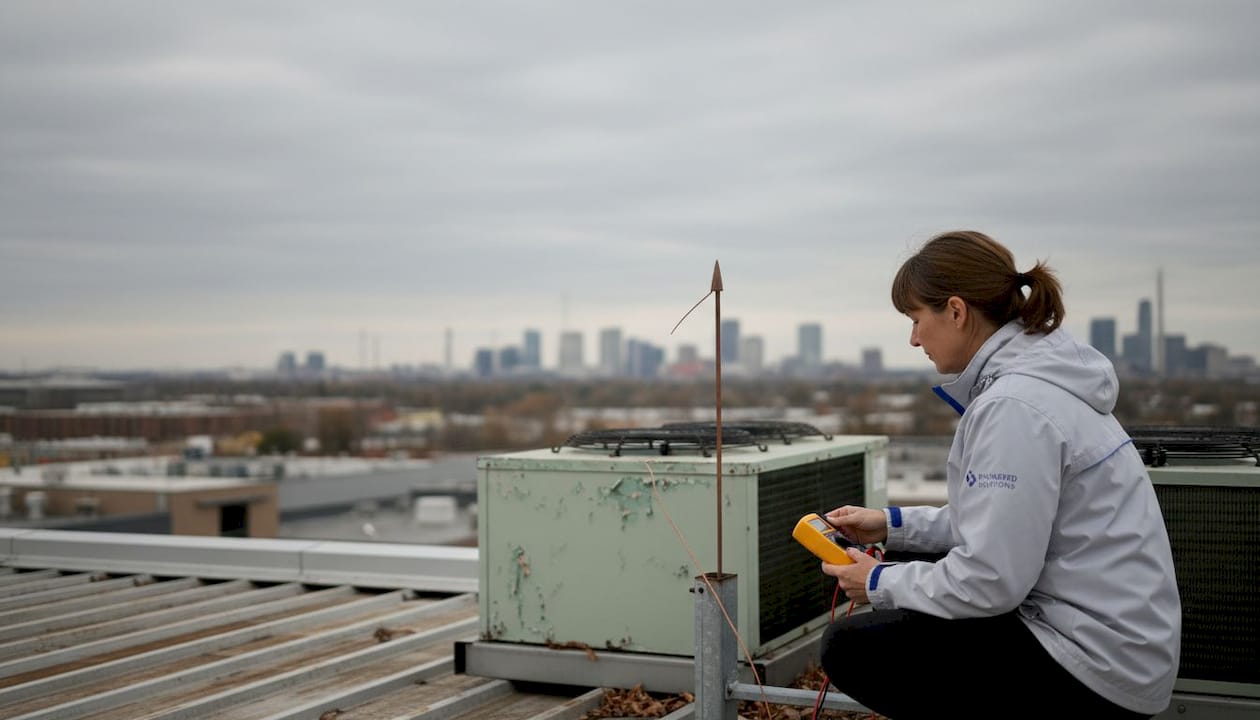
Steel frames and metal roofs require proper bonding and grounding, not just material presence, for protection per NFPA 780. The standard specifies grounding resistance targets that unmanaged metal structures rarely meet without deliberate engineering.
Here’s what separates an ungrounded metal structure from a properly protected one:
| Feature | Ungrounded metal structure | Properly grounded LPS |
|---|---|---|
| Current path | Random, through building systems | Controlled, through down conductors |
| Ground resistance | Unknown, often high | Less than 10 ohms per NFPA 780 |
| Equipment risk | High, surge damage likely | Reduced, bonding limits potential difference |
| Compliance status | Non-compliant | Compliant with NFPA 780, IEC 62305 |
| Insurer acceptance | Typically rejected | Documented and accepted |
Insurers and OSHA compliance reviewers are increasingly aware of this distinction. Passive metal presence without documentation of a complete lightning protection system (LPS) will not satisfy modern audit requirements. Facilities with proper lightning protection systems in place have the bonding connections, down conductors, and grounding electrodes documented in a format that withstands scrutiny. Review current lightning safety standards to understand what a compliant installation requires.
Pro Tip: Document every component of your LPS in a dedicated maintenance file, including ground resistance measurements. Insurers and auditors want to see test records, not just installation certificates. Insurance and compliance tips consistently emphasize that records are as important as the hardware.
Myth 4: Surge protectors alone safeguard facilities from lightning
Surge protection devices (SPDs) are a necessary part of any lightning risk strategy, but they are frequently misunderstood as a complete solution. This misconception is especially common in facilities that have invested in high-quality SPDs for their electrical panels and sensitive equipment. The investment is worthwhile, but it covers only part of the risk.
SPDs work by clamping transient overvoltages, the voltage spikes that travel through power lines when lightning strikes nearby or when current couples into the grid. What they cannot do is handle the energy of a direct lightning strike to the building. SPDs mitigate indirect surges but do not protect against direct strikes, which still require a complete LPS.
Building a complete protection strategy means layering defenses in sequence:
- Air terminal system: Intercepts the strike and provides a controlled entry point for the current.
- Down conductor network: Carries current safely from the air terminal to the grounding system.
- Grounding electrode system: Disperses the charge harmlessly into the earth.
- Equipotential bonding: Connects all metallic systems to eliminate dangerous voltage differences.
- Surge protection devices: Clamp residual transient overvoltages that reach internal circuits after the above layers have done their work.
Removing any layer from this sequence increases risk at the next layer. An SPD receiving the energy of a direct strike will fail catastrophically. Expert SPD advice consistently stresses that SPDs are the last line, not the only line. Facilities that implement proven lightning protection strategies see measurable reductions in equipment damage and downtime. The environmental benefits of protection also extend to reduced electronic waste and lower replacement costs over time.
Myth 5: Early Streamer Emission (ESE) lightning rods outperform conventional systems
ESE (Early Streamer Emission) lightning rods are marketed aggressively in some markets with claims of superior protection radius and faster response times. The appeal is obvious: a single device that supposedly covers a larger area sounds like an efficient solution. But the major international standards bodies have reached a clear conclusion on this technology.
ESE systems are not recommended by NFPA or IEC and conventional Franklin rods have decades of validated performance behind them. Independent research, including peer-reviewed analysis from IEEE, has found no reliable evidence that ESE devices perform as claimed under controlled conditions.
For facility managers evaluating LPS options, here is a practical checklist:
- Check standards acceptance: Is the device listed or accepted under NFPA 780 or IEC 62305? If not, it is a compliance risk.
- Request independent test data: Marketing claims are not a substitute for third-party laboratory or field validation.
- Review insurance implications: Some insurers specifically exclude ESE-only systems from coverage terms.
- Evaluate installation density: Conventional Franklin rod systems require more air terminals for equivalent coverage, but they deliver that coverage reliably.
- Consult your standards body: Review current lightning standards to confirm what your jurisdiction requires.
The promise of a larger protection radius from a single device is attractive, but a non-compliant system that fails during a strike creates far larger problems than the installation cost savings justified.
Pro Tip: Avoid any LPS component whose primary marketing argument is performance not recognized by NFPA or IEC. If the manufacturer cannot point to explicit standards acceptance, that device introduces compliance and liability risk into your facility.
The uncomfortable truth: Why most lightning protection mistakes cost facilities millions
After reviewing these five myths, a pattern emerges that goes beyond technical misunderstanding. The most expensive lightning protection failures we see at Indelec share a common root: decision-makers trusted marketing over standards, or assumed that a partial solution covered full risk.
The financial consequences are not limited to equipment replacement. A single non-compliant installation can result in denied insurance claims, OSHA citations, and in some cases, litigation following injuries. The cost of a properly engineered and documented LPS is predictable and manageable. The cost of a claim denied because your system didn’t meet NFPA 780 is not.
Facility managers who treat lightning protection as a checkbox exercise tend to underinvest in documentation and ongoing verification. A complete lightning protection guide treats the system as a living compliance asset, with ground resistance records, annual inspections, and updated risk assessments on file. That approach transforms lightning protection from a one-time installation into a defensible safety program.
Protect your facility with proven, standards-compliant solutions
Aligning your facility with these facts is easier when you work with a partner who has been engineering lightning protection solutions since 1955. Indelec provides products, documentation support, and technical consulting that meet NFPA 780, IEC 62305, and other applicable standards.

Our Prevectron3 air terminal delivers reliable, standards-recognized performance for industrial and commercial installations. Whether you need a new complete lightning protection application or a compliance audit of your existing system, our engineers can support your documentation requirements for insurance and regulatory review. Visit our lightning safety standards resource to understand what current codes require, and contact our team to schedule a facility assessment.
Frequently asked questions
Can lightning strike the same place more than once?
Yes. Tall or isolated structures are struck repeatedly based on their physical characteristics, not past strike history. The Empire State Building is hit up to 100 times per year.
Does a building’s metal roof or steel frame ensure lightning safety?
No. NFPA 780 requires proper bonding and grounding in addition to the material itself. Metal presence alone does not create a safe current path.
Are surge protectors alone enough to prevent lightning damage?
No. SPDs only mitigate surges from indirect events. A direct strike requires a complete LPS with air terminals, down conductors, and grounding in place before SPDs can function effectively.
Why aren’t Early Streamer Emission rods recommended?
NFPA and IEC do not endorse ESE rods, and independent testing has not validated the performance claims made by manufacturers. Conventional Franklin rods remain the compliant and proven choice.
Do rubber tires or shoes protect people from lightning strikes?
No. Lightning voltage overwhelms rubber’s insulating capacity instantly. Protection comes from a metal shell creating a Faraday cage, not from rubber materials in tires or footwear.
Recommended
- Lightning protection for buildings: complete guide to safer facilities
- Building lightning safety: protect your facility effectively
- Commercial building lightning safety: 5 proven methods
- Lightning risk assessment guide: protect your facility
- 7 Essentiële elektrische onderhoudstips voor professionals – Holland Electric