Electrical infrastructure safety: proven lightning protection
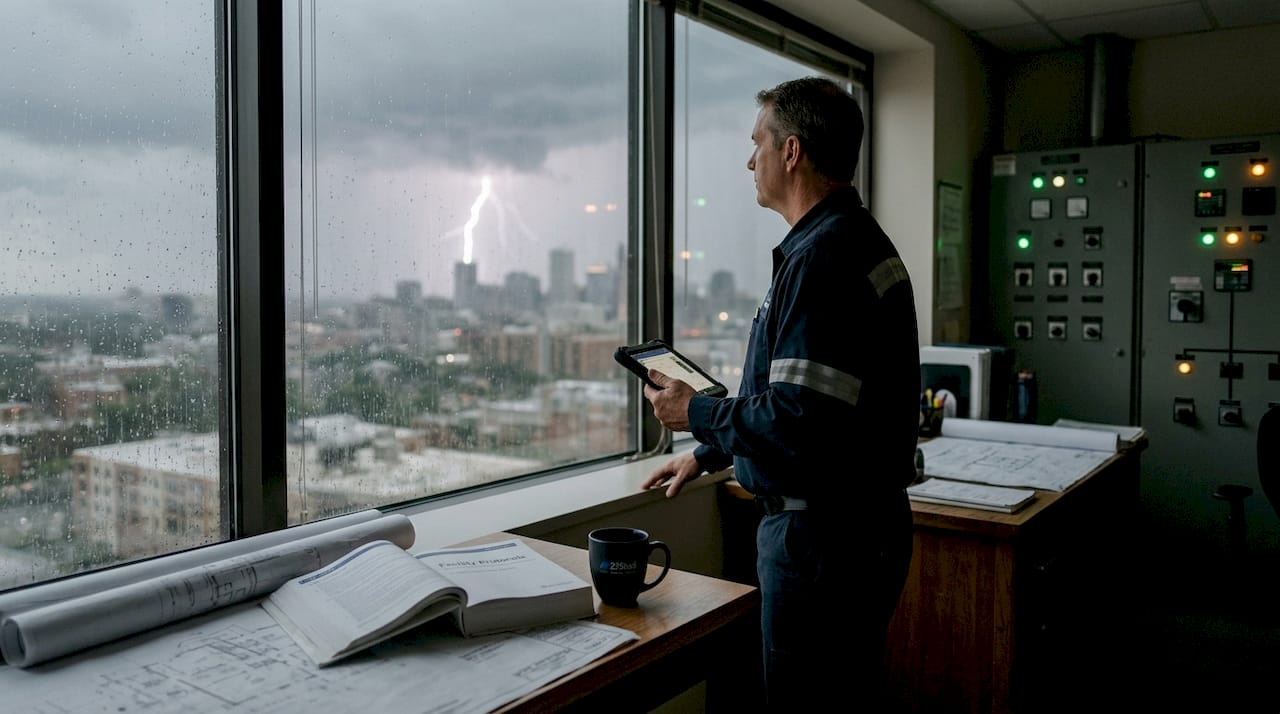
Lightning is not a rare event for industrial and commercial facilities. It is a recurring, high-energy threat that most site managers systematically underestimate until a critical failure forces a reckoning. Lightning currents typically range from 5 to 200kA, and a single poorly protected substation can lose more than half its expected service life due to non-vertical strikes. This guide cuts through the noise and delivers practical, field-tested strategies for protecting your electrical infrastructure, keeping your operations running, and staying compliant with evolving safety standards.
Table of Contents
- The real threat: lightning and electrical infrastructure
- Key lightning protection strategies for industrial and commercial settings
- Special considerations for high-risk zones and sensitive infrastructure
- Maintaining system safety and compliance
- Enhance your lightning protection with trusted solutions
- Frequently asked questions
Key Takeaways
| Point | Details |
|---|---|
| Lightning is a major risk | Significant strikes and surges can cause costly damage and outages if not protected against. |
| Protection strategies matter | Choosing the right system design and technology is critical for industrial and commercial sites. |
| Special cases need tailored solutions | Explosion zones and sensitive infrastructure require insulated and advanced protection approaches. |
| Maintenance ensures safety | Regular inspection, updates, and compliance checks are vital for ongoing protection. |
The real threat: lightning and electrical infrastructure
Most facility managers think of lightning as an occasional nuisance. The data tells a very different story. Modern industrial sites operate complex electrical systems that are highly sensitive to transient overvoltages, and lightning is one of the most powerful sources of those transients.
Typical lightning currents range from 5 to 20kA, but extreme events can push well past 200kA. That kind of energy does not just trip a breaker. It destroys switchgear, fuses control systems, and can ignite fires in seconds. Understanding the lightning phenomenon explained in full technical detail helps you appreciate why standard surge protection alone is rarely enough.
One of the most underappreciated risks is the angle of the strike. Research shows that non-vertical strikes cut substation MTBF from 31 years down to just 12 years at a 1175kV BIL rating. That is not a marginal difference. It is a 61% reduction in expected service life, which translates directly into unplanned capital expenditure and operational downtime.
Here is a quick breakdown of what lightning-related failures typically look like across facility types:
| Failure type | Common cause | Typical impact |
|---|---|---|
| Switchgear destruction | Direct strike, high current | Full system shutdown |
| Control system failure | Induced surge | Process interruption |
| Transformer damage | Overvoltage transient | Weeks of downtime |
| Fire ignition | Arc flash from strike | Asset loss, safety risk |
Key vulnerabilities that facility managers often overlook include:
- Ungrounded or poorly grounded equipment that amplifies transient damage
- Overhead power lines entering the facility without adequate surge protection
- Rooftop HVAC and communication equipment exposed to direct strikes
- Interconnected control networks that carry induced surges across the entire site
“A lightning protection system is only as strong as its weakest path to ground. One missing bond can redirect destructive energy straight through your most critical equipment.”
Reviewing current lightning protection standards is the first step toward understanding where your site stands relative to regulatory expectations and engineering best practices.
Key lightning protection strategies for industrial and commercial settings
Once you understand the threat, the next step is selecting the right protection architecture for your specific site. There is no universal solution. Topology, site layout, and the nature of your operations all shape the optimal approach.
Here is a structured approach to building a robust lightning protection system (LPS):
- Conduct a risk assessment. Map your site’s exposure level, identify critical assets, and calculate the annual probability of a damaging strike using IEC 62305 methodology.
- Select the right air termination system. For large industrial sites, early streamer emission (ESE) rods offer broader protection radii than conventional Franklin rods, reducing the number of down conductors needed.
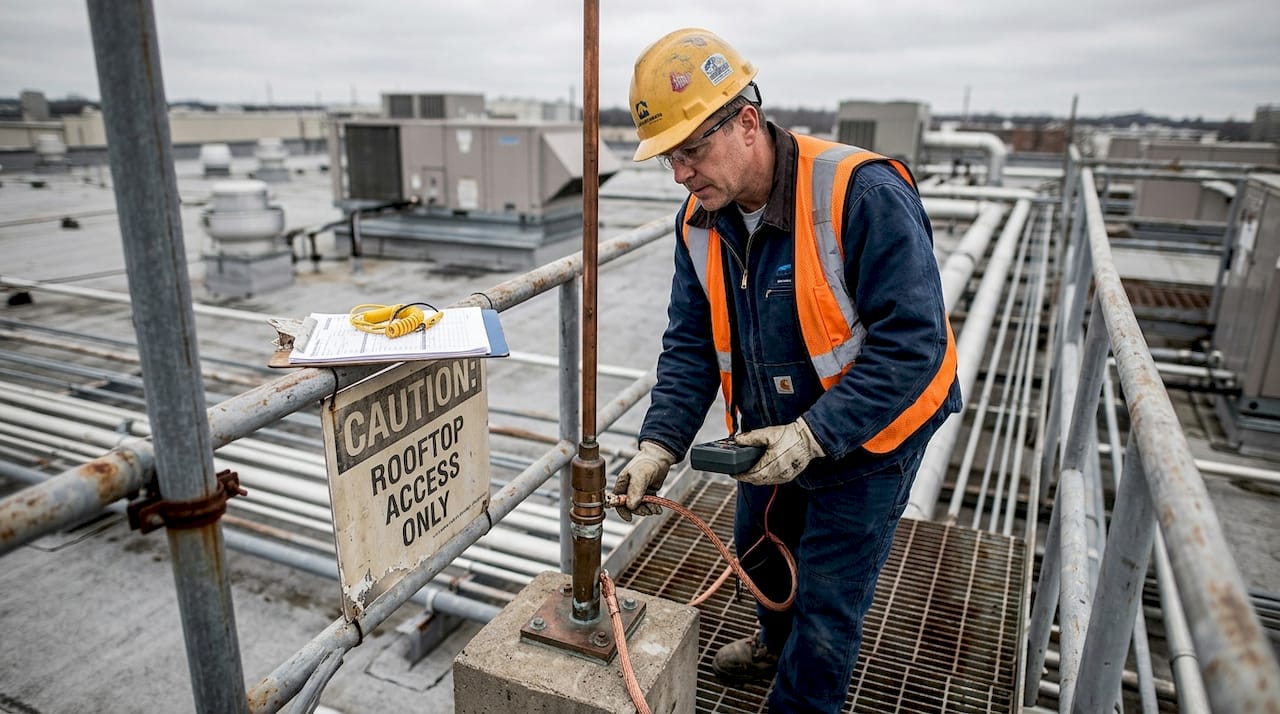
- Design your grounding network carefully. A low-impedance ground is the foundation of any effective LPS. Soil resistivity testing should drive your grounding electrode design.
- Install surge protection devices (SPDs) at every entry point. Power, data, and communication lines all need coordinated SPD protection to prevent induced surges from reaching sensitive equipment.
- Choose your network topology based on your site type. Research on wind farms shows that star topology reduces overvoltages by 62 to 89% compared to radial configurations, which consistently produce the highest overvoltage levels. Negative polarity strikes also generate higher overvoltages than positive ones, a factor that must inform your SPD ratings.
Pro Tip: If your facility includes distributed assets like remote pumping stations or communication towers, treat each node as an independent protection zone with its own grounding and SPD coordination. Do not assume the main site LPS covers outlying structures.
| Topology type | Overvoltage risk | Best suited for |
|---|---|---|
| Radial | Highest | Simple, single-asset sites |
| Star | Lowest (62-89% reduction) | Wind farms, distributed networks |
| Hybrid | Moderate | Mixed industrial campuses |
Exploring proven protection applications across different industries gives you a practical benchmark for what works in environments similar to yours. For facilities with unique structural or operational profiles, reviewing lightning protection for sensitive sites provides design examples that go beyond standard configurations.
Special considerations for high-risk zones and sensitive infrastructure
Some facilities carry risks that standard LPS designs simply cannot address without modification. Explosion-prone environments, electronics-critical control rooms, and sites with high personnel density all require a more deliberate approach.
Key considerations for high-risk zones include:
- Insulated LPS in explosion zones.Explosion-prone areas require insulated LPS to prevent sparking that could ignite flammable atmospheres. Standard bare conductors are not acceptable in ATEX-classified zones.
- Sideflash prevention. When potential differences develop between structural elements during a strike, sideflash can arc across gaps and injure personnel or damage equipment. Equipotential bonding eliminates this risk.
- Induced surge reach. Surges from nearby strikes can travel along cables and pipelines for up to a mile, damaging infrastructure that has no direct exposure to the strike point. This is why SPD coordination must extend well beyond the immediate strike zone.
“Facilities that handle flammable gases or fine dust particles face a compounded risk: lightning does not just damage equipment, it can trigger catastrophic secondary events. Insulated LPS is not optional in these environments.”
Pro Tip: For facilities in ATEX zones, always verify that your LPS contractor holds specific competency in explosion-zone installations. A general electrical contractor without this specialization may inadvertently create ignition risks during installation.
For facilities with highly sensitive electronics or mission-critical operations, solutions for sensitive installations address the full spectrum of protection needs, from air termination through to SPD coordination and shielding. Sites with unconventional architecture can also benefit from custom LPS for unique structures, where protection design adapts to the building rather than forcing the building to adapt to a standard system.
Maintaining system safety and compliance
Installing a lightning protection system is not a one-time event. It is the beginning of an ongoing commitment to safety and regulatory compliance. Systems degrade, facilities expand, and standards evolve. Your LPS must keep pace with all three.
Here is a practical maintenance and compliance framework:
- Schedule annual inspections. Every component of your LPS, from air terminals to grounding electrodes, should be physically inspected and electrically tested at least once per year.
- Inspect after every known strike or severe weather event. Non-vertical strikes significantly reduce substation service life, and a post-event inspection can catch damage before it compounds into a larger failure.
- Maintain detailed records. Inspection reports, test results, and any modifications to the system create the documentation trail that insurers and regulators expect. Missing records can void coverage or trigger compliance penalties.
- Update your system when your facility changes. New equipment, building extensions, or changes in site layout can create unprotected zones. Treat every significant facility change as a trigger for an LPS review.
- Stay current with applicable standards. IEC 62305, NFPA 780, and sector-specific codes are updated periodically. Reviewing lightning safety regulations ensures your system remains compliant as requirements evolve.
Pro Tip: Build your LPS inspection into your annual insurance renewal cycle. Presenting current inspection records to your insurer often supports better coverage terms and demonstrates proactive risk management.
For facilities with specialized infrastructure like airports or large industrial campuses, technical guidelines for maintenance provide sector-specific frameworks that go beyond generic inspection checklists.
Enhance your lightning protection with trusted solutions
You now have a clear framework for assessing, designing, and maintaining a lightning protection system that matches the real risk profile of your facility. The next step is putting that framework into practice with technologies and expertise you can rely on.
Indelec’s Prevectron3 lightning rod delivers advanced early streamer emission technology, providing broader protection radii and reducing the infrastructure footprint of your LPS. Independent research confirms the higher efficiency of ESE lightning rods compared to conventional systems, making them a strong choice for complex industrial and commercial sites. Our system application specialists work directly with facility managers and safety officers to design, install, and certify solutions that meet your operational requirements and regulatory obligations. With nearly 70 years of field experience, Indelec brings the technical depth your site demands.
Frequently asked questions
How do lightning strikes typically affect electrical infrastructure?
Lightning strikes introduce severe overvoltage transients that can destroy switchgear, fail control systems, and dramatically shorten equipment service life. Non-vertical strikes alone can cut substation mean time between failures from 31 years to just 12 years.
What is the most effective lightning protection strategy for wind farms?
Star topology reduces overvoltages by 62 to 89% compared to radial configurations, making it the preferred choice for distributed wind farm networks where negative polarity strikes pose the greatest risk.
Do explosion zones require special lightning protection?
Yes. Explosion zones require insulated LPS to eliminate any risk of sparking that could ignite flammable gases or dust, and standard bare-conductor systems are not compliant in ATEX-classified environments.
How often should lightning protection systems be inspected to ensure safety?
At minimum, inspect your LPS annually and after any known strike or major weather event. Consistent inspection records also support insurance compliance and help identify degradation before it leads to system failure.