Why Monitoring Lightning Activity Matters for Facility Safety

TL;DR:
- Continuous lightning monitoring provides real-time data essential for safety, uptime, and compliance.
- Advanced technologies enable early warnings, precise strike tracking, and detailed event logs.
- Implementing monitoring enhances risk management, streamlines inspections, and fulfills evolving regulatory standards.
Lightning strikes the United States 25 million times every year, causing billions in infrastructure damage, operational disruption, and liability exposure. Yet most facility managers treat lightning protection as a one-time installation rather than an ongoing operational discipline. That mindset creates a dangerous blind spot. Static rods and grounding systems intercept strikes, but they don’t tell you what happened, when, or how severe it was. Continuous lightning monitoring fills that gap, giving safety officers the real-time intelligence they need to protect personnel, preserve uptime, and satisfy increasingly demanding compliance standards.
Table of Contents
- The hidden risks: Why lightning isn’t just a rare threat
- How lightning monitoring works: Technologies and methods
- Business benefits: Enabling efficient maintenance and risk reduction
- Compliance and traceability: Meeting modern lightning standards
- Practical steps: Implementing effective lightning activity monitoring
- The real value: Why a culture of monitoring outpaces static protection
- Next steps: Partnering for smarter lightning safety
- Frequently asked questions
Key Takeaways
| Point | Details |
|---|---|
| Lightning risk is constant | Lightning regularly threatens industrial and commercial facilities, causing costly disruptions and compliance risks. |
| Monitoring enables rapid response | Modern monitoring tools slash response times by up to 60%, helping protect people and critical systems. |
| Compliance requires traceability | International standards mandate monitoring, record-keeping, and periodic inspections for facility safety. |
| Choose the right technology | IoT and networked sensors deliver reliable alerts and traceable audit trails for effective lightning risk management. |
The hidden risks: Why lightning isn’t just a rare threat
Lightning is not a rare visitor to industrial and commercial sites. It is a persistent, geographically uneven hazard that demands year-round attention. Florida, for example, logs more cloud-to-ground strikes per square mile than any other US state, making it a recurring challenge for manufacturers, utilities, and logistics hubs operating there. But high-risk zones extend far beyond the Sunshine State.
Industrial lightning hazards include more than direct structural hits. Induced surges traveling through power lines can destroy control systems hundreds of meters from the strike point. Step voltage, the electrical gradient radiating outward from a ground strike, poses a direct threat to outdoor workers. Even a nearby strike that triggers no visible damage can degrade surge protection components silently, leaving the facility exposed to the next event.
“Many lightning events go entirely unnoticed by facility teams, yet they still compromise electrical systems, ground integrity, and sensitive equipment.”
The numbers reinforce why vigilance matters. 25 million lightning strikes occur annually in the US, causing billions in damage across sectors. A single hit to a substation or process control cabinet can trigger unplanned downtime worth tens of thousands of dollars per hour in manufacturing environments.
| Risk category | Example impact | Detection without monitoring |
|---|---|---|
| Direct structural strike | Roof damage, fire risk | Visible inspection only |
| Induced electrical surge | Equipment failure, data loss | Post-failure diagnosis |
| Ground potential rise | Worker injury risk | Often undetected |
| LPS component degradation | Reduced protection level | Scheduled audit only |
OSHA and NFPA both emphasize that risk reduction requires ongoing vigilance, not just the presence of protection hardware. Knowing common lightning hazards in facilities is only the first step. Tracking each event as it occurs is what separates reactive facilities from proactive ones.
How lightning monitoring works: Technologies and methods
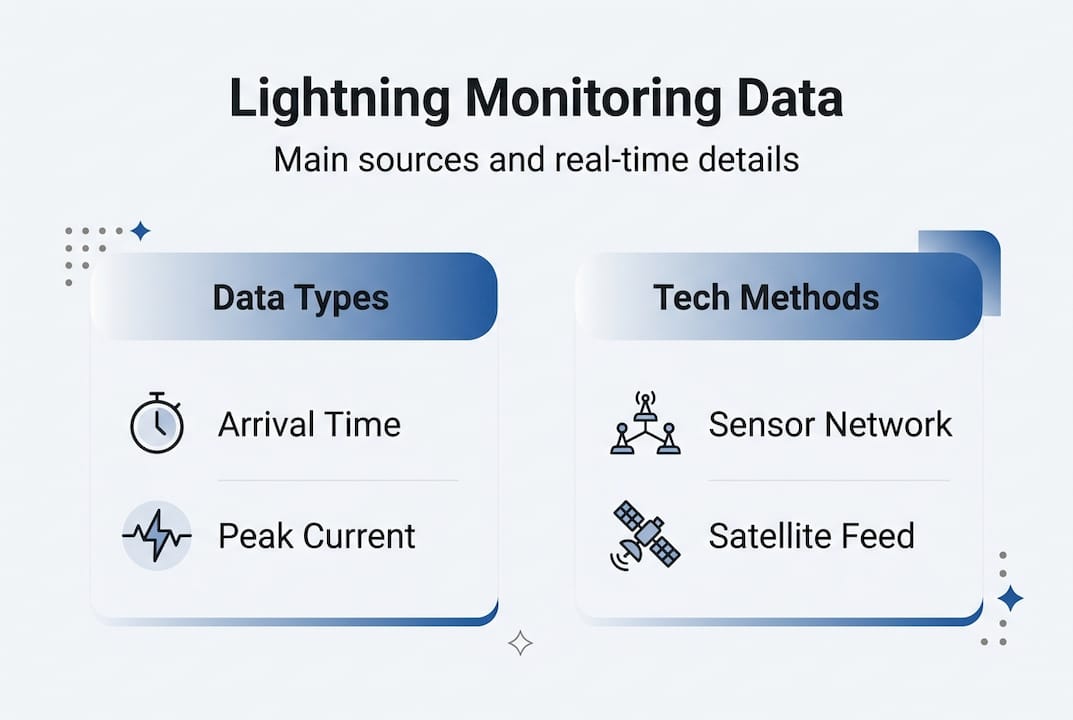
Modern lightning monitoring draws on three complementary layers. Ground-based sensor networks such as the National Lightning Detection Network (NLDN) and Canadian Lightning Detection Network (CLDN) triangulate strike location and current magnitude using arrival-time differences across multiple sensors. NOAA’s Geostationary Lightning Mapper (GLM) adds satellite-based total lightning detection, capturing both cloud-to-ground and intra-cloud activity that ground networks can miss. At the site level, IoT-enabled surge counters and line sensors installed directly on your lightning protection system (LPS) record every event with timestamps and current estimates.
Together, these layers deliver four critical data types: strike arrival time, precise geographic location, peak current magnitude, and a sequential event log for full traceability. For lightning protection on sensitive sites like chemical plants or data centers, that traceability is non-negotiable.
| Technology | Coverage | Data output | Best use case |
|---|---|---|---|
| NLDN/CLDN ground network | Regional | Location, peak current | Wide-area threat awareness |
| NOAA GLM satellite | Continental | Total lightning density | Storm tracking, advance warning |
| IoT surge counters | Site-specific | Event log, current estimate | Post-strike inspection trigger |
| Fixed line sensors | Infrastructure | Line-level activity | Transmission and distribution protection |
Early warning is where monitoring pays its most immediate dividend. Networks can push alerts up to 60 minutes before a storm reaches a facility, giving safety teams time to evacuate exposed personnel, shut down sensitive processes, and position maintenance crews for rapid post-event response. Integrating these alerts into your facility lightning safety workflow converts raw data into coordinated action.
For facilities monitoring transmission lines or large outdoor assets, line-level sensors add granularity that network data alone cannot provide.
Pro Tip: Pairing real-time monitoring data with predictive analytics software lets maintenance teams forecast component wear cycles, prepare inspection kits in advance, and cut the window between a strike event and a completed safety check.
Business benefits: Enabling efficient maintenance and risk reduction
The operational case for monitoring is straightforward: you cannot optimize what you cannot measure. When a strike occurs at 2 a.m. and no monitoring system records it, maintenance teams arrive the next morning with no baseline. They either over-inspect everything or miss the affected zone entirely. Connected monitoring eliminates that guesswork.
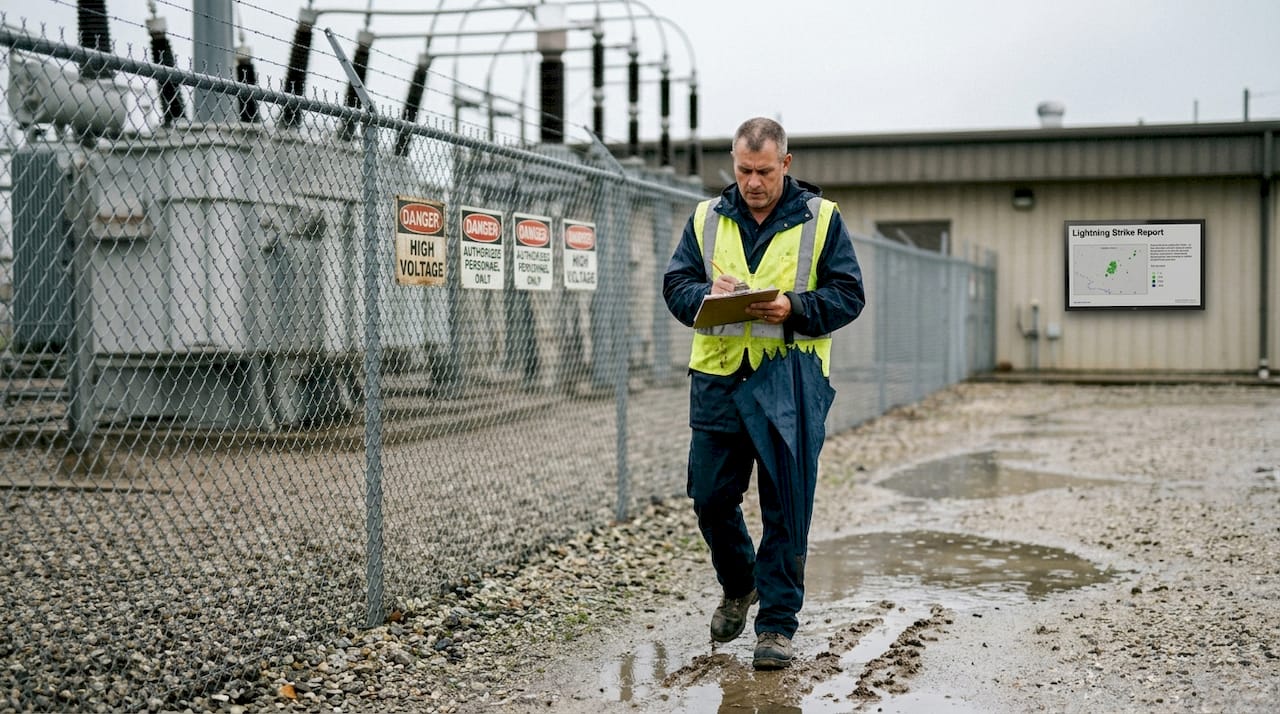
Instant alerts allow maintenance teams to prioritize post-strike inspections by zone and severity. A 40 kA strike near the transformer yard gets a same-shift inspection. A 5 kA indirect event near administrative offices gets logged and queued for next-day review. That triage capability alone reduces wasted labor hours significantly.
Key operational advantages of connected lightning monitoring:
- Immediate notification of strike events, including location and estimated current
- Automated inspection triggers that align with IEC 62305 post-strike requirements
- Digital logs that document every event for insurance and legal purposes
- Degradation tracking that identifies LPS components approaching end-of-life
- Integration with CMMS (Computerized Maintenance Management Systems) for seamless work order generation
The impact on response time is measurable. Connected monitoring systems reduce post-impact response time by up to 60%, directly minimizing costly downtime in process-critical environments. For a petrochemical facility running continuous operations, that figure translates directly to revenue protected.
Pro Tip: Automated digital logs generated by monitoring systems serve as contemporaneous records during insurance claims. Adjusters consistently settle claims faster when facilities produce timestamped strike data matched to damage reports.
Covering the full scope of electrical infrastructure lightning protection means linking your lightning protection services plan to real-time monitoring so that every event drives a documented operational response.
Compliance and traceability: Meeting modern lightning standards
Regulatory pressure on lightning protection is intensifying. IEC 62305, the international standard governing lightning protection systems, requires post-strike inspections and periodic verification of system integrity. NFPA 780, the dominant standard in North American practice, adds requirements for monitoring data as part of both verification and insurance compliance. Meeting these obligations without a monitoring system means relying on scheduled audits alone, which creates significant gaps in your evidentiary record.
Here is a practical compliance workflow that monitoring enables:
- Record every event. Monitoring systems log date, time, location, and estimated current for each strike affecting the facility perimeter.
- Trigger inspection. Automated alerts notify the responsible safety officer immediately, initiating an IEC 62305-compliant post-strike inspection protocol.
- Document findings. Inspection results are linked to the event record, creating a complete, date-stamped audit trail.
- Schedule follow-up. Any degraded components identified during inspection generate work orders in the maintenance system.
- Archive records. Digital logs are stored securely and made available for regulatory audits, insurance reviews, and legal proceedings.
“Treating monitoring as a compliance burden misses the point. It is your most defensible evidence that the facility is managed to the current standard of care.”
IEC 62305-mandated post-strike inspections and periodic verification are only achievable at scale with monitoring. Manual log-keeping introduces gaps that auditors notice. Digital traceability closes those gaps automatically. NFPA 780 monitoring requirements further reinforce that documentation is not optional.
Facility managers who understand modern lightning standards recognize that monitoring is increasingly a baseline expectation, not a premium add-on. An industrial lightning compliance guide should always include a monitoring chapter alongside system design and grounding. Completing a thorough lightning risk assessment at your facility will clarify exactly which monitoring tier applies to your site classification.
Practical steps: Implementing effective lightning activity monitoring
Deploying monitoring does not require a complete overhaul of your existing protection infrastructure. It requires a structured assessment and a phased integration plan.
Step-by-step implementation guide:
- Assess your risk profile. Identify strike density for your geographic zone, map ATEX or EX-rated areas where ignition risk is highest, and note any isolated assets like remote substations or communication towers that sit outside your main LPS coverage.
- Select your monitoring approach. Facilities with broad perimeters benefit most from networked sensor integration combined with site-level IoT counters. Smaller sites may start with counters on key LPS down-conductors and integrate with a regional network subscription.
- Integrate with safety workflows. Alerts must route to the right person at the right time. Map monitoring outputs to your emergency response plan, maintenance dispatch system, and safety officer notification protocol.
- Establish a data review cadence. Weekly log reviews keep the system honest and flag any sensor anomalies before they create coverage gaps.
- Verify system performance. Require vendors to demonstrate detection reliability before signing off on installation.
Following an infrastructure lightning protection guide helps you sequence these steps correctly for your facility type. For sites selecting or upgrading hardware, reviewing lightning protection system application criteria ensures your monitoring tier matches your protection tier.
Pro Tip: Specify a minimum 95% impact detection rate and 99% system uptime in any monitoring vendor contract. These benchmarks distinguish enterprise-grade systems from consumer-level weather alert subscriptions.
The real value: Why a culture of monitoring outpaces static protection
Static lightning protection is necessary. Nobody disputes that. But treating it as a finished solution is where many safety programs quietly fall short. A lightning rod that has never been tested after a strike, a grounding system whose resistance has drifted above 10 ohms, a surge protector that absorbed its last event silently months ago: these are the hidden failure points that monitoring reveals and static assumptions miss.
The facilities that lead on safety do not simply install compliant systems and move on. They build processes around continuous awareness. Monitoring shifts the safety officer’s role from reacting to incidents to managing risk in real time. It is the difference between learning about a problem from an insurance adjuster and catching it during a post-strike inspection the next morning.
At Indelec, we have observed this shift across industrial and infrastructure clients worldwide. Facilities that embed risk assessment best practices into their monitoring programs consistently outperform peers on both safety outcomes and regulatory audit scores. The monitoring culture is not an upgrade from protection. It is the maturation of it.
Next steps: Partnering for smarter lightning safety
If your facility relies on installed protection without a monitoring layer, you are operating with incomplete information. Indelec’s engineering team works with facility managers and safety officers to design monitoring programs that integrate with both new and existing protection infrastructure.
From the Prevectron3 air terminal, which provides verified early streamer emission performance, to highly efficient ESE lightning rods backed by independent field studies, Indelec solutions are engineered for traceability and compliance from the ground up. Explore lightning protection system application options tailored to your site classification, or contact our technical consultants for a site-specific monitoring assessment.
Frequently asked questions
How does lightning monitoring improve facility safety?
Monitoring delivers real-time advance warnings that allow safety teams to initiate evacuations and equipment shutdowns before a storm reaches the site, directly reducing injury and damage risk.
Is lightning monitoring required for regulatory compliance?
Yes. IEC 62305 post-strike requirements mandate inspection traceability after every event, and NFPA 780 includes monitoring as part of its verification and insurance documentation framework.
Which technologies are most effective for lightning monitoring?
IoT-enabled surge counters combined with NOAA GLM satellite data and ground-based network feeds provide the most complete, real-time picture for site-level safety decisions.
How often should lightning protection be inspected?
Annual inspections are the baseline, but IEC 62305-mandated post-strike checks require an immediate inspection after any strike event recorded by your monitoring system.
What data does lightning monitoring generate for insurance and audits?
Monitoring systems produce timestamped logs of strike location, intensity, and frequency that quantify risk per IEC 62305 and NFPA 780, giving insurers and auditors the contemporaneous evidence they need.