Inspection Ready: 3 Lightning Protection Steps for French Site Managers
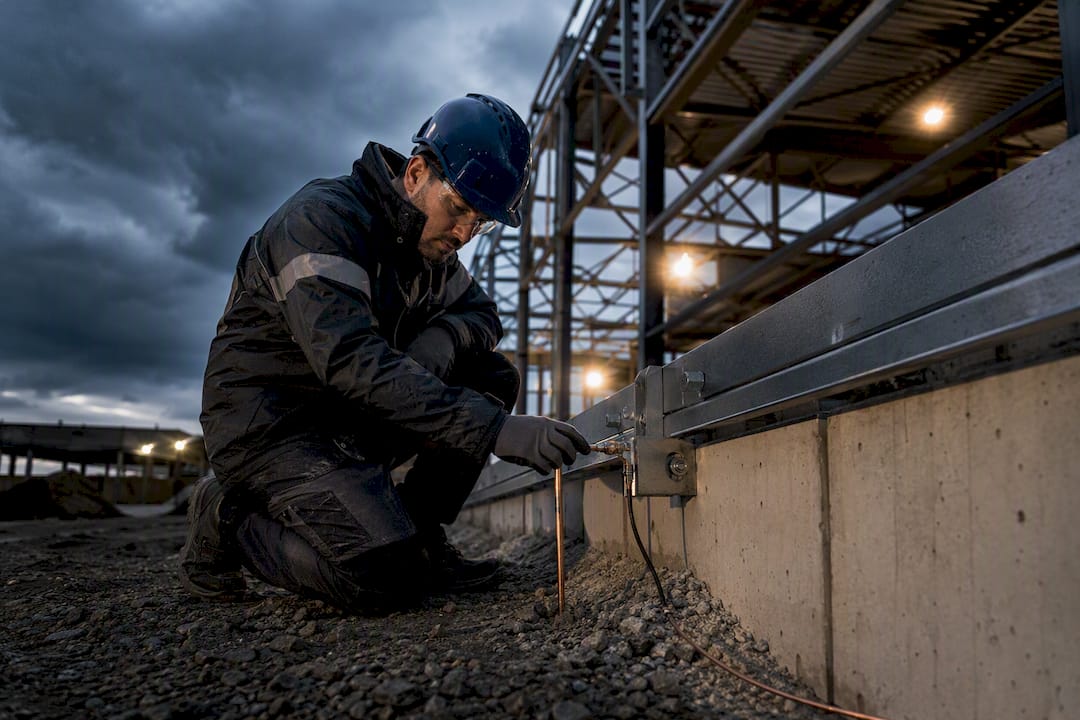
Protect active construction sites with three things: reliable early warning, the right structural and surge safeguards, and documented stop-work procedures. Detection systems built to IEC 62793 standards give you the lead time; structural protection under NF EN 62305 or NFC 17-102 limits damage once a strike happens; written evacuation rules keep people alive in between. French labor rules put the responsibility for all three squarely on the employer, and a specialist can help you design and certify each piece.
TL;DR:
- Lightning detection sensors and regional alert services can provide 20 to 30 minutes of warning before a strike occurs, allowing timely site shutdowns.
- Structural protection must include properly coordinated air terminals, conductors, earthing, and surge protection devices to prevent dangerous voltage differences.
- Safe refuge areas must be enclosed, grounded, and located away from tall, isolated objects, with a documented work stoppage and restart procedure in place.
- Installing dedicated grounding electrodes for cranes and insulating scaffolding can significantly reduce lightning-related risks on active construction sites.
- Regular testing, inspection, and working with certified specialists ensure compliance and effective lightning protection system deployment.
Table of Contents
- Why Lightning Is a Distinct Hazard on Active Construction Sites
- What French Regulations Require From Site Employers
- Detection and Early Warning: What Actually Buys You Time
- Structural and Electrical Protection for Site Equipment
- Protecting Cranes, Scaffolding, and Site Cabins Right Now
- Evacuation Rules and When It’s Safe to Restart
- Post Strike Response and Ongoing Inspection
- What a Specialist Lightning Protection Partner Actually Delivers
- Why Procedures Beat Hardware for Immediate Safety
- Get a Site Survey Before the Next Storm Season
- Where to Verify These Standards and Alerts Yourself
- Sources
Why Lightning Is a Distinct Hazard on Active Construction Sites
A lightning strike doesn’t need to hit a worker directly to hurt them. Most descending strikes follow a path shaped by electric-field buildup near tall, grounded, or metal objects, which is exactly why tower cranes, scaffolding towers, rebar cages, and temporary electrical panels sit inside what engineers call the “sphere of protection” risk zone.
The dangers on a site break down into four mechanisms:
- Direct strike: current passes through a person or structure.
- Side flash: current jumps from a struck object to a nearby worker or piece of metal.
- Step and touch voltage: ground current spreads outward and creates a lethal voltage difference between a worker’s feet or hands.
- Induced surge: electrical equipment and site wiring absorb transient voltage even without a direct hit, frying control panels and site cabins.
A half-built structure has none of the built-in protections a finished building has. Open rebar, ungrounded scaffolding, and temporary power runs create exactly the kind of exposed metalwork that increases side-flash and step-voltage risk.
What French Regulations Require From Site Employers
Under French labor rules, an employer identifying a lightning risk on site is obligated to have a documented procedure for interrupting work and moving personnel to a safe enclosed area. This isn’t a suggestion buried in an OPPBTP pamphlet. It’s a compliance obligation you need to be able to produce if an inspector or insurer asks.
A genuinely safe refuge has specific characteristics:
- Enclosed, grounded structure, not an open-sided shed or scaffold platform.
- No contact with plumbing, metal rails, or exposed electrical conduit.
- Doors and windows closed, not propped open for airflow.
- Located away from tall isolated objects such as a standalone crane mast.
Keep a simple log of every weather-related work stoppage: time called, who authorized it, duration, and who verified conditions before restart. That log matters far more during an incident review than most managers expect.
Detection and Early Warning: What Actually Buys You Time
You have two realistic options for early warning, and they aren’t mutually exclusive. Local sensors built to IEC 62793 measure the electric field directly above your site and trigger an alarm as the field intensifies, before the first strike lands nearby. Subscription alert services, the kind Meteorage offers, track regional lightning activity and push notifications by SMS, email, or phone, often with 20 to 30 minutes of lead time and no permanent hardware to install.
- Choose your detection layer. A permanent high-rise project justifies fixed sensors; a short-term site often does better with a subscription service.
- Set clear alarm triggers. Decide in advance what reading or alert level triggers a stop, not during the storm itself.
- Build in redundancy. Pair automated alerts with a human spotter during shift handovers, when attention naturally drops.
- Rehearse the workflow. Alert received, foreman notified, horn sounded, workers move, time logged.
Pro Tip:Test your alert notification chain monthly, not just after installation. A subscription service that emails the site office instead of the foreman’s phone is worthless at 2 p.m. on a Tuesday when everyone is fifty feet up a scaffold.
Structural and Electrical Protection for Site Equipment
Structural lightning protection follows NF EN 62305 and NFC 17-102, which use the sphere method and installation-sensitivity criteria to define how much protection a given structure needs. On a construction site, that framework has to flex around equipment that changes week to week.
Three hardware categories matter most:
- Air terminals. Passive rods and Early Streamer Emission (ESE) terminals both create a defined capture point above vulnerable equipment; mesh or cage systems suit large, irregular structures better than a single rod ever will.
- Down conductors and earthing. Every air terminal needs a low-impedance path to ground, and on temporary sites that path often has to be built from scratch rather than borrowed from an unfinished building’s incomplete grounding.
- Surge protection devices (SPDs). Type 1 or type 1+2 SPDs absorb transient voltage before it reaches operator cabins and control panels, and they need to sit on temporary distribution boards, not just the permanent building supply.
Treat these as one system, not a shopping list. Air terminals, conductors, earthing, and SPDs specified in isolation can create dangerous potential differences between components instead of eliminating them. A design example for complex sites shows how those pieces have to be coordinated rather than bolted on independently.
Protecting Cranes, Scaffolding, and Site Cabins Right Now
A tower crane is one of the tallest, most isolated metal structures on most job sites, which makes its grounding a priority rather than an afterthought.
- Install dedicated temporary grounding electrodes for the crane. Relying on whatever incomplete earthing exists elsewhere on site leaves a gap that current can exploit, and dedicated electrodes close that gap.
- Isolate or insulate scaffolding when a permanent lightning protection system already exists on the adjacent building. OPPBTP guidance recommends keeping scaffolding electrically separate rather than letting it become an unplanned extension of someone else’s grounding network.
- Close site cabins and containers fully during a storm. A container only behaves like a Faraday cage when every door and hatch is shut. Left open, the enclosure effect disappears entirely.
- Fit SPDs on cabin and container power supplies. This protects the electronics inside even if the enclosure itself takes a nearby hit.
- Move loose materials and tools into secure storage before the storm arrives, not during it.
Evacuation Rules and When It’s Safe to Restart
Someone specific needs the authority to call a stop, and everyone on site needs to know who that is before a storm ever forms.
- Trigger the evacuation the moment your alert system fires, not when thunder is already audible on site.
- Move to a safe refuge and stay away from metal rails, plumbing, and open doorways.
- Keep workers together and accounted for with a headcount at the refuge point.
- Wait at least 30 minutes after the last audible thunder before authorizing a return to exposed work.
Pro Tip:The most common gap Indelec sees on inspected sites isn’t the evacuation call itself. It’s the missing return to work protocol. Crews stop when the alarm sounds but drift back to elevated work as soon as the rain lets up, well before the storm cell has actually cleared.
Post Strike Response and Ongoing Inspection
A strike on or near your site demands a specific sequence, not a quick visual scan before restarting work.
- Isolate affected circuits immediately and do not re-energize equipment until it has been tested.
- Conduct a visual inspection of grounding connections, SPDs, and any equipment near the strike point.
- Schedule periodic testing of your grounding resistance and structural protection, performed by qualified technicians, with results documented for your compliance file.
- Bring in a certified specialist whenever inspection reveals damage, and suspend use of the affected equipment until it’s recertified.
What a Specialist Lightning Protection Partner Actually Delivers
Indelec approaches a construction site the same way it approaches any protected structure: risk assessment first, then a lightning protection system design matched to that specific risk, then the temporary grounding, SPDs, and structural hardware to execute it, then testing and certification to close the loop. Founded in 1955 and running an active R&D center, a specialist company has applied this sequence across industrial and infrastructure projects worldwide.

Ask for a site survey before your project reaches its most exposed phase. Expect three deliverables back: a written risk report, a certificate of compliance once protection is installed, and a maintenance plan that tells you when the next inspection is due.
Why Procedures Beat Hardware for Immediate Safety

I’d argue the industry spends too much energy debating air terminal types and not enough drilling evacuation timing. Hardware protects a structure over its lifetime; a fast, well-rehearsed stop-work call protects the people standing on it right now. Detection and clear rules are what actually save someone on a Tuesday afternoon.
Run a five-minute weekly briefing: who calls the stop, where the refuge point is, how alerts arrive, and the 30-minute restart rule. Drill it monthly. Pair a subscription alert service with your permanent detection hardware wherever both are feasible, because redundancy is what catches the alert that gets missed.
— INDELEC
Get a Site Survey Before the Next Storm Season
A specialist company offers a compliant lightning protection setup, not a generic contractor bolting on a rod and calling it done. Site surveys, LPS design built to NF EN 62305 and NFC 17-102, deep earth grounding drilling for cranes and temporary structures, SPD installation, and final certification can come from one accountable source instead of three separate vendors who each blame the others when something doesn’t line up.

If your project is entering its most exposed phase, or you’ve never had a formal risk assessment done, request a site survey and system design consultation now. You’ll get a written risk report and a clear path to certification before the storm season catches your crew unprepared.
Where to Verify These Standards and Alerts Yourself
- Prévention BTP covers site-specific lightning risk guidance in depth.
- Meteorage runs the alert service referenced for lead-time estimates.
- Legifrance holds the official labor code text on employer safety obligations.
Sources
- Le risque foudre sur les chantiers : tous concernés | Prévention BTP
- Comment se protéger de l’orage et de la foudre sur un chantier ? | Habitatpresto
- Le risque foudre sur les chantiers | METEORAGE
- Legifrance — (relevant labor code article)