Post 2026: 4 RFP Must Haves for NF EN 62305 in France
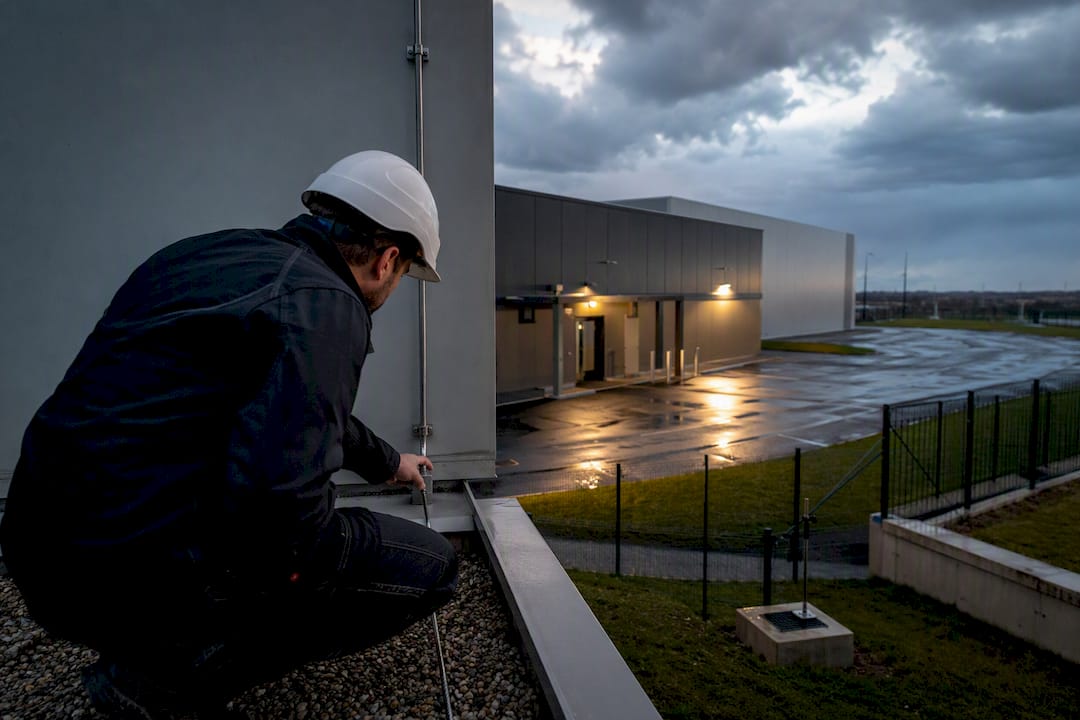
NF EN 62305 is the French national adoption of the IEC 62305 series, the four-part international standard governing lightning protection for structures, people, and electrical systems. A 2024 technical revision (3rd edition) updated the risk methodology and component requirements across all four parts. French professionals should obtain the current texts through AFNOR, calculate their site’s lightning risk under IEC 62305-2 or the simplified FD C 17-108 method, and set the required Lightning Protection Level before specifying any equipment.
TL;DR:
- The 2024 revision of IEC 62305-1 introduces a more precise risk calculation method that can lead to higher Lightning Protection Level requirements, especially for complex or high-risk structures.
- Accurate risk assessment depends on detailed inputs such as ground flash density and clear calculation of Nd and NT, with simplified methods suitable for straightforward sites but not complex ones.
- Component standards like IEC 62561 and IEC 61643 are essential for procurement, as they certify the physical parts and surge protective devices used in the system, not the overall design.
- Verification requires both thorough design review before installation and detailed physical testing afterward, with certificates explicitly referencing the current standard edition for credibility.
- Avoid common pitfalls by ensuring risk calculations are transparent, components match design specifications, ground resistance is properly measured periodically, and safety protocols address induced currents during work.
Table of Contents
- What does the NF EN 62305 series actually cover?
- Where to get the official NF EN 62305 and IEC 62305 texts in France
- What changed in the 2024 revision, and why it matters for your specs
- Running a risk assessment and choosing the right LPL
- Component standards you need in every procurement spec
- Maintenance and inspection: what the standard actually requires
- How compliance actually gets verified
- Common implementation problems and how to avoid them
- Personnel safety requirements during lightning protection work
- Indelec’s perspective: what generic compliance misses on complex sites
- Practical next steps for NF EN 62305 compliance projects
- Sources
What does the NF EN 62305 series actually cover?
Each of the four parts answers a different question, and knowing which one applies to your task saves hours of wasted reading.
- Part 1 sets out scope, terminology, and general principles. It defines what counts as lightning damage and what falls outside the standard’s reach, including certain underground structures and specific pipeline scenarios.
- Part 2 is the risk management engine. It walks through calculating the frequency of dangerous lightning events (Nd), comparing that figure to a tolerable risk threshold (NT), and deciding whether protection is even required.
- Part 3 covers physical damage and injury to living beings. This is where lightning protection system design lives, including air terminals, down conductors, earth termination, and separation distances.
- Part 4 addresses electrical and electronic systems inside the structure. It defines Lightning Protection Zones (LPZ), surge protective device coordination, and how to shield sensitive equipment from induced surges.
For a project manager drafting a technical specification, Part 3 and Part 4 matter most. For an insurer or safety officer weighing whether protection is mandatory at all, Part 2 is where the answer sits. The lightning standards overview maps these parts against real project deliverables if you need a starting reference point.
Where to get the official NF EN 62305 and IEC 62305 texts in France
You cannot cite a standard you have not actually read, and specifications built on secondhand summaries create liability. Here is how French teams typically access the official texts:
- Buy directly through AFNOR. The AFNOR boutique lists NF EN 62305-1 with full bibliographic metadata, page count, and scope text, and the same applies to NF EN 62305-3 for structural protection.
- Use organizational access tools for teams. Consultancies and engineering firms handling multiple projects often rely on AFNOR’s BAO platform or an AFNORpass subscription rather than buying each part individually.
- Check the IEC Webstore for international reference. IEC 62305-1’s preview page shows scope and edition details before purchase, useful for confirming which edition a supplier is quoting.
- Cite edition and date explicitly in tenders. A specification that just says “NF EN 62305” without an edition year is asking for a dispute later.
What changed in the 2024 revision, and why it matters for your specs
The 3rd edition of IEC 62305-1, published September 12, 2024, is a full technical revision, not a light edit. It replaces the 2010 edition across the board, and several changes carry real consequences for how French professionals calculate risk and buy equipment.
The most significant shift is in Part 2. The updated risk methodology introduces the concept of Nsg, a refined ground flash density parameter, alongside a “single risk” framework that changes how the frequency of dangerous events (Nd) gets computed against the tolerable threshold (NT). The old approach lumped several risk components together; the 2024 edition separates them, which typically produces a more precise, and sometimes more conservative, LPL recommendation.
The revision also sharpens surge current specifications used to size SPDs, tightening the link between the risk assessment output and the actual product ratings a procurement officer has to buy. That precision cuts both ways: better-sized SPDs, but less room to fudge a spec with a generic surge rating pulled from an old datasheet. The new edition also cross-references IEC 62561 component standards more explicitly than before, so a compliant lightning protection system now needs its individual components, not just its overall design, checked against a separate standard.
Running a risk assessment and choosing the right LPL
The risk assessment is not a formality. It is the calculation that tells you whether you need a Lightning Protection Level I system (the most rigorous) or nothing at all. Here is the practical sequence:
- Gather your inputs. You need the ground flash density (Ng) from national lightning maps, the structure’s collection area (Ad) based on its geometry and height, and an environmental factor (Cd) that adjusts for surrounding structures or terrain.
- Calculate Nd, the expected frequency of dangerous lightning events striking or affecting the structure per year.
- Compare Nd against NT, the tolerable risk threshold for that structure type. If Nd exceeds NT, protection is required. If it does not, you can often justify skipping a full LPS, though local regulations or insurance requirements sometimes impose protection anyway.
- Select the LPL, ranging from I (highest protection, lowest tolerated risk) to IV, based on how far Nd exceeds NT and what consequences a strike would produce.
For straightforward structures, the simplified method in FD C 17-108 often gets you to a defensible answer faster than running the full IEC 62305-2 calculation by hand. Complex sites, mixed-use buildings, or anything with hazardous processes usually need the full method, and practitioner tools built around Nd and Ad calculations can speed that up considerably.
Pro Tip:Ask any consultant for the raw Nd and NT figures behind their LPL recommendation, not just the final answer. A specialist who can’t show you the calculation inputs can’t defend the number if it’s challenged during a permit review or insurance audit.
Whatever method you use, insist on three deliverables from whoever runs the assessment: a written risk report with the Nd/NT comparison, an LPL specification tied to that report, and a component list that matches the LPL, not a generic catalog pull.
Component standards you need in every procurement spec
NF EN 62305 sets the design principles, but it does not certify individual products. That job falls to a separate tier of component standards, and skipping them in a spec is one of the most common gaps Indelec sees in tender documents.
- IEC 62561 series covers LPS components directly: air terminals, down conductors, connectors, and earth-termination materials. A lightning rod that meets IEC 62305-3’s design rules still needs to carry IEC 62561 certification for the physical product.
- IEC/EN 61643 series governs surge protective devices and how they coordinate with each other across protection zones. A partner resource on how SPDs actually work is a useful primer if your team is new to surge coordination.
- Third-party test certificates should be a line item in every tender, not an afterthought. Ask for them by name, not “compliant components.”
- Maintenance intervals tied to the standard’s recommendations belong in the same document as the design spec, not a separate afterthought contract.
Maintenance and inspection: what the standard actually requires
A lightning protection system is not an install-and-forget asset. NF EN 62305 ties inspection frequency to the LPL and to the environment the structure sits in, and skipping this step is how compliant installations quietly become non-compliant within a few years.
Structures at LPL I or II, or those in corrosive, coastal, or high-lightning-activity zones, typically warrant more frequent visual checks and periodic full inspections than a low-risk LPL IV building. Visual inspections catch the obvious problems: loose connections, corroded down conductors, damaged air terminals, or earth-termination points buried under new construction work. Full inspections, which test continuity and earth resistance values, catch what a visual check cannot.

Earth resistance measurements deserve particular attention in France, where soil conditions vary sharply between regions. A grounding system that tested fine at installation can drift out of spec within a few years if soil moisture or nearby excavation work changes the surrounding earth’s conductivity. That is why deep earth grounding work often needs revisiting on a cycle, not treated as a one-time installation task.
Any structural modification, an added rooftop unit, a building extension, a new antenna, should trigger a review of the original risk assessment, not just a visual check of the existing hardware. The LPS was designed for a specific structure geometry, and changing that geometry can silently invalidate the original Nd calculation. Documentation matters here too: inspection records need to be kept and dated, because insurers and auditors increasingly ask for a paper trail, not just a verbal assurance that “someone checked it.”
How compliance actually gets verified
Verification under NF EN 62305 happens at two distinct stages, and confusing them is a common source of disputes on French projects.
The first stage is design verification: confirming the LPS specification, the SPD coordination scheme, and the component list actually match the risk assessment’s LPL output before anything gets installed. This is a paperwork exercise, but skipping it means discovering a mismatch only after equipment is already in the ground.
The second stage is physical testing after installation. Continuity testing confirms electrical paths through down conductors and bonding connections are intact. Earth resistance testing confirms the grounding system meets the value assumed in the design. Visual inspection confirms separation distances, the physical gap required between the LPS and other conductive elements, were actually built as specified, not approximated on site.
Test certificates issued at this stage should reference the specific standard edition and the LPL the system was designed against, not a generic “tested and compliant” stamp. A certificate that does not specify which edition of NF EN 62305 the test protocol followed is close to worthless if a claim or audit happens later. This is increasingly non-negotiable on public infrastructure and industrial tenders in France, where procurement officers now routinely ask for this level of detail before accepting a bid.
Common implementation problems and how to avoid them
Most compliance failures on French sites trace back to a handful of recurring mistakes, and almost none of them are exotic.
The most frequent one is treating the risk assessment as a checkbox rather than an engineering input. A consultant hands over an LPL number with no visible Nd/NT calculation behind it, and the client accepts it because challenging the math feels beyond their expertise. That gap is exactly where under-protected buildings and over-specified budgets both happen.
A second common problem is component mismatch: an LPS designed to LPL II specifications gets built with connectors or air terminals certified for a lower protection level, usually because a substitution happened during procurement without anyone re-checking the IEC 62561 rating against the original design. Third-party certificates catch this, but only if someone actually reads them against the spec.
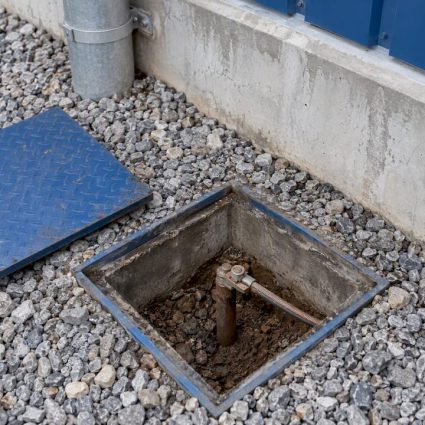
Grounding problems are the third recurring headache, particularly on sites with rocky or sandy soil where achieving the target earth resistance value requires more than a single ground rod. Deep earth grounding techniques solve this in most cases, but only if the soil resistivity was actually measured before design, not assumed from a regional average.
Finally, retrofits on older buildings often skip the updated risk calculation entirely, carrying forward an LPL that was set decades ago under an outdated standard edition. Given how much the 2024 revision changed the underlying risk methodology, any structure protected under a pre-2024 assessment is worth revisiting, particularly if the building’s use or surrounding environment has changed since the original study.
Personnel safety requirements during lightning protection work
Installing and maintaining a lightning protection system carries real risk to the people doing the work, and NF EN 62305 assumes that safety protocols sit alongside the technical design, not as a separate concern.
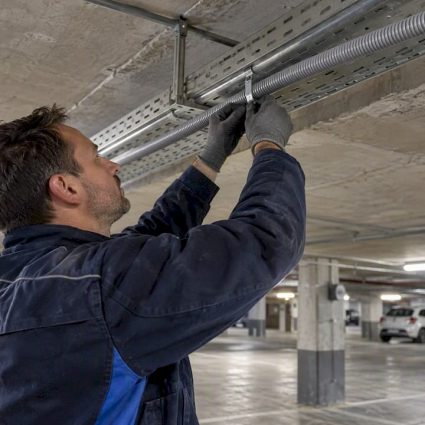
Anyone working at height on rooftop air terminals needs standard fall-protection equipment, but lightning protection work adds a specific complication: metal LPS components can carry induced currents even without a direct strike nearby, so technicians need to treat down conductors and bonding points as potentially live during storm-adjacent conditions, not just during an active strike.
Earth-termination work often means excavation, which brings its own hazards around underground utilities and unstable trenching, particularly on industrial sites where multiple buried systems can run close together. Testing work, especially continuity and earth resistance measurements, should never happen during active thunderstorm activity in the area, a rule that sounds obvious until a maintenance schedule gets compressed and someone decides to push through anyway.
On ATEX sites and other hazardous environments, personnel safety rules intensify considerably. Standard bonding and earthing practice is not automatically sufficient in an explosive atmosphere, and any technician working on lightning protection in these zones needs training specific to that environment, not a generic electrical safety briefing. Documentation of who performed which inspection, with what equipment and on what date, protects both the technician and the facility if a safety question arises later. This is not paperwork for its own sake. It is the record that shows due diligence was actually exercised.
Indelec’s perspective: what generic compliance misses on complex sites
Reading the standard’s clauses is one thing. Turning them into a testable procurement spec, one where a contractor can be held to a measurable outcome, is where most projects actually stumble. That gap is where an experienced provider’s translation work matters most, particularly in industrial and ATEX contexts.
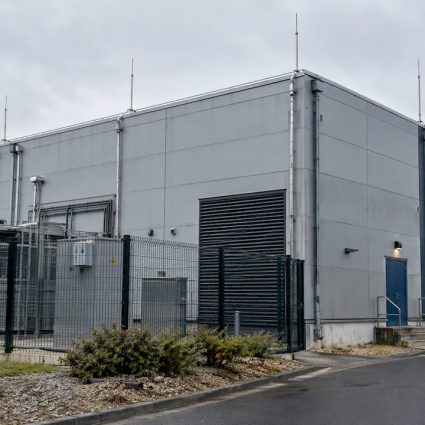
Hazardous environments deserve extra scrutiny. Applying IEC 62305 on French ATEX sites is not a matter of applying standard bonding and earthing practice with slightly stricter tolerances. It requires a tailored risk study before any component gets specified, because a generic clause applied to an explosive atmosphere without adjustment can leave a gap the standard’s authors never anticipated for that specific installation.
Since 1955, Indelec has built its R&D center around exactly this kind of translation work, turning normative text into deliverables a contractor can actually be held to.
— INDELEC
Practical next steps for NF EN 62305 compliance projects
If you are drafting an RFP for a lightning protection project, the standard alone will not tell you what to write into it. That translation, from clause to contract line item, is where Indelec’s services fit.

The company has longstanding experience in designing and certifying lightning protection systems and maintains an R&D center that tracks major revisions to relevant standards as they occur. That continuity matters when a 2024 edition change to surge current specs needs translating into an actual SPD order, not just a footnote in a report.
When you draft your RFP, ask for four things explicitly: the edition and date of every standard cited, a written risk report showing the Nd/NT comparison behind the recommended LPL, a component list with IEC 62561 and IEC 61643 certificates attached, and a documented test plan for post-installation verification. A contractor who cannot produce these on request is asking you to trust a black box.

Indelec’s lightning protection system application service covers risk assessment, design, installation supervision, and testing under the current standard, for facility owners and procurement teams who need a specification they can actually defend to an insurer or auditor. Request a project review to see what an LPL-matched specification looks like for your site.
Sources
- IEC 62305-1:2024 | IEC
- Achats normes NF EN 62305-1 — AFNOR boutique
- Achats normes NF EN 62305-3 — AFNOR boutique
- Normes des protections foudre — Guide de l’Installation Electrique