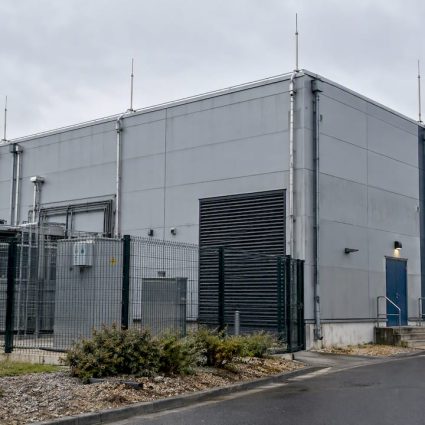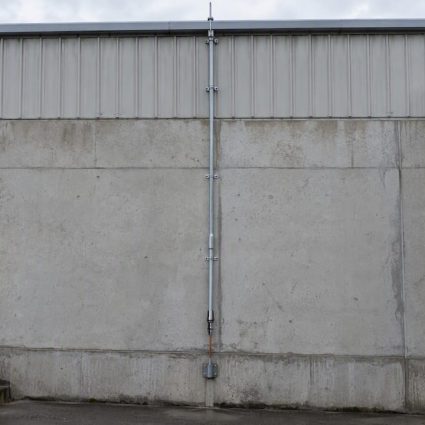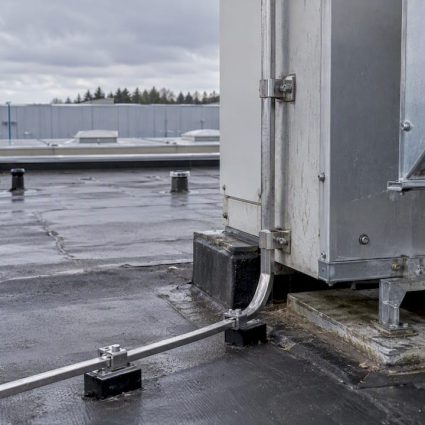
Surge Protector Integration in a GTB: Design Guide
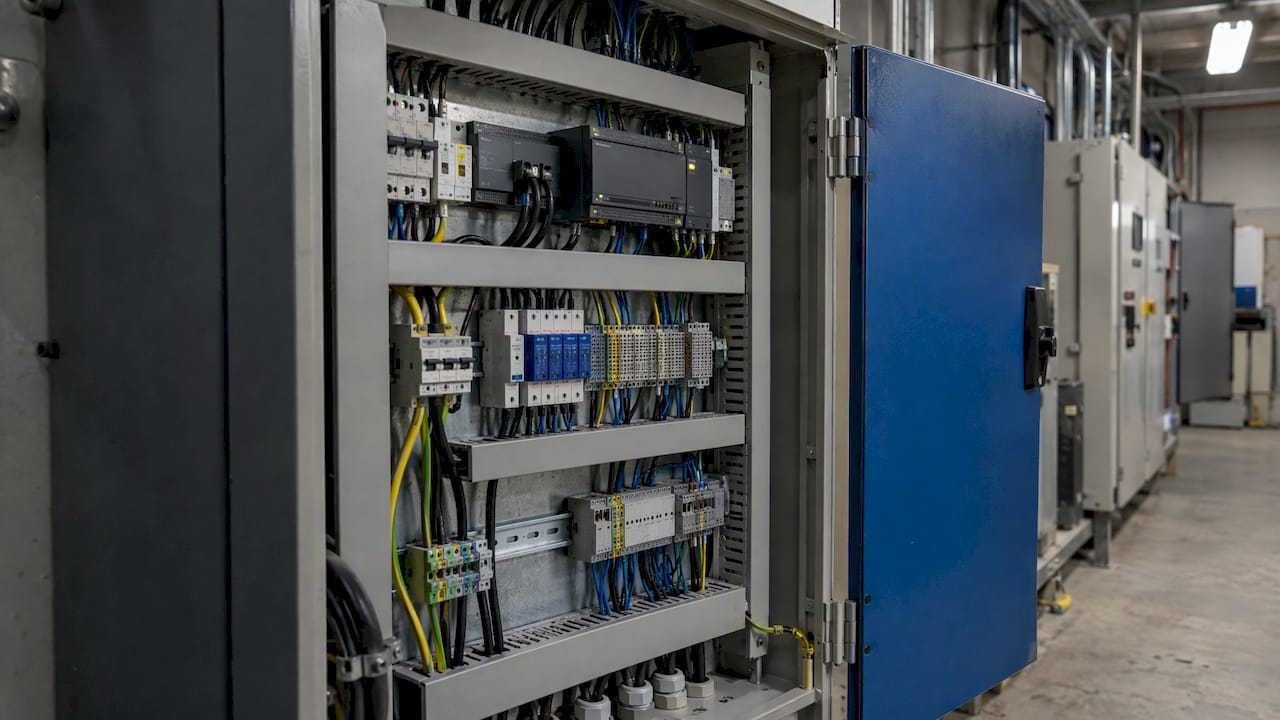
Integrating a surge protective device (SPD, parafoudre in French) into a GTB (gestion technique du bâtiment, the French term for a building management system) means three things. You protect the lines that feed and connect the GTB. You bring each SPD’s status back to the supervisor as a monitored signal. You document the whole scheme so it can be inspected. Done at design stage, it costs little. Retrofitted into a live GTB/GTC architecture, it costs a lot more and is harder to do well.
This guide is written for facility managers, engineering consultancies and contractors working on French industrial, commercial and public sites. It covers placement, signaling, wiring and paperwork.
TL;DR
- Treat the GTB as a sensitive system: protect its power supply, its field bus and communication cables, and any line that leaves the building, not only the main switchboard.
- Use SPDs with a remote status contact, and wire it to a GTB input so a worn cartridge raises an alarm instead of going unnoticed.
- Decide on SPDs in the lightning risk analysis (ARF) and technical study (ET), before the GTB specification is frozen.
- Keep a verification and maintenance notice, an as-built file (DOE) and a logbook: for ICPE sites, hardware alone does not pass an inspection.
- Check SPDs after any significant lightning event, and log the check.
Table of Contents
- Why a GTB is exposed to surges
- Start from the risk analysis, not the catalog
- Where to place SPDs in a GTB architecture
- Bringing SPD status into the supervisor
- Enclosures and environment
- Put it in the specification from day one
- Documentation: what an inspector will ask for
- Our perspective
- How we can help
- A practical checklist for your next GTB project
- FAQ
- Sources
Why a GTB is exposed to surges
A GTB links controllers, sensors, actuators, meters and a supervision server across a whole site. That means long cables running between buildings, floors and technical rooms, plus an Ethernet or field-bus backbone, a power supply and often a connection to a remote network. Every one of those conductors can carry a surge into electronics that tolerate very little.
A lightning strike does not need to hit the building. A nearby strike induces voltage on cables, and a strike on the grid sends a surge through the supply. The weak point is often not the energy circuit but the low-current wiring that nobody thought of as “an incoming line”.
The standard framework is the NF EN IEC 62305 series. Its part 3 covers protection of structures against physical damage through a lightning protection system (SPF in French). Surge protection sits alongside it as part of a coordinated scheme, not as an accessory added at the end. For a GTB, that is the key idea: the SPDs are part of the architecture.
Start from the risk analysis, not the catalog
The French reference for classified sites is the circular on the order of 15 January 2008. It states that the lightning risk analysis identifies which installations need protection and at what level, and which incoming or outgoing links (energy, communication, pipework) need protection. Your GTB cabling is exactly that kind of link when it crosses between structures.
In practice, ask these questions during the ARF and ET:
- Which cables leave each structure? Power feeders, bus cables, Ethernet runs between buildings, outdoor sensors, a modem or router line.
- What would a loss cost? A frozen HVAC supervision is an inconvenience. A failed fire-safety interlock, process control or access system is a different matter.
- Which equipment is sensitive, and where is it? Controllers in a remote technical room are different from a server in the main IT room.
- What protection level is needed for each zone, and who maintains the SPDs afterward?
The Qualifoudre FAQ published by INERIS shows how seriously the analysis is taken: it explains that SPDs must be specified in the ARF at the interface of incoming lines for the study to follow that configuration. If the analysis does not call for them, the later technical study will not either. Get the GTB scope into the analysis.
Our lightning risk analysis and technical study services are built around that sequence.
Where to place SPDs in a GTB architecture
Think in layers, from the incoming service to the sensor.
Layer 1: the main low-voltage switchboard
The first SPD goes at the origin of the installation, in the main switchboard (TGBT). This is the coarse stage. Its protection level (Up) decides what reaches everything downstream.
Layer 2: divisional boards and the GTB cabinet
A widely quoted rule of thumb in commercial and industrial buildings is to add an SPD in divisional boards located more than 10 m from the main board, and near equipment more than 10 m from the divisional board. A manufacturer technical guide states this rule. Treat it as a starting point: your ARF and the SPD’s protection level take precedence over any rule of thumb.
The GTB cabinet itself deserves its own SPD on its supply, close to the controllers and the power supply unit. The goal is coordination: the upstream device takes the bulk of the energy, the downstream one trims the residual voltage. Coordination between stages depends on the products and the cable length between them, so follow the manufacturer’s coordination data and do not mix brands blindly.
Layer 3: data and signal lines
This is where GTB projects usually fail. Typical lines to consider:
- Field bus segments between buildings (RS-485 based buses, for example).
- Ethernet or IP links between cabinets in separate structures.
- Analog and digital sensor loops that leave the building: outdoor temperature, rooftop equipment, lighting masts, gate controls.
- Telephone or modem lines used for remote supervision.
Each needs an SPD rated for that signal type, voltage and bandwidth. A power SPD on a data line does nothing. A data SPD with the wrong nominal voltage or too much capacitance can degrade the signal. Take the specifications from the bus or equipment manufacturer.
One point on the Google results for this topic: many pages are about residential installations, such as whether a communication panel needs its own SPD. A site with a GTB is not that case. Your decision rests on the risk analysis, the cable routes and the criticality of what the GTB controls.
Layer 4: the interface with the lightning protection system
When the building has external lightning protection (air terminals, down conductors, earthing), the SPDs must be coordinated with it. Equipotential bonding links the SPD earth connection to the main earth terminal with the shortest possible conductor. A long, looped SPD earth lead raises the residual voltage and defeats the device. Cabinet layout matters: put the SPD near the point where the cable enters, not at the far end of the enclosure.
The earthing quality behind it also counts. See our guides on how to maintain grounding systems and our earthing product range.
Bringing SPD status into the supervisor
An SPD wears. It absorbs surges until its protection elements are exhausted, and then it stops protecting while everything appears to work. Remote signaling is what makes SPDs part of a GTB rather than a hidden component.
Many SPDs come with a pluggable cartridge and a status indicator, green when operational and red when the cartridge needs replacement. Many models also accept an auxiliary contact for remote status reporting, and some have it built in. Check the datasheet of the exact model, because availability varies by product.
What to wire
| Signal | Typical GTB use | Design note |
|---|---|---|
| SPD status contact (changeover) | Digital input on a GTB controller | Wire it so that a wire break also raises an alarm |
| Aggregated alarm from several SPDs | One input per board or building | Saves inputs, but you lose the location of the fault |
| Lightning strike counter | Pulse or contact to the supervisor | Gives the event history needed for post-strike checks |
| Earth continuity or monitoring | Supervisory alarm | Only where the study calls for it |
We recommend one input per board on critical sites, so the alarm text on the supervision screen says exactly which SPD to replace. Add the replacement reference and the cabinet location to the alarm description.
Wiring the contact without creating a new problem
The status contact is a low-voltage circuit that runs from a power cabinet to a GTB cabinet. If it travels a long way, it can become a path for surges itself. Keep it short, keep it away from power conductors, and if it leaves the structure, protect it with a signal SPD as for any other line.
Alarm philosophy
Decide in advance who receives the alarm and what they do. A red status should open a maintenance ticket with a delay target. Some sites replace the cartridge at the next maintenance visit, others within days when the equipment is critical. Write it in the maintenance plan. If your GTB is linked to a facility management platform, such as the building management systems used to manage commercial property tasks and tickets, the SPD alarm should feed the same workflow as any other technical fault.
Enclosures and environment
The SPD is only as reliable as the cabinet around it. Outdoor GTB cabinets, rooftop junction boxes and sensor housings face dust, water and temperature swings, so ingress protection counts. For a refresher on rating choices, see this guide to electronics enclosure IP ratings. Leave space around SPDs for heat dissipation and cartridge replacement, and avoid putting them behind other equipment.
Put it in the specification from day one
Industry experts consistently stress that the design phase decides whether protection works. Retrofitting protection into a complex GTB/GTC architecture is more expensive and technically harder than planning it from the start. This is why the project specification should contain, from the first draft:
- The SPD stages and locations for power distribution.
- The list of data and signal lines that need protection, by cable.
- The SPD status points to wire into the GTB, and the input count they need.
- The earthing and bonding principle.
- The documents the installer must deliver.
For architects and engineering consultancies, a practical benefit: the GTB integrator, the electrician and the lightning protection specialist see the same document. Without it, each assumes another has handled the SPDs, which is how cables to the car park barrier or the rooftop weather station end up unprotected.
A look at how this plays out in a sensitive facility is in our highly sensitive site design example. For contractors on industrial sites, our building contractor lightning guide covers coordination between trades.
Documentation: what an inspector will ask for
For ICPE (classified installations) sites, the installation must be backed by a technical study and a verification and maintenance notice. The circular on the 2008 order states that verification must be performed periodically and after any significant lightning event, with all operations recorded in the site logbook (carnet de bord). Verification documentation must align with the circulars referencing NF C 15-443 and the NF EN IEC 62305 series.
The installer must also compile an as-built file (DOE), with precise component specifications and installation photos. Per the Qualifoudre note, the verification and maintenance notice must list the protection measures provided in the technical study and the precise location of each. Without that notice, you cannot obtain an acceptable inspection report, however good the hardware.
For a GTB project, make sure the file shows:
- Each SPD with reference, location, protected line and the standard it complies with.
- The wiring of each status contact and the matching GTB point.
- The earthing connection of each SPD.
- The inspection frequency and the criteria for replacing a cartridge.
- The logbook entries for commissioning and every later check.
Component compliance matters as well. INERIS publishes a note on component criteria covering the conformity standards applicable to lightning protection components. Check it when selecting products. For more on classified sites, read our lightning protection guide for ICPE sites.
Our perspective
We have been in lightning protection since 1955, and the pattern we see on GTB projects is consistent: the hardware is rarely the problem. The problem is ownership. The electrician installs the main board SPD, the GTB integrator wires the controllers, and nobody is accountable for the cable that connects the two buildings.

Our view is that a surge protection scheme should be designed as one system, from the analysis through to maintenance. That means the risk analysis names the GTB lines, the technical study lists the SPDs by location, the installer documents what was built, and the maintenance plan treats the SPD status as a monitored point, not a visual check done once a year. A site that learns about a worn SPD from the supervision screen, rather than from a failed controller after a storm, has designed its protection properly.
We also advise against treating this as a catalog choice. The same site may need different SPDs for the TGBT, the GTB cabinet and the outdoor sensor loops, and the right answer depends on the structure, its lightning protection and what the GTB controls.
— INDELEC
How we can help
Indelec covers the chain this guide describes: lightning risk analysis, technical study, installation, and verification and maintenance, plus a range of surge protection products and lightning strike counters. If you are specifying a GTB for a new build or auditing an existing one, we can help you define which lines need protection and what the inspection file must contain. You can start from our services overview.
A practical checklist for your next GTB project
- Include the GTB cabling routes in the lightning risk analysis.
- List every cable that crosses between structures or leaves the building.
- Specify SPD stages for power, with coordination data from the manufacturer.
- Specify SPDs for data and signal lines, matched to signal type.
- Choose SPDs with a remote status contact and allocate GTB inputs.
- Define alarm recipients and response times.
- Keep SPD earth leads short and bonded to the main earth terminal.
- Require the DOE, the verification and maintenance notice and a logbook.
- Plan a check after any significant lightning event.
FAQ
Where should the SPD go in the electrical board?
At the origin of the installation, in the main switchboard, with the connection leads as short as possible. In extended sites, add SPDs in divisional boards and near sensitive equipment, as your risk analysis and the manufacturer’s coordination data indicate.
Do GTB data lines need surge protection too?
Yes, when they run between structures or leave the building, since induced surges travel on any conductor. Use SPDs designed for the signal type, voltage and bandwidth of the bus. A power SPD does not protect a data line.
How does the GTB know an SPD has failed?
Through a remote status contact, available on many SPD models as built-in or as an auxiliary. Wire it to a digital input on a controller and configure an alarm. Check the datasheet of your model to confirm the contact is available.
Is an SPD check required after a storm?
For ICPE sites, verification must be performed after any significant lightning event, and recorded in the logbook, per the circular on the 2008 order. For other sites, it is good practice to follow the same approach, especially where the GTB controls critical equipment.
Sources
- NF EN IEC 62305-3, Norm’Info (AFNOR)
- Circular of 24 April 2008 on the order of 15 January 2008 (AIDA, INERIS)
- Qualifoudre FAQ 2023 (INERIS)
- Qualifoudre note no. 3, verification and maintenance notice (INERIS)
- Qualifoudre note no. 5, component criteria (INERIS)
- TGBT blog: surge protectors for switchboards
- Surge protector technical guide