Factory electrical safety checklist: step-by-step guide
TL;DR:
- Manufacturing facilities face high electrical risks with frequent citations and fatalities.
- Regular risk assessments, strict lockout/tagout procedures, and proper inspections are essential.
- Cultivating a safety culture including near-miss reporting improves electrical hazard prevention.
Manufacturing facilities carry some of the most serious electrical risks of any work environment. Over 2,070 workplace electrical fatalities occurred in the US between 2011 and 2024, with manufacturing among the most heavily cited sectors. Food manufacturing alone racked up 384 LOTO citations and $7.4 million in penalties, and electric shock accounts for 28% of all electrical fatalities. This guide gives safety managers and compliance officers a step-by-step checklist grounded in OSHA standards and current industry practice, covering risk assessment, LOTO, inspection routines, arc flash analysis, and the cultural factors that determine whether your safety program actually holds up under pressure.
Table of Contents
- Assessing workplace electrical risks: Where to begin
- Lockout/Tagout (LOTO): Non-negotiable procedures
- Inspection checklist for panels, cords, and wet areas
- Arc flash analysis, PPE selection, and difficult environments
- What most factories overlook in electrical safety
- Safeguard your facility with proven solutions
- Frequently asked questions
Key Takeaways
| Point | Details |
|---|---|
| Start with risk assessment | Begin every safety program with a thorough identification and ranking of workplace electrical hazards. |
| Enforce LOTO procedures | Implement and document Lockout/Tagout for all maintenance to prevent life-threatening mistakes. |
| Conduct regular inspections | Daily and periodic inspections are your best defense against citations and major incidents. |
| Update arc flash analysis | Review and update arc flash studies and PPE selection every five years or after changes. |
| Foster a safety culture | Checklists work best when paired with ongoing leadership commitment and employee involvement. |
Assessing workplace electrical risks: Where to begin
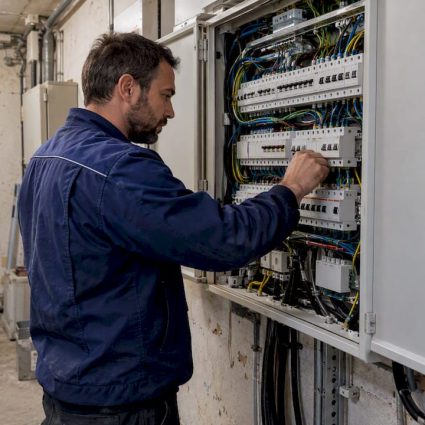
Every strong safety program starts with a clear picture of what you are actually dealing with. Before you can build a checklist, you need a facility-specific electrical risk inventory. Walk every area of your plant and document electrical panels, motor control centers, cord sets, portable equipment, and outdoor service connections. Pay particular attention to cramped mechanical rooms, areas near water or steam, and any equipment that has been modified or added since the last formal review.
Knowing where hazards live is only half the job. You also need a framework for deciding how to address them. The hierarchy of controls is the industry standard for that decision. It runs from most to least effective:
- Elimination: Remove the hazard entirely. De-energize equipment before any maintenance work.
- Engineering controls: Install barriers, improve labeling, add interlocks, and schedule preventive maintenance to reduce exposure.
- Administrative controls: Enforce written permits, conduct regular training, and establish clear procedures for energized work exceptions.
- PPE: Arc-rated clothing, insulated gloves, and face shields are the last line of defense, not the first.
Common hazards that show up repeatedly during factory risk inventories include exposed conductors on aging equipment, improper use of extension cords as permanent wiring, moisture intrusion near panels, and inadequate clearance around electrical enclosures. These are not exotic problems. They are the ones that generate citations and injuries year after year.
Understanding electrical safety basics for industrial facilities helps you frame the inventory correctly. You can also cross-reference your findings against common lightning hazards that affect outdoor equipment and service entrances, which are often missed in standard walkthroughs.
De-energize equipment whenever possible. Energized work should require written justification, a permit, and qualified personnel. The hierarchy of controls is not a suggestion — it is the foundation of every compliant safety program.
Pro Tip: Use a digital CMMS (computerized maintenance management system) to log every hazard found during your inventory, assign corrective actions, and track completion. This creates an audit-ready record that demonstrates due diligence during OSHA inspections.
Lockout/Tagout (LOTO): Non-negotiable procedures
Once risks are identified, enforcing control through LOTO becomes the linchpin of factory safety. LOTO failures are among the most cited and most costly violations in manufacturing, and they are also among the most preventable. The procedure is straightforward when followed correctly.
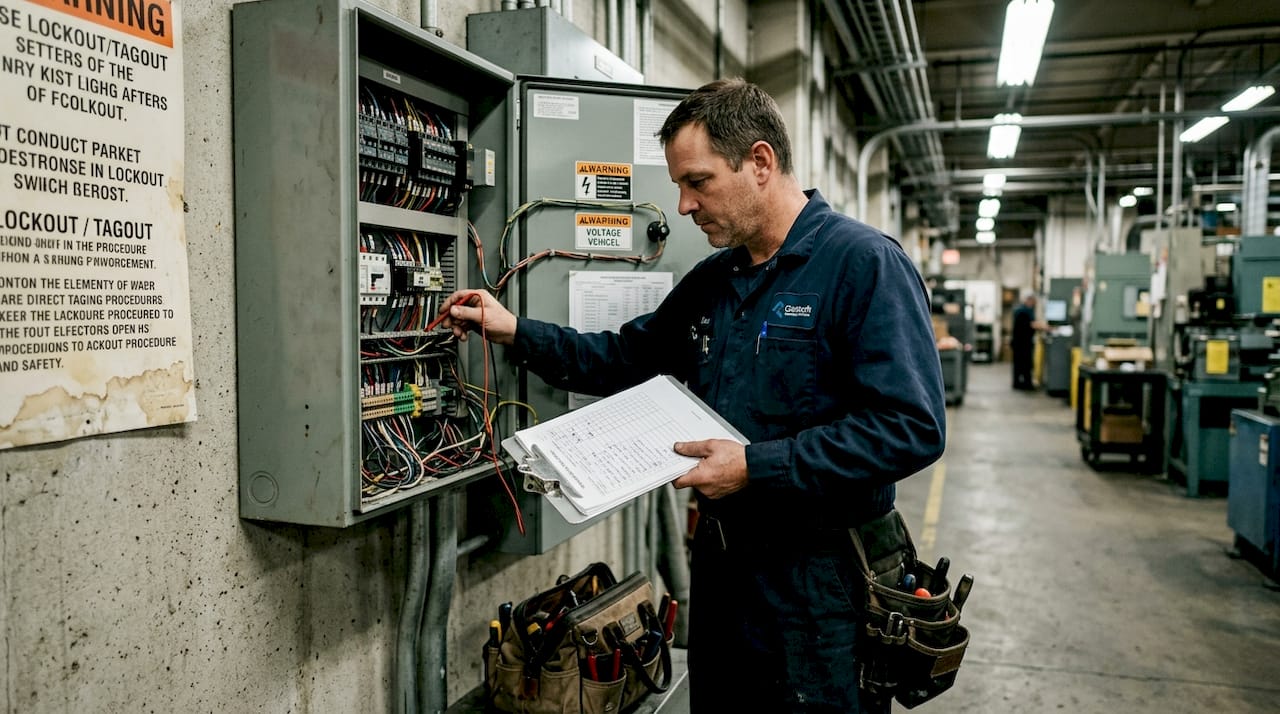
LOTO procedures require factories to identify all energy sources, interrupt the load, apply locks and tags, and verify de-energization before any maintenance begins. Here is how that looks in practice:
- Notify affected employees that maintenance is beginning and equipment will be shut down.
- Identify all energy sources for the equipment, including electrical, pneumatic, hydraulic, and stored mechanical energy.
- Shut down the equipment using normal stopping procedures.
- Isolate all energy sources by opening disconnects, closing valves, and blocking any stored energy.
- Apply lockout devices and tags to each isolation point. Each worker applies their own lock.
- Release or restrain stored energy by bleeding pressure, discharging capacitors, and blocking gravity-loaded parts.
- Verify de-energization by attempting to start the equipment and testing with a meter before touching anything.
The most common failure points in factory LOTO programs are incomplete energy source identification, shared locks that allow one worker to remove another’s protection, and skipping the verification step because it feels redundant. It is not redundant. It is the only step that confirms the process actually worked.
Manufacturing sees disproportionate OSHA citations for LOTO, machine guarding, and electrical wiring. These are not edge cases. They are the top violations in the sector, and the penalties reflect it.
Review your comprehensive safety practices to make sure your written LOTO program covers every equipment type on your floor. Cross-reference against the OSHA electrical checklist to catch gaps before an inspector does.
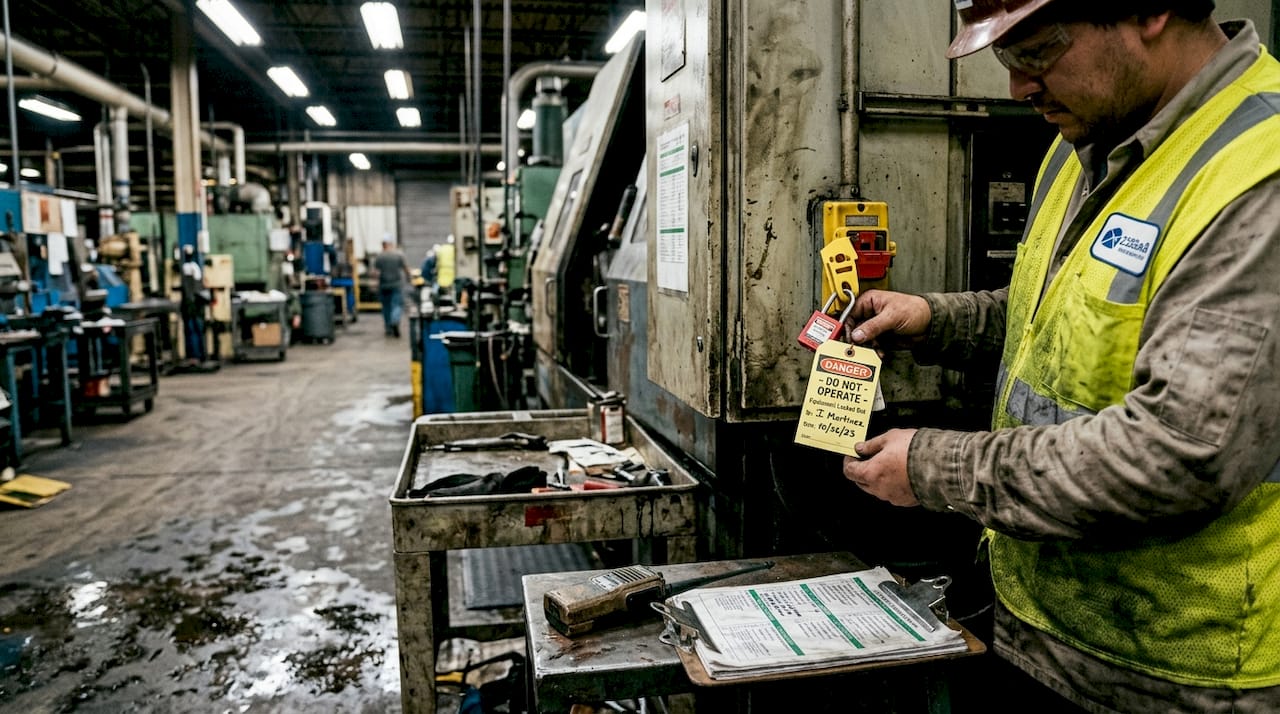
Pro Tip: Build a digital LOTO audit trail by logging every procedure execution, including who applied locks, what energy sources were isolated, and when verification was completed. This record becomes your primary defense during OSHA inspections and incident investigations.
Inspection checklist for panels, cords, and wet areas
Effective LOTO is just the beginning. Thorough ongoing inspection is your daily frontline defense. The items that generate the most citations are also the ones easiest to miss during a busy shift, which is why a structured checklist matters.
Critical inspection points:
- Electrical panels: no open knockouts, all covers in place, no exposed conductors, 36-inch working clearance maintained
- GFCI protection in all wet or damp locations, including wash-down areas and outdoor connections
- Flexible cords free of splices, taps, and frayed insulation. Replace, do not repair.
- Extension cords properly grounded, no multiple plug adapters, used only for temporary applications
- All temporary 15-20A 120V circuits protected by GFCI
- Equipment labels legible and current, including voltage ratings and hazard warnings
Panel inspections should happen daily for visible issues and on a scheduled basis for deeper checks. Annual thermographic (infrared) scans of panels and switchgear catch hot spots before they become failures, and the results should be documented with corrective action records attached.
Flexible cord requirements are a frequent citation source because they seem minor until a cord failure causes a fire or shock. Treat cord condition as a daily check item, not an annual one.
| Inspection item | Frequency | Typical OSHA fine (willful) |
|---|---|---|
| Panel covers and knockouts | Daily | Up to $16,131 per violation |
| GFCI in wet areas | Daily | Up to $16,131 per violation |
| Cord condition and splices | Daily | Up to $16,131 per violation |
| Thermographic panel scan | Annual | Varies by citation class |
| Arc flash label accuracy | After any equipment change | Up to $16,131 per violation |
For wet areas specifically, no metal ladders near energized equipment, maintain equipment spacing to prevent splash contact, and verify GFCI devices trip correctly with a tester at least monthly. Document every test. Visit the risk assessment guide to see how grounding and bonding tie into your broader inspection program.
Arc flash analysis, PPE selection, and difficult environments
Beyond routine checks, specialized analysis is critical for mitigating the most dangerous risks, especially arc flash. An arc flash event releases enormous energy in milliseconds, and the injuries it causes are severe. Compliance here is not optional.
Arc flash hazard analysis using IEEE 1584 determines the incident energy level at each piece of equipment, establishes approach boundaries, and specifies the PPE required. Analysis must cover panels, switchgear, and transformers, and it must be updated every five years or after any significant equipment change.
| PPE category | Incident energy (cal/cm²) | Minimum arc rating | Typical use |
|---|---|---|---|
| Category 1 | Up to 4 | 4 cal/cm² | Low-voltage panels, lighting circuits |
| Category 2 | Up to 8 | 8 cal/cm² | Motor control centers, small switchgear |
| Category 3 | Up to 25 | 25 cal/cm² | Medium-voltage equipment |
| Category 4 | Up to 40 | 40 cal/cm² | High-energy switchgear |
For environments where incident energy exceeds 40 cal/cm², PPE categories alone are not sufficient. Use the incident energy method rather than category tables, and justify de-energized work in writing. Tight spaces compound this problem because calculated approach boundaries may physically overlap with walls or adjacent equipment, making energized work genuinely impossible to perform safely.
NFPA 70B 2023 shifted the standard from time-based maintenance schedules to risk-based electrical maintenance programs (EMP). Condition monitoring tools like infrared scans and power quality analysis are now preferred over intrusive maintenance that can introduce new faults. This is a meaningful change for compliance officers: your maintenance records need to reflect a risk-based rationale, not just a calendar.
Review the arc flash PPE guide for industrial environments and align your program with the facility safety workflow to ensure arc flash controls connect to your broader hazard management process. Climate adaptation strategies are also worth reviewing, since extreme weather increasingly affects equipment performance and failure rates.
Pro Tip: Every time you add, replace, or reconfigure electrical equipment, trigger an arc flash study update immediately. Waiting for the five-year cycle after a system change creates a liability gap that no checklist can cover.
What most factories overlook in electrical safety
Here is the uncomfortable reality: the factories with the best checklists are not always the safest. A checklist is only as good as the culture that uses it. When supervisors treat the walkthrough as a box-checking exercise and workers do not feel safe reporting near-misses, the checklist becomes a liability document rather than a prevention tool.
The most overlooked element in factory electrical safety is near-miss reporting. A near-miss is a free lesson. It tells you exactly where your controls are failing before someone gets hurt. Factories that track and review near-misses systematically find hazards that no scheduled inspection would have caught. Pair that with safe solutions for industrial sites and you have a feedback loop that actually improves over time.
Digital traceability matters too. Static paper checklists get lost, altered, or ignored. Digital records with timestamps and photo documentation create accountability at every level.
In safety, what you do not see coming costs the most.
Build near-miss reviews into your monthly safety meetings. Make them non-punitive. The goal is pattern recognition, not blame. That shift in approach, more than any single checklist item, is what separates facilities with strong safety records from those that are always reacting.
Safeguard your facility with proven solutions
The steps above address the most common electrical hazards in factory environments, but a truly resilient safety program accounts for risks that go beyond daily inspections and LOTO procedures.

Lightning strikes, grounding failures, and surge events can disable equipment, trigger fires, and create cascading hazards that no internal checklist can prevent on its own. Indelec’s lightning protection solutions are engineered specifically for industrial facilities with critical operations, high equipment density, and zero tolerance for unplanned downtime. If your site has experienced prior incidents or operates in a high-exposure environment, lightning protection is not optional. Contact our team for a site-specific risk assessment and find out where your current program has gaps.
Frequently asked questions
What is required for daily electrical safety checks in factories?
Factories should inspect panels daily for open knockouts, missing covers, exposed conductors, proper 36-inch working clearance, and functioning GFCI protection in all wet areas.
How often should arc flash analysis be updated?
Arc flash studies must be updated every five years or immediately after any major change to electrical systems, equipment, or facility configuration.
Are extension cords allowed in factory settings?
Extension cords are permitted only when grounded, undamaged, free of splices, used without multiple plug adapters, and protected by GFCI on temporary 15-20A 120V circuits.
What makes Lockout/Tagout critical for factories?
LOTO is required to prevent accidental energization during maintenance, and it consistently ranks among the highest-cited and most penalized violations across all manufacturing sectors.