The Role of Safety in Infrastructure: A Decision-Maker’s Guide

TL;DR:
- Safety in infrastructure is a fundamental lifecycle element that influences project success and human outcomes.
- Effective safety assurance relies on structured, evidence-based processes embedded at every stage, from design to operation.
Safety in infrastructure is not a compliance checkbox. It is the structural layer that determines whether a project delivers on its promises or becomes a liability. The role of safety in infrastructure extends from the earliest design decisions through decades of operation, shaping financial performance, regulatory standing, and human outcomes alike. Yet many organizations still treat safety as a parallel track rather than a core project driver. This guide cuts through that misconception and gives infrastructure professionals a clearer, more disciplined framework for understanding how safety works at every level.
Table of Contents
- Key takeaways
- The role of safety in infrastructure: system safety assurance explained
- Leadership, culture, and the human side of safety
- What incident investigations reveal about systemic failure
- Technology and data-driven tools for infrastructure safety
- Embedding safety into investment strategy and project management
- My perspective on what safety really demands from leadership
- Protect your infrastructure with Indelec’s safety expertise
- FAQ
Key takeaways
| Point | Details |
|---|---|
| Safety is lifecycle-embedded | Effective safety assurance is built progressively from design through operations, not applied after the fact. |
| SIL allocation drives design rigor | Safety Integrity Level ratings determine how stringent your verification and validation must be at each project stage. |
| Culture shapes compliance outcomes | Leadership behavior and delegation chains determine whether safety protocols are followed or quietly bypassed. |
| Systemic failures cause most incidents | Governance gaps such as missing approvals and absent safety officers are the real culprits in major infrastructure failures. |
| Technology requires disciplined governance | AI and sensor-based monitoring tools only deliver safety value when paired with consistent inspection schedules and data review. |
The role of safety in infrastructure: system safety assurance explained
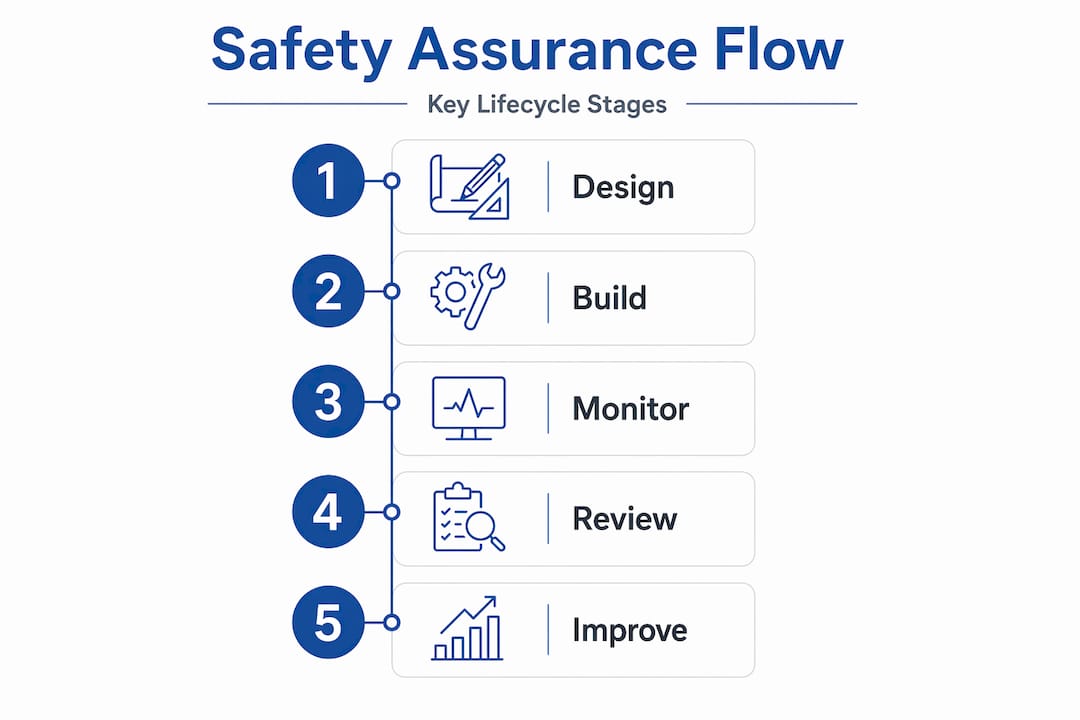
The phrase “safety management” gets used loosely, but infrastructure professionals need a more precise concept: system safety assurance. This is a structured, evidence-based process aligned with international standards such as IEC 61508 and embedded across every phase of a project’s lifecycle, from concept and design through commissioning, operation, and eventual decommissioning.
The distinction matters because safety assurance is not documentation. It is a planned series of verification activities at each project stage that generate traceable evidence to enable later validation. Progressive assurance prevents the gaps that late-stage audits routinely miss because those audits can only verify what was recorded, not what was actually done.
Here is how the lifecycle gates typically work in practice:
- Concept and design: Hazards are identified, risk tolerability is assessed, and safety functions are allocated. This is where Safety Integrity Level (SIL) ratings are assigned. SIL ratings from 1 to 4 determine the rigor of design, verification, and validation required for each safety function, with SIL 4 representing the most demanding requirements.
- Build and integration: Evidence from design is handed over formally. Residual risks are transferred with explicit statements to the next stage owner so that accountability does not disappear in the handover.
- Commissioning: Safety claims made during design are tested against real-world conditions. Gaps between theoretical models and actual behavior get identified and resolved before the asset enters service.
- Operation and maintenance: Safety performance is monitored against original assumptions. Changes to the operating environment or asset condition that affect safety integrity must trigger a formal review.
Pro Tip:When reviewing a project’s safety case, ask specifically for the residual risk register and the evidence trail connecting it to design decisions. If that document is vague or missing, the assurance process has a gap regardless of what the audit reports say.
Leadership, culture, and the human side of safety
Technical frameworks only go as far as the people implementing them. The delegation of safety responsibility flows from the asset owner down through design teams, contractors, and subcontractors. Each link in that chain either reinforces or weakens the safety culture of the project.
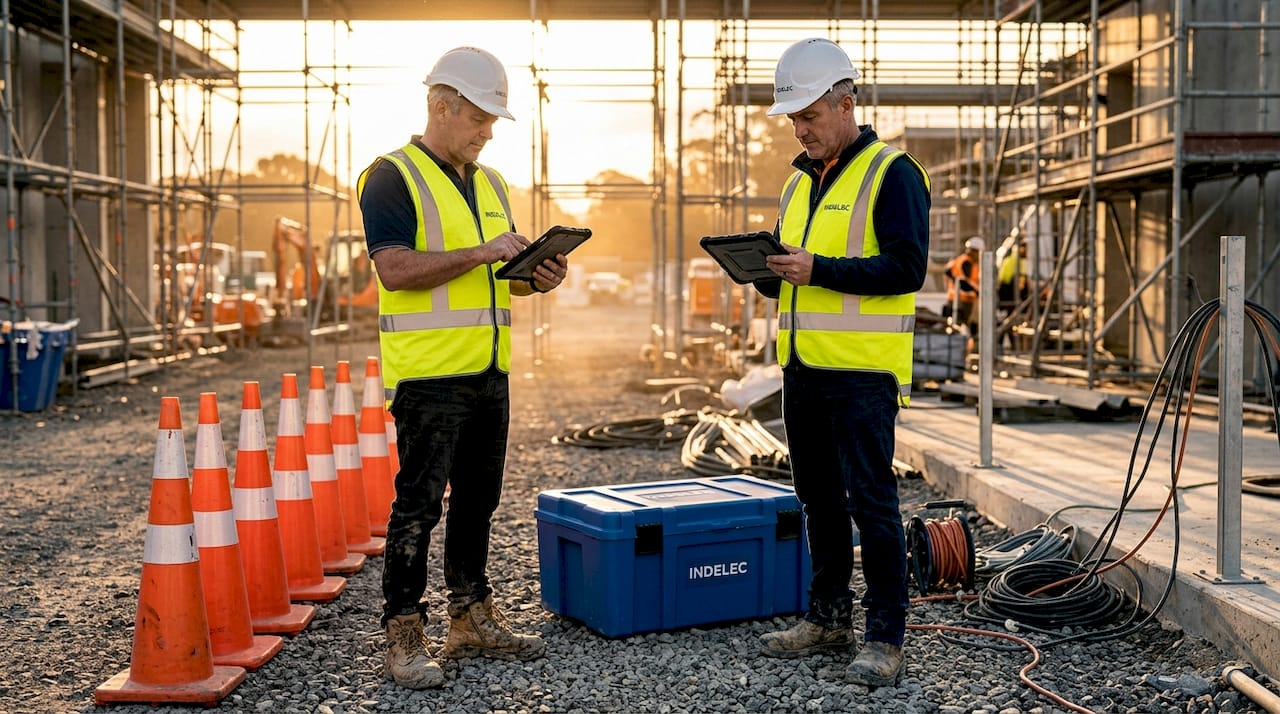
The concept of “factor of safety with attitude” captures something important here. Safety is not just a number in a calculation. It is an organizational attitude that influences how decisions get made under pressure, how non-conformances get reported, and whether front-line workers feel safe raising concerns without fear of schedule consequences.
The practical implications for decision-makers include:
- Visible leadership commitment: When project executives review safety KPIs with the same scrutiny they apply to cost and schedule, the message reaches every tier of the workforce.
- Clear accountability at every level: Ambiguous responsibility is one of the most reliable precursors to safety failures. Every party in the delegation chain needs documented obligations, not just general awareness of the rules.
- Psychological safety for reporting: Organizations where workers fear reprisal for flagging hazards accumulate unaddressed risks. Near-miss reporting rates are a leading indicator of cultural health.
- Safety as a selection criterion for procurement: Evaluating contractors on their safety culture and track record, not just their price, changes the incentive structure from the start.
The numbers behind this are stark. Falls, electrocutions, and struck-by incidents account for over 60% of construction worker deaths annually in the U.S., and eliminating these hazards could save roughly 600 lives per year. Those are not random events. They are the downstream result of cultural and procedural decisions made months earlier.
Pro Tip:Treat your near-miss reporting rate as a safety performance indicator. A rising near-miss count after a culture initiative often signals improvement, because it means workers are reporting what was always happening rather than staying silent.
What incident investigations reveal about systemic failure
When a major infrastructure safety incident occurs, the initial narrative usually focuses on the immediate cause: equipment failure, operator error, adverse conditions. Investigations that go deeper almost always find something more troubling. The real causes are systemic, rooted in governance weaknesses that developed long before the incident.
A fatal crane collapse investigation illustrates this clearly. The inquiry found systemic failures including skipped procedural steps, absent onsite engineers, missing safety officer oversight, and retroactive approvals that normalized bypassing controls. No single person made one catastrophic decision. The system had been quietly degrading for some time.
“Lack of onsite engineers and retroactive approvals are red flags that correlate directly with systemic failure in infrastructure project safety.”
The governance gaps that show up most frequently in incident investigations include:
- Missing or after-the-fact sign-offs on safety-critical procedures
- Absence of qualified safety officers during high-risk operations
- Diffuse responsibility where everyone assumes someone else is covering a critical check
- Inadequate independent inspections that might catch problems before they escalate
What this means practically: your project’s safety governance should be auditable in real time, not reconstructed retrospectively. Independent inspections, real-time monitoring, and unambiguous onsite safety representation are not overhead. They are the conditions that allow your other safety investments to function as designed. A facility safety workflow built around these principles closes the governance gaps that investigations consistently identify.
Technology and data-driven tools for infrastructure safety
The monitoring capabilities available to infrastructure teams today are meaningfully better than what existed a decade ago, but the technology only creates value when paired with disciplined governance. That distinction matters because organizations routinely invest in sensing and analytics tools and then fail to act consistently on what those tools surface.
| Technology | Application | Safety benefit |
|---|---|---|
| AI dashcam analytics | Highway defect and risk detection | Monitors 40,000+ km of road continuously, supplemented by night surveys |
| Optical fiber sensing | Pipeline leakage detection | Real-time identification of pressure anomalies before failure |
| Acoustic monitoring | Structural integrity of pipelines | Early warning of material stress or external damage |
| Drone inspections | Remote asset condition assessment | Reduces accident risks from external damage and operational instability |
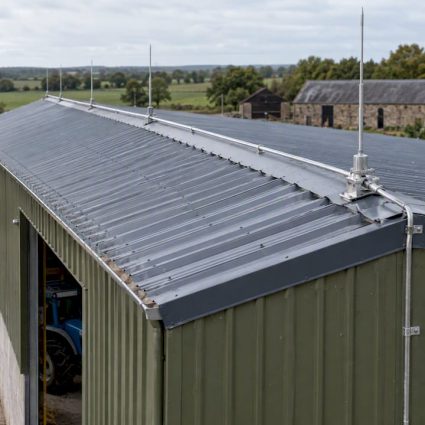
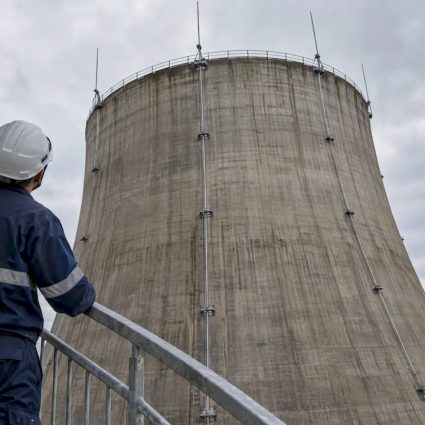
| Lightning protection systems | Protection of exposed infrastructure | Prevents catastrophic electrical failure from direct strikes |
The AI dashcam example from India’s highway authority demonstrates both the potential and the governance requirement. The system provides continuous defect detection at scale, but the authority also maintains scheduled night surveys for signage and lighting assessment. The point is that AI-driven analytics require structured inspection cadences alongside them to translate data into actual safety improvements.
For pipeline infrastructure, optical fiber and acoustic sensing paired with drone inspections now offer a layered approach to detecting leakage, external damage, and structural stress. The technology exists. The organizational discipline to act on it consistently is the harder variable to manage.
Pro Tip:When evaluating safety monitoring technology, build the governance requirement into the procurement decision. Define who reviews the data, how often, and what the escalation protocol is before the system goes live. Technology without a defined response workflow is monitoring theater.
Embedding safety into investment strategy and project management
The financial case for treating safety as a core project variable, rather than a compliance cost, is now well-supported by evidence. Embedding road safety in infrastructure financing improves returns, reduces operational disruption, and supports ESG commitments that increasingly influence access to capital. Safety becomes a measurable performance variable tied directly to project outcomes.
For decision-makers, the practical path to safety-integrated project management involves these steps:
- Include safety KPIs in procurement specifications. Contractors should be required to demonstrate their safety management capability, not just their price competitiveness.
- Link safety performance to payment mechanisms. Milestone-based contracts that include safety performance metrics create a financial incentive aligned with the project’s actual risk profile.
- Track leading and lagging indicators separately. Lagging indicators such as incident rates tell you what went wrong. Leading indicators such as inspection completion rates, near-miss reports, and training completion tell you where you are heading.
- Model insurance and litigation risk in your financial projections. Organizations that consistently manage safety well pay less for coverage and carry less legal exposure. That difference compounds across a portfolio.
- Report safety performance alongside financial performance to boards and investors. Elevating safety to board-level visibility changes the conversation from operational management to strategic governance.
A useful comparison: projects that treat safety as a compliance function typically hit minimum regulatory standards and stop there. Projects that treat safety as a performance variable set targets above minimums, track variance, and use that data to inform future investment decisions. The second approach generates better data, fewer incidents, and stronger stakeholder confidence. You can see how a structured approach to electrical protection upgrades mirrors this same logic, building safety progressively from planning through to full operation.
My perspective on what safety really demands from leadership
I’ve spent decades working with infrastructure teams across industrial, commercial, and critical facility sectors, and the pattern I keep seeing is the same one. Organizations invest in the technical side of safety, the standards, the equipment, the documentation, and then under-invest in the organizational side. The leadership behaviors and cultural conditions that determine whether those technical systems actually function as designed.
What I’ve learned is that safety culture is not a soft issue. It is a systems variable. When leadership treats schedule pressure as a legitimate reason to defer a safety check, that decision propagates down every tier of the project. By the time it reaches the worker on site, it has been normalized. No one made a decision to be unsafe. The system made it for them.
The future of infrastructure safety will combine increasingly powerful monitoring technology with a renewed focus on human factors. Neither works without the other. You can have real-time sensing across every asset and still miss the failure if the governance around acting on that data is weak. And you can have strong safety culture and still take on risks that better technology would have detected earlier.
My conviction, grounded in what I’ve seen work and what I’ve seen fail, is that decision-makers need to stop asking “Are we compliant?” and start asking “Are we safe?” They are not the same question, and the gap between them is where most major incidents live.
— Indelec
Protect your infrastructure with Indelec’s safety expertise

Lightning strikes represent one of the most underestimated yet consequential risks in infrastructure safety planning. Indelec has been designing and deploying protection systems for critical infrastructure since 1955, with a portfolio covering industrial facilities, transport hubs, energy installations, and commercial assets worldwide. Our lightning protection systems are engineered to meet international safety standards and integrate directly with your broader risk management framework. Whether you need a full system design, a compliance audit, or technical consulting to meet lightning safety standards, Indelec’s team brings the depth of experience your project requires. Explore our professional protection services to see how we support infrastructure resilience from design through operation.
FAQ
What is system safety assurance in infrastructure?
System safety assurance is a structured, evidence-based process embedded across every phase of an infrastructure project’s lifecycle. It accumulates verified safety evidence from design through operation, ensuring risks are formally managed at each stage rather than discovered after the fact.
How are Safety Integrity Levels assigned to infrastructure systems?
Safety Integrity Levels (SIL 1 to SIL 4) are allocated based on the consequence and likelihood of a safety function failure. Higher SIL ratings require more stringent design, verification, and validation practices to meet the required risk reduction.
What causes most major infrastructure safety failures?
Systemic failures, including missing approvals, absent onsite safety officers, and retroactive authorizations, are the primary drivers of major infrastructure incidents. Individual errors are typically symptoms of deeper governance and organizational weaknesses.
How does safety investment affect infrastructure project returns?
Embedding safety measures into infrastructure financing and project management improves financial returns, reduces operational disruption, and supports ESG goals. Safety functions as a measurable performance variable that reduces insurance exposure and strengthens long-term operational reliability.
What role does technology play in infrastructure safety monitoring?
Technologies such as AI dashcam analytics, optical fiber sensing, and drone inspections provide continuous monitoring capabilities that reduce accident risks and support compliance. Their effectiveness depends on disciplined governance, including defined review schedules and clear escalation protocols when risks are detected.