Protection System Failure Signs: A Facility Manager’s Guide
TL;DR:
- Protection system failure signs indicate early degradation symptoms that can threaten safety and compliance. Recognizing technical, physical, and behavioral warning indicators early helps prevent full system failures and unplanned shutdowns. Maintaining a pattern-based monitoring approach supports proactive management and reduces the risk of catastrophic events.
A protection system failure sign is a measurable or observable symptom that a safety or security system is degrading and may soon fail, threatening both operational continuity and regulatory compliance. Facility managers and maintenance personnel in industrial and commercial settings need to recognize these early warning indicators before they escalate into full system failures. Standards bodies and organizations like Indelec have long emphasized that early warning signs such as frequent false alarms, intermittent communication errors, and inconsistent sensor readings can appear weeks or months before a complete breakdown. Catching these signals early is the difference between a scheduled repair and an unplanned shutdown.
What is a protection system failure sign?
A protection system failure sign is any technical, physical, or behavioral symptom that indicates a protection system is no longer performing as designed. The industry term for this concept is “precursor indicator,” and it covers everything from sensor drift to physical corrosion. Recognizing precursor indicators early is the foundation of any sound maintenance program under standards like IEC 62305, which governs lightning protection system integrity worldwide.
Failure signs rarely appear as single dramatic events. They accumulate quietly over time, building a pattern that trained maintenance personnel can learn to read. The critical skill is not just spotting one anomaly but connecting multiple weak signals into a coherent picture of system health.
What are the common technical and physical signs of failure?
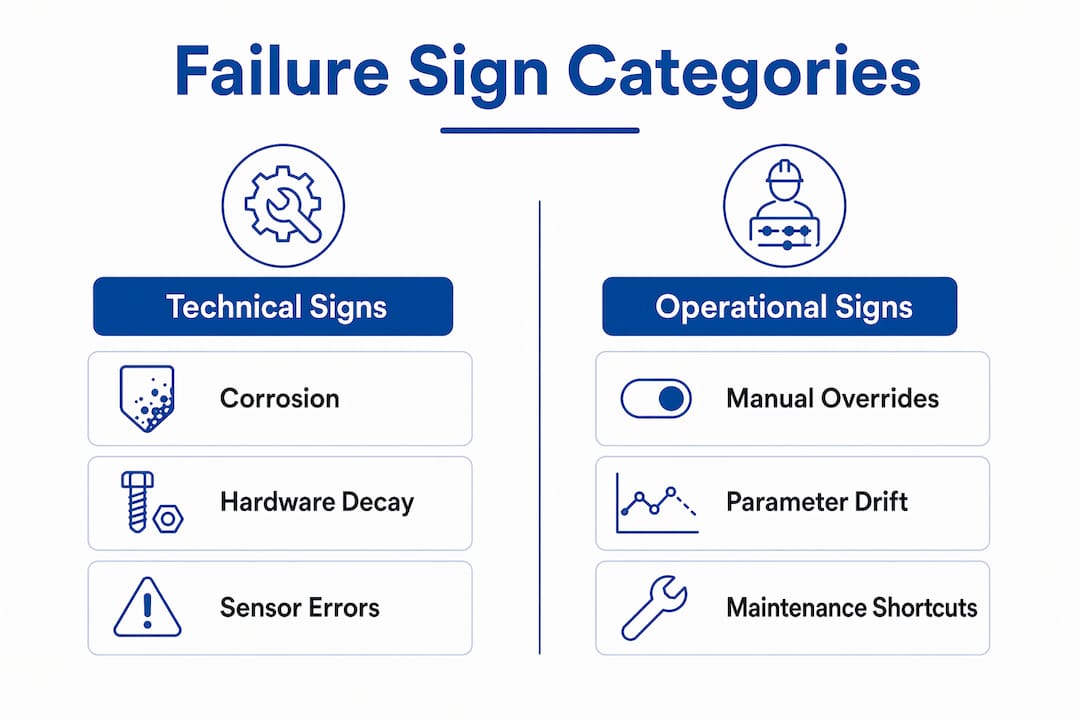
Technical and physical deterioration are the most visible categories of protection system issues. Maintenance personnel who know what to look for can catch problems long before they become safety events.
Technical warning signs include:
- Frequent false alarms or intermittent sensor readings that cannot be traced to a single environmental cause
- Communication errors between field devices and control panels, especially if they occur in patterns tied to temperature or load cycles
- Inconsistent response times during scheduled tests, where the system passes on paper but shows marginal performance
- Repeated circuit breaker trips or relay activations with no corresponding fault event in the protected zone
- Setpoint drift, where detection thresholds shift gradually away from their original calibrated values
Physical warning signs include:
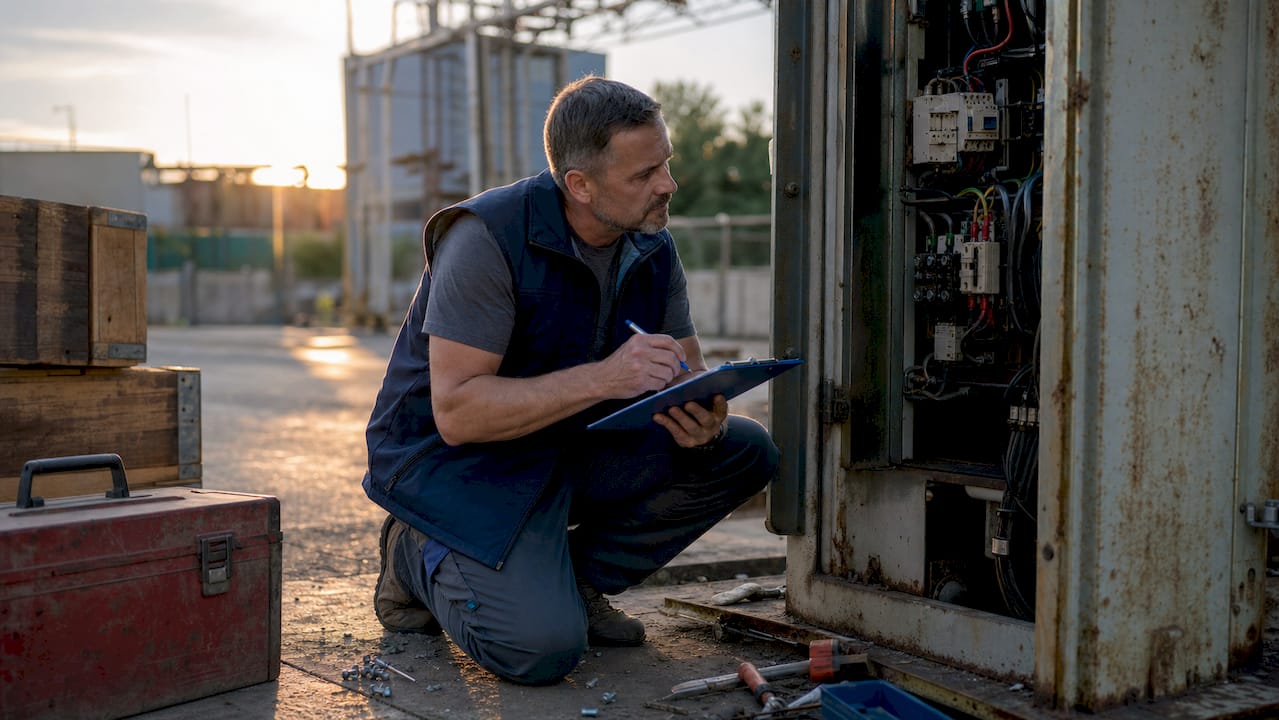
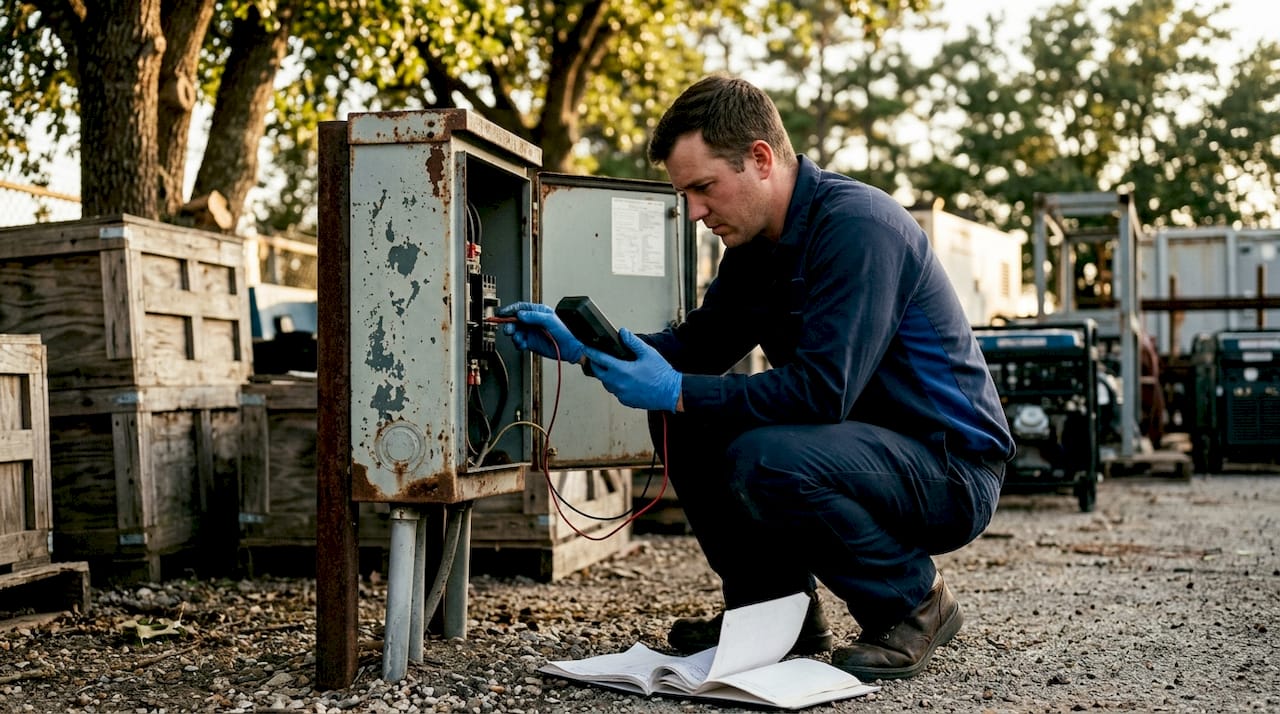
- Rusted housings, exposed wiring, and loose hardware on field devices or junction boxes
- Discoloration or heat marks around connection points, indicating thermal stress
- Cracked or degraded conduit and cable insulation, particularly in outdoor or high-humidity environments
- Missing or damaged grounding connections, which are especially critical in lightning protection systems
Physical decay is not cosmetic. Professional assessments classify rusted housings and loose hardware as critical structural vulnerability indicators, meaning they directly compromise the system’s ability to perform its protective function. A corroded ground connection on a lightning rod, for example, can render an entire protection zone ineffective even though the rod itself looks intact.
Pro Tip:Schedule a detailed visual inspection at least twice per year, and always conduct one after any severe weather event. Document findings with photographs and timestamps so you can track the rate of deterioration over time.
How do operational behaviors reveal underlying protection system issues?
Operational patterns are often the earliest and most overlooked category of failure indicators. When maintenance teams start working around a system rather than with it, the system is already in trouble.
Recurring non-corrected trouble codes and increasing manual overrides are two of the clearest behavioral signs that a protection system is losing reliability. Each unresolved trouble code represents a fault the system has flagged but the team has not fixed. Over time, these accumulate into a backlog that masks new, more serious faults.
Common behavioral warning signs include:
- Trouble codes that get acknowledged and reset without root cause investigation
- Manual bypasses installed as temporary fixes that become permanent features
- Frequent parameter adjustments to suppress nuisance alarms rather than address their source
- Maintenance logs showing the same component reset or replaced repeatedly within a short period
- Verbal workarounds passed between shift teams that never make it into written documentation
The danger of manual overrides is subtle but serious. A bypass installed to keep a production line running during a sensor fault may still be active six months later, leaving a gap in the protection zone that nobody on the current team knows about. Systems can pass periodic tests yet still fail real-world conditions precisely because undocumented workarounds are invisible to standard test protocols.
Operational shortcuts also create what engineers call accumulated fragility. Each workaround adds a small amount of hidden risk. No single shortcut causes a failure, but the combined weight of many unresolved issues can push a system past its breaking point during the one event it was designed to handle.
Pro Tip:Audit your system’s setpoints and parameter logs quarterly. Compare current values against the original commissioning documentation. Any drift greater than the manufacturer’s tolerance band is a sign the system has moved out of alignment with its design intent.
What is the difference between nuisance alarms, malfunctions, and imminent failure signs?
Correctly categorizing a warning sign determines how fast you respond and what resources you deploy. Treating a nuisance alarm as a malfunction wastes time. Treating an imminent failure sign as a nuisance alarm can be catastrophic.
False alarms mean the system is still responsive but may be compromised, while system malfunctions indicate deeper hardware or software failures. That distinction matters because the response path is completely different. A nuisance alarm calls for calibration review. A malfunction calls for component replacement and a full system audit.
| Symptom | Likely cause | Recommended action |
|---|---|---|
| Occasional false alarm, single zone | Environmental interference or sensor drift | Recalibrate sensor, document frequency |
| Repeated false alarms, multiple zones | Systemic setpoint drift or wiring fault | Full parameter audit, inspect wiring |
| Trouble code with no alarm | Control panel or communication fault | Diagnose panel, check field device connection |
| System fails scheduled test | Hardware degradation or software fault | Replace component, retest, escalate if repeated |
| Manual override in place | Unresolved fault or design mismatch | Remove override, investigate root cause immediately |
Nuisance alarms and setpoint drift are rarely calibration issues alone. They signal that the original system design assumptions no longer fit the current operational reality. A detection threshold set for a warehouse storing dry goods will behave differently after that warehouse starts storing chemicals with different vapor profiles. The alarm is not wrong. The system’s configuration is simply out of date.
Imminent failure signs are distinguished by their combination and acceleration. A single false alarm is a nuisance. Three false alarms in one week, combined with a trouble code and a recent manual override, is a pattern pointing toward imminent failure. Maintenance teams that track these combinations rather than individual events catch failures before they happen.
How can facility managers proactively monitor and respond to failure signs?
Proactive monitoring requires a structured approach, not just periodic inspections. The following steps give maintenance teams a repeatable framework for staying ahead of protection system issues.
Establish a documented baseline. Record all system parameters, setpoints, and test results at commissioning or after any major upgrade. This baseline is the reference point for detecting drift. Without it, you cannot tell whether a current reading is normal or abnormal.
Implement continuous monitoring where possible. Modern protection systems support remote monitoring that flags anomalies in real time. Continuous data collection enables pattern recognition approaches that reactive inspections cannot replicate.
Treat every false alarm as data. Log the time, zone, environmental conditions, and any recent maintenance activity. A single false alarm may be noise. Three false alarms with a common variable are a signal.
Conduct root cause analysis on every trouble code. Do not reset and move on. Assign a technician to investigate, document the finding, and close the loop with a corrective action. Uncorrected trouble codes are one of the clearest signs of a system slowly losing readiness.
Review compliance against current standards. IEC 62305 for lightning protection and NFPA 72 for fire alarm systems both specify inspection and testing intervals. Indelec recommends regular maintenance reviews to confirm that systems remain compliant as operational conditions change.
Preserve institutional knowledge. Document every modification, bypass, and parameter change with the rationale behind it. Loss of institutional knowledge regarding protection system design rationale often results in safety compromises through undocumented modifications.
Schedule third-party assessments annually. Internal teams develop blind spots. An external assessment brings fresh eyes and often catches issues that in-house personnel have normalized over time.
Key Takeaways
A protection system failure sign is a precursor indicator that a system is degrading, and catching these signs early through pattern recognition and documented monitoring is the most reliable way to prevent failures before they threaten safety or compliance.
| Point | Details |
|---|---|
| Define failure signs clearly | A failure sign is any measurable symptom of system degradation, not just a complete breakdown. |
| Physical decay is high priority | Rusted housings, loose wiring, and damaged grounding connections are critical vulnerability indicators requiring immediate action. |
| Behavioral patterns reveal drift | Recurring trouble codes, manual overrides, and undocumented workarounds signal accumulated system fragility. |
| Distinguish alarm types | Nuisance alarms, malfunctions, and imminent failure signs each require a different response path and urgency level. |
| Proactive monitoring prevents failures | Continuous monitoring, documented baselines, and root cause analysis catch failure patterns before they become safety events. |
What experience with protection systems has taught us
The most dangerous protection system failure is the one nobody sees coming. After decades of working with industrial and commercial facilities, the pattern Indelec observes most often is not dramatic hardware failure. It is slow-building fragility that accumulates through a hundred small decisions, each one reasonable in isolation.
A technician resets a trouble code to keep the line running. A supervisor approves a temporary bypass during a busy production period. A parameter gets adjusted to stop a nuisance alarm from interrupting a shift. None of these decisions feels significant at the time. Collectively, they create a system that looks compliant on paper but has quietly drifted far from its design intent.
The piece that most maintenance teams underestimate is institutional knowledge loss. When the technician who installed the system retires, the rationale behind every non-standard configuration leaves with them. The team that inherits the system sees the workarounds but not the reasons for them. They work around the workarounds. The fragility compounds.
What actually works is treating failure signs as a language the system uses to communicate its condition. False alarms are not annoyances to suppress. They are data points. Trouble codes are not administrative tasks to clear. They are diagnostic signals. Facilities that build a culture of reading that language, documenting what they find, and acting on patterns rather than individual events consistently outperform those that rely on scheduled inspections alone. The electrical protection innovations available today make continuous monitoring more accessible than ever. The limiting factor is almost never technology. It is organizational commitment to taking early warning signs seriously.
— Indelec
Indelec’s solutions for protection system reliability
Facility managers who want to move from reactive troubleshooting to proactive protection system management have a clear starting point.

Indelec has specialized in electrical protection since 1955, with a focus on lightning protection systems for industrial and commercial facilities. The Prevectron3 air terminal, built on Indelec’s patented OptiMax technology, is designed to deliver consistent, verifiable performance across the full range of conditions that facility managers face. Indelec’s services team also provides installation, maintenance, and certification support, helping facilities stay aligned with IEC 62305 and other applicable standards. If your facility’s protection system is showing any of the warning signs covered here, Indelec’s compliance testing requirements page is a practical next step for understanding your current obligations and options.
FAQ
What is a protection system failure sign?
A protection system failure sign is any measurable or observable symptom indicating that a safety or security system is degrading and may fail. Common examples include frequent false alarms, recurring trouble codes, physical corrosion, and undocumented manual overrides.
How early do failure signs appear before a system fails?
Early warning signs like false alarms and intermittent sensor errors can appear weeks or months before a full protection system failure. Tracking these patterns over time gives maintenance teams enough lead time to intervene before a safety event occurs.
What is the difference between a nuisance alarm and a real failure sign?
A nuisance alarm means the system is still responsive but may be misconfigured or drifting, while a malfunction points to deeper hardware or software failure. The key distinction is whether the symptom is isolated and correctable through calibration or part of a broader pattern requiring component-level investigation.
Can a system pass its scheduled tests and still be at risk of failure?
Yes. Systems can pass periodic tests yet still fail under real-world conditions when undocumented workarounds and misaligned controls are present. Relying solely on scheduled test results without reviewing operational logs and parameter history creates a false sense of compliance.
How often should facility managers audit protection system parameters?
Quarterly parameter audits are the recommended minimum for most industrial and commercial protection systems. Any value that has drifted beyond the manufacturer’s tolerance band since the last audit is a direct indicator that the system needs recalibration or redesign review.