INDELEC Responds to Recent Publication on the Cachoeira Paulista Lightning Research Campaign
Putting the Cachoeira Paulista Results into Scientific Perspective
INDELEC has published a new technical position paper addressing the recent scientific publication*”Revisiting test data of ESE rods in Cachoeira Paulista (Brazil, 2000-2005)”*, which reexamines data collected during the renowned Brazilian rocket-triggered lightning research campaign conducted between 2000 and 2005.
As one of the industrial partners involved in the original program, INDELEC welcomes scientific debate and recognizes the significant contribution of the Cachoeira Paulista campaign to the understanding of lightning attachment processes. However, the company believes it is important to place the findings in their proper scientific context.
Research Program, Not a Product Certification Test
The Cachoeira Paulista project was established as a scientific research initiative aiming to improve the understanding of lightning behavior through rocket-triggered lightning experiments. It was never designed as a certification program intended to validate or invalidate a particular lightning protection technology.
A key point raised by INDELEC is the limited number of lightning attachment events recorded during the campaign. While 57 rocket launches were conducted over five years, only 21 successfully triggered lightning, and only two altitude-triggered flashes attached directly to objects on the test platform. Such a small dataset cannot provide statistically robust conclusions regarding the comparative performance of lightning protection systems.
Advancing Lightning Science Through Continuous Research
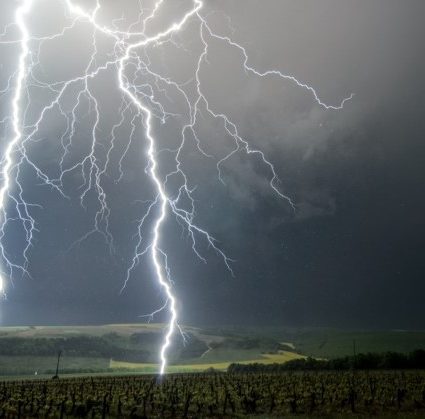
Lightning remains one of nature’s most complex phenomena. Despite decades of research, many aspects of lightning initiation, propagation, and attachment mechanisms are still the subject of ongoing scientific investigation. Advances in high-speed imaging, sensing technologies, and data acquisition systems continue to reveal new insights into the physics of lightning.
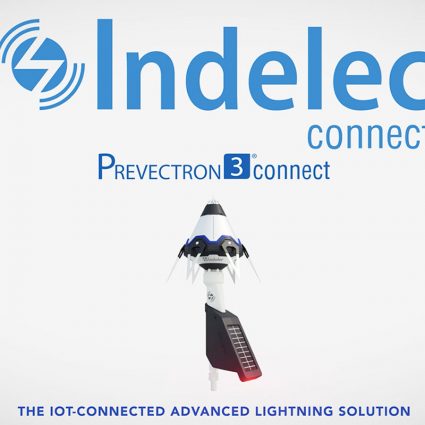
For INDELEC, the true value of the Cachoeira Paulista campaign lies in the knowledge gained from the observations made during the research. The findings contributed to the evolution of successive generations of INDELEC lightning protection technologies, helping improve products from the Millennium range to the latest Prevectron®3 generation incorporating OptiMax® technology.
Moving Beyond Triggered Lightning Experiments
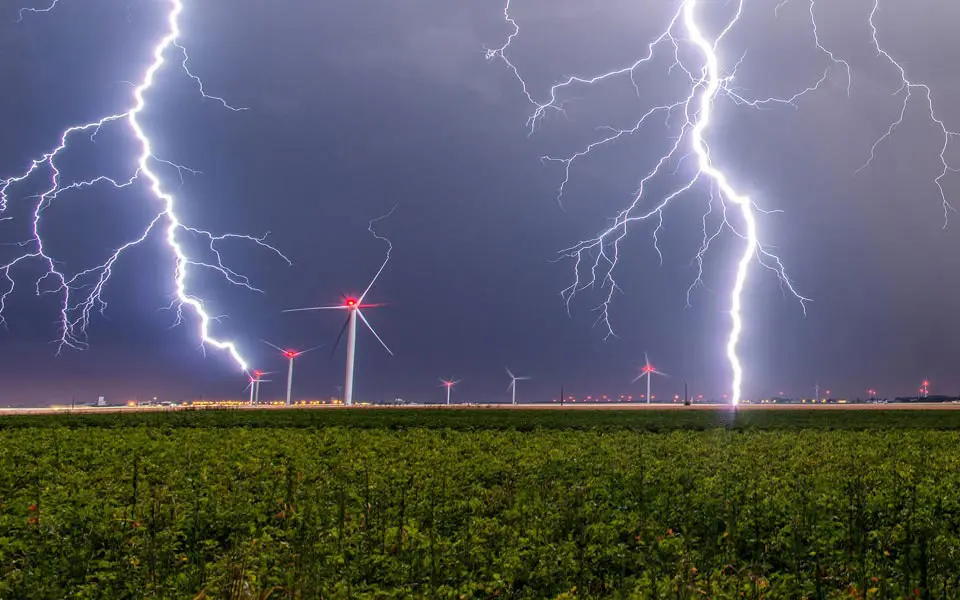
While triggered-lightning experiments remain an essential research tool, they cannot fully reproduce the complexity and variability of natural lightning conditions. Factors such as environmental conditions, terrain, wind, soil characteristics, and the geometry of surrounding structures all influence lightning attachment processes.
INDELEC believes that the future of lightning research lies in the analysis of large-scale real-world data collected under actual operating conditions rather than relying solely on a limited number of controlled experiments.
The Era of Connected Lightning Protection
One of the most significant developments in recent years has been the emergence of connected lightning protection systems.
INDELEC’s latest generation of connected air terminals enables continuous monitoring of lightning protection installations installed worldwide. These systems create opportunities to collect and analyze data from hundreds of real lightning events across diverse climates, environments, and installation configurations.
Such an approach provides access to significantly larger and more representative datasets than those available through historical triggered-lightning campaigns. It also offers researchers the possibility to study lightning behavior under genuine operating conditions, helping improve both scientific understanding and protection technologies.
A Continued Commitment to Scientific Integrity
INDELEC has always supported independent scientific research and continues to collaborate with researchers, laboratories, and technical experts around the world. While recognizing the scientific value of the Cachoeira Paulista experiments, the company considers that the limited number of recorded events does not justify definitive conclusions regarding the effectiveness of any lightning rod technology.
As connected technologies open new opportunities for collecting unprecedented quantities of field data, INDELEC remains committed to advancing lightning science through rigorous research, innovation, and evidence-based engineering.
The complete position paper,“INDELEC’s Position on Recent Publications Discussing ESE Lightning Protection Systems”, is now available for download and provides a detailed analysis of the scientific context, limitations of historical test campaigns, and the future role of connected lightning monitoring systems in lightning research.
Download the full paper:Reply to Cachoeira Paulista article.pdf