Lightning protection maintenance: a complete workflow guide
TL;DR:
- A robust lightning protection system relies on detecting corrosion, grounding issues, and component degradation before failure. Implementing a standardized inspection workflow with proper tools, documentation, and integration into a maintenance system ensures compliance and system reliability. Regular, comprehensive inspections, especially after lightning strikes and in high-risk environments, prevent costly damages and enhance safety.
A single undetected corroded conductor or a grounding electrode that has drifted above safe resistance thresholds can render your entire lightning protection system (LPS) useless in the moment it’s needed most. When a direct strike hits an unprotected facility, the consequences cascade fast: equipment failures, fires, production shutdowns, and potential liability. The good news is that a structured preventive maintenance workflow eliminates most of these risks before they become disasters. This guide walks you through everything from pre-inspection setup to continuous improvement, giving your team a practical, compliance-ready process.
Table of Contents
- What you need before you start
- Step-by-step preventive maintenance workflow
- Special considerations: frequency, edge cases, and environments
- Documentation, reporting, and continuous improvement
- What most workflows miss: the integration factor
- Ready to optimize your lightning protection maintenance?
- Frequently asked questions
Key Takeaways
| Point | Details |
|---|---|
| Standardized workflow | A structured preventive maintenance process reduces risks and ensures consistent compliance. |
| Environment matters | Facilities in high-lightning or harsh climates require more frequent LPS inspections. |
| Post-strike response | After any lightning incident, a full inspection is mandatory—regardless of visible damage. |
| Digital documentation | Using CMMS or digital tools minimizes overlooked steps and eases compliance reporting. |
| Integration boosts uptime | LPS maintenance is most reliable when integrated with overall facility safety routines, not managed in isolation. |
What you need before you start
Before executing a maintenance workflow, it’s critical to ensure you have everything required for a thorough, safe, and standardized process. Showing up to a site without the right tools or documentation is not just inefficient, it’s a compliance risk.
Tools and equipment checklist
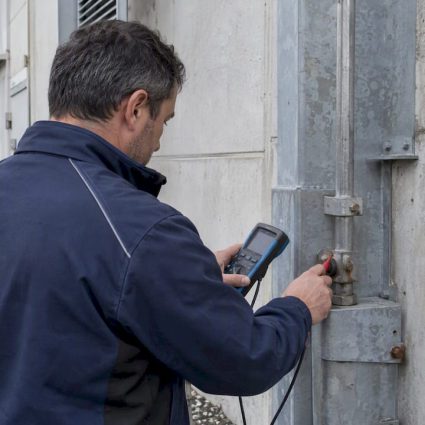
Your technicians need more than a visual eye. Here’s what a proper LPS inspection kit looks like:
- Earth resistance meter (for measuring ground electrode resistance)
- Continuity tester or low-resistance ohmmeter (to verify conductor integrity)
- Clamp meter (for non-intrusive current testing)
- High-resolution camera (to document corrosion, physical damage, and connection quality)
- Tape measure and inspection mirror (for hard-to-reach conductors and bonds)
- PPE kit: insulated gloves, safety glasses, hard hat, and non-conductive footwear
- Torque wrench (to verify mechanical connection tightness on clamps and bonding lugs)
- Surge protection device (SPD) tester (to assess SPD condition without full replacement)
Pro Tip: Pre-calibrate your resistance meters against a known reference before each inspection cycle. An uncalibrated meter can give you a false “pass” on a failing ground electrode, and that’s a serious problem during a storm event.
Documentation and standards alignment
A robust maintenance program rests on solid documentation. You need a defined template before the first technician sets foot on site. Your facility safety workflow should already reference the applicable standards, but make sure you’ve pulled the current versions of local codes and international guidelines before each cycle.
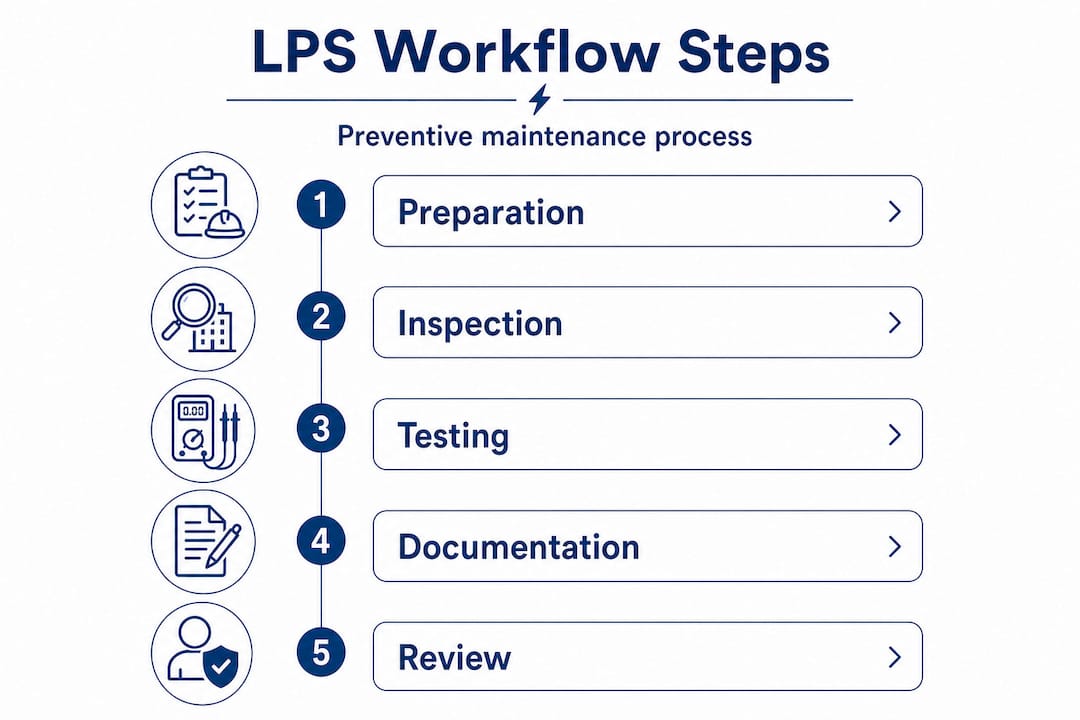
Key standards and references to have on hand include IEC 62305 (international lightning protection), NFPA 780 (US installations), and EN 50164 (component specifications). Cross-reference these against your local authority having jurisdiction (AHJ) requirements. The lightning protection standards page provides a consolidated reference if you need to verify which editions apply to your facility type.
| Preparation element | Minimum requirement | Best practice |
|---|---|---|
| Inspection tools | Basic resistance meter + camera | Full calibrated kit with SPD tester |
| Documentation template | Paper checklist | CMMS-integrated digital form with photo fields |
| Standards reference | Local code only | IEC 62305 + NFPA 780 + local AHJ |
| Scheduling | Calendar-based (annual) | Risk-based with trigger protocols |
| Crew training | Aware of LPS basics | Certified inspectors with LPS-specific training |
Scheduling considerations
Never schedule LPS inspections during active weather events or within 24 hours of a forecast storm. Beyond the obvious safety risk, wet conditions skew ground resistance readings significantly. Dry soil conditions produce the most accurate baseline measurements. Also factor in site accessibility: rooftop air terminals, tall structures, and confined ground electrode pits all require specialized access equipment and may need coordination with operations to avoid interference with production schedules.
Step-by-step preventive maintenance workflow
With preparation handled, follow this practical and standards-driven workflow to ensure thorough inspections and compliance. The step-by-step lightning protection guide offers additional context on each phase below.
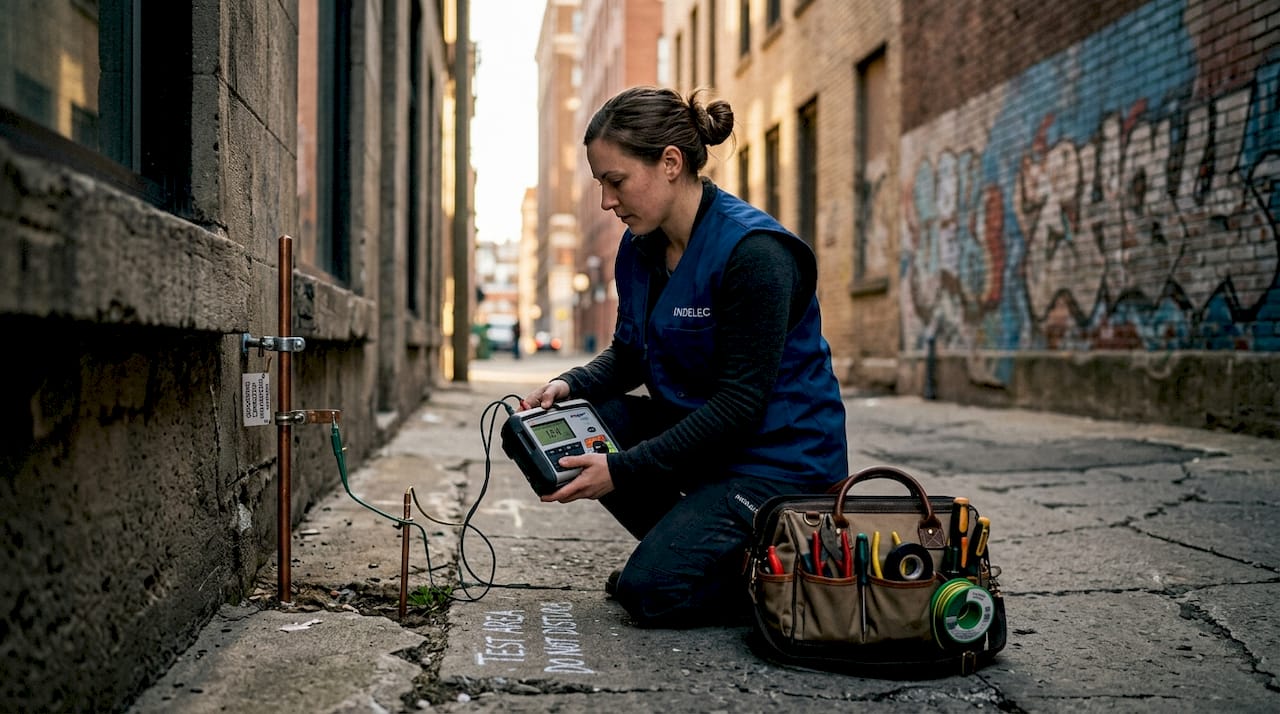
The following sequence maps directly to the standard LPS inspection workflow, which covers six core steps: visual inspection, continuity checks, ground resistance measurement, SPD evaluation, documentation, and post-strike protocol.
The six-step workflow
Visual inspection of air terminals, conductors, and bonds. Walk the entire conductor path from air terminal to ground electrode. Look for physical damage, corrosion (especially at connection points), missing fasteners, and any conductor that has been displaced by maintenance work on other building systems. Pay close attention to dissimilar metal connections, which corrode faster. Flag any conductor that shows green or white oxide buildup for immediate follow-up.
Continuity testing of all conductors and bonding connections. Use your low-resistance ohmmeter to verify that each conductor segment reads within acceptable limits. Any resistance above 0.2 ohms across a bonding connection warrants investigation. Continuity issues often hide inside conduit runs or inside walls where visual inspection can’t reach. Map your test points against your as-built drawings to ensure full coverage.
Ground resistance measurement. This is your most critical data point. Use the fall-of-potential method or a stakeless clamp method depending on your site layout. Acceptable thresholds vary by standard and facility type, but most codes specify a maximum of 10 ohms for general facilities and lower values for critical infrastructure. Measure at each electrode separately if the system allows isolation. Log the readings with date and soil moisture conditions for trend analysis.
Surge protection device inspection. SPDs degrade with each transient event, not just direct strikes. Check status indicators on each device, test leakage current where your meter supports it, and visually inspect for signs of thermal damage. A unit that looks fine externally may be depleted internally. If your SPDs are over five years old in a high-activity lightning zone, treat them as suspect regardless of visual condition.
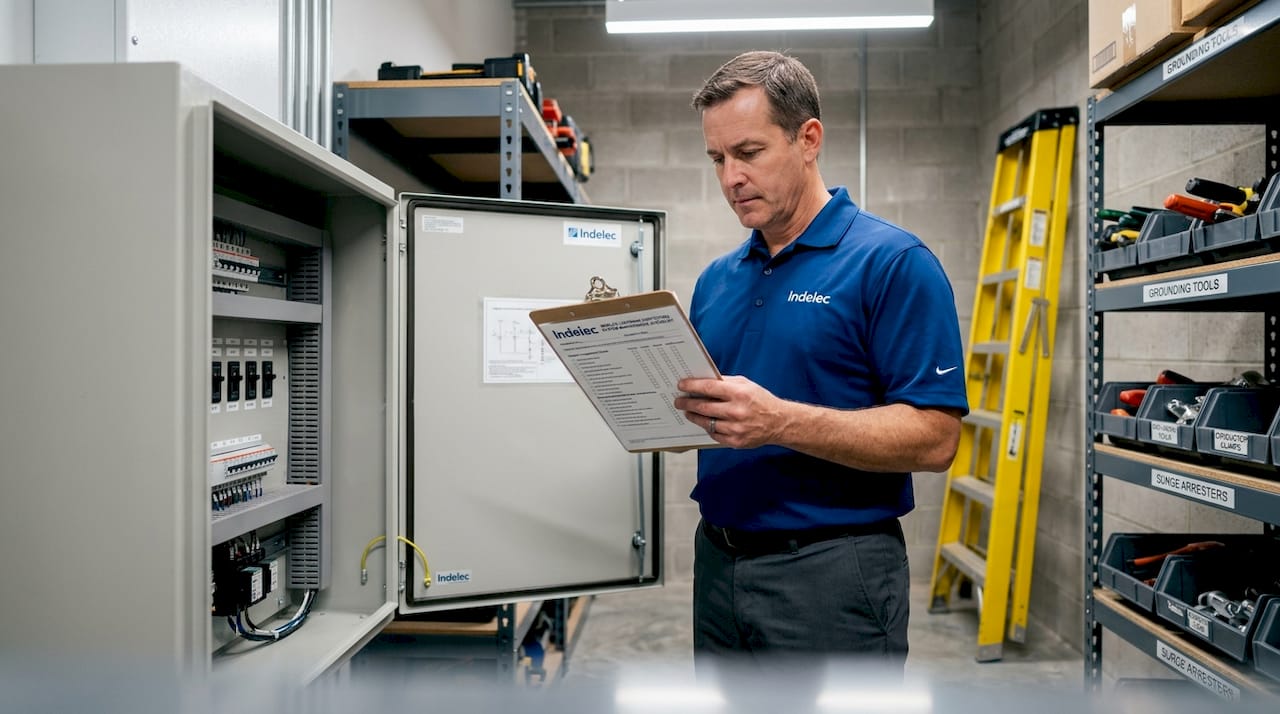
Document with photos and formal reports. Every inspection needs a timestamped photo record of each connection point, each SPD, each ground electrode pit, and any identified defect. Written reports must capture measurement values, component conditions, technician name, date, and corrective action recommendations. Link to the system documentation best practices guide if your team needs templates.
Post-lightning strike: immediate full inspection. If your facility experiences a confirmed strike, restart this entire workflow within 48 hours. Do not assume the system performed correctly just because there was no visible fire or damage.
Safety warning: Always de-energize adjacent electrical systems where possible before working near bonding connections in energized environments. Induced voltages during a nearby strike can be lethal even without direct contact. Follow lockout/tagout (LOTO) procedures before opening any junction box or ground electrode inspection pit connected to an active electrical system.
Integrating CMMS into your workflow
Paper-based checklists create compliance gaps. Digital workflows through a Computerized Maintenance Management System (CMMS) give you real-time visibility, traceability, and automatic scheduling triggers. According to guidance for industrial facilities, integrating LPS maintenance with overall safety workflows, particularly bonding and grounding checks to prevent side flashes, is essential for facilities with complex electrical environments.
| Feature | Paper-based workflow | CMMS-driven workflow |
|---|---|---|
| Scheduling | Manual calendar reminders | Auto-triggered by date, events, or sensor data |
| Photo documentation | Physical files, often lost | Cloud-linked, timestamped, searchable |
| Compliance audit trail | Manually assembled | Auto-generated reports |
| Post-strike response | Reliant on verbal communication | Automated work order creation |
| Trend analysis | Manual comparison | Dashboard-based trend visualization |
| Team accountability | Sign-off sheets | Role-based digital assignment and confirmation |
Pro Tip: If your CMMS doesn’t have a native lightning protection template, build one using the six-step workflow above as your task structure. Assign each step to a specific technician role and set photo attachment as a mandatory field before task closure.
Special considerations: frequency, edge cases, and environments
The foundational workflow is effective for most sites, but special situations require additional vigilance and adaptation.
Standard annual inspection cycles work for low-to-medium risk facilities in temperate climates with stable soil conditions. But many industrial and commercial facilities operate in environments that demand more. High-lightning-activity zones, coastal environments with salt air, polluted industrial atmospheres, and facilities with buried metallic infrastructure all require more frequent testing and adjusted inspection protocols.
High-risk environments that require adjusted frequency
- Coastal facilities: Salt spray accelerates conductor corrosion and increases ground electrode degradation. Move to semi-annual inspections for conductor paths and quarterly visual checks of air terminals.
- Polluted industrial sites: Airborne contaminants (acids, chlorides, and industrial particulates) can attack conductor coatings and bonding surfaces. Increase inspection frequency to match your corrosion risk classification under IEC 62305.
- High-lightning-incidence zones: If your facility sits in a region averaging more than 25 ground flash density events per km² per year, treat annual as your minimum, not your target.
- Facilities with critical infrastructure: Data centers, hospitals, substations, and chemical plants should follow a biannual inspection cycle as a baseline, not an exception.
- Sites with recent construction or renovation: Any nearby excavation, roofing work, or electrical system upgrade is a trigger for an unscheduled inspection of connected LPS components.
Trigger events requiring immediate full inspection
Beyond scheduled cycles, these events should automatically launch an unscheduled full LPS inspection:
- Confirmed lightning strike at or near the facility
- Reports of unexplained electrical equipment failures or surge damage
- Ground disturbance within 3 meters of buried electrodes
- Roof or structural repairs that involved conductor paths
- Flooding or extreme soil saturation events near ground electrodes
- Any fire or heat event in proximity to conductor runs
Critical note: Many facilities skip the post-strike inspection when there’s no visible structural damage. This is a serious mistake. A strike can degrade a conductor internally, weld a bond connection shut while destroying its conductivity, or deplete an SPD completely, all without leaving obvious external signs. Post-strike inspection is non-negotiable, even when everything looks fine.
For facilities managing energy storage systems or other high-voltage assets, cross-referencing your LPS inspection workflow with a broader energy storage maintenance checklist can help you catch interdependencies between grounding systems and battery infrastructure that a standalone LPS check might miss.
For facilities requiring tailored system design, reviewing a site-specific design example can help your team understand how protection zones interact with your maintenance scope.
Documentation, reporting, and continuous improvement
Even a flawless workflow is only as good as its documentation and feedback mechanisms. Here’s how to close the loop.
Strong documentation does three things: it proves compliance, it supports insurance claims when damage occurs, and it gives your team the trend data needed to catch degrading components before they fail. The effective LPS documentation guide goes deep on record structure, but here’s the core checklist every inspection report must cover:
What every inspection record must include
- Inspection date, time, and site weather conditions at time of measurement
- Technician name and certification status
- As-built drawing reference (confirm actual installation matches current drawings)
- Resistance measurement values at each test point, with comparison to previous readings
- SPD status and condition for every installed unit
- Photographic evidence of every connection point, defect, and corrective action
- List of deficiencies with severity rating (critical, major, minor)
- Corrective action log with assigned owner and target completion date
- Sign-off by qualified responsible person
A statistic worth embedding in your reporting culture: facilities that lack complete inspection records are significantly more likely to face denied insurance claims after lightning damage events, because insurers require proof of due diligence. Proper photo documentation is often the single most powerful piece of evidence in those situations.
Using reports for continuous improvement
Don’t treat inspection reports as archive files. Use them actively. After each cycle, run a brief lessons-learned review with your safety and electrical teams to identify recurring deficiencies, components that are degrading faster than expected, and areas where the inspection process itself can improve. Trend analysis across three or more inspection cycles often reveals systemic problems (like a specific conductor run that consistently fails continuity) that a single-year view would miss entirely. This kind of institutional learning is what separates facilities with strong safety records from those that scramble after every incident.
What most workflows miss: the integration factor
After decades of experience in lightning protection across industrial, commercial, and critical infrastructure facilities, one pattern stands out clearly. Facilities that treat their LPS as a stand-alone system, inspected in isolation by a single specialist once a year, consistently underperform compared to facilities that integrate LPS checks into their broader safety and maintenance culture.
The problem isn’t technical knowledge. Most maintenance teams understand grounding and bonding well enough to follow a checklist. The problem is accountability gaps. When LPS maintenance lives in its own silo, no one outside the specialist team knows what was found, what was deferred, or what changed since the last inspection. Electrical teams add new equipment without notifying the LPS manager. Roofing contractors disturb conductor paths without triggering a reassessment. Operations schedules override inspection access without understanding the risk implications.
The facilities with the strongest lightning protection reliability are those that have connected LPS planning with facility safety at the management level. Their LPS inspection findings appear on the same safety dashboard as fire suppression checks and emergency egress audits. Deficiencies get prioritized alongside other safety risks, not deferred indefinitely because no one with budget authority understood what a “high ground resistance reading” actually meant.
The practical fix is simpler than it sounds. Schedule a joint quarterly review between your electrical team, your safety officer, and whoever manages your LPS contractor relationship. Walk through open findings together. Cross-reference any facility changes against LPS system drawings. This single meeting, done consistently, catches more problems than adding a third annual inspection ever would.
Ready to optimize your lightning protection maintenance?
Implementing a structured preventive maintenance workflow is the foundation, but the quality of your outcomes also depends on the quality of your system design, components, and professional support. If you’re carrying unresolved deficiencies from past inspections, operating in a high-risk environment, or simply not confident that your current LPS coverage meets the applicable standards, it’s worth getting expert eyes on your installation.
Indelec provides lightning protection system services covering risk assessment, compliant system design, installation, and ongoing maintenance support for industrial and commercial facilities worldwide. Our team helps you move from reactive incident response to a proactive, audit-ready maintenance program. Whether you need a full system review or just help aligning your workflow with current industry lightning standards, we can support your team at every stage. Reach out to discuss your facility’s specific needs and let’s build a maintenance program that holds up when it matters most.
Frequently asked questions
How often should lightning protection systems be inspected?
Annual inspections are the minimum, but facilities in high-lightning zones or coastal and polluted environments need semi-annual or more frequent checks to maintain reliability and compliance.
What documentation is required for compliance?
At minimum, you need dated records with photos, measurement values, identified deficiencies, and corrective actions to satisfy most safety standards and support insurance claims.
What should be checked after a lightning strike?
Always conduct a full post-strike inspection covering all conductors, bonding connections, ground resistance, and SPD status, even when no visible damage is apparent.
How can maintenance teams ensure no steps are missed during inspection?
Use a standardized six-step workflow combined with CMMS mobile execution to enforce task sequence, require photo attachments, and generate an automatic audit trail for every inspection.