How to audit lightning protection equipment safely
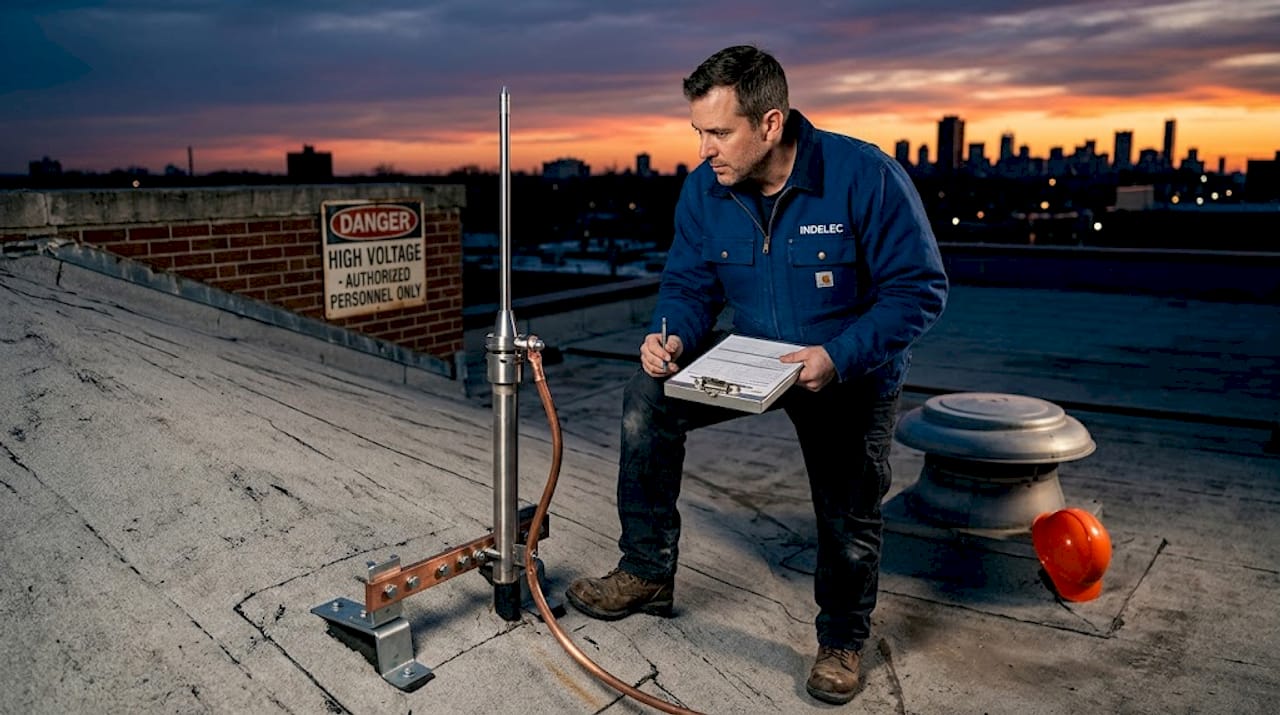
TL;DR:
- Regular, thorough lightning protection system audits verify performance and compliance, reducing liability risks. Proper preparation, qualified personnel, and meticulous documentation are essential for effective inspections. Addressing internal SPD coordination and ongoing facility modifications is critical for comprehensive lightning safety management.
Lightning protection equipment that passes a visual check but fails under real strike conditions is a liability your facility cannot afford. An inadequately audited system can void insurance policies, expose your organization to regulatory penalties, and put personnel at serious risk the moment a thunderstorm rolls in. For facility managers and safety officers responsible for industrial or commercial properties, a structured, documented audit process is not optional. It is the foundation of defensible compliance and genuine operational safety.
Table of Contents
- Understand the importance of lightning protection audits
- Assemble your audit toolkit and prerequisites
- Step-by-step lightning protection audit process
- Recordkeeping, compliance, and common mistakes to avoid
- What most audits miss—and how to get ahead
- Get expert support for your lightning protection audits
- Frequently asked questions
Key Takeaways
| Point | Details |
|---|---|
| Follow recognized standards | Align audits with NFPA 780 and IEC 62305 for reliable facility protection. |
| Use a comprehensive checklist | Cover all system elements, including SPDs and documentation, for full compliance. |
| Keep thorough records | Maintain detailed audit logs and certificates to avoid common compliance pitfalls. |
| Prioritize expert involvement | Leverage skilled personnel and third-party reviews to address unseen risks. |
Understand the importance of lightning protection audits
Skipping or shortcutting a lightning protection audit is a cost that typically shows up in the worst possible way. Equipment failures triggered by undetected grounding deficiencies, insurance claims denied because inspection records were outdated, or worse, a direct strike incident that reveals a system that never worked as designed. These are not hypothetical risks. They are the predictable consequences of treating audits as a formality rather than a technical obligation.
Regular audits serve two purposes simultaneously. They verify that installed systems still perform to their original design specifications, and they confirm that the facility remains compliant with current lightning and surge protection standards. Both purposes matter equally. A system that performs well but is documented poorly is still a compliance failure. A system that is perfectly documented but has degraded components is still a safety failure.
On the regulatory side, the NFPA 780 Standard (2023 edition) is the primary national reference for the design, installation, and inspection of lightning protection systems in the United States. Audit procedures must align with the NFPA 780 inspection methodology to be considered compliant. For facilities with international exposure or those managing electronic systems under European guidelines, the BS EN IEC 62305 series extends the audit scope to include surge protection devices and the protection of electrical and electronic systems, not just the external lightning protection structure.
Here is what a properly scoped audit must cover as a minimum:
- Air terminals, roof bonding, and strike interception components
- Down conductors and their physical integrity
- Grounding electrode systems and measured resistance values
- Surge protection devices (SPDs) and their coordination with the broader electrical system
- Corrosion, mechanical damage, and connection integrity at all bonding points
- Current inspection records and certification documentation
“A lightning protection audit is not a single checkbox. It is a layered verification process that spans from the tip of the air terminal to the deepest grounding electrode, and every connection in between.”
Understanding the full scope of a lightning risk assessment for your specific facility class also helps calibrate how frequently and deeply audits need to be conducted. High-risk environments such as chemical plants, data centers, or elevated structures require more rigorous schedules than standard commercial buildings.
Assemble your audit toolkit and prerequisites
A successful audit starts well before anyone sets foot on the roof. Preparation determines whether your on-site time is efficient and whether your findings will hold up against regulatory scrutiny. Cutting corners in the preparation phase typically means return visits, missed deficiencies, and gaps in documentation that auditors or insurers will flag later.

Start with the right equipment and documentation. Here is a practical breakdown:
| Audit tool or document | Purpose |
|---|---|
| Earth resistance tester (fall-of-potential or clamp method) | Measures grounding electrode resistance against acceptable thresholds |
| Continuity tester or low-resistance ohmmeter | Verifies conductor continuity from air terminal to earth |
| Visual inspection checklist | Ensures no component is overlooked during walkthrough |
| SPD specification sheets and installation records | Confirms devices match the design spec and are properly rated |
| Previous audit reports and deficiency logs | Identifies recurring issues and tracks corrective action history |
| Manufacturer certifications and system design drawings | Establishes the baseline against which current condition is measured |
| Camera or inspection tablet | Documents physical condition of all components with visual evidence |
Personnel qualifications are non-negotiable. Only trained, certified inspectors with specific knowledge of lightning protection systems should conduct or supervise the audit. Facilities that assign this task to general maintenance staff without verified credentials risk producing audit reports that are challenged or rejected entirely. Where in-house expertise is limited, engaging a third-party specialist from the outset is a sound investment.
Pro Tip: Request a copy of the original system design drawings before every audit cycle. Systems are often modified during facility renovations without corresponding updates to documentation. Comparing actual installed conditions against the original design will reveal undocumented changes that may violate the protection zone geometry or bonding requirements.
According to the Lightning Protection Audit Checklist, a structured pre-audit checklist for facility and safety teams should specifically cover air terminals and roof bonding, down conductors, grounding electrodes with resistance testing, surge protection devices, corrosion and physical condition assessment, and complete record keeping. Using a standardized checklist format aligned to this scope prevents the informal, ad hoc approaches that leave compliance gaps.
Before going on site, also confirm:
- Utility lockout procedures are in place for any electrical testing near live systems
- Roof and elevated access permits are secured
- Weather conditions are appropriate for outdoor work at height
- A qualified supervisor is assigned to sign off on the completed report
Reviewing the infrastructure lightning protection steps for your specific facility type will also help you anticipate which components require special attention during the walkthrough based on the original installation approach.
Step-by-step lightning protection audit process
With preparation complete and your team in place, the audit itself follows a logical sequence. Rushing this phase or conducting it out of order leads to missed inspection items and unreliable test data. Follow this process every time.
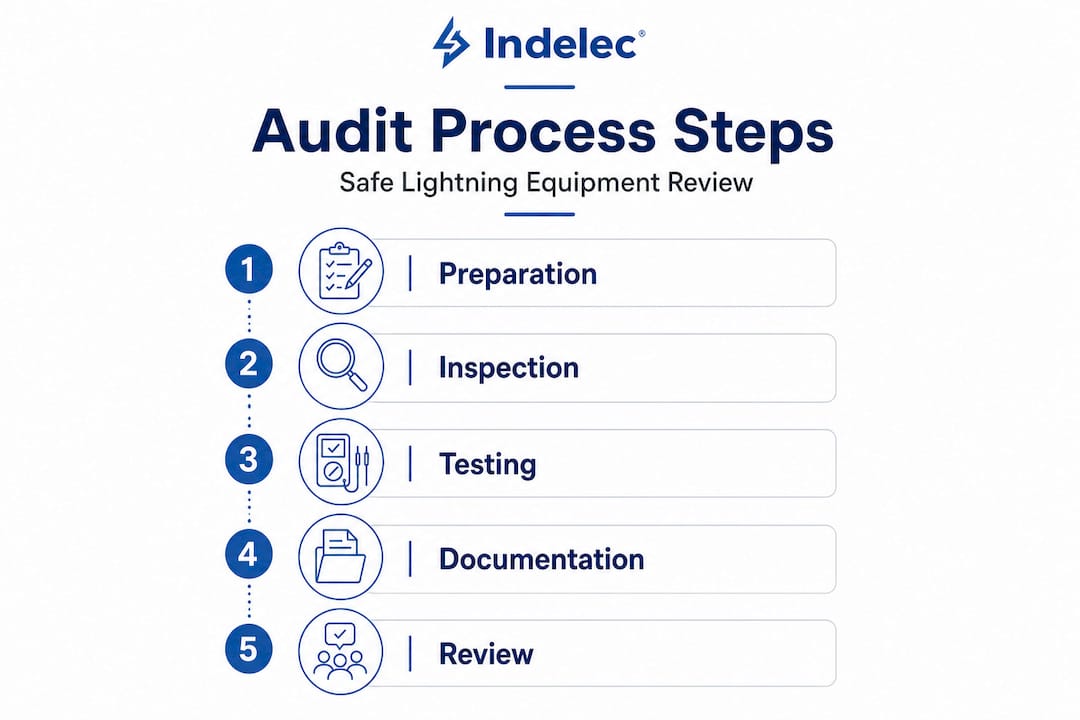
Begin with a documentation review. Before touching any equipment, verify that you have the current system design drawings, the previous inspection report, and any corrective action records. Confirm that all SPDs currently installed match the specifications on file.
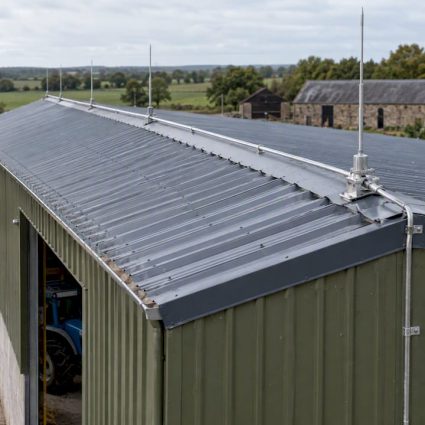
Conduct a full roof-level visual inspection. Walk the entire roof perimeter and interior. Check every air terminal for physical damage, improper seating, or corrosion at the base. Confirm that conductor routing matches the design drawings and that no mechanical damage has occurred since the last inspection.
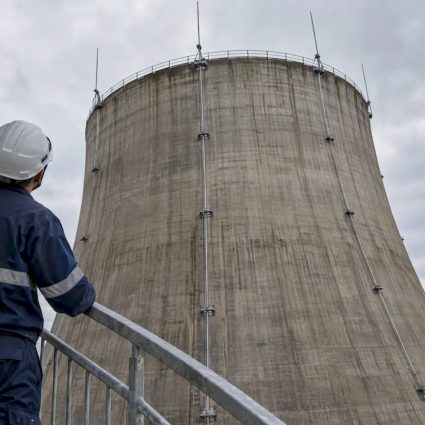
Inspect all down conductors from roof to grade. Look for bends tighter than the allowable radius, physical damage from construction activity, missing protective conduit in accessible areas, and corrosion at connection points. Every connection must be mechanically secure and free of oxidation.
Test grounding electrode resistance. Use the fall-of-potential method or a calibrated clamp meter to measure earth resistance at each grounding point. Compare results against the design specification. Values above 10 ohms typically indicate a problem requiring immediate corrective action, though your specific standard may set a tighter threshold.
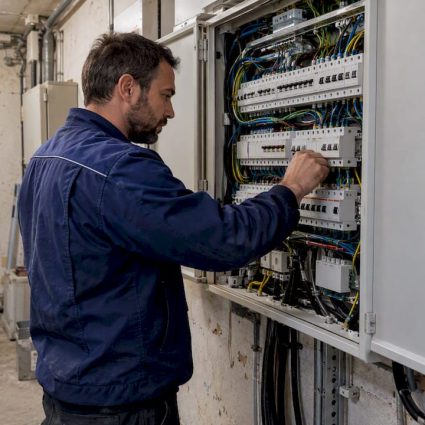
Verify surge protection device installation and labeling. Inspect every SPD in the system. Confirm that each device is rated for its installed position, properly labeled, and shows no indication of end-of-life status. Check indicator windows or status lights where present, and verify that coordination between SPD levels matches the original design.
Test conductor continuity. Use a low-resistance ohmmeter to verify electrical continuity from air terminal through each down conductor to the grounding electrode. Discontinuities indicate failed connections, corrosion breaks, or unauthorized modifications.
Document all findings with photos and written records. Every deficiency must be photographed and described in the inspection report with its exact location. Every component that passes inspection should also be logged. Undocumented findings have no legal or compliance value.
Complete the formal inspection report and assign corrective actions. Flag all deficiencies with a severity rating, assign a responsible party, and set a realistic correction deadline. The inspection report must be signed by the qualified inspector.
Pro Tip: Use a comparison table in your report to show before-and-after resistance values across audit cycles. This gives insurers and compliance auditors a clear trend line that demonstrates proactive management, not just point-in-time compliance.
| Inspection item | Acceptable standard | Common failure condition |
|---|---|---|
| Earth resistance | Less than or equal to 10 ohms | Dry soil conditions, aged electrode |
| Conductor continuity | Less than or equal to 0.1 ohm | Corrosion at clamps, unauthorized cuts |
| SPD status indicator | Green / within rated zone | Red indicator, missing label |
| Air terminal condition | No physical damage, secure mount | Bent tip, loose base fitting |
| Down conductor routing | Matches design drawing | Rerouted around construction, unsupported spans |
For comprehensive guidance on documenting lightning protection systems in a format that supports both internal tracking and regulatory review, structured templates aligned to NFPA 780 requirements are the most reliable approach. Understanding how lightning testing works also helps your team interpret resistance test results in the context of your specific soil and seasonal conditions.
Recordkeeping, compliance, and common mistakes to avoid
Completing a thorough on-site audit is only half the job. The documentation produced must be accurate, complete, and filed in a way that supports retrieval during insurance reviews, regulatory inspections, or incident investigations. This is the phase where many facilities undermine otherwise strong field work.
Your audit records should include the following as a minimum:
- Signed inspection report with date, inspector credentials, and facility identification
- Component-by-component checklist with pass, fail, or not-applicable status
- All resistance test readings with instrument model and calibration date
- Photographic evidence for every deficiency and any component of concern
- Corrective action log with assigned responsibility and completion tracking
- Certificate of inspection if required by your jurisdiction or insurer
The Lightning Protection Audit Checklist specifically identifies record keeping across inspection cycles as a core audit requirement, not an administrative afterthought. Inspectors who treat documentation as secondary to field work consistently produce records that fail under scrutiny.
Alignment with the NFPA 780 Standard (2023 edition) requires that audit trails be maintained in a format that demonstrates the full inspection scope was covered and that deficiencies were addressed within a reasonable timeframe. Partial records or records that only document failures without confirming what passed are not sufficient.
“Incomplete or missing records remain the most cited compliance failure during third-party lightning protection reviews. A system that performs perfectly on the day of a strike but cannot produce inspection history is still a liability.”
The most avoidable mistakes we see consistently across facilities include:
- Conducting only visual checks without resistance or continuity testing
- Failing to inspect SPDs at all levels of the system, particularly at service entrance and panel level
- Submitting unsigned or undated reports that cannot be legally verified
- Allowing corrective action deadlines to pass without documented follow-up
- Not updating system drawings after facility modifications
The resource on documenting system audits provides additional structure for building an audit trail that satisfies both internal quality management requirements and external regulatory obligations. Getting this right the first time saves significant time during any subsequent third-party review.
What most audits miss—and how to get ahead
Most lightning protection audits stop at the physical system. Inspectors walk the roof, test the electrodes, verify the down conductors, and sign off. That approach meets the minimum. It does not reflect what actually causes failures in modern facilities.
The interaction between the external lightning protection system and the internal SPD network is where the most serious vulnerabilities hide. A perfectly functional air terminal and grounding system can still allow damaging transients to reach sensitive electronic equipment if SPD coordination across protection zones is poorly designed or if devices have degraded without triggering their status indicators. We see this repeatedly in industrial facilities where control systems and communications equipment suffer damage after a strike event despite a lightning protection system that appears compliant on paper.
Facilities that bring electrical and electronic system vendors into the audit process see measurably fewer failures. When the team reviewing the SPD installation includes someone who understands the load profile of the equipment being protected, coordination gaps become visible that a standard lightning inspector would miss. This is not a standard practice. It should be.
Another area that routinely escapes audit attention is the bonding of newly installed equipment. Facility upgrades happen frequently, and new electrical panels, HVAC units, or communications racks are often installed without being bonded back into the existing lightning protection network. By the next scheduled audit, these gaps may have been in place for months or years.
Our recommendation is to implement a mid-cycle check process, a lightweight review at the six-month mark between full audits, focused specifically on any facility modifications since the last inspection. This is not a full audit. It is a targeted verification that the existing system has not been compromised by changes on the ground.
Periodic third-party reviews also add value that internal teams cannot always provide. An outside specialist reviewing your full-service lightning protection strategy will identify normalization of deviance, the gradual acceptance of substandard conditions that becomes invisible to teams who see the same system repeatedly. Third-party reviews should be scheduled at least every three years, or after any major facility modification or significant strike event.
Get expert support for your lightning protection audits
Conducting your own internal audits is an important step, but there are limits to what internal teams can accomplish without dedicated tools, field experience, and access to current standards interpretation. When your facility needs to go beyond the checklist and into full system evaluation, certified external support makes a measurable difference.

Indelec brings over 70 years of field experience to lightning protection system design, installation, and audit support. Whether you are managing a single industrial site or a portfolio of commercial properties, our certified specialists help you move from reactive compliance to proactive risk management. Explore our lightning protection system application resources to see how our solutions align with your facility classification, and review our technical guidance on lightning standards to ensure your audit program reflects current regulatory requirements. Our team supports deep earth resistance testing, SPD coordination reviews, and full certification documentation services designed to hold up under any regulatory scrutiny.
Frequently asked questions
How often should lightning protection equipment be audited in the U.S.?
Annual audits are the baseline recommendation, though high-risk facilities or those in lightning-prone regions should consider more frequent reviews based on the NFPA 780 inspection methodology and local code requirements.
Is surge protection device (SPD) testing required during lightning audits?
Yes, SPD verification is a mandatory component of compliant audits. The BS EN IEC 62305 series explicitly requires that audit scope cover surge protection measures affecting electrical and electronic systems, not only the external structure.
What are the most common audit failures for lightning protection?
Inadequate recordkeeping, skipped SPD inspections, and unsigned or undated reports are the most frequently cited deficiencies, as confirmed by the Lightning Protection Audit Checklist framework used by facility and safety teams.
Does the audit process differ for older versus new lightning systems?
Older systems require additional attention to corrosion, material compatibility, and connection integrity at aged bonding points. The audit checklist for older installations should include conductor condition ratings and material degradation assessments alongside standard NFPA or IEC protocol steps.