Top electrical protection innovations for safer facilities
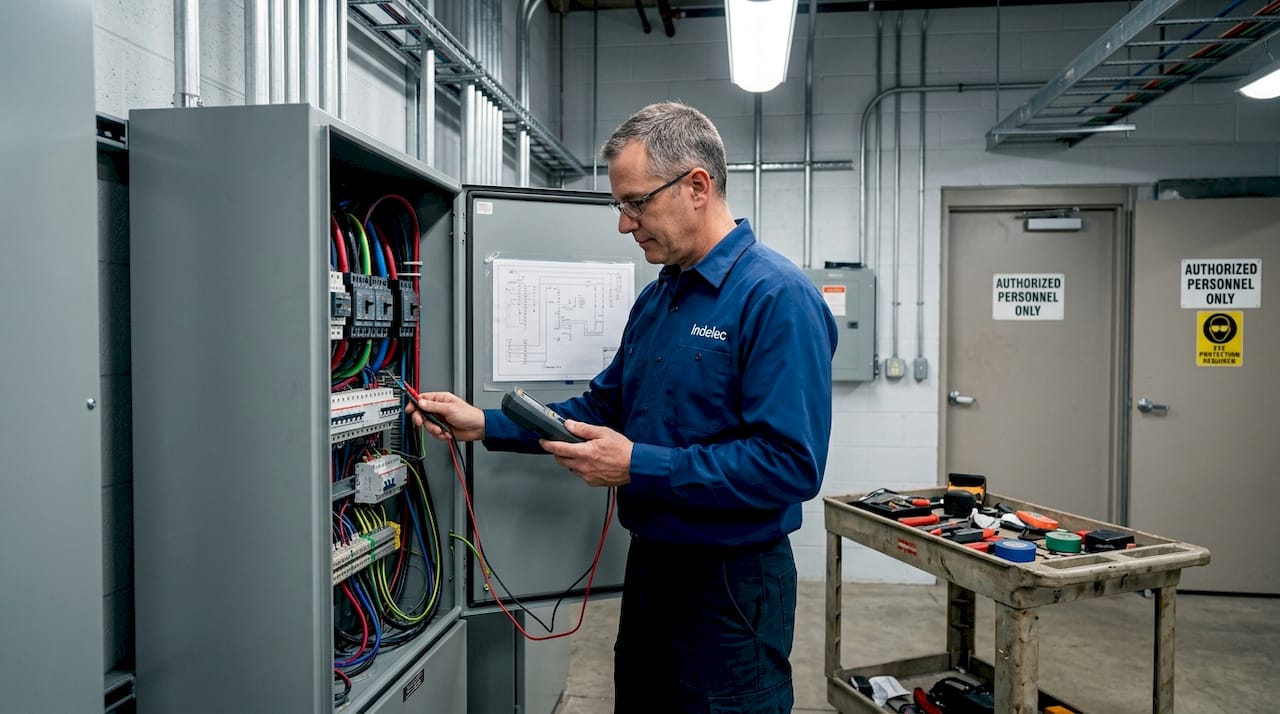
TL;DR:
- Electrical protection has advanced significantly in 2026, emphasizing ultra-fast semiconductor DC breakers, intelligent systems with continuous fault monitoring, and the adoption of medium-voltage UPS for large-scale facilities. Proper evaluation, coordination, and system-wide planning are essential to effectively integrate these innovations and ensure safety, reliability, and compliance. A holistic approach encompassing site protection, environmental responsibility, and future scalability remains key for resilient infrastructure upgrades.
Electrical hazards remain one of the costliest and most disruptive risks in industrial and commercial operations, with facility complexity growing faster than most protection strategies can keep pace with. The rapid push toward electrification, AI-driven loads, battery energy storage, and edge computing means that the circuit protection designed for yesterday’s infrastructure is often mismatched for today’s demands. This guide covers the most significant electrical protection advances available in 2026, giving facility managers and safety officers a clear, data-backed framework to evaluate, compare, and act on the best options for their operations.
Table of Contents
- How to evaluate cutting-edge electrical protection options
- Ultra-fast semiconductor-based DC protection
- Intelligent circuit protection with continuous monitoring
- Upstream medium-voltage UPS: The new trend for large facilities
- Comparison of the latest electrical protection innovations
- Why faster, smarter protection isn’t enough: A holistic view
- Take the next step with advanced lightning and facility protection
- Frequently asked questions
Key Takeaways
| Point | Details |
|---|---|
| Speed matters | Microsecond circuit interruption dramatically lowers risk and downtime in critical environments. |
| Continuous monitoring | Integrated RCM enables early detection and proactive maintenance before failures escalate. |
| Architectural change | Upstream MV UPS is redefining protection strategies for large-scale and data-heavy facilities. |
| System fit is key | Best protection choice depends on facility type, load profile, and existing infrastructure requirements. |
| Holistic planning | Successful upgrades combine technology, coordination, and ongoing evaluation for future resilience. |
How to evaluate cutting-edge electrical protection options
To hone in on the best options, start with a clear evaluation framework tailored to modern facility demands. Not every innovation fits every site, and a poor selection can introduce new vulnerabilities while solving old ones. Here is a structured approach for assessing modern electrical protection solutions.
1. Interruption speed and arc-flash energy control
The faster a protection device isolates a fault, the less arc-flash energy is released into the system. This directly affects personnel safety, equipment survival, and compliance with NFPA 70E arc-flash labeling requirements. Safety officers should evaluate where interruption speeds and advanced protection claims apply and consider downstream impacts like arc-flash risk and coordination before specifying any new device.
2. Continuous monitoring and early fault detection
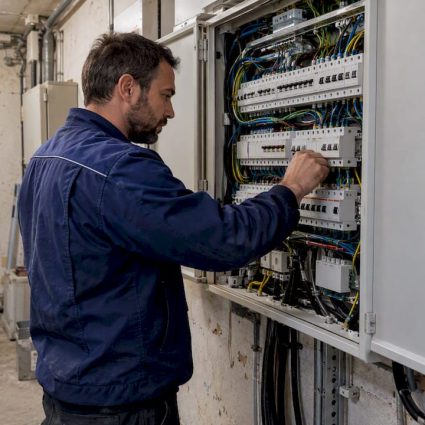
Modern protection should do more than react. Look for devices with built-in diagnostics, insulation monitoring, or residual current monitoring (RCM) that flag developing faults before they become shutdowns.
3. Suitability for evolving loads
Battery storage systems, high-density server racks, and variable frequency drives all create non-linear, high-frequency disturbances. Your chosen protection must handle these loads without nuisance tripping or blind spots. Reviewing your electrical protection upgrade guide before specifying devices is a practical starting point.
4. Regulatory compliance and grid standards
Protection solutions must align with applicable standards: IEC, IEEE, NEC, and increasingly, grid interconnection requirements for sites with distributed energy resources (DERs). Verify that any new device carries the necessary certifications for your jurisdiction.
5. Legacy system integration
Most facilities cannot replace everything at once. Evaluate compatibility with existing switchgear, control systems, and SCADA platforms to avoid creating coordination gaps. Reviewing your power quality strategies alongside your protection upgrade plan helps expose hidden interaction risks early.
Pro Tip: Before issuing a specification, run a tabletop arc-flash coordination study using the new device’s actual interruption data. Vendor datasheets and real-world interruption curves can differ significantly, especially for semiconductor devices operating at the edges of their rated range.
Key evaluation checklist:
- Response time in microseconds or milliseconds (specify for AC vs. DC)
- Arc-flash incident energy reduction at the point of installation
- Built-in or compatible monitoring outputs (Modbus, PROFINET, IEC 61850)
- Tested coordination with upstream and downstream protective devices
- Maintenance requirements and spare-part availability in your region
Ultra-fast semiconductor-based DC protection
Armed with the right criteria, the most dramatic advances start with circuit breaker speed. Traditional electromechanical breakers operate in the 20 to 100 millisecond range. That gap is long enough for a fault in a DC bus to generate serious arc energy, damage busbars, and trigger cascading failures across a battery storage array or data center power distribution unit.
Semiconductor-based DC protection interrupts faults up to 1,000 times faster than mechanical circuit breakers, with microsecond response times for critical applications. This is not an incremental improvement; it is a fundamentally different protection paradigm. For a hyperscale data center running a 2 MW DC bus, the difference between 50 ms and 50 µs interruption can mean the difference between a logged event and a catastrophic busbar failure.
The primary use cases where this technology delivers the greatest return:
- DC microgrids and battery energy storage systems (BESS): High fault currents in DC systems rise faster than in AC systems. Microsecond interruption prevents thermal runaway propagation.
- Data center power distribution: Protects sensitive server loads from voltage collapse during fault events upstream.
- EV charging infrastructure: High-current DC faults in charging corridors require precise, fast isolation to protect both the charger and the vehicle.
- Renewable energy tie-ins: Solar array combiner boxes and DC-coupled storage benefit from semiconductor protection at interconnection points.
The technology is not without limits. Semiconductor breakers generate heat during normal conduction and require active cooling in high-current installations. They also carry a higher upfront cost than electromechanical alternatives. Pairing them with your lightning protection innovations strategy is important because transient overvoltages from lightning can stress semiconductor junctions if surge protection coordination is not verified.
Pro Tip: Specify semiconductor breakers with an integrated current-limiting function and verify that your surge protective devices (SPDs) upstream are rated for the let-through energy levels these breakers will tolerate. The coordination between transient protection and semiconductor switching is a common gap in early-adopter installations.
Statistic callout: Semiconductor-based DC protection offers up to 1,000× faster interruption than mechanical circuit breakers. For a 1 MW DC bus, this speed reduction can cut arc-flash energy exposure by orders of magnitude, directly lowering PPE requirements and equipment replacement costs.
Intelligent circuit protection with continuous monitoring
Protection that not only reacts but anticipates faults is fast becoming essential for any facility running high-uptime operations. The latest generation of circuit protection devices integrates residual current monitoring (RCM) directly into the breaker or protective relay, enabling continuous non-intrusive fault detection without interrupting normal operations.
RCM works by measuring the difference between outgoing and return current in a circuit. Any leakage, whether caused by degrading cable insulation, moisture ingress, or a developing ground fault, shows up as an imbalance. The device logs the trend, alerts the maintenance team, and allows a scheduled repair before the fault escalates to a trip or worse, a fire.
Three operational benefits that stand out:
- Reduced mean time to repair (MTTR): Maintenance crews arrive at a known fault location with specific data, not a blank diagnostic slate after an unplanned outage.
- Condition-based maintenance enablement: Instead of time-based inspection cycles, you respond to actual equipment condition. This cuts labor costs and reduces unnecessary disturbance to live circuits.
- Compliance documentation: Real-time logs from RCM-capable devices support your climate adaptation for protection records and satisfy audit requirements for insulation integrity under IEC 60364 and NFPA 70B.
| Feature | Traditional circuit breaker | Intelligent circuit protection with RCM |
|---|---|---|
| Fault detection method | Overcurrent or short circuit | Overcurrent + continuous leakage current trending |
| Maintenance approach | Time-based | Condition-based |
| Data output | Event log only | Real-time current, trend, alarm thresholds |
| Integration capability | Limited | SCADA, BMS, CMMS via standard protocols |
| Early fault warning | None | Yes, configurable alarm levels |
Pro Tip: When deploying RCM-capable devices, set initial alarm thresholds conservatively and log data for 60 days before tuning. Existing insulation in older facilities often shows background leakage that looks alarming at first but is actually stable. Baselining first prevents nuisance alerts that erode staff trust in the monitoring system.
For facilities exploring how residual current monitoring integrates with broader site protection, the key question is whether your existing SCADA or building management system can ingest the data streams these devices generate. Most modern units support IEC 61850 or Modbus TCP, but legacy DCS platforms may need a gateway device.
Upstream medium-voltage UPS: The new trend for large facilities
Alongside device-level advances, facility-wide strategies are evolving fast. Traditionally, UPS systems lived at the low-voltage distribution level, close to the load. That model works for smaller facilities but becomes inefficient and architecturally messy when you are managing tens of megawatts of critical load. The shift toward medium-voltage (MV) UPS is reshaping how large industrial sites, hyperscale data centers, and campus-style facilities approach backup power.
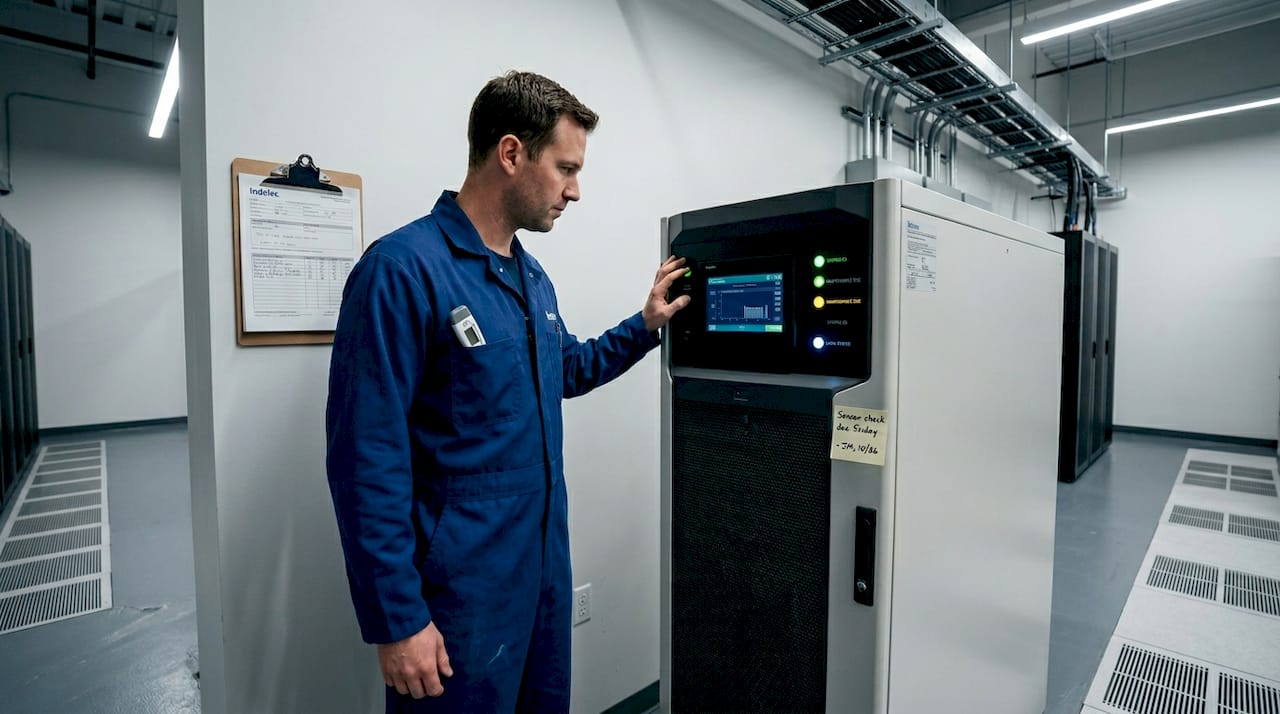
ABB’s HiPerGuard MV UPS architecture improves site-wide protection and efficiency, providing a direct-to-grid interface for hyperscale loads at up to 98% efficiency. That efficiency gain, compared to 92 to 95% for traditional LV UPS systems, translates directly to lower cooling loads and reduced operational costs at scale.
The new 34.5kV HiPerGuard configuration enables direct grid connection, fundamentally reshaping the protection study requirements for AI data centers. When the UPS sits upstream at medium voltage, it eliminates layers of LV switchgear, reduces cable runs, and simplifies the overall single-line diagram.
Key architectural advantages:
- Fewer switchgear panels: Consolidating UPS at MV removes multiple LV distribution boards from the critical path.
- Reduced cable infrastructure: Shorter, higher-voltage runs mean lower I²R losses and less physical infrastructure to maintain.
- Simplified protection coordination: One upstream protection study covers the entire site rather than managing dozens of individual LV UPS coordination studies.
- Better scalability for AI loads: As GPU clusters and AI inference farms scale, the MV architecture absorbs growth without requiring distributed LV upgrades.
| Characteristic | LV UPS (traditional) | MV UPS (upstream) |
|---|---|---|
| Typical efficiency | 92 to 95% | Up to 98% |
| Switchgear required | High (distributed) | Low (centralized) |
| Protection study complexity | Multiple LV studies | Single site-level study |
| Best fit | Small to medium facilities | Hyperscale, large industrial |
| Maintenance access | Local, per-unit | Centralized, specialized |
“Upstream UPS architectures reshape protection studies and simplify distributed architectures, but they also demand a fresh look at maintenance workflows and access requirements.” ABB technical documentation reinforces that the operational benefits require equally rigorous planning for commissioning and upkeep.
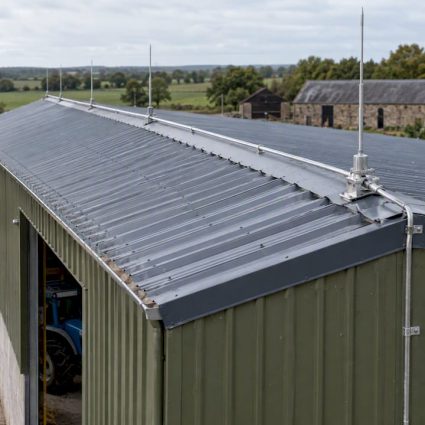
For sensitive installation protection scenarios, the MV UPS approach needs careful grounding and bonding coordination. Moving the UPS upstream affects how transient voltages propagate through the distribution system, which has direct implications for SPD placement and lightning protection bonding at the facility level. Reviewing your site protection design against the new architecture before commissioning is not optional; it is a safety requirement.
Comparison of the latest electrical protection innovations
To sum up and support practical decision-making, here is how these solutions stack up in key areas.
| Innovation | Speed | Monitoring | Best use case | Key limitation |
|---|---|---|---|---|
| Semiconductor DC breaker | Microseconds | Optional add-on | DC grids, BESS, EV charging | Higher cost, heat management |
| Intelligent circuit protection (RCM) | Standard | Continuous, built-in | AC distribution, compliance-driven sites | Requires SCADA integration |
| Medium-voltage UPS | N/A | Site-level | Hyperscale, large industrial | Specialized maintenance needed |
The best-fit decision is scenario-dependent. Facility context and specific risks drive which technology delivers real value. A pharmaceutical plant running sensitive analytical equipment will prioritize RCM and power quality over raw interruption speed. A battery storage facility will rank semiconductor speed at the top. A new hyperscale data center will evaluate MV UPS first.
Additional decision factors to layer in:
- Existing infrastructure: How much can you retrofit vs. redesign?
- Regulatory environment: What standards govern your sector and jurisdiction?
- Operational risk tolerance: What is the cost of an unplanned outage per hour?
- Workforce capability: Does your team have the skills to maintain semiconductor or MV UPS systems, or will you need a service contract?
Pro Tip: Build a simple risk matrix that scores each innovation against your facility’s top five failure scenarios before engaging vendors. This prevents “feature shopping” and keeps the evaluation grounded in your actual operational risks. Use your electrical infrastructure safety documentation as the baseline for that risk inventory.
Why faster, smarter protection isn’t enough: A holistic view
Here is the uncomfortable truth many facility upgrade projects ignore: a faster breaker installed in a poorly coordinated system is not safer than a slower one correctly applied. We have seen semiconductor DC breakers specified for their impressive interruption speed, then installed without updating the downstream protection relay settings. The result was nuisance tripping under normal high-load startup transients and, worse, cases where upstream devices cleared faults before the intended downstream device could react, leaving a section of plant without the selective protection it needed.
The real risk in 2026 is not that facilities lack access to advanced protection technology. It is that the pace of adoption outstrips the pace of systems thinking. Every device-level upgrade has cross-system implications. Adding MV UPS changes your grounding topology, which affects your lightning protection bonding network. Deploying RCM across a legacy distribution board can reveal insulation problems that were stable but undetected for years, requiring a repair program that was never budgeted. Faster semiconductor breakers stress SPD coordination in ways that the original protection study never anticipated.
Environmental responsibility in protection is another dimension that deserves more attention in upgrade planning. Semiconductor devices contain rare materials with specific end-of-life handling requirements. MV UPS battery banks involve chemistries that need careful disposal protocols. A truly holistic protection upgrade considers the full lifecycle, from specification through decommissioning, not just the performance metrics at commissioning.
Futureproofing requires interoperability. Specify devices that communicate over open protocols, not proprietary platforms. Verify that your protection strategy can absorb the next wave of changes, whether that means grid-edge storage, vehicle-to-grid integration, or new load profiles from AI compute expansion. The facilities that get this right in 2026 will spend far less on reactive upgrades through the rest of the decade.
Take the next step with advanced lightning and facility protection
Cutting-edge electrical protection at the device level works best when it is embedded in a complete, site-wide safety strategy that includes robust lightning protection, proper grounding, and ongoing compliance maintenance.

Indelec brings over 70 years of specialized expertise to exactly this challenge. Whether your priority is mandatory lightning protection compliance for industrial sites, system application services that integrate with modern electrical protection architectures, or green lightning protection solutions that align with your sustainability commitments, our teams are equipped to support every stage from risk assessment through installation and certification. Contact us to schedule a facility-specific consultation and ensure your 2026 electrical protection strategy is built on a complete, coordinated foundation.
Frequently asked questions
What is the main advantage of semiconductor-based DC protection in 2026?
Semiconductor circuit breakers deliver interruption speeds 1,000 times faster than traditional mechanical types, greatly reducing arc-flash energy, equipment damage, and downtime in DC grid applications.
How does residual current monitoring improve facility safety?
RCM detects insulation faults early without disrupting live operations, enabling maintenance teams to schedule repairs before a developing fault escalates to an unplanned outage or fire.
Why are medium-voltage UPS systems trending for hyperscale and AI data centers?
MV UPS architectures reach 98% efficiency while consolidating distributed LV equipment, reducing switchgear, and simplifying site-wide protection coordination for massive, rapidly scaling facilities.
Can ultra-fast DC breakers replace coordination studies?
No. Even with microsecond interruption, coordination and selectivity studies remain essential to verify that the intended device clears each fault type without causing unintended upstream or downstream trips.