Weatherproofing electrical sites: a safety and compliance guide
TL;DR:
- Proper weatherproofing of outdoor electrical enclosures is essential to prevent failures caused by weather, corrosion, and thermal cycling. Conduct thorough site assessments, select enclosures with appropriate ratings such as NEMA 4X or IP66, and ensure meticulous installation practices, including proper sealing and cable routing. Regular inspections and maintenance extend enclosure life, mitigate condensation issues, and support compliance, promoting long-term system resilience in harsh environments.
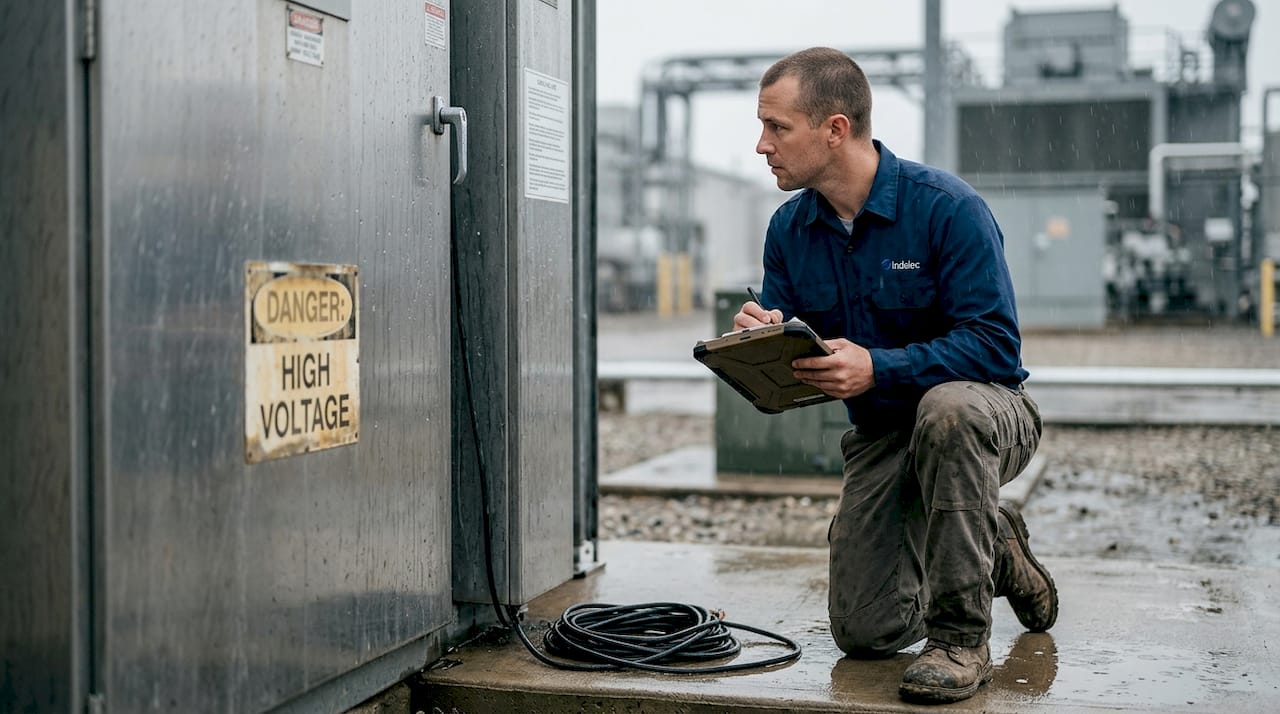
Unplanned electrical downtime at industrial facilities rarely happens on clear days. It happens during the season’s first hard freeze, during a plant washdown that nobody thought would reach the junction box, or after a coastal storm leaves behind salt-laden residue that eats through a steel enclosure in weeks. Weatherproofing is required by national codes and, when done right, eliminates a class of failures that are entirely preventable. This guide walks facility managers and engineers through every step, from site assessment to inspection routines, with ratings, regulatory requirements, and practical installation details that hold up under field conditions.
Table of Contents
- Assessing site conditions and compliance requirements
- Choosing and rating the right weatherproof enclosures
- Installation best practices: cabling, sealing, and mounting
- Addressing condensation, climate, and inspection routines
- Where most facilities fall short—and how to go beyond the basics
- Take the next step: professional solutions for weatherproof protection
- Frequently asked questions
Key Takeaways
| Point | Details |
|---|---|
| Assess risks and compliance first | Start by evaluating environmental exposures and applicable regulations before choosing equipment. |
| Match enclosures to hazards | Select NEMA or IP ratings specific to actual site risks, not just the highest available rating. |
| Install using best practices | Apply correct installation techniques, prioritize GFCI, and avoid common sealing mistakes. |
| Control condensation and maintain | Use desiccants, climate controls, and routine inspections especially after storms. |
| Update processes over time | Regularly review protection needs and communicate changes to all stakeholders. |
Assessing site conditions and compliance requirements
After outlining the stakes, we begin by assessing your facility’s environment and compliance gaps.
Before specifying a single enclosure, you need a clear picture of every hazard your electrical installations actually face. That means going beyond “outdoor” as a category. A rooftop control panel at a coastal refinery faces a completely different threat profile than a junction box inside a food processing plant that sees daily high-pressure hose-downs. Each scenario demands a different protection strategy.
The primary hazards worth cataloging at any industrial site include:
- Rain and wind-driven moisture that exploits poorly sealed conduit entries
- Sleet and ice accumulation that can jam gaskets and seals on equipment doors
- Hose-down and wash cycles common in food, beverage, pharmaceutical, and chemical facilities
- Chemical and salt corrosion from coastal air, fertilizer dust, and process vapors
- Dust and particulate infiltration from grinding, cutting, or aggregate handling
- Thermal cycling that fatigues seals and causes condensation to accumulate inside even well-rated enclosures
Matching your enclosure and device ratings to the actual risk is the foundation of every decision downstream. NEC 406.9 demands weather-resistant receptacles with enclosures that remain weatherproof even while in use, covering both the idle and plugged-in states. That distinction matters in practice. Plenty of facilities install compliant covers and then use extension cords that defeat the protection entirely.
On the rating system itself, NEMA ratings include corrosion, ice, and mechanical tests that go well beyond what IP (Ingress Protection) ratings cover. For North American facilities operating under NEC and NFPA mandates, NEMA ratings are generally the primary specification standard.
| Site type | Key hazards | Applicable NEMA rating | IP equivalent |
|---|---|---|---|
| General outdoor industrial | Rain, wind, dust | NEMA 3R | IP54 |
| Process plant with washdowns | Water jets, moisture | NEMA 4 | IP65 |
| Coastal or chemical facility | Corrosion, hose-down | NEMA 4X | IP66 |
| Hazardous dust environments | Dust ignition risk | NEMA 12 | IP54 |
| Outdoor substation, severe weather | Sleet, ice, rain | NEMA 3S | IP55 |
Reviewing NEC and NFPA mandates specific to your outdoor and wet locations should be a formal step, not an afterthought. Use an industrial safety checklist to document findings systematically and communicate requirements to contractors before they begin work. Written documentation protects your facility during audits and gives O&M teams a baseline for future comparisons. You can also cross-reference your local requirements with broader compliance and lightning safety standards, especially when outdoor installations interact with grounding systems.
Choosing and rating the right weatherproof enclosures
With your risks mapped, next is selecting enclosures and devices with proven weatherproof credentials.
A common mistake is treating enclosure selection as a “higher is always better” decision. Specifying NEMA 4X across an entire facility when only a handful of locations face genuine corrosion exposure adds cost without adding safety. At the same time, under-specifying in truly harsh environments is how facilities accumulate failure events, liability exposure, and regulatory citations.
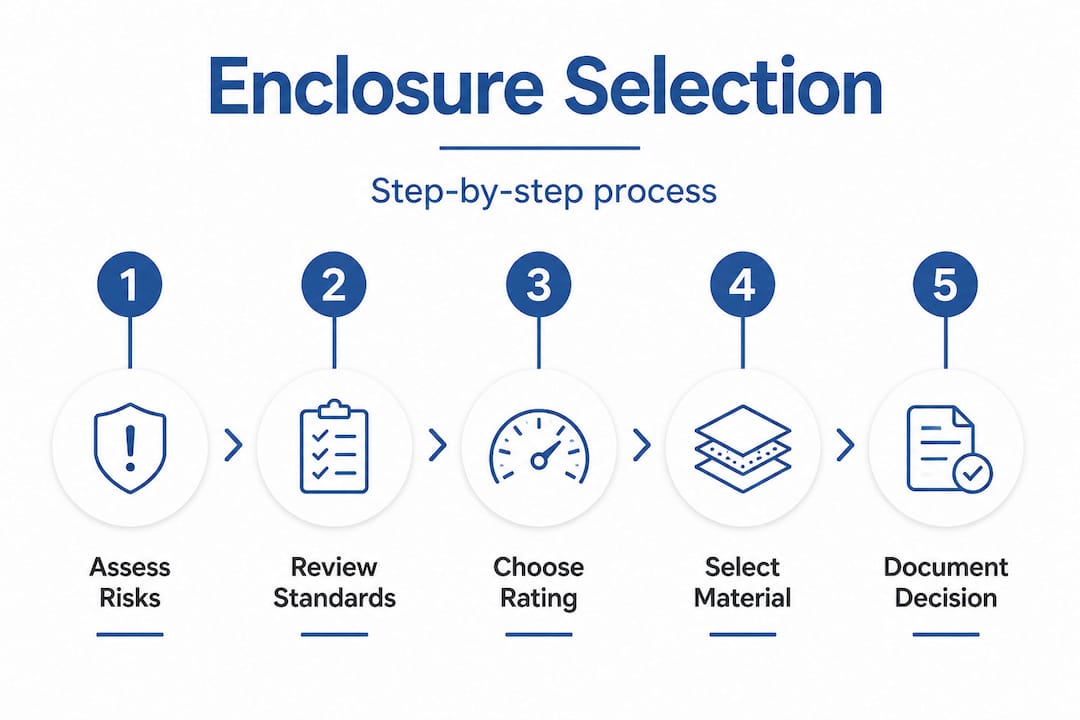
Here is a practical step-by-step approach to enclosure selection:
- Identify the physical location and exposure level. Is the box fully exposed, partially sheltered, or inside a covered but unheated structure?
- Catalog the specific hazards from your site assessment: moisture type, chemical exposure, UV intensity, temperature range.
- Cross-reference rated performance with those hazards using manufacturer documentation and the NEMA or IP rating definitions.
- Confirm material compatibility. Fiberglass or stainless steel enclosures outperform painted carbon steel in corrosive environments. Polycarbonate works well for moderate outdoor duty.
- Verify the complete assembly, not just the box itself. The conduit entry method, door hardware, and gasket material must all match the rating level.
NEMA 3R suits rain and sleet protection for general outdoor use, NEMA 4 provides watertight performance including hose-directed water, and NEMA 4X adds corrosion resistance to the NEMA 4 criteria. On the IP side, IP65 protects against dust and water jets, IP66 against more powerful jets, and IP67 covers temporary immersion.
| Rating | Best use case | Key limitation |
|---|---|---|
| NEMA 3R | Outdoor general electrical panels | No hose-down or corrosion protection |
| NEMA 4 | Process control outdoors, hose-down areas | No inherent corrosion protection |
| NEMA 4X | Chemical, coastal, food processing sites | Higher cost, heavier enclosures |
| IP65 | Outdoor controls with dust and jet risk | Does not address corrosion or ice |
| IP66 | Mission-critical outdoor VFD/PLC panels | Requires careful conduit sealing |
| IP67 | Submersion risk areas, flood-prone locations | Less common in fixed industrial use |
Warning: In corrosive or high-frequency washdown environments, under-rating your enclosures is not a minor deviation from best practice. It is a documented pathway to arc flash incidents, insulation failures, and regulatory violations. A failure that traces back to an enclosure with an inappropriate rating will not be a defensible position under NEC or OSHA review.
For outdoor VFD and PLC panels, IP66 is the practical minimum, with SS316L stainless steel construction, bottom cable entry to support proper drip loop geometry, and thermal management provisions for ambient temperatures above 40°C (104°F).
Pro Tip: If your facility is within five miles of a coastline or handles chlorine, ammonia, or acidic process chemicals, specify NEMA 4X as the default for all outdoor enclosures, not just those in direct contact with the process. Airborne salt and vapor travel farther than most engineers expect. Review electrical protection standards that address both enclosure performance and broader system integrity when specifying outdoor assemblies.
Installation best practices: cabling, sealing, and mounting
Once you have the right gear, precision during installation is critical for full weatherproofing effectiveness.
Correct product selection and sloppy installation produce the same field result: a failed enclosure. The most common installation errors that compromise weather ratings are also the most preventable with proper training and a documented installation sequence.
Follow these steps every time:
- Plan all cable entries before mounting. Confirm gland sizes match the actual cable diameters with appropriate tolerance. An oversized gland is one of the most frequent failure points in the field.
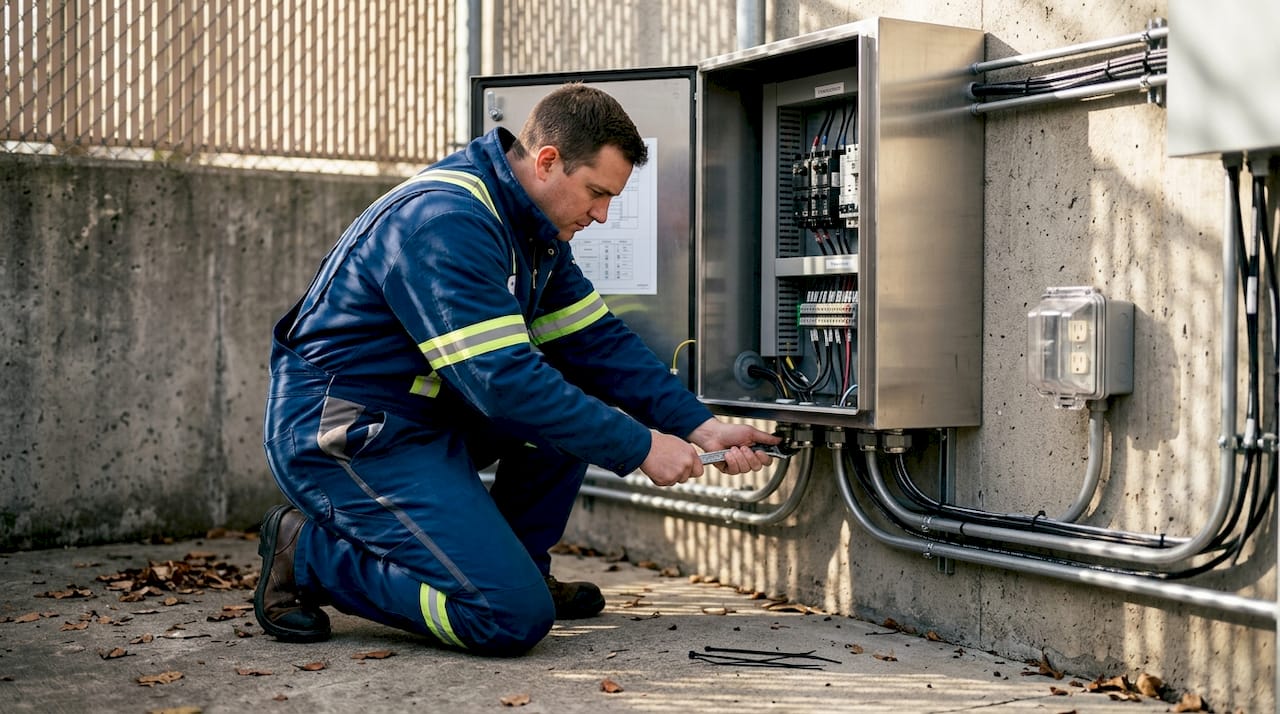
- Mount enclosures so cable entries face downward or sideways. Top cable entry without drip loops is an invitation for water ingress. Use cable glands or grommets for all entries, route cables with drip loops, and use heat-shrink or waterproof connectors inside the enclosure.
- Apply sealant properly. Silicone alone on a conduit fitting is not a weatherproofing method. Threaded conduit entries require conduit hubs rated for the enclosure’s protection level.
- Secure all unused entry points with appropriately rated plugs. Every open knockout is a vulnerability.
- Verify door and cover gasket compression. Over-tightened covers crack gaskets; under-tightened covers leak at corners.
- Confirm mounting surface integrity. A structurally sound mounting bracket matters. Vibration from industrial equipment loosens screws and can compromise gasket seals over time.
The bullet points below identify the red-flag errors that show up most often during installation audits:
- Conduit running directly into the top of an enclosure with no drip loop
- Silicone caulk used as the sole sealant at conduit entries
- Mixed gland sizes (some too large) with packing material stuffed in the gap
- Missing or cracked gaskets on previously opened enclosures that were reused without inspection
- Enclosures mounted flush against walls without drainage space at the bottom
- Extension cords run through “weatherproof” in-use covers that were designed for specific plug profiles, not loose cable
NEC 210.8 mandates GFCI protection for all outdoor receptacles, and NEMA 4X is required for high-corrosion locations. This applies to every outdoor 15 or 20 amp, 125-volt circuit on your site.
Pro Tip: Always install extra-duty in-use covers on outdoor GFCI receptacles. Standard in-use covers meet the basic code requirement, but extra-duty covers withstand more abuse in industrial environments and are required in some jurisdictions for commercial and industrial applications. Document cover types during installation for your compliance records. For a structured approach to upgrading older installations, review electrical protection upgrade steps that address both code gaps and operational improvements. On sites with painting or coating operations, also apply industrial paint booth safety best practices to manage combustible dust near electrical enclosures.
Addressing condensation, climate, and inspection routines
Even with perfect installation practice, ongoing performance depends on tackling climate threats and maintaining regular upkeep.
A sealed enclosure that passes its IP or NEMA rating test on day one can fail silently over the following months because of one specific mechanism: condensation. Thermal cycling draws humid air through microscopic paths in seals and fittings. When temperatures drop at night, that moisture condenses on the internal surfaces of the enclosure. Over time, standing water accumulates, accelerating corrosion, tracking across insulation surfaces, and eventually causing failures that look mysterious because the enclosure itself shows no obvious physical damage.
Even well-sealed enclosures suffer from condensation in humid or cold climates. The solutions include:
- Desiccant packs: Effective for low-activity enclosures that see infrequent access. Replace or regenerate desiccants on the same schedule as routine inspections.
- Breather and vent elements: These allow pressure equalization while blocking liquid water and dust. They are ideal for enclosures in environments with large daily temperature swings.
- Thermostatically controlled heaters: Used in enclosures that must stay above the dew point during cold weather. Size the heater based on enclosure volume and minimum ambient temperature, not just “a heater is installed.”
- Anti-condensation coatings on internal metallic surfaces in particularly humid coastal or tropical environments.
Edge-case failures include condensation, seal cracking, neglected cable entries, and undersized glands, all of which only become visible during inspections. That is the argument for taking inspections seriously rather than treating them as a compliance checkbox.
Field insight: Weatherproofing is not a one-time installation decision. Enclosures in aggressive environments may need seal inspection every six months, not every year. High-corrosion zones near chemical plant vents or seawater cooling systems deserve a quarterly look at minimum, especially during seasonal transitions when temperature differentials are greatest.
Annual post-storm inspections significantly extend the service life of outdoor electrical enclosures and reduce unplanned downtime. Structure your inspection program to check: gasket condition and compression, gland tightness and seal integrity, internal moisture or corrosion evidence, fastener and hinge corrosion, conduit entry seal integrity, and proper function of any heaters or vents installed for condensation control.
Tie your inspection schedule to your facility’s preventive maintenance program and document findings formally. Verbal “looks fine to me” reports from technicians do not constitute a defensible inspection record under OSHA or NEC audit conditions. For long-term strategies that account for worsening weather patterns, review climate adaptation for protection approaches that address both enclosure performance and broader site resilience.
Where most facilities fall short—and how to go beyond the basics
After years of working with industrial sites across varied climates and regulatory environments, one pattern stands out: facilities that struggle with weatherproofing failures are rarely using the wrong products. They are using reasonable products poorly, then not maintaining them, and not revisiting their specifications when site conditions change.
The checklist-only approach is a significant part of the problem. Checklists capture what was true at installation time. They do not capture the fact that a new solvent tank was added twenty feet from an enclosure rated only for general outdoor use, or that the facility’s prevailing wind shifted after a neighboring structure was demolished. Corrosion and climate do not respect the original design brief.
There is also a real cost to over-specifying that the industry rarely discusses honestly. Specifying NEMA 4X stainless enclosures across a site that primarily faces light rain and dust results in unnecessary procurement cost, heavier installations that require additional structural support, and a false sense of security because teams assume “we have the best rating” without recognizing that installation practice and maintenance matter more than the nameplate.
The under-specification failure mode gets most of the attention, and rightly so because its consequences are more dramatic. But over-specification creates organizational complacency that can be equally damaging when edge cases arise at the locations where budget pressure forced a downgrade.
The practical answer is a dynamic site classification system, one where enclosure ratings are tied to formally documented site conditions that get re-evaluated on a regular cycle, not just when something fails. Working with contractors and O&M teams to keep rating information and inspection records accessible and current is the infrastructure that makes this work. It also supports your environmental responsibility in protection commitments, since properly rated, well-maintained systems consume fewer replacement materials and generate less hazardous waste over their lifecycle.
Document, re-evaluate, and communicate. Those three words describe the difference between facilities that manage weatherproofing as a living system and those that manage it as a one-time project.
Take the next step: professional solutions for weatherproof protection
For organizations ready to move beyond standard practices, expert partnership bridges the final gap between safety and compliance.
Industrial facilities with complex outdoor electrical systems, high-value assets, or exposure to severe weather need more than product selection guidance. They need a full-cycle approach that starts with a professional site assessment, integrates enclosure weatherproofing with grounding and lightning protection solutions designed for their specific risk profile, and produces documentation that holds up during regulatory audits.
Indelec’s engineering team brings specialized expertise to facilities where conventional weatherproofing intersects with lightning risk, from exposed outdoor substations to coastal processing plants where deep earth grounding services are essential for both safety and code compliance. Every installation is engineered to meet applicable standards and documented for compliance reporting. For facilities committed to long-term resilience, our green lightning protection approach connects electrical protection performance with sustainability goals. Reach out to discuss a tailored audit or system design for your site.
Frequently asked questions
What is the main difference between NEMA and IP ratings?
NEMA ratings cover corrosion, ice, and mechanical hazards that go beyond IP’s focus on dust and water ingress, making them non-equivalent and generally preferred for North American industrial specifications.
How often should weatherproof electrical enclosures be inspected?
Annual inspections and post-storm checks are the baseline standard, with higher-frequency inspections recommended for corrosive or coastal environments.
Do I need NEMA 4X enclosures everywhere outdoors?
No. Specify NEMA 4X only in corrosive or washdown environments; general outdoor locations with rain and dust exposure are typically well served by NEMA 3R or NEMA 4.
How can I prevent condensation inside sealed enclosures?
Use desiccants, breather vents, or thermostatically controlled heaters to manage humidity and temperature differentials that drive condensation inside sealed enclosures.
Is GFCI protection mandatory for all outdoor installations?
Yes. NEC 210.8 mandates GFCI protection for all outdoor 15 and 20 amp, 125 to 250 volt receptacles without exception.
Recommended
- Step-by-Step Electrical Protection Upgrade: Facility Safety Guide
- How to document lightning protection systems effectively
- Building lightning safety: protect your facility effectively
- Factory electrical safety checklist: step-by-step guide
- Industrial equipment safety checklist: Essential steps for compliance – CONQUEST MFG USA
- Electricians in UK renovations: roles, costs & compliance