Explaining lightning hazard zones for safer facilities
TL;DR:
- Lightning hazard zones are layered shields that reduce electromagnetic impact on sensitive equipment.
- Proper zone assessment and protective devices are essential for safety, compliance, and operational continuity.
- Regular reviews and updates are crucial as facility modifications and environmental factors change over time.
Lightning strikes are one of the most underestimated threats in industrial and commercial facility management. Most safety plans focus on grounding rods and air terminals, then stop there. But a single strike delivers up to 200kA of current, and the electromagnetic shockwave it creates can destroy sensitive electronics, ignite fires, and halt operations across an entire building. The real protection gap is not outside your fence line. It is inside, in the unprotected zones where equipment, personnel, and data systems are most vulnerable. This guide explains exactly how lightning hazard zones work, how to assess your facility’s risk, and what you need to do at every zone boundary to stay safe and compliant.
Table of Contents
- What are lightning hazard zones and why do they matter?
- Understanding LPZ types and their roles in facility safety
- Risk assessment: Determining lightning hazard zones in your facility
- Zone boundaries, surge devices, and special cases (EX/ATEX zones)
- A fresh perspective: What most facility managers overlook about lightning hazard zones
- Connect with facility lightning protection experts
- Frequently asked questions
Key Takeaways
| Point | Details |
|---|---|
| Understand LPZs | Lightning Protection Zones categorize facility risk and guide protective measures for equipment and people. |
| Risk drives design | Risk assessment is crucial for defining effective LPZ boundaries and choosing protection devices. |
| Follow standards | IEC 62305 emphasizes a zone-based, risk-focused approach while US standards differ in application. |
| Special zones need care | Areas like EX/ATEX require specific insulated measures due to explosion risk from potential sparking. |
| Regular inspection required | Ongoing, standard-compliant inspection ensures your facility’s lightning protection remains effective. |
What are lightning hazard zones and why do they matter?
The term “lightning hazard zone” is often used loosely, but in the engineering world it has a precise meaning. The formal framework is called the Lightning Protection Zone (LPZ) concept, and it is defined in IEC 62305-4 as a method of dividing structures into areas of decreasing lightning electromagnetic impulse (LEMP) exposure. The goal is to protect electrical and electronic systems by controlling how much of the lightning’s energy reaches each area.
Think of it like a series of nested shields. The outermost layer faces the full force of a strike. Each inner layer is designed to absorb or deflect more of the threat, so that by the time energy reaches your most sensitive equipment, it is reduced to a manageable level. Without this layered thinking, a single strike can cascade through your entire electrical infrastructure.
Why does this matter for facility lightning safety? Three reasons stand out:
- Operational continuity: Unprotected equipment failures from LEMP can shut down production lines, data centers, and control systems for days.
- Personnel safety: Improper zone design exposes workers to touch and step voltages that are often invisible until someone is injured.
- Regulatory compliance: Many insurance policies and industry lightning protection standards now require documented LPZ assessments before coverage applies.
“The LPZ concept is not just a design tool. It is the foundation of any credible lightning protection plan for a modern facility.”
Facility managers who treat lightning protection as a single-layer problem, typically just an external air termination system, are leaving the most critical assets unprotected. The LPZ approach forces you to think floor by floor, room by room, and system by system. That shift in thinking is what separates a compliant facility from a vulnerable one.
Understanding LPZ types and their roles in facility safety
Once you grasp the concept, the next step is knowing what each zone actually means in practice. Each LPZ has a distinct threat profile: LPZ 0A is fully exposed to direct strikes and the complete electromagnetic field. LPZ 0B is shielded from direct strikes but still experiences the full field. LPZ 1 sees only partial currents and an attenuated field. LPZ 2 and above offer further attenuation, making them suitable for sensitive electronics.
Here is how these zones typically map onto a real industrial facility:
| Zone | Threat level | Typical location | Primary protection needed |
|---|---|---|---|
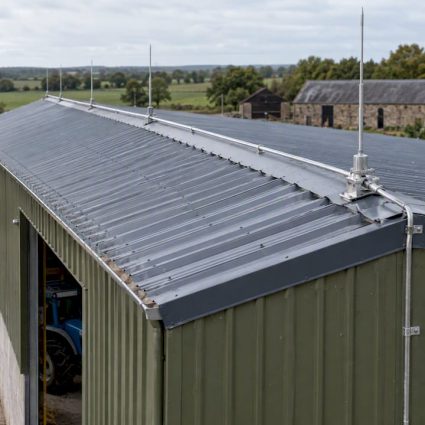
| LPZ 0A | Highest | Rooftops, open yards | Air termination, bonding |
| LPZ 0B | High | Under roof overhangs, covered loading docks | Shielding, bonding |
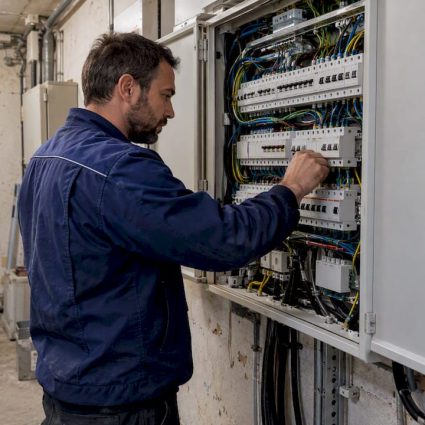
| LPZ 1 | Moderate | Building interiors near entry points | Type 1 SPDs, shielding |
| LPZ 2+ | Low | Server rooms, control centers | Type 2/3 SPDs, cable routing |
Here is how to think about zone assignment in practice:
- Start at the outermost perimeter and work inward.
- Identify every point where power, data, or signal lines cross a zone boundary.
- Assign a zone to each space based on its shielding and distance from the strike point.
- Match the surge protective device (SPD) type to the zone transition, not just the equipment.
- Document every boundary decision for compliance audits.
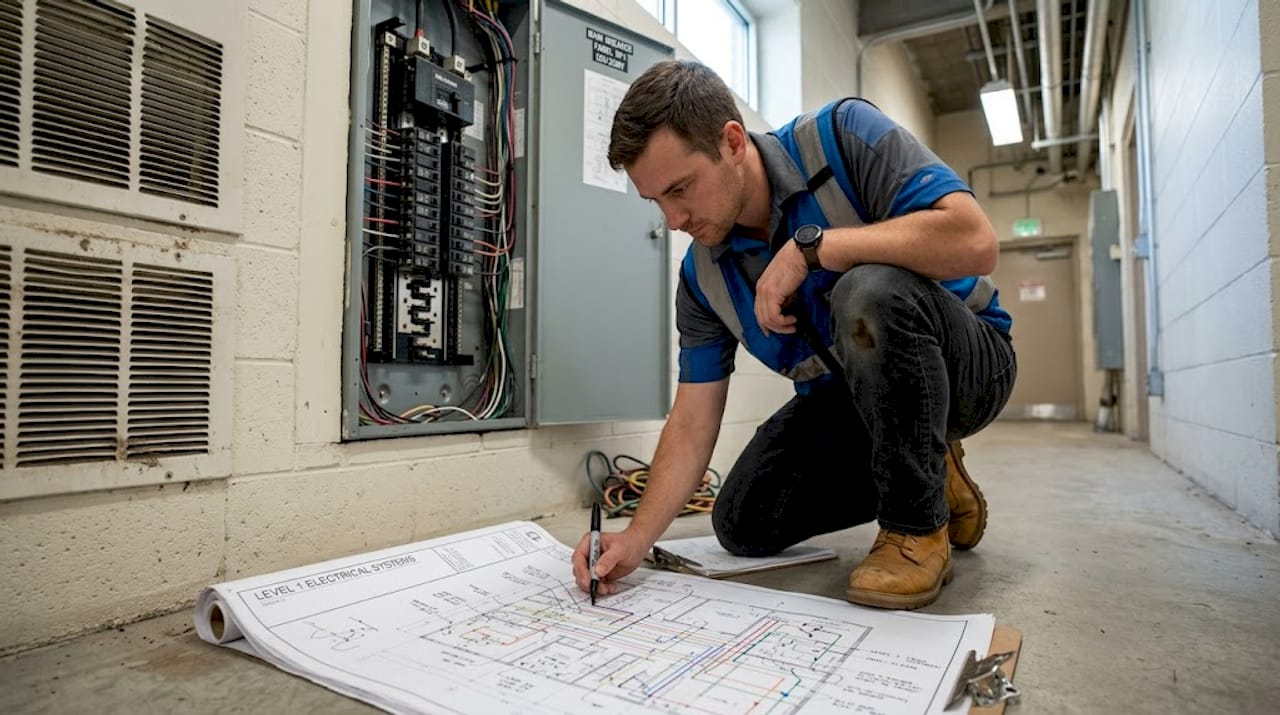
One scenario that catches many managers off guard: a server room located in an interior space might qualify as LPZ 2, but if an unshielded cable run enters it from outside, that cable effectively imports LPZ 0A conditions directly into the room. Proven lightning protection addresses this by treating every cable penetration as a zone boundary event.
Pro Tip: Map your facility’s cable routes before finalizing zone boundaries. A single unshielded conduit from the roof to the basement can collapse your entire zone strategy.
The zones also overlap in ways that surprise even experienced engineers. A rooftop HVAC unit sits in LPZ 0A, but its control wiring runs into LPZ 1 spaces. Every transition point is a potential failure location if common lightning hazards at those junctions are not addressed.
Risk assessment: Determining lightning hazard zones in your facility
Knowing the zones is only half the work. You also need to know which zones your facility actually requires, and that comes from a formal risk assessment. The IEC 62305-2 methodology uses the formula R = N x P x L, where N is the number of dangerous lightning events per year, P is the probability of damage, and L is the expected loss. You compare R to a tolerable risk threshold, typically 10^-5 for scenarios involving potential loss of life.
To run this assessment, you need to gather:
- Ground flash density (Ng) for your location. Florida, for example, sees up to 14 flashes per square kilometer per year, while the Pacific Northwest sees far less.
- Building dimensions and construction materials, since larger and taller structures intercept more strikes.
- The nature of internal systems, including whether you have explosive materials, critical data infrastructure, or high-value equipment.
- All incoming service lines, power, telecom, and data, since each is a separate risk pathway.
The output tells you not just whether you need protection, but how robust each zone boundary needs to be. A facility with a low Ng and no sensitive electronics might only need basic LPZ 1 measures. A chemical plant in a high-flash-density region needs a full LPZ 2 or 3 strategy for its control systems.
Key statistic: In high-risk regions like Florida, ground flash density can reach 14 flashes per km² per year, meaning a large industrial site may be struck multiple times annually without any warning.
Pro Tip: Use the IEC 62305 standard as your baseline, but cross-check against local codes. Some jurisdictions layer additional requirements on top of the IEC framework.
One common pitfall is underestimating internal risk pathways. Managers often focus on the building’s footprint but forget that underground cables, shared utility trenches, and metal pipelines all act as conductors. A thorough risk assessment guide accounts for all of these entry points, not just the roof. Engaging lightning protection services early in the process saves significant rework later.
Zone boundaries, surge devices, and special cases (EX/ATEX zones)
Defining zones on paper is one thing. Enforcing them physically is another. Every LPZ boundary is a physical and functional line where lightning energy must be controlled before it crosses into the next zone. The primary tool at each boundary is a coordinated surge protective device.
At each LPZ transition, the SPD type must match the energy level: Type 1 SPDs handle the massive impulse currents at the LPZ 0A or 0B to LPZ 1 transition. Type 2 SPDs manage residual surges at the LPZ 1 to LPZ 2 boundary. Type 3 SPDs provide fine protection at the equipment level inside LPZ 2 or higher zones.
| Boundary | SPD type | Typical installation point |
|---|---|---|
| 0A/0B to 1 | Type 1 | Main distribution board |
| 1 to 2 | Type 2 | Sub-distribution panels |
| 2 to equipment | Type 3 | Equipment racks, outlets |
The most critical mistakes at boundaries include:
- Installing the wrong SPD class at a transition point
- Leaving data and signal lines unprotected while protecting power lines
- Failing to bond all metallic services at the same boundary point
- Assuming that an SPD installed years ago still meets current load and frequency requirements
Special environments add another layer of complexity. In EX/ATEX zones with explosive atmospheres, insulated or physically separated down-conductors are required because tests have confirmed sparking within 1 meter of standard conductors during a strike. In a petrochemical plant or grain storage facility, that spark is a catastrophic ignition risk.
“In explosive atmospheres, the margin for error is zero. A standard LPS conductor routed too close to a flammable zone is not just a compliance issue. It is a potential disaster.”
For ATEX zones, the facility lightning safety workflow must also address remote monitoring capabilities, since physical inspection of live hazardous areas is restricted and must be minimized.
A fresh perspective: What most facility managers overlook about lightning hazard zones
After decades of working with industrial and commercial sites, one pattern stands out: most managers treat lightning protection as a one-time installation project. They get the system certified, file the paperwork, and move on. The zones, however, are not static. Every renovation, new cable run, or equipment upgrade has the potential to redraw zone boundaries without anyone realizing it.
Building changes are the silent killer of zone integrity. A new HVAC unit, a relocated server rack, an added production line, each one can introduce an uncontrolled pathway that bypasses your carefully designed boundaries. IEC inspections every 12-24 months exist precisely because facilities change, and the protection system must change with them.
There is also the underestimated challenge of special soils and cross-building connections. Facilities built on high-resistivity soil, rocky terrain, or near water tables face grounding challenges that standard plans do not anticipate. And when two buildings share a common ground ring or utility trench, a strike on one structure can propagate directly into the other. Zone planning that stops at the building wall is incomplete by definition.
Connect with facility lightning protection experts
Understanding lightning hazard zones is the foundation, but translating that knowledge into a certified, compliant system requires hands-on expertise and site-specific engineering. Indelec has been designing and installing lightning protection systems since 1955, working across industrial, commercial, and infrastructure sectors worldwide.

Whether you need a full lightning system application review, guidance on current lightning standards, or end-to-end risk assessment and installation services, our team brings both the technical depth and field experience your facility demands. Reach out to schedule a site-specific consultation and ensure your zone boundaries are built to last.
Frequently asked questions
What is the difference between LPZ 0A and 0B?
LPZ 0A faces direct strikes and the full electromagnetic field, while LPZ 0B is shielded from direct strikes but still exposed to the complete electromagnetic field. Both zones require robust bonding, but only 0A demands direct strike air termination systems.
Do all countries require the lightning hazard zones (LPZ) approach?
No. IEC 62305 mandates LPZ as a core design method, but the US NFPA 780 standard uses prescriptive hardware and installation rules instead, referencing risk assessment only as an optional tool rather than a requirement.
How often must lightning protection systems be inspected?
IEC 62305 requires inspections every 12 to 24 months depending on the protection level assigned, with remote monitoring strongly preferred in ATEX zones to reduce the need for physical entry into hazardous areas.
What is the formula for lightning risk assessment?
The IEC formula is R = N x P x L, comparing the calculated risk R against a tolerable threshold such as 10^-5 for scenarios involving potential loss of life at a facility.
Why are EX/ATEX zones treated differently?
Explosive atmospheres require insulated conductors because tests show sparking can occur within 1 meter of standard down-conductors during a strike event, creating a direct ignition risk in any area where flammable gases, vapors, or dust are present.