Why maintain protection systems: essential safety for facilities
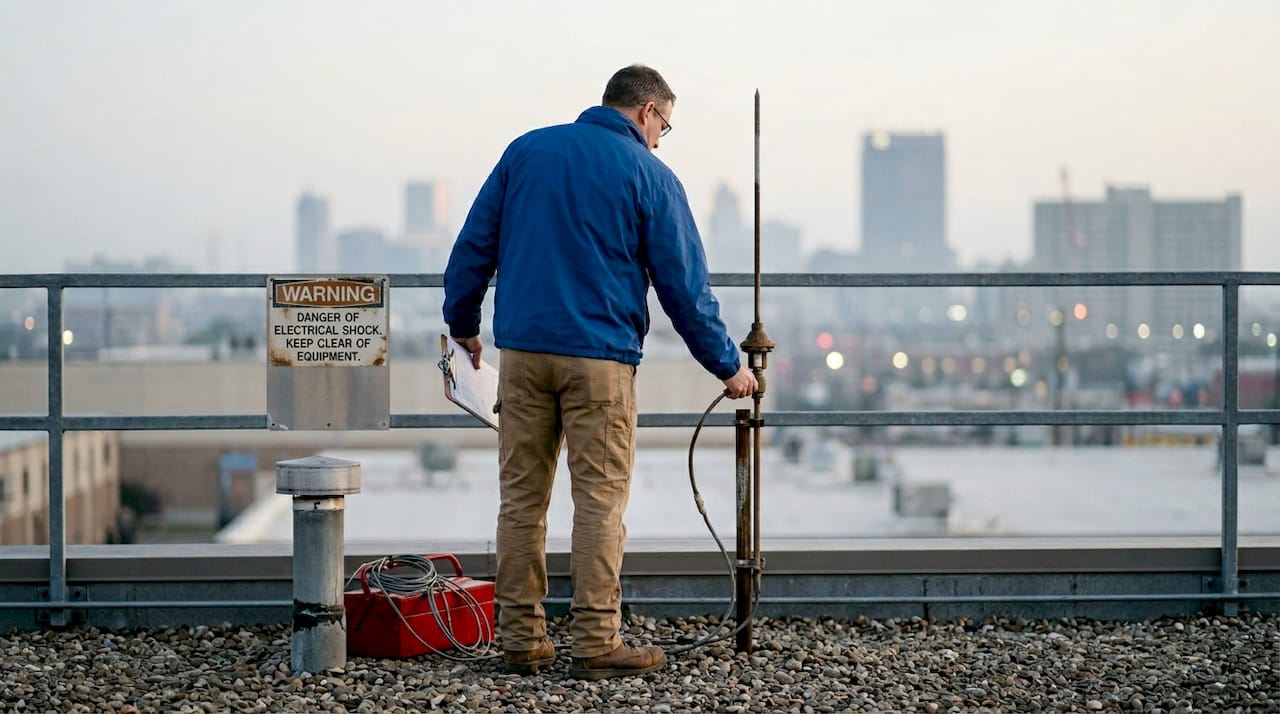
TL;DR:
- Proper maintenance of lightning protection systems is essential to ensure safety and compliance.
- Regular inspections and testing detect undetected faults that could cause catastrophic failures.
- High-risk sites require specialized, frequent inspections and insulated systems for explosion safety.
Lightning protection systems are often installed with confidence and then quietly forgotten. That’s a costly assumption. When a system degrades unnoticed, it offers no real protection during a strike, leaving your facility, your team, and your compliance record exposed.
Annual visual inspections and tests are required to keep these systems effective, yet many facilities skip them entirely. This article walks you through the real risks of neglect, what regulations actually require, how proper maintenance protects lives and assets, and what high-risk sites must do differently. If you manage a facility with a lightning protection system, this is what you need to know.
Table of Contents
- The true cost of neglected protection systems
- Core maintenance requirements: What regulations demand
- How proper maintenance safeguards lives and assets
- Special cases: Maintenance for high-risk and critical facilities
- Why ‘set and forget’ is the biggest myth in lightning protection
- Choose the right partner for ongoing protection
- Frequently asked questions
Key Takeaways
| Point | Details |
|---|---|
| Maintenance prevents catastrophe | Neglecting lightning protection invites system failure, costly downtime, and regulatory fines. |
| Regulations require annual checks | Compliance means annual inspections, special tests after severe events, and keeping clear documentation. |
| High-risk sites need extra care | Hazardous facilities face stricter requirements and additional inspection protocols to maintain safety. |
| Proper maintenance saves lives | Routine tests and prompt post-event checks protect people and assets from preventable incidents. |
The true cost of neglected protection systems
Most facility managers understand that lightning protection systems (LPS) need to be installed correctly. Far fewer realize that installation is only the beginning. Over time, conductors corrode, ground connections loosen, surge protection components degrade, and physical damage from weather or construction goes unnoticed. What looks like a functioning system from the outside can be completely ineffective where it counts.
Failure to maintain LPS can lead to undetected faults and catastrophic failures that shut down operations, damage critical equipment, and create serious safety hazards. The consequences aren’t just technical. They’re financial, legal, and reputational.
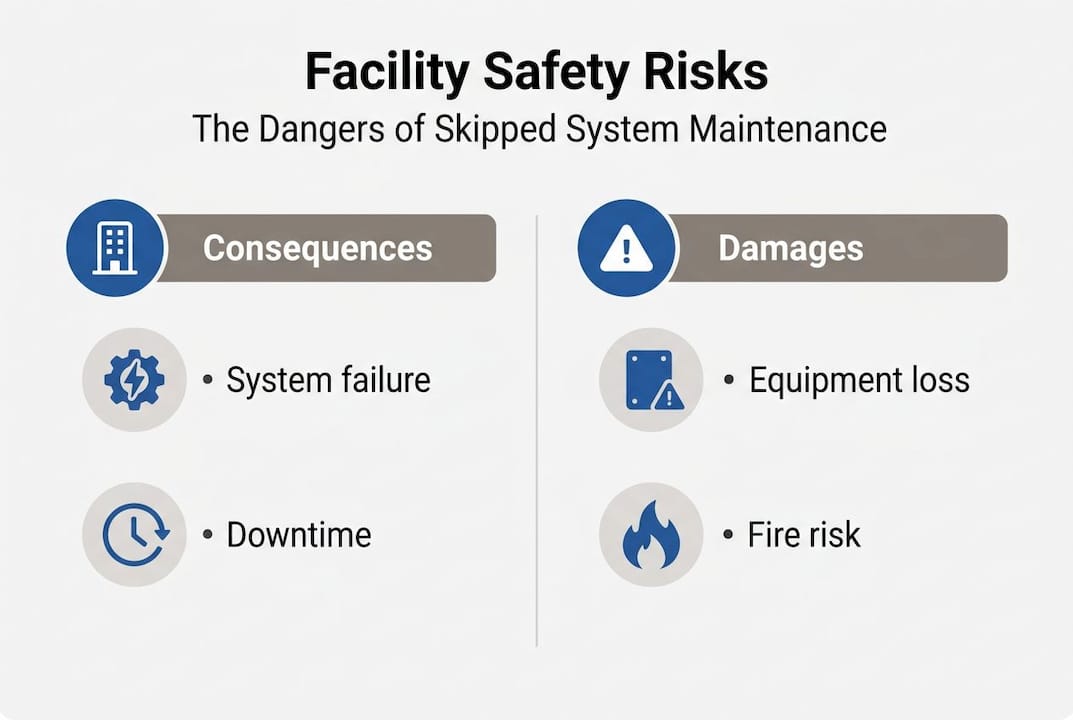
Here’s a breakdown of what neglect actually costs:
| Risk category | Potential impact |
|---|---|
| Financial loss | Equipment replacement, emergency repairs, production downtime |
| Regulatory penalties | Fines, forced shutdowns, loss of operating licenses |
| Safety incidents | Personnel injury, fire, explosion in hazardous zones |
| Insurance complications | Denied claims if non-compliance is discovered post-incident |
The real-world fallout from skipping maintenance includes:
- Lost revenue from downtime: A single lightning-related outage can cost industrial facilities tens of thousands of dollars per hour.
- Legal liability: If a strike injures a worker and the LPS is found to be non-compliant, the facility operator faces direct legal exposure.
- Reputation damage: Clients, partners, and regulators notice when a facility has a preventable safety incident.
- Voided insurance coverage: Insurers increasingly require documented maintenance records. Without them, claims can be denied.
“An undetected fault in a grounding conductor doesn’t announce itself. It waits for the next storm.”
Understanding common lightning hazards at your specific facility type is the first step toward knowing what can go wrong. Pairing that awareness with a strong facility lightning safety program turns reactive thinking into proactive protection.
Core maintenance requirements: What regulations demand
Regulations around lightning protection maintenance are not vague suggestions. They set specific obligations for inspection frequency, testing methods, and documentation. Knowing exactly what’s required keeps your facility compliant and your team protected.
Critical facilities must have annual in-depth inspections, and post-event checks after major lightning activity are mandatory under most applicable standards. These aren’t optional best practices. They’re enforceable requirements.
Here’s how requirements differ between standard and high-risk facilities:
| Requirement | Standard facility | High-risk facility |
|---|---|---|
| Visual inspection | Annual | Semi-annual or quarterly |
| Continuity testing | Annual | Annual + post-event |
| Ground resistance check | Every 2 years | Annual |
| Post-strike inspection | Recommended | Mandatory |
| Documentation | Required | Required with audit trail |
For most commercial and industrial sites, your annual maintenance checklist should include:
- Visual inspection of all air terminals, conductors, and bonding connections
- Continuity testing of the full conductor network
- Ground resistance measurement (target: below 10 Ohms)
- Inspection of surge protection devices (SPDs) and replacement if degraded
- Check for physical damage from weather, construction, or equipment changes
- Review and update system documentation and site drawings
- Log all findings, corrective actions, and sign-off by a qualified inspector
Pro Tip: Always log inspection outcomes in a dedicated maintenance register. Auditors and insurers want to see a clear, timestamped record of who inspected what and what was found. A missing log is treated the same as a missing inspection.
Familiarizing yourself with the applicable lightning protection standards for your region and industry is non-negotiable. A solid compliance lightning safety guide can help you map your current practices against what’s actually required.
How proper maintenance safeguards lives and assets
Maintenance isn’t just about ticking regulatory boxes. When done right, it actively reduces risk, extends system life, and keeps your facility running without interruption. The difference between a system that works and one that fails often comes down to a single corroded joint or a ground resistance value that drifted above the acceptable threshold.
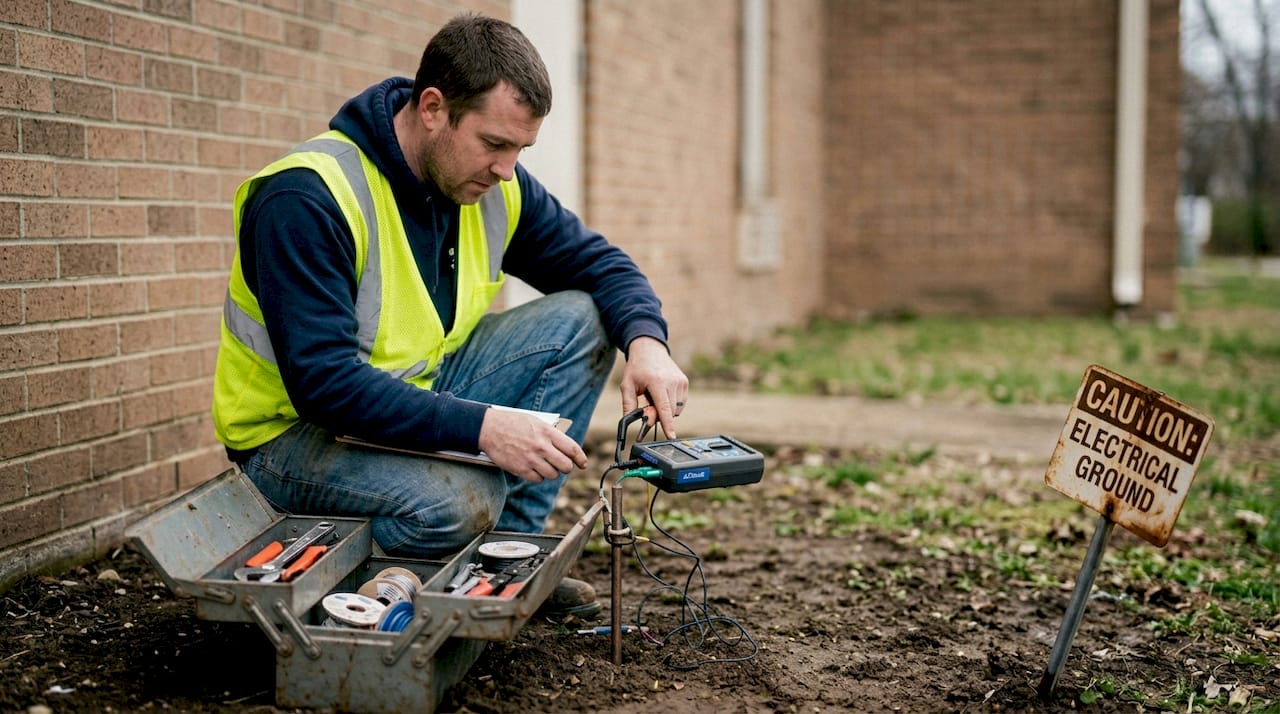
Annual visual inspections, continuity tests, and ground resistance checks are the core procedures that catch these issues before they become failures. A systematic approach to these steps gives your team real visibility into system health.
Here’s what a well-maintained LPS delivers in practice:
- Early fault detection: Continuity testing identifies broken conductor paths before a storm exposes the gap.
- Extended system lifespan: Addressing minor corrosion or mechanical damage early prevents full component replacement later.
- Uninterrupted operations: A compliant, functioning system means no forced shutdowns following a strike.
- Insurance and legal protection: Documented maintenance records support claims and demonstrate due diligence.
- Personnel safety: A properly grounded system safely channels strike energy away from people and sensitive equipment.
The numbers matter here. Ground resistance above 10 Ohms significantly reduces a system’s ability to safely dissipate strike energy. That single metric, checked annually, can be the difference between a safe discharge and a destructive fault current traveling through your building’s structure.
Pro Tip: Don’t wait for the next scheduled inspection after a major storm. Post-strike inspections are critical because even a near-miss can shift ground connections, damage air terminals, or stress surge protection components. A small fault found the day after a storm is far cheaper than a failure discovered during the next direct strike.
Building a reliable lightning safety workflow into your operations calendar ensures these checks happen consistently. Reviewing system application best practices also helps your team understand what a properly functioning system looks like at each inspection point.
Special cases: Maintenance for high-risk and critical facilities
Not all facilities carry the same risk profile. Refineries, chemical plants, data centers, hospitals, and sites with explosive atmospheres (classified as EX zones) face consequences from a lightning failure that go far beyond equipment damage. In these environments, a single undetected fault can trigger fires, explosions, or cascading system failures with catastrophic outcomes.
High-risk industrial sites need insulated external systems and specialized, frequent inspections that go well beyond standard commercial requirements. This isn’t regulatory overcaution. It reflects the physics of what happens when high-energy strike currents interact with flammable materials or sensitive electronics.
Enhanced requirements for high-risk and critical facilities include:
- Insulated external LPS: Required in EX zones to prevent spark discharge near flammable atmospheres
- Increased inspection intervals: Semi-annual or quarterly visual checks, not just annual
- Mandatory post-event inspections: Any nearby strike, not just direct hits, triggers a required inspection
- Detailed documentation: Full audit trails with inspector credentials, test results, and corrective action timelines
- Coordination with process safety teams: LPS maintenance must align with broader hazardous area management programs
- Specialized inspector qualifications: Standard electricians are not qualified for EX zone LPS work
“In explosive atmospheres, the LPS is not just a safety feature. It is a primary explosion prevention control. Treating it like a standard electrical system is a serious error.”
For these sites, inspections must involve qualified lightning protection specialists with specific experience in hazardous area classifications. Facility managers should never delegate this work to general maintenance contractors without verifying credentials.
Reviewing sensitive site guidelines helps clarify exactly what design and maintenance standards apply to your specific facility type. Understanding proven protection for electrical infrastructure also gives context for how these enhanced systems are designed to perform under real-world conditions.
Why ‘set and forget’ is the biggest myth in lightning protection
After years of conducting audits and supporting facility teams across industrial and commercial sites, one pattern stands out clearly. The most expensive failures are never caused by dramatic, unavoidable strikes. They come from small, missed issues that accumulated quietly over time.
A corroded bonding clamp. A ground rod that shifted during nearby construction. A surge protection device that tripped and was never reset. None of these announce themselves. They wait.
The industry myth that a well-installed LPS is a permanent solution leads managers to skip documentation, defer minor repairs, and treat inspections as a formality rather than a diagnostic tool. That mindset is where the real risk lives.
What actually prevents failures is a culture of proactive follow-up: logging every inspection, acting on every finding, and treating system changes (new equipment, building modifications, nearby construction) as triggers for a fresh review. Facilities that follow this approach, guided by resources like safe solutions for industrial sites, consistently outperform those that rely on installation quality alone. The system you installed five years ago may not match the facility you’re running today.
Choose the right partner for ongoing protection
Knowing what your lightning protection system requires is one thing. Having the right team to deliver it is another. Indelec offers full-spectrum inspection and maintenance services, compliance support, and access to advanced protection technologies designed for both standard and high-risk facilities.
Our certified specialists conduct thorough system checks aligned with current maintenance standards, provide detailed inspection reports, and help you build a maintenance program that holds up to regulatory scrutiny. Whether you’re managing a single commercial property or a portfolio of industrial sites, our professional lightning protection application services ensure your systems perform when it matters most. Reach out to our team to schedule a certified inspection and take the guesswork out of compliance.
Frequently asked questions
What is the recommended maintenance schedule for lightning protection systems?
A yearly inspection and testing schedule is standard for most facilities, covering visual checks, continuity tests, and ground resistance measurements, with additional inspections required after significant lightning events.
How does neglecting system maintenance increase risk?
Neglect allows faults to accumulate undetected, raising the likelihood of complete system failure during a strike and exposing the facility to regulatory non-compliance penalties.
What extra steps do high-risk sites require?
High-risk sites require insulated external lightning protection systems, more frequent inspection intervals, mandatory post-event checks, and inspections conducted by specialists with hazardous area qualifications.
Why should inspection outcomes be logged?
Logging inspection outcomes creates a verifiable audit trail that satisfies regulatory requirements and allows your team to track recurring issues before they escalate into system failures.