Building contractor lightning guide: Safe solutions for industrial sites
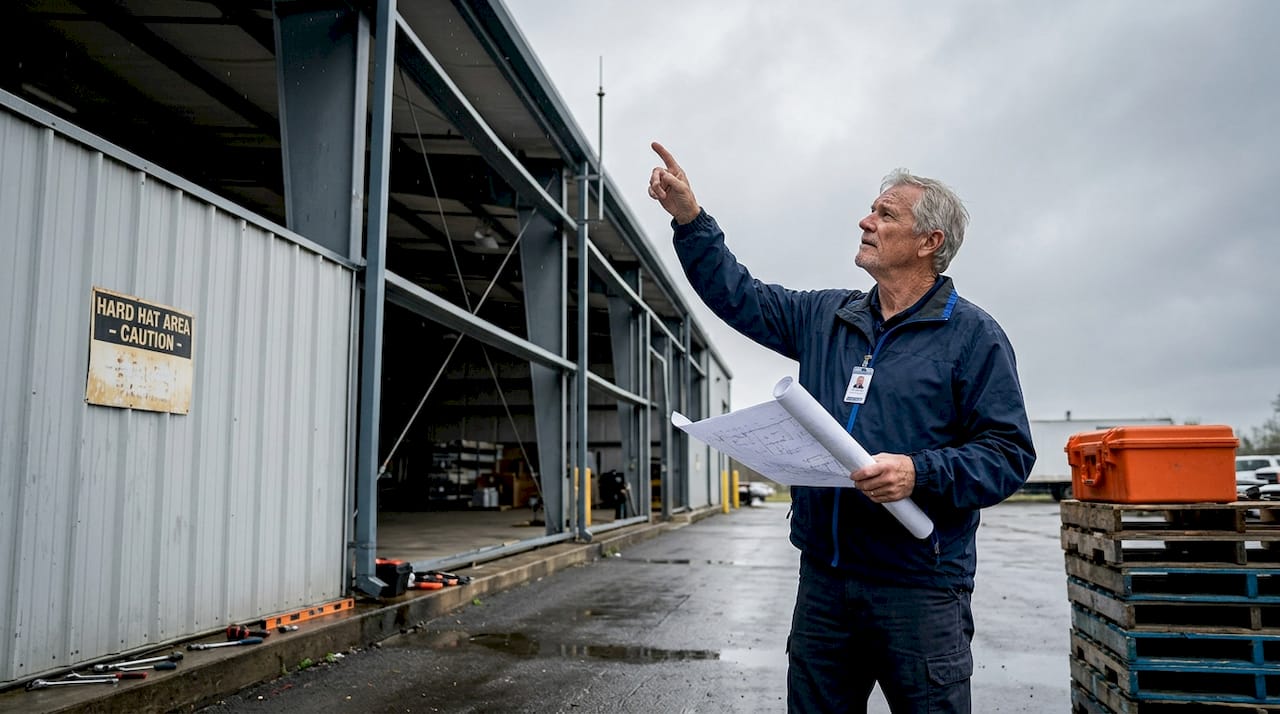
In industrial facilities, lightning rarely behaves the way most contractors expect. Rather than flowing neatly through installed conductors, 80% of lightning current can travel through the steel framework itself, bypassing your carefully designed system. This creates hidden risks that go undetected until equipment fails, a safety incident occurs, or a compliance audit reveals gaps. This guide walks you through the standards, design methods, maintenance requirements, and expert recommendations you need to build lightning protection systems that actually work on industrial and commercial sites.
Table of Contents
- Why lightning protection is crucial for industrial and commercial buildings
- Understanding IEC 62305: International lightning protection standard
- Designing lightning protection for industrial structures: Methods and practical insights
- Inspection, maintenance, and annual compliance for lightning protection systems
- Top tips for building contractors: Expert pitfalls and recommendations
- Innovative solutions and services for lightning protection
- Frequently asked questions
Key Takeaways
| Point | Details |
|---|---|
| Bond steel structures | Steel frameworks often carry most lightning current, so always bond them for safe protection. |
| Follow IEC 62305 standards | Use IEC 62305 to select protection levels, mesh sizes, and conductor requirements based on risk. |
| Inspect systems annually | Schedule yearly inspections and maintenance for high-risk sites to stay compliant and ensure performance. |
| Document everything | Keep records of system design, maintenance, and compliance checks for audit readiness and safety. |
Why lightning protection is crucial for industrial and commercial buildings
Lightning is not just a weather nuisance. For industrial and commercial facilities, a single strike can trigger equipment failure, ignite fires, disrupt critical processes, and expose your client to serious regulatory penalties. The risks are amplified on sites with exposed steel structures, rooftop mechanical systems, and sensitive electronic infrastructure.
One of the most persistent misconceptions in the field is that installed conductors handle all the current. In reality, structural steel plays a massive role in current distribution. A pharmaceutical plant case study showed that roof steel carried 80% of the total lightning current, while the intended conductors handled only 20%. If that steel is not properly bonded, the current finds uncontrolled paths through the building, damaging cables, equipment, and potentially injuring personnel.
Key risks contractors must account for on industrial sites include:
- Equipment damage from conducted and induced surges
- Fire and explosion hazards in facilities handling flammable materials
- Data loss and process interruption in automated or IT-dependent operations
- Regulatory non-compliance leading to fines or project shutdowns
- Liability exposure when protection systems are inadequate or undocumented
“Industrial sites face unique risks due to exposed structures and critical systems, making lightning an underestimated danger that demands precise, standards-based protection.”
Understanding proven lightning protection safety principles is the first step. From there, a clear [lightning protection workflow](https://indelec.com/en/blog-en/public-infrastructure-lightning protection workflow) ensures nothing gets missed from design through commissioning.
Understanding IEC 62305: International lightning protection standard
IEC 62305 is the global benchmark for lightning protection design. It gives contractors and engineers a structured, risk-based framework to determine exactly what level of protection a facility needs and how to deliver it.
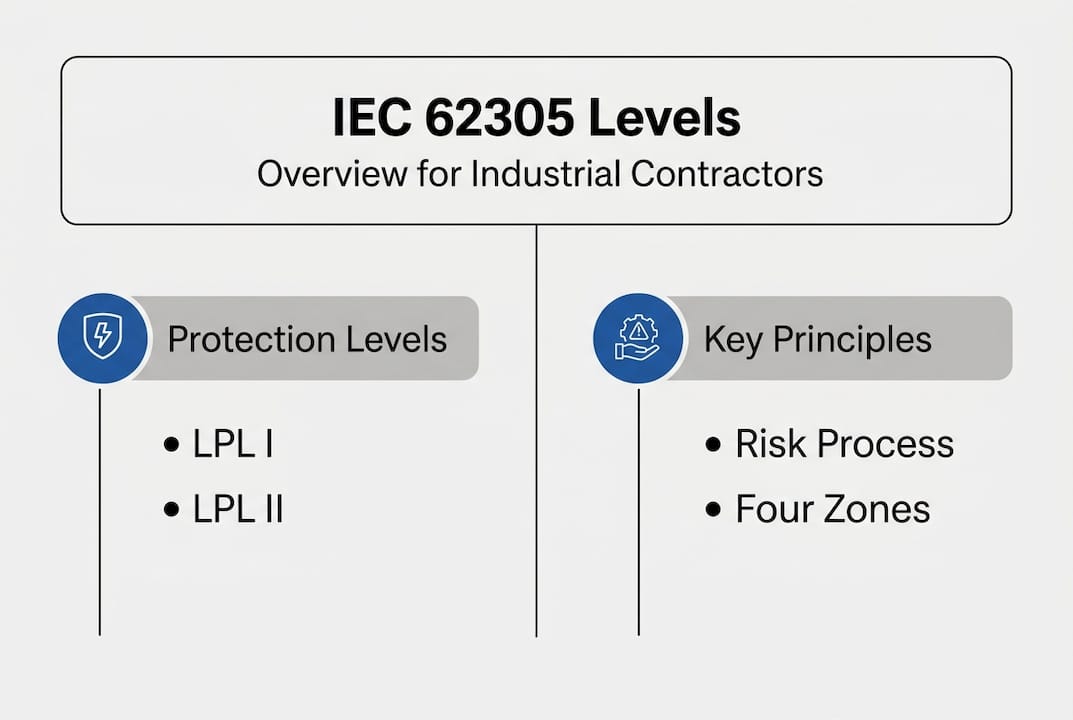
The standard defines four protection levels (LPL I through IV), each corresponding to a different risk threshold. LPL I offers the highest protection and applies to the most critical or hazardous facilities. LPL IV covers lower-risk structures. Your choice of level drives every downstream design decision.
| Protection level | Mesh size | Typical application |
|---|---|---|
| LPL I | 5 x 5 m | Explosive/chemical plants |
| LPL II | 10 x 10 m | Hospitals, data centers |
| LPL III | 15 x 15 m | Commercial buildings |
| LPL IV | 20 x 20 m | Standard structures |
The standard supports three primary design methods:
- Rolling sphere method: Models the lightning strike path using a sphere radius tied to the protection level. Effective for complex roof geometries.
- Protective angle method: Simpler approach suited to straightforward structures with defined air terminal placements.
- Mesh method: Covers flat or gently sloping roofs with a conductor grid sized to the protection level.
Risk assessment under IEC 62305 follows a defined process: identify the structure and its contents, calculate the probability and consequences of a strike, determine the tolerable risk threshold, and select the protection level that brings actual risk below that threshold. Conductor sizing, bonding requirements, and separation distances all flow from this assessment.
Pro Tip: Always document your risk assessment calculations and keep them with the project file. Inspectors and auditors will ask for them, and having clear records protects you and your client.
For a deeper look at applicable lightning standards and how they interact with local codes, review the relevant system application guide before finalizing your design.
Designing lightning protection for industrial structures: Methods and practical insights
Translating IEC 62305 into a working system on an industrial site requires more than following a checklist. The biggest variable most contractors underestimate is the role of structural steel.
Steel frameworks are highly conductive and interconnected throughout a building. When lightning strikes, current distributes across every available conductive path. The pharmaceutical plant study confirmed this clearly: cables routed through the structure were exposed to significant induced voltages because the steel was not fully bonded into the lightning protection system. Transfer impedance measurements were required to assess cable vulnerability.
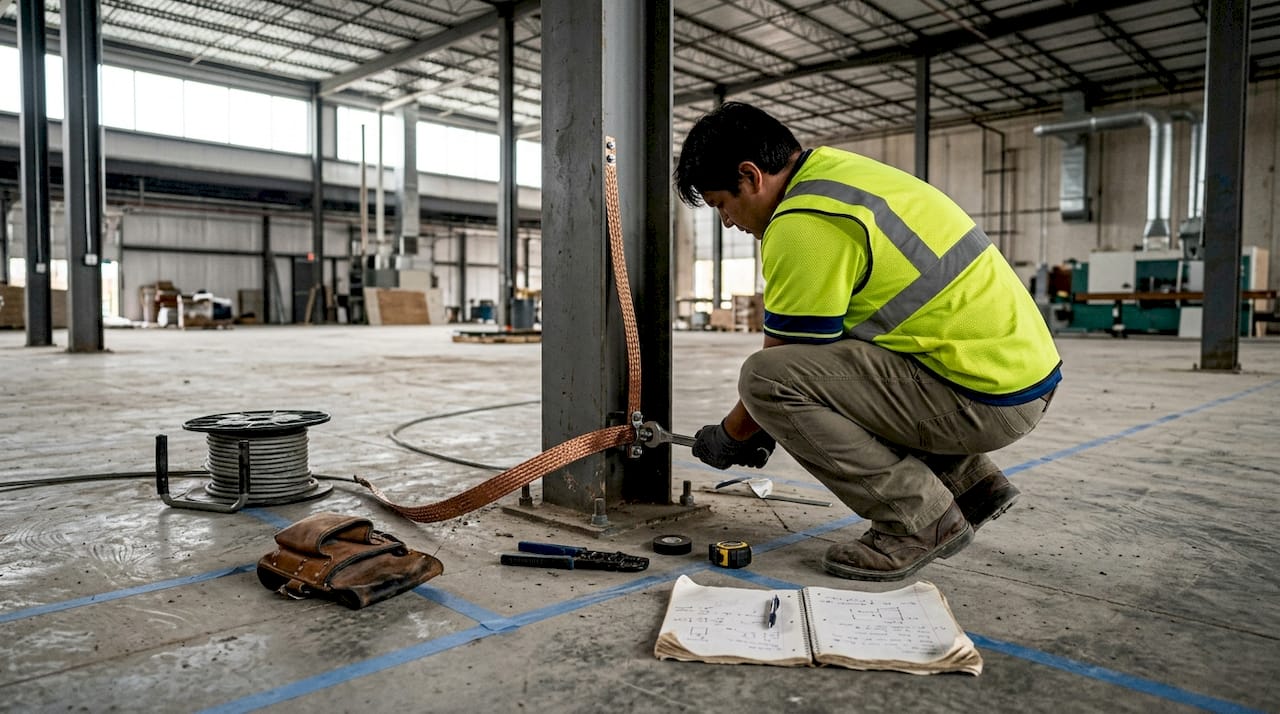
Here is how current actually distributed in that case study:
| Current path | Percentage of total lightning current |
|---|---|
| Structural steel (roof) | 80% |
| Installed down conductors | 20% |
This distribution has direct implications for your design. Every major steel element, including columns, beams, and reinforcement, must be bonded to the lightning protection system at regular intervals. Unbonded steel creates unpredictable current paths and can cause dangerous side flashes.
Practical installation guidelines for industrial sites:
- Use minimum 50 mm² copper or 70 mm² aluminum for down conductors on LPL I/II sites
- Bond all metallic roof structures, HVAC frames, and pipe penetrations to the equipotential bonding network
- Maintain required separation distances between conductors and sensitive cables to prevent induced surges
- Use shielded cable routes where separation distance cannot be maintained
- Test transfer impedance on critical cable runs in steel-framed buildings
Pro Tip: On sites with extensive steel frameworks, treat the steel as part of your system, not a problem to work around. Proper bonding turns it into an asset that improves current distribution.
For more guidance on [facility lightning safety tips](https://indelec.com/en/blog-en/building-lightning-safety-protect-your facility) and a [sensitive site design example](https://indelec.com/en/solutions-en/highly-sensitive-site-lightning protection design example), these resources provide practical context for complex projects.
Inspection, maintenance, and annual compliance for lightning protection systems
A well-designed system that is never inspected will eventually fail. IEC 62305 sets clear expectations: LPL I and II sites require annual inspections, while lower-risk sites may extend to two or four-year intervals. High-risk industrial facilities should treat annual maintenance as a minimum, not a target.
A structured inspection routine should cover:
- Visual check of all air terminals, down conductors, and connections for corrosion, mechanical damage, or displacement
- Continuity testing of all conductor paths from air terminal to earth electrode
- Earth resistance measurement to confirm grounding system performance
- Inspection of all bonding connections to structural steel and metallic services
- Review of surge protection devices (SPDs) at main panels and sensitive equipment
Maintenance steps that often get skipped on industrial sites:
- Cleaning corroded clamps and replacing damaged conductor sections
- Re-torquing mechanical connections that have loosened due to thermal cycling
- Updating system drawings when building modifications have been made
- Logging all findings and corrective actions in a dedicated maintenance record
Pro Tip: Keep a digital maintenance log tied to the facility’s asset management system. When a compliance audit happens, you want to pull up a complete history in seconds, not spend hours searching paper files.
A note on ESE rods: Early Streamer Emission air terminals are accepted under NF C 17-102 and referenced in IEC frameworks, but they remain controversial in the field due to ongoing debate about their claimed protection radius. If your project specifies ESE rods, verify that the chosen standard explicitly permits them and document the basis for that decision.
Review the full scope of lightning protection maintenance services and align your inspection program with the [facility safety workflow](https://indelec.com/en/blog-en/facility-lightning-safety workflow infrastructure) that fits your site classification.
Top tips for building contractors: Expert pitfalls and recommendations
After years of field experience and case study analysis, certain mistakes show up repeatedly on industrial lightning protection projects. Avoiding them is straightforward once you know what to look for.
The most common pitfalls include:
- Ignoring steel bonding: Improper bonding of steel frameworks is the single most common cause of system underperformance on industrial sites. Bond everything.
- Undersizing conductors: Using residential-grade conductor sizing on industrial LPL I/II projects creates compliance failures and real safety risks.
- Skipping the risk assessment: Jumping straight to installation without a documented IEC 62305 risk assessment leaves you exposed legally and technically.
- Neglecting SPD coordination: Air terminals and down conductors protect the structure. SPDs protect the equipment inside. Both are required.
- Poor documentation: Incomplete as-built drawings and missing maintenance records are the fastest way to fail a compliance audit.
Pro Tip: On any project involving sensitive processes or hazardous materials, bring in a certified lightning protection specialist during the design phase. The cost of expert input is a fraction of the cost of a redesign or, worse, an incident.
Staying current on climate adaptation strategies for electrical protection is also worth your time. Changing weather patterns are increasing lightning frequency in some regions, which directly affects risk assessments and protection level decisions.
Innovative solutions and services for lightning protection
When your project demands more than a standard conductor grid, modern air terminal technology and expert support make a measurable difference.

Indelec’s Prevectron3 technology represents the current state of the art in early streamer emission air terminals, designed for industrial and commercial sites where conventional mesh systems are impractical or insufficient. For contractors working on complex rooftop geometries, large open areas, or facilities with critical process equipment, advanced air terminals reduce the number of down conductors required while maintaining compliance with applicable standards. Indelec also provides full system application solutions including technical consulting, installation support, and certification services. If your site falls into the category of underestimated lightning danger, our team can conduct a full risk assessment and recommend a protection strategy tailored to your facility’s specific risk profile and regulatory requirements.
Frequently asked questions
What determines the needed protection level for an industrial facility?
IEC 62305 applies a risk-based assessment that factors in facility size, occupancy, asset sensitivity, and the consequences of a strike to assign one of four protection levels. The higher the risk and consequence, the more stringent the protection level required.
Why is bonding steel structures important in lightning protection?
Structural steel can carry up to 80% of lightning current during a strike, so bonding it into the protection system ensures that current dissipates safely rather than finding uncontrolled paths through cables and equipment.
How often should lightning protection systems be inspected?
LPL I and II sites require annual inspections under IEC standards, while lower-risk classifications may allow longer intervals. High-risk industrial facilities should default to annual inspections regardless of classification.
Are ESE rods compliant with all standards?
ESE rods are accepted under NF C 17-102 and IEC frameworks, but their claimed protection radius remains a subject of technical debate. Always verify that your project’s governing standard explicitly permits their use before specifying them.