The Role of Construction Phase Protection in 2026
TL;DR:
- Construction phase protection involves safety and security measures during active building work to prevent injuries, theft, and delays. It is a legal requirement, critical for reducing fatalities, preventing theft, and ensuring project continuity. Effective strategies evolve with project phases and rely on physical barriers, procedural controls, electronic monitoring, and daily operational practices.
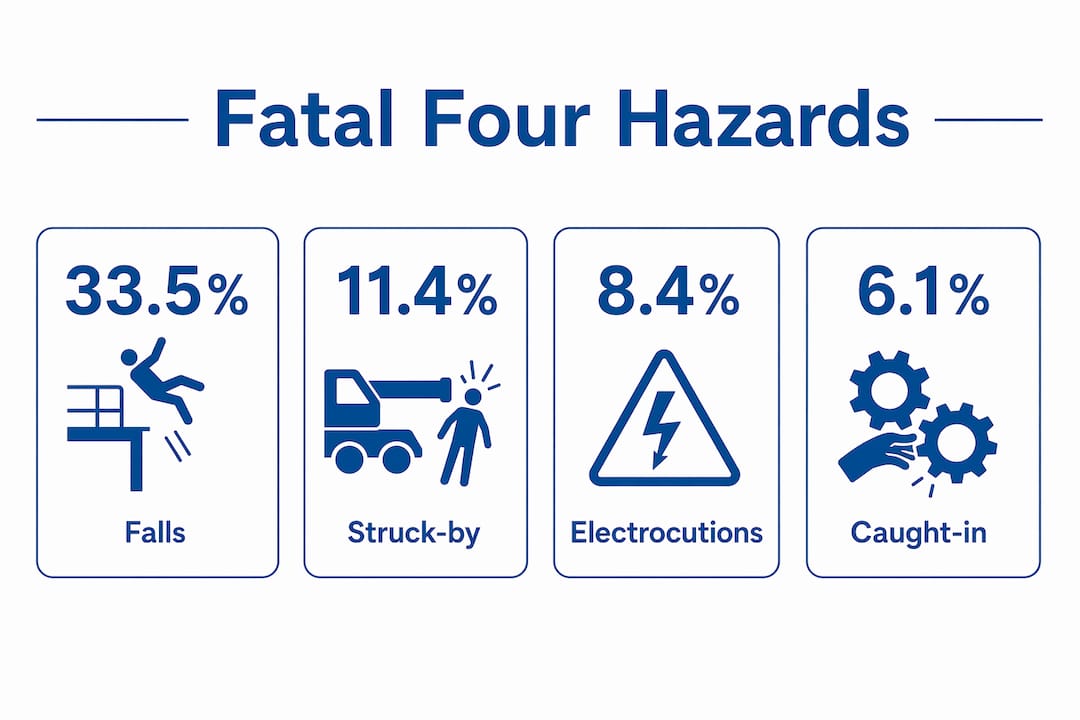
Construction phase protection is the comprehensive set of safety and security measures implemented during active building works to prevent injuries, theft, unauthorized access, and project delays. The role of construction phase protection extends far beyond compliance paperwork. It directly determines whether a project finishes on time, within budget, and without fatalities. OSHA data shows falls cause 33.5% of all construction fatalities, with electrocutions accounting for 8.4% and struck-by incidents at 11.4%. These numbers confirm that protection during the building phase is not a formality. It is the primary mechanism keeping workers alive and projects viable.
What is the role of construction phase protection?
Construction phase protection, formally known in regulatory frameworks as the Construction Phase Plan (CPP) under CDM 2015 regulations, defines the safety and security controls active from the first day of site mobilization through to handover. The CPP is a legal requirement in the UK under the Construction (Design and Management) Regulations 2015, and equivalent obligations exist under OSHA standards in the United States. Project managers who treat the CPP as a document rather than an operational system create the conditions for incidents.
The industry term “construction phase plan” covers physical controls, procedural safeguards, and monitoring systems. Physical controls include fall protection, perimeter fencing, and electrical lockout/tagout procedures. Procedural safeguards include site inductions, toolbox talks, and visitor management. Monitoring systems include CCTV, alarm networks, and audit schedules. All three categories must function together for protection to hold.
Legal obligations under CDM 2015 and the Occupiers’ Liability Act 1984 require reasonable access control and documented hazard management. Failing either standard exposes contractors to criminal liability, civil claims, and insurance invalidation. The CPP is the legal spine of every construction project.
What are the main risks construction phase protection addresses?
Construction sites concentrate hazards that do not exist in most other work environments. Workers operate at height, near live electrical systems, alongside heavy plant, and within partially completed structures that can shift or collapse. Each hazard category demands a specific control response.
Fatality and injury risks
OSHA’s “Fatal Four” account for the majority of construction deaths:
- Falls: 33.5% of fatalities. Guardrails, safety nets, and personal fall arrest systems are the primary controls.
- Struck-by: 11.4% of fatalities. Exclusion zones, high-visibility clothing, and plant management protocols reduce exposure.
- Electrocutions: 8.4% of fatalities. Lockout/tagout procedures and electrical safety measures for industrial sites are non-negotiable controls.
- Caught-in/between: 5.4% of fatalities. Machine guarding and excavation shoring address this category.
Each percentage represents a preventable death. The fact that these four categories have remained consistent across years confirms that the hazards are known and the controls are established. The failure is almost always in implementation, not in knowledge.
Theft, vandalism, and unauthorized access
Construction site theft costs the UK building industry approximately £800 million annually as of 2026. That figure translates directly into delayed deliveries, emergency procurement costs, inflated insurance premiums, and damaged client relationships. Vandalism compounds the financial impact by destroying completed work and creating safety hazards from damaged structures or exposed materials.
Unauthorized access creates a separate liability category. A trespasser injured on an unsecured site can trigger claims under the Occupiers’ Liability Act 1984, regardless of whether the trespasser had permission to enter. Perimeter control is therefore both a security measure and a legal defense.
| Risk category | Primary control | Secondary control |
|---|---|---|
| Falls | Guardrails, harnesses | Safety nets, toe boards |
| Electrocution | Lockout/tagout | Insulated PPE, exclusion zones |
| Theft | Perimeter fencing, CCTV | GPS trackers, inventory controls |
| Unauthorized access | Gatehouses, sign-in systems | Lighting, alarm systems |
| Vandalism | Perimeter security, lighting | Rapid incident reporting |
How do construction phase protection strategies evolve during project phases?
Protection requirements change as the physical site changes. A site during groundworks carries different risks than the same site during steel erection or interior finishing. Static protection plans that apply the same controls from mobilization to handover consistently fail to match resources to actual risk.
Phase-by-phase risk profiles
Pre-build and groundworks phase. The primary risks are excavation collapse, plant movement, and perimeter establishment. Guard coverage requirements are lower at this stage. Budgeting models show approximately 40 hours per week of combined guard coverage during pre-build phases.
Active build phase. This is the highest-risk period. Workers operate at height, electrical systems are being installed, and large quantities of materials and plant are on site. Active build phases typically require over 80 hours of combined guard coverage per week. Doubling coverage is not an overreaction. It reflects the actual concentration of hazards and assets.
Finishing and commissioning phase. Installed systems, fixtures, and high-value equipment become theft targets. Physical hazards reduce but do not disappear. Guard hours taper back toward 40 hours per week, but electronic monitoring often increases as the building becomes more enclosed.
Turnover and handover phase. The site transitions from construction to occupation. Access control becomes critical as the client’s team begins moving in alongside remaining construction workers. Separation of zones and visitor management protocols are the primary controls.
Neglecting security reassessment during phase transitions commonly creates hidden vulnerabilities that lead to serious incidents months later. The transition from active build to finishing is the most commonly mismanaged period.
Pro Tip:Tie your security plan reviews to physical project milestones, such as groundworks completion or structural steel erection, rather than fixed calendar dates. Milestone-based reviews catch risk changes that monthly calendar reviews miss.
What are the key components and best practices of construction phase protection?
Effective protection during the building phase combines physical barriers, procedural controls, and electronic monitoring into a single integrated system. Each layer compensates for the weaknesses of the others.
Physical barriers and fall protection
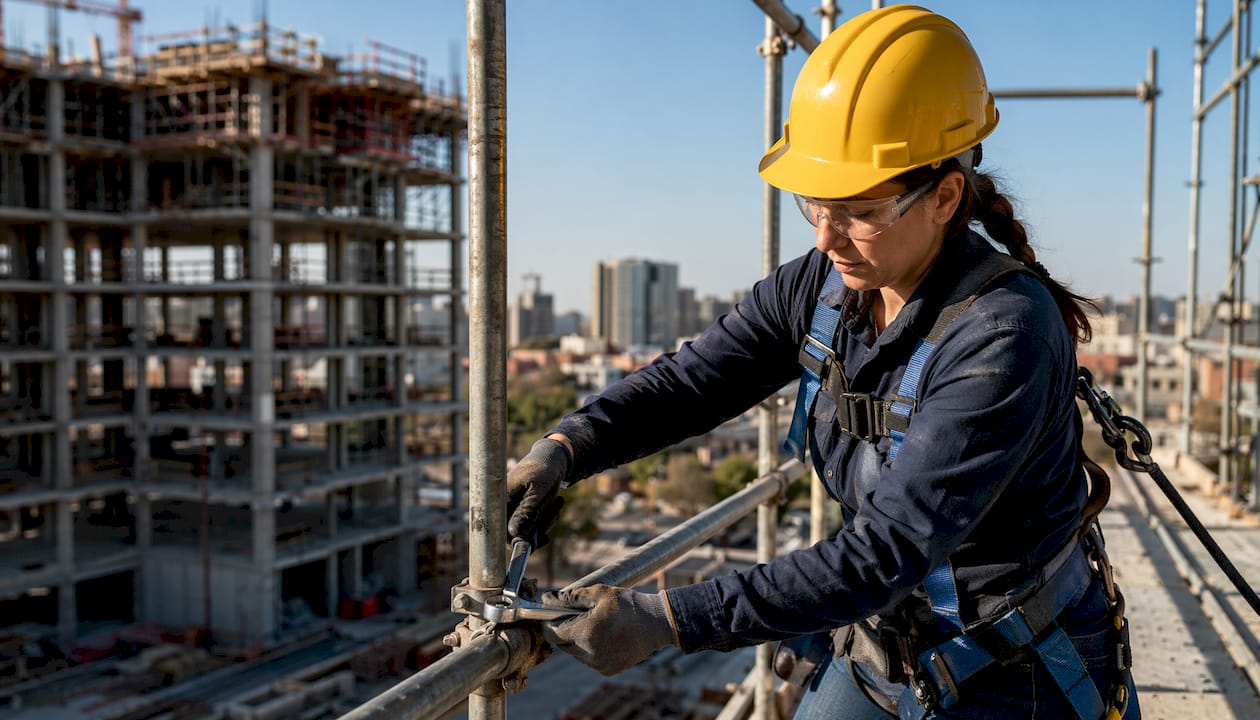
Perimeter hoarding and fencing define the site boundary and control access. Internal barriers separate active work zones from areas where other trades or visitors are present. Guardrails, toe boards, and safety nets address fall risks at height. Construction site safety audits should inspect fall protection, scaffolding, and electrical lockout/tagout systems on a daily walk-down basis, with formal weekly and monthly audits producing documented evidence.
Scaffolding inspections deserve particular attention. A scaffold that passes Monday’s inspection can fail by Friday if loading conditions change or weather affects the structure. Daily visual checks by a competent person are the minimum standard.
Access control systems
- Gatehouses and manned entry points verify credentials and log all site visitors.
- Electronic sign-in systems create an auditable record of who is on site at any moment, which is critical for emergency evacuation accountability.
- Visitor management protocols require escorts for all non-construction personnel.
- Zonal access restrictions limit workers to areas relevant to their current task.
Access control also supports protection of highly sensitive installations within the site, such as temporary electrical switchgear, fuel storage, and data infrastructure.
Electronic monitoring and tracking
CCTV coverage of perimeter gates, material storage areas, and high-value plant deters theft and provides evidence when incidents occur. GPS trackers fitted to plant and equipment allow recovery after theft and create a record of unauthorized movement. Alarm systems linked to monitoring centers provide out-of-hours response capability. Proactive security investments in AI-driven monitoring and access controls reduce project disruptions and insurance costs, protecting assets valued in the hundreds of millions.
Operationalizing the construction phase plan
Documentation alone does not protect anyone. Daily toolbox talks and site inductions are the mechanism that converts a written CPP into practiced behavior. Regulators assess whether workers know the plan, not whether the plan exists in a site office binder.
Pro Tip:Run toolbox talks at the start of each shift, not just at project induction. Workers who receive a single induction at the start of a six-month project retain a fraction of the safety information by week eight.
Safety checklists are only effective when continuously updated to reflect real site conditions. A checklist written during groundworks does not capture the hazards present during structural steel installation.
How does effective construction phase protection impact project outcomes?
Protection measures produce measurable returns across safety, schedule, cost, and reputation. Project managers who frame protection as an investment rather than a cost center make better resource allocation decisions.
- Fatality and injury reduction. Consistent application of fall protection, electrical controls, and plant management protocols directly reduces the Fatal Four incident rates. Each prevented fatality also prevents the project shutdown, investigation, and reputational damage that follows a site death.
- Schedule protection. Theft of materials or plant triggers emergency procurement, delivery delays, and program revisions. Preventing theft keeps the critical path intact.
- Insurance cost management. Insurers assess site security measures when setting premiums and processing claims. Inadequate access control or absent CCTV coverage can invalidate a policy at the point of claim.
- Client confidence. Clients who visit a well-controlled site with visible safety measures, clean access logs, and documented audit trails develop confidence in the contractor’s overall management capability.
- Legal protection. Documented compliance with CDM 2015, OSHA standards, and the Occupiers’ Liability Act 1984 provides a defensible record if an incident leads to prosecution or civil litigation.
Construction site protection is a strategic investment essential for project continuity. Firms that treat security and safety as operational priorities, rather than compliance checkboxes, consistently outperform peers on schedule adherence, insurance costs, and client retention.
Dynamic allocation of guard coverage matching risk profiles throughout a multi-year project avoids overpaying during low-risk periods and under-protecting during high-risk peaks. That balance is where protection planning creates genuine financial value.
Key Takeaways
Construction phase protection delivers the most value when it is dynamic, phase-aligned, and operationalized through daily workforce engagement rather than treated as static documentation.
| Point | Details |
|---|---|
| Falls are the leading killer | Falls cause 33.5% of construction fatalities; guardrails and harnesses are the primary required controls. |
| Theft costs are project-scale | UK site theft reaches approximately £800 million annually, directly threatening schedules and insurance coverage. |
| Guard hours must match phase risk | Active build phases require over 80 hours of guard coverage per week; pre-build phases require approximately 40 hours. |
| Plans must be practiced daily | Toolbox talks and inductions convert written CPPs into site behavior that satisfies regulators and protects workers. |
| Phase transitions create hidden risk | Failing to reassess protection at physical milestones is the most common source of late-project incidents. |
Indelec’s perspective on construction phase protection
The most persistent mistake project managers make is treating the construction phase plan as a document submission rather than a living operational system. After decades of working with industrial and infrastructure sites, the pattern is consistent. Sites with excellent paperwork and poor daily practice have worse incident records than sites with simpler plans that are genuinely followed.
Phase transitions are where complacency concentrates. The move from active build to finishing feels like a de-escalation, and teams naturally relax. That relaxation is exactly when theft of installed fixtures spikes and when electrical commissioning hazards peak simultaneously. The protection plan must explicitly address this transition, not assume that reduced physical hazard automatically means reduced security risk.
Technology helps, but it does not replace judgment. AI-driven CCTV and GPS tracking create data. A project manager still has to act on that data within minutes, not hours. The value of electronic monitoring depends entirely on the response protocol attached to it. A camera that records a theft but triggers no response for 12 hours is a documentation tool, not a protection tool.
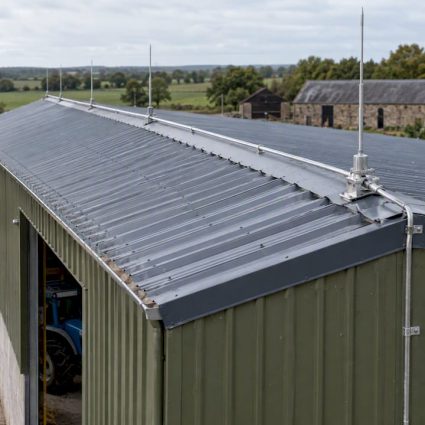
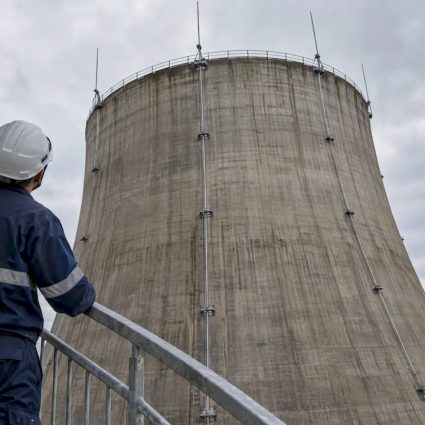
Lightning protection is a specific area where construction sites are routinely under-protected. Structures under construction lack the permanent grounding and bonding systems of completed buildings. Temporary structures, exposed steel frameworks, and workers at height on scaffolding all face elevated lightning risk. Integrating lightning safety workflows into the construction phase plan from the start of groundworks is standard practice on well-managed sites. Waiting until the permanent building systems are installed leaves a gap that weather does not respect.
— Indelec
Indelec’s construction site protection solutions
Construction sites face electrical hazards that standard safety plans often underestimate. Lightning strikes on partially completed structures, ungrounded steel frameworks, and exposed temporary electrical systems create risks that require specialized protection from day one of mobilization.

Indelec has designed and installed lightning protection systems for industrial and infrastructure construction projects since 1955. Its solutions comply with international lightning protection standards and are backed by ISO 9001 certification. Indelec also provides technical training for site engineers and safety teams, ensuring that protection systems are correctly specified, installed, and maintained throughout the construction phase. For projects requiring grounding infrastructure from the foundation stage, Indelec’s deep earth grounding services provide compliant, engineered solutions built for long-term performance.
FAQ
What is a construction phase plan?
A construction phase plan is a legal document required under CDM 2015 that defines the safety and security controls active throughout the building process. It must be operational and practiced on site, not just filed as documentation.
What are the Fatal Four hazards in construction?
The Fatal Four are falls (33.5% of fatalities), struck-by incidents (11.4%), electrocutions (8.4%), and caught-in/between incidents (5.4%), as identified by OSHA. These four categories account for the majority of construction site deaths.
How often should construction site safety audits occur?
Construction site safety audits should include daily walk-down inspections, formal weekly reviews, and monthly documented audits covering fall protection, scaffolding, and electrical lockout/tagout systems.
Why does guard coverage change during construction phases?
Guard coverage requirements reflect the concentration of workers, materials, and plant on site. Active build phases require over 80 hours of combined guard coverage per week, while pre-build and turnover phases require approximately 40 hours.
How does lightning protection fit into construction phase safety?
Partially completed structures lack the grounding and bonding systems of finished buildings, making workers and exposed steel frameworks vulnerable to lightning strikes. Integrating a certified lightning protection system from the start of groundworks closes this gap before permanent building systems are installed.