Type 2 Surge Protector: Specs, Wiring Rules, and Selection
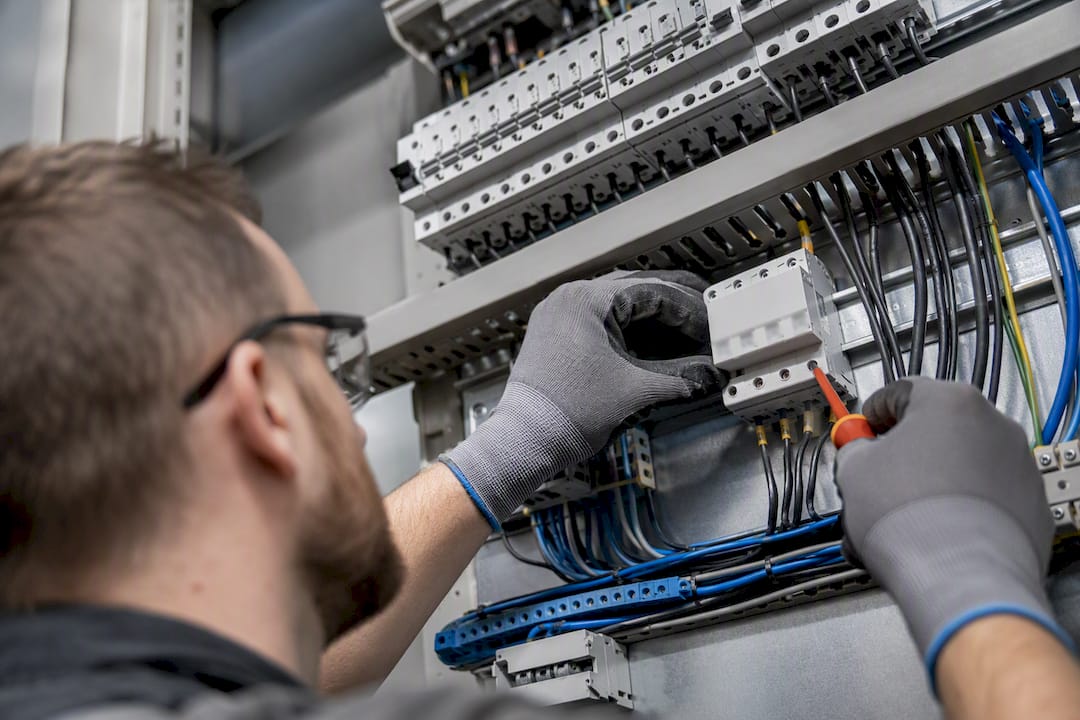
A Type 2 surge protector, or parafoudre type 2, is the device you install at the distribution board to catch induced lightning and switching surges before they reach connected equipment. It’s tested against an 8/20 µs current waveform under NF EN 61643-11, and it sits at the origin of the tableau in nearly every residential and commercial installation. This is the device most French installations need, whether or not a lightning rod is present.
Before you order or approve one, check three numbers on the datasheet:
- In (nominal discharge current): the baseline rating the device handles repeatedly without degrading.
- Imax (maximum impulse current): the ceiling it survives once, during a severe event.
- Up (protection voltage): the residual voltage passed through to your load, the number that actually determines whether downstream electronics survive.
Get these three right and the rest of the spec sheet falls into place.
Key Takeaways
Matching In, Imax, and Up to the actual load, combined with correct placement within 50 cm of the board and coordinated with upstream and downstream devices, determines whether a Type 2 surge protector actually protects anything.
| Point | Details |
|---|---|
| Check three numbers first | In, Imax, and Up on the datasheet determine whether the device fits your load and risk level. |
| Respect the 50 cm and 30 m rules | Keep connecting leads under 50 cm at the board and add Type 3 protection beyond 30 m downstream. |
| Set In above the 5 kA floor | Treat 5 kA as the legal minimum, and choose 15 kA or higher for higher-risk sites. |
| Inspect on a schedule | Check domestic units yearly or after storms; inspect industrial sites every three to six months. |
| Get a site study for complex loads | Indelec recommends a full risk assessment for high Nk zones, PV, EV charging, and sensitive equipment. |
Table of Contents
- What Do In, Imax, and Up Mean on a Parafoudre Type 2?
- Where and How Do You Install a Type 2 Surge Protector?
- How Do You Choose the Right Type 2 Surge Protector?
- How Often Should You Inspect and Replace a Type 2 Parafoudre?
- When Is a Type 2 Surge Protector Legally Required?
- What Does Indelec Recommend for Complex Surge Protection Projects?
- What the Standards Don’t Tell You About Choosing a Surge Protector
- Get a Site-Specific Surge Protection Assessment
- Sources
What Do In, Imax, and Up Mean on a Parafoudre Type 2?
Reading a Type 2 datasheet comes down to four numbers and one waveform. Miss any of them and you risk installing a device that’s technically “Type 2” but wrong for the load it’s protecting.

In, the nominal discharge current, is the value the surge protector absorbs repeatedly over its service life without losing performance. Most guidance sets the floor at In ≥ 5 kA, and that’s the minimum you should accept for any distribution board, residential or otherwise. Push higher, to 15 kA or more, on installations with elevated lightning exposure, and you buy both margin and longevity: a device that only just meets 5 kA degrades faster than one rated well above its typical operating load.
Imax is the one-time survival rating, the current the device can absorb once during an exceptional strike without failing outright. It’s not a repeat-use number. Think of Imax as the airbag deploying once, hard, and In as the seatbelt doing its job every single day.
Up (sometimes listed as Uc for continuous operating voltage) is the residual voltage that reaches your load after the surge protector clips the transient. This is the number equipment manufacturers actually care about. Sensitive domestic electronics generally need residual voltage kept well below their rated immunity threshold, while industrial control systems often demand a tighter margin still because a control relay resets far less gracefully than a laptop charger.
The waveform matters too. Type 2 devices are tested and classified against an 8/20 µs current impulse, simulating the induced surges that travel down conductors after a nearby strike or a switching event. Type 1 devices, by contrast, are rated against a slower 10/350 µs waveform representing a direct lightning current, which is why Type 1 and Type 2 solve different problems and aren’t interchangeable.
Pole configuration matters as much as current rating. Common formats include 1P+N for single-phase domestic boards, and 3P or 3P+N for three-phase commercial and industrial feeds. Match the voltage rating to your network, not the other way around, since an undersized voltage rating defeats the surge protector before it ever sees a transient.

Where and How Do You Install a Type 2 Surge Protector?
Placement rules exist because impedance in the connecting leads adds directly to the voltage your equipment sees, no matter how good the device’s own Up rating looks on paper.
- Locate it at the board origin. In most residential setups, that’s the main tableau. In larger commercial buildings, it may be a specific distribution board serving a critical zone, decided during design rather than left to whoever has spare DIN rail space.
- Respect the 50 cm rule. The total conductor length connecting the surge protector to the busbar, including its own protective device, should stay under 50 cm at the TGBT. Longer leads add inductance, and inductance adds voltage the surge protector was never rated to let through.
- Track the 30 m downstream limit. A Type 2 device installed at the main board protects effectively up to about 30 m of cable run. Beyond that, add a Type 3 device near the sensitive load rather than assuming the upstream unit still has your back.
- Bond the earth properly. Surge protection lives or dies on its earthing connection. A weak or long equipotential bonding path undermines even a correctly specified Up rating, since the surge protector diverts current to earth, not into thin air.
- Keep wiring short, rigid, and appropriately sized. Use conductors sized for the expected discharge current, routed directly rather than looped or coiled, and wire alarm or remote signaling contacts so a spent cartridge reports itself instead of failing silently.
Pro Tip:Coil a spare 20 cm of surge protector lead “just in case” and you’ve quietly added inductance that raises the residual voltage your equipment sees. Cut leads to length instead of looping them.
For a full commissioning walkthrough, Indelec’s facility installation guide covers torque specs and test-point sequencing in more depth than fits here.
How Do You Choose the Right Type 2 Surge Protector?
Selection comes down to matching the device to both the load it protects and the risk profile of the site, not just grabbing whatever’s rated “Type 2” off the shelf.
- Set In at 5 kA minimum, and move to 15 kA or higher for sites with elevated lightning exposure, PV arrays, or critical process equipment where downtime is expensive.
- Target Up against the equipment’s own immunity rating, not a generic number. Domestic electronics tolerate different residual voltage than an industrial PLC cabinet, so check the load’s own datasheet before locking in a spec.
- Plan coordination deliberately. If a Type 1 or combined Type 1+2 device sits upstream, your Type 2 unit’s Up target should assume it’s already knocked down the worst of the transient. Add Type 3 downstream near sensitive terminals rather than over-specifying the main board unit.
- Decide on form factor early. Modular DIN rail units with replaceable cartridges cost less to maintain long term than fixed, non-serviceable blocks, and they’re the format most electricians standardize on for exactly that reason.
- Check environmental ratings against the cabinet. IP rating and operating temperature range matter more in outdoor enclosures or unconditioned plant rooms than in a climate-controlled office board.
- Specify alarm contacts if the site has any remote monitoring capability at all. A cartridge that fails silently in a rarely visited utility room is a liability waiting to surface at the worst time.
How Often Should You Inspect and Replace a Type 2 Parafoudre?
A Type 2 cartridge doesn’t announce its own failure the way a blown fuse does, which is exactly why inspection cadence matters more than most electricians treat it.
- Domestic installations: inspect annually, or immediately after any significant regional storm, since a single major surge event can consume a cartridge’s remaining margin even without visible damage.
- Industrial and critical sites: inspect every three to six months, tightening that interval further for facilities with high lightning exposure or process equipment where a silent failure carries real cost.
- Watch for the obvious indicators first: a blown or fused cartridge, a red flag on the local mechanical indicator, or a tripped alarm contact all mean immediate replacement, not a “watch it for now.”
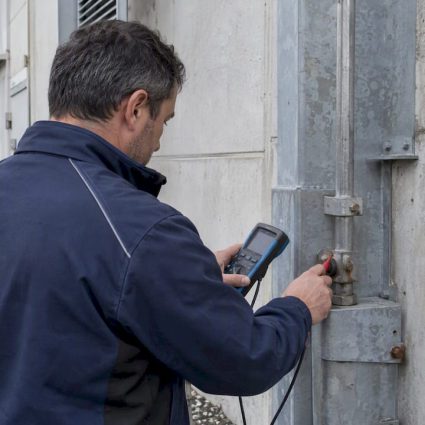
- Measure what the eye can’t see: earth resistance, continuity of protective conductors, and the state of any remote alarm signaling all belong in a proper maintenance visit, not just a visual check.
- Replace the cartridge, not necessarily the whole block, when the device is modular; that’s the entire point of the format.
- Log the replacement and dispose of the spent cartridge properly, since compliance audits and insurance claims both tend to ask for a paper trail after a claimed lightning event.
When Is a Type 2 Surge Protector Legally Required?
Installation of a Type 2 device stops being optional the moment certain conditions apply, and knowing them keeps you out of an awkward compliance conversation later.
NF EN 61643-11 (aligned with IEC 61643-11) defines the test waveforms and classification that make a device eligible to be labeled Type 2 in the first place; that’s the baseline any spec sheet needs to satisfy. On top of that, NF C 15-100 and the companion guide UTE C 15-443 set out when surge protection becomes mandatory rather than merely advisable: buildings fitted with a lightning rod, sites fed by an overhead line exposed to direct strikes, and locations in higher-risk AQ zones based on lightning flash density (Nk) all trigger a requirement.
Where a building already has Type 1 protection at the service entrance, a Type 2 device downstream is still typically needed. Combined Type 1+2 units simplify that pairing into a single device rather than two separate ones sharing a board. Document the standard reference, the device model, and the installation date in the client handover file. That paperwork is what an insurer or auditor will ask for first.
What Does Indelec Recommend for Complex Surge Protection Projects?
Indelec has worked in lightning and surge protection since 1955, and that history shapes a fairly simple recommendation: match the device to the site’s actual risk, not to the cheapest box that clears the minimum spec.
For most standard boards, a well-specified standalone Type 2 unit does the job. Where a site gets more complicated, a dedicated study earns its cost:
- High Nk zones with elevated lightning flash density, where Type 1+2 coordination changes the whole design.
- PV and EV charging installations, where surge paths multiply and a single main-board device rarely covers every exposure point.
- Facilities with process-critical or highly sensitive equipment, where Indelec’s R&D-backed testing approach informs tighter Up staging across coordinated devices.
Indelec’s services extend from initial risk assessment through installation, maintenance, and certification, covering lightning rods and grounding systems alongside surge devices, so the surge protection plan isn’t designed in isolation from the rest of the site’s protection scheme. For sites also integrating battery storage or backup generation, coordinating surge protection with backup power infrastructure during design avoids rework later.
What the Standards Don’t Tell You About Choosing a Surge Protector
The standards get you to a compliant device. They don’t tell you which compliant device actually performs best on your specific board, and that gap is where a lot of underperforming installations come from.
The industry’s habit of treating 5 kA In as a target rather than a floor is the most common shortfall we see. It’s the minimum the standard allows, not the number a well-protected board should be built around. On any site with real lightning exposure, a device rated at 15 kA or higher costs marginally more up front and lasts substantially longer before its next replacement cycle.
The second miss is treating Up as a single number to compare across brochures instead of a target to hit relative to the load. A Up of 1.5 kV protects a domestic router just fine. It may not protect an industrial PLC with a tighter tolerance. Read the equipment’s own immunity spec before the surge protector’s.
Finally, coordination gets skipped more often than it should. A Type 2 device installed without regard to what sits upstream or downstream is solving only part of the problem. Plan the whole chain, from Type 1 at the service entrance to Type 3 at the sensitive terminal, and size each stage’s Up to hand off cleanly to the next.
Get a Site-Specific Surge Protection Assessment
Choosing between a standalone Type 2 unit and a combined Type 1+2 system depends on your building’s exposure, its earthing setup, and what’s actually plugged into the board, details a generic datasheet can’t answer for you. Indelec has been assessing exactly that trade-off since 1955, and its engineers can walk a site, measure the actual risk factors, and specify a device that matches the load rather than just clearing the regulatory minimum.

That applies whether you’re protecting a single residential board, a commercial facility with multiple distribution points, or a site adding PV and EV charging infrastructure that changes the surge exposure calculus entirely. Indelec’s lightning protection services cover the full path from risk assessment to installation, maintenance, and certification, backed by documented standards guidance you can hand straight to a client or auditor. Request a site study to get a spec built around your building’s actual numbers, not a generic recommendation.
Sources
- Parafoudres : types 1, 2 et 3, règle des 50 cm, installation …
- Faut-il vérifier les parafoudres et à quel moment??