Earthing Audit: When and How to Assess Your Ground Network
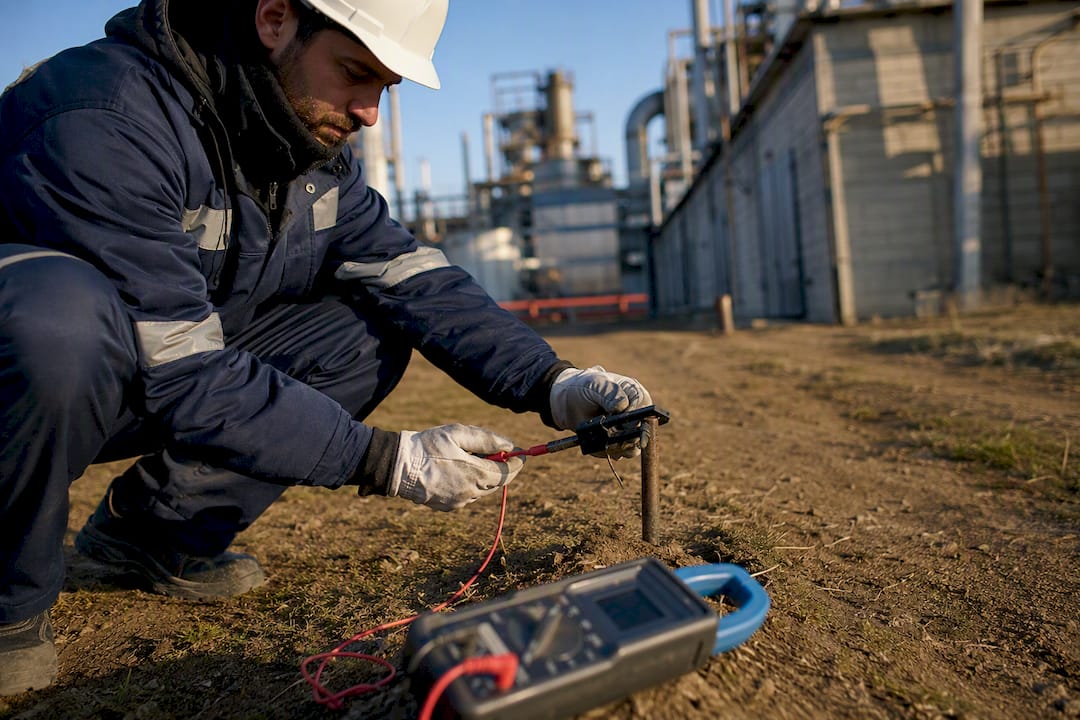
An earthing network audit verifies that the entire fault-return path, from an equipment body through risers, bonds, and buried electrodes, is continuous and low enough in resistance for protective devices to trip on demand. Commission one after a safety incident, after any major electrical modification, or once your system passes its recommended inspection interval.
Three signals mean you should act now:
- Unexplained equipment faults, console failures, or repeat breaker trips with no obvious cause
- A near miss or actual shock incident anywhere on the property
- Recent structural work, new high-load equipment, or an extension that added circuits to the network
ABB recommends regular power quality and grounding audits for facilities running critical electronics, treating grounding as a maintenance line item, not a one-time install checkbox. Commissioning an audit gets you three things fast: proof the system is actually safe, documentation for compliance and insurance, and a ranked list of what to fix first.
Key Takeaways
A safe, compliant earthing system depends on testing the complete fault-return path, not one electrode resistance reading, against named standards with calibrated instruments.
| Point | Details |
|---|---|
| Audit triggers | Commission an audit after unexplained equipment faults, safety incidents, major modifications, or a missed inspection interval. |
| Test the whole loop | A single pit resistance reading can hide a disconnected riser; always pair it with loop impedance and continuity checks. |
| Match method to context | Use fall-of-potential for accuracy and clamp-on testing only where a valid parallel network exists. |
| Frequency scales with risk | Coastal, humid, or chemically aggressive soils justify more frequent audits compared to the standard periodic cycle. |
| Indelec delivers turnkey audits | Indelec pairs calibrated field testing with deep earth drilling and integrated lightning protection planning under one engagement. |
Table of Contents
- What Does an Audit Réseau De Terre Actually Cover?
- Which Field Test Methods Do Auditors Use?
- What Standards Govern Grounding Compliance?
- How Often Should You Schedule a Grounding Audit?
- How Do You Read the Results and Fix Common Faults?
- What Does a Specialist Earthing Audit Look Like With Indelec?
- What Should Your Audit Report Include?
- What Should You Ask Before Hiring an Auditor?
- Get a Specialist Ground Network Assessment From Indelec
- Where to Learn More About Grounding Standards and Methods
- Frequently Asked Questions
- Sources
What Does an Audit Réseau De Terre Actually Cover?
A proper grounding compliance check is not just a single resistance reading at one test pit. It is a full-system exercise that combines paperwork review, physical inspection, and instrumented testing across every accessible part of the network.
Auditors generally work through the same sequence:
- Document and design review. Original drawings, past test certificates, and any modification records get compared against what actually exists on site.
- Visual inspection. Every visible bond, riser, clamp, and connection point gets checked for corrosion, loose hardware, or physical damage.
- Continuity testing. Risers, equipotential bonding conductors, and metallic structures (tanks, ductwork, structural steel) are checked to confirm they are electrically joined, not just bolted together.
- Electrode and system resistance measurement. This includes individual electrode readings and the total system resistance seen from the main earthing bar.
- Corrosion assessment. Buried connections and electrodes get evaluated for degradation, especially in wet or chemically active soils.
- Touch and step potential checks. Where people could contact energized metalwork or stand across a voltage gradient during a fault, auditors measure the actual risk.
A full earthing audit examines riser and grid integrity, soil resistivity, electrode resistance, loop impedance, and touch and step potentials together, then delivers a defect location plan with prioritized remedial recommendations rather than a single pass/fail number. The deliverable at this stage should include a list of every measured test point and photographic evidence of anything flagged.
Pro Tip:Ask your auditor for the raw test-point list before the visit, not after. If they cannot tell you which risers, tanks, and bonding points they plan to test in advance, they likely have not scoped the job properly.
Which Field Test Methods Do Auditors Use?
Different tests answer different questions, and a competent electrical grounding audit uses several of them together rather than relying on one number to tell the whole story.
- Soil resistivity mapping (Wenner four-pin method). Four probes are driven into the ground at equal spacing and depth to measure how resistive the surrounding soil actually is. This number drives electrode sizing and placement, since a poorly conductive soil needs a bigger or deeper electrode array to hit the same target resistance.
- Fall-of-potential (three-point) testing. This is the reference method for measuring true electrode resistance, using a current probe and a separate potential probe placed at calculated distances from the electrode under test.
- Clamp-on testing. Faster and non-invasive, but only valid where the electrode is part of a parallel network with other return paths. Fluke’s technical guidance on earth impedance control in commercial and industrial buildings lays out exactly when a clamp reading is trustworthy and when it will mislead you.
- Signal injection and grid continuity checks. These detect “islanding,” where part of a grid has become electrically isolated from the rest despite looking connected on a drawing.
- Earth loop impedance and prospective fault current testing. These confirm that, during an actual fault, the loop is low enough in impedance for the breaker or fuse to clear within its rated time.
- Touch and step potential measurement. Voltage gradients are measured at typical hand and foot contact points during simulated fault conditions.
Soil resistivity and electrode geometry directly drive equivalent system impedance. Technical design references describe meshes around 15 by 15 meters as a practical example of how spacing controls touch and step potential during a lightning discharge or fault event.
What Standards Govern Grounding Compliance?
Auditors don’t invent their own pass/fail thresholds. They test against published standards, and a credible audit report will name the exact clause it’s citing rather than a vague “industry best practice.”
The reference documents you’ll typically see cited include:
- National electrical installation codes covering earthing design, bonding, and disconnection times
- IEC standards addressing earthing system design, resistance, and touch/step voltage limits
- IEEE guides on grounding grid design and testing methodology for substations and industrial sites
- Lightning protection standards that set separate, often stricter, earthing requirements where a dedicated lightning protection system ties into the same network
Standards link measurement type to a specific pass criterion. A loop impedance reading is judged against the disconnection time it needs to guarantee, while an electrode resistance figure is judged against the touch and step voltages it needs to keep below hazardous levels. A serious auditor supplies calibration certificates for every instrument used and a written compliance statement, not just a spreadsheet of numbers.
How Often Should You Schedule a Grounding Audit?
Frequency depends on facility type, but three factors always shorten the interval: age of the system, soil aggressiveness, and criticality of what the grounding protects.
- Routine cycle. Most industrial and commercial sites schedule a full audit every two to four years, tightening to annual checks for facilities running sensitive electronics or continuous processes.
- Environmental triggers. Coastal sites, high-humidity climates, and chemically aggressive soils accelerate corrosion at electrode and joint connections, which pushes many facilities to audit annually rather than on the standard cycle.
- Event-driven triggers. Any electrical incident, new equipment installation, or building modification that touches the earthing network should trigger an immediate re-audit rather than waiting for the next scheduled cycle.
A typical on-site campaign runs a few days: one for setup and document review, one or two for measurement, then a follow-up period for analysis and report writing before remedial work gets scheduled.
How Do You Read the Results and Fix Common Faults?
The single biggest interpretation mistake facility teams make is treating one good pit resistance reading as proof the whole system is fine. A single electrode pit resistance can be misleading, since riser integrity and full-loop impedance testing are what actually reveal whether a protective device will operate correctly during a real fault. A disconnected riser can sit undetected for years while the electrode itself tests perfectly.
Common findings auditors flag include:
- Open or disconnected risers that isolate part of a bonding network without any visible sign at the surface
- Corroded joints and clamps, especially at grade level or in buried sections exposed to moisture
- Grid islanding, where sections of a mesh or grid have lost continuity with the main system
- Resistance values that drift upward over time due to soil drying, corrosion, or physical disturbance from nearby excavation
Once findings are in hand, prioritize by risk, not by cost. Anything that compromises personnel safety, touch potential violations, or disconnected protective bonding, goes first. Reliability issues that threaten equipment but not people come second. Cosmetic or minor resistance drift that’s still within tolerance can wait for the next planned maintenance window.
Pro Tip:If two adjacent test points show wildly different resistance values with no obvious reason, suspect a broken bonding connection between them before you assume a soil problem.
Typical remedial measures include joint repair or replacement, adding electrodes to bring total resistance down, installing equipotential meshes across hazardous areas, soil treatment to improve conductivity around existing rods, and corrosion protection at exposed connections.

What Does a Specialist Earthing Audit Look Like With Indelec?
Indelec has worked in electrical protection since 1955, and grounding audits sit alongside lightning protection as a core discipline rather than an add-on service. Deep-earth drilling capability matters here: when soil resistivity is poor, driving standard rods deeper or adding a properly spaced array is often more effective than surface remediation.
A standard Indelec audit engagement includes:
- Calibrated instrumentation with certificates supplied alongside the report
- A sample report format shown before you commit, so you know what deliverable to expect
- A defined remediation scope with cost estimates tied to specific defect locations
- Coordination between earthing findings and surge protective device placement, since a weak ground network undermines even a well-designed lightning protection system
What Should Your Audit Report Include?
A report that just lists numbers without context is not useful for procurement, compliance, or insurance purposes. Insist on these core items before signing off on any engagement:
- Raw measurement data for every test point, not just a summary average
- Annotated site photos showing exactly where each measurement or defect was recorded
- A defect location map you can hand to a maintenance contractor without re-explaining the site
- A prioritized remedial plan with cost estimates, tied directly to defect severity
- A compliance matrix showing which standard clauses each measurement satisfies or fails
If a recommendation seems unclear or overly conservative, ask the auditor to walk through the specific measurement and standard clause behind it. A credible provider will re-test a borderline point rather than argue from a spreadsheet. Keep the report on file. It becomes your reference document for procurement bids, asset management records, and evidence if an insurer or regulator ever asks how the grounding system was verified.
What Should You Ask Before Hiring an Auditor?
Before you sign a proposal, request three documents: current instrument calibration certificates, a sample audit report from a comparable facility, and evidence they actually cite the standards relevant to your industry.
Ask directly which field methods they’ll use and why, what happens if they find a safety-critical fault mid-audit, and whether any recommended repairs carry a workmanship warranty. A prioritized remedial plan with cost estimates tied to actual measurements is standard practice, not a premium add-on.
Walk away from any bid that skips on-site testing entirely, never mentions a specific standard, or describes deliverables only in vague terms like “full report included.”
Get a Specialist Ground Network Assessment From Indelec
Indelec runs earthing audits the same way it has built lightning protection systems since 1955: with calibrated field instruments, a dedicated R&D center behind the methodology, and turnkey delivery from testing through remediation. Where a facility’s soil or existing electrode array falls short, Indelec’s deep earth grounding drilling team installs additional electrodes sized to your actual soil resistivity rather than a generic spec sheet.

What sets this apart from a one-off inspection firm is integration. Your ground network doesn’t operate in isolation. It’s the foundation your surge protection and lightning rods depend on, and Indelec’s full lightning protection service covers risk assessment, installation, and maintenance under one contract, so findings from your earthing audit feed directly into a coordinated protection plan instead of sitting in a drawer. For facilities weighing corrosion-prone soil or aging infrastructure, that continuity between diagnosis and repair saves a second procurement cycle entirely.
If you’re seeing unexplained equipment faults, planning a modification, or simply due for your scheduled inspection, request a site survey through Indelec’s services page and get calibrated field data before you commit to any remediation budget.
Where to Learn More About Grounding Standards and Methods
Reference these sources when you need to verify a claim in an audit report or brief a procurement team.
- Essential grounding standards: a plain-language summary of compliance expectations for facility teams.
- Fluke earth impedance guidance: field-tested detail on clamp-on versus fall-of-potential methods.
- Common energy and facility audit findings: parallel examples of how facility audits get prioritized and actioned.
Frequently Asked Questions
How much does an earthing audit typically cost?
Cost depends on site size, number of test points, and soil complexity, so get a scoped quote rather than relying on a generic per-site rate.
Can I do a basic ground network assessment myself?
Visual checks for obvious corrosion or damage are reasonable for in-house teams, but fall-of-potential testing, loop impedance measurement, and touch/step potential assessment require calibrated instruments and trained technicians to produce results you can rely on for compliance.
What’s the difference between an earthing audit and a lightning protection inspection?
An earthing audit focuses on the grounding network’s resistance, continuity, and safety performance under fault conditions. A lightning protection inspection checks air terminals, down conductors, and surge protective devices, though the two systems share the same ground network and are best audited together.
How long does a typical site audit take?
Most campaigns run a few days on site for measurement, with additional time afterward for data analysis and report preparation before remedial work gets scheduled.

What happens if my facility fails the audit?
A failed result triggers the prioritized remedial plan in your report. Safety-critical items like disconnected risers or touch potential violations get addressed first, while lower-risk findings can be scheduled into routine maintenance.
Sources
- ABB Maintenance – Power Quality and Grounding Audit – ABB Process Automation Service – Maintenance
- Earthing Audit & Grounding System Health Assessment – Wire Consultancy
- Conception et dimensionnement d’un réseau de terre – Techniques de l’Ingénieur
- Control of earth impedance in commercial, industrial and residential buildings – Fluke