Qualify for CEE Subsidies: GTB vs GTC for French Facility Managers

GTB (multi-lot building management systems) coordinate HVAC, lighting, hot water, and security across an entire building for optimization and regulatory compliance. GTC (mono-lot centralized supervision) monitors and controls a single technical installation, like a boiler room or lighting circuit. Choose GTB if your building falls under Décret BACS, needs CEE BAT-TH-116 subsidy eligibility, or manages multiple interacting systems. Reserve GTC for narrow, single-purpose sites.
TL;DR:
- A multi-lot building management system typically achieves 15% to 30% energy savings, outperforming single-lot controls by optimizing cross-system interactions.
- Décret BACS and subsidy programs generally require Class B or A automation, which are only achievable with a true GTB capable of full building integration.
- Upgrading from GTC to GTB involves auditing existing controllers for open protocol compatibility and insisting on open interfaces during procurement.
- Small, single-purpose sites can still function effectively with GTC, but larger or evolving buildings benefit significantly from GTB’s comprehensive coordination and predictive analytics.
- Most facilities should plan phased upgrades over 12 to 24 months to avoid costly disruptions and ensure compatibility with future expansion.
Table of Contents
- GTB vs GTC: what each system actually controls
- How do GTB and GTC differ in practice?
- Does Décret BACS require a GTB or GTC?
- What energy and ROI gains can you expect?
- When should you choose GTC instead of GTB?
- How do you upgrade a GTC into a GTB?
- An engineer’s view on getting GTB and GTC right
- Where to check the rules yourself
- Sources
GTB vs GTC: what each system actually controls
GTC, short for centralized technical management, watches over one installation. Think a heating plant, a lighting loop, or a chiller. It reads sensors, executes setpoints, and flags faults, but it stays inside its own lot with no awareness of what’s happening elsewhere in the building.
GTB, or building management system, sits a level above. It coordinates HVAC, lighting, domestic hot water, access control, and utility meters simultaneously, looking for interactions a single-lot system would never see, like a chiller fighting a heater that’s still running.
Both architectures share the same basic building blocks:
- Field devices: sensors, actuators, valves, dampers
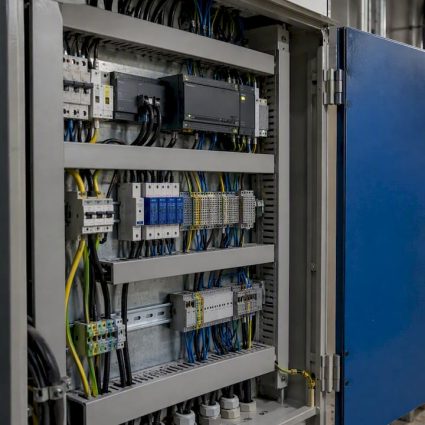
- Controllers or PLCs that execute local logic
- Supervision software providing the human interface
- A data historian logging trends for reporting and audits
What separates a modern GTB from a glorified GTC is often the communication layer underneath. Open protocols like BACnet, KNX, and Modbus let controllers from different manufacturers talk to the same supervision layer, which is what makes multi-lot coordination possible in the first place. Without them, you’re stuck bolting together proprietary silos that never quite add up to a real BMS.
How do GTB and GTC differ in practice?
The technical definitions matter less than what they mean for your day-to-day operations. Here’s where the gtb vs gtc differences actually bite:
- Scope and visibility. A GTC gives you a tight, accurate picture of one lot. A GTB gives you the whole building, which matters the moment two systems start working against each other without anyone noticing.
- Intelligence and optimization. GTC systems execute schedules and alarms. GTB platforms add predictive control, cross-system scheduling, and scenario logic, like triggering free cooling through ventilation instead of running the chiller overnight.
- Interoperability and lock-in risk. A single-vendor GTC rarely causes headaches, since it only talks to itself. A GTB spanning multiple trades needs open protocol support to avoid getting locked into one integrator for every future change.
- Real-world coordination. Picture peak shaving: a GTB can dim non-critical lighting and stagger HVAC starts the instant a demand spike is detected. A GTC covering only the chiller has no idea the spike exists.
Sector guidance is consistent on this point: GTC handles a lot in isolation, while GTB centralizes and optimizes across every connected system, which is exactly why regulators and subsidy programs treat the two so differently.
Does Décret BACS require a GTB or GTC?
This is where the comparison stops being theoretical. Décret BACS and tertiary building obligations push a growing share of commercial buildings toward automation systems capable of cross-system control, and a mono-lot GTC generally can’t meet that bar on its own.
The technical yardstick is ISO 52120-1, which grades building automation into four classes:
- Class D: no automation, manual control only
- Class C: standard automation, basic scheduling
- Class B: advanced automation with some optimization
- Class A: high-performance automation with full building integration
Class matters for money, not just compliance.CEE fiche BAT-TH-116 ties subsidy eligibility to class A or B multi-lot GTB installations. A mono-lot GTC alone typically doesn’t qualify, no matter how well it runs its one system.
If you’re filing for CEE support, keep documentation tight: system architecture diagrams, protocol specifications, and proof of multi-lot scope. Auditors check whether the installed system genuinely spans multiple technical lots, not just whether the paperwork claims it does.
What energy and ROI gains can you expect?
Numbers vary by baseline, but the pattern holds across most sector guidance. GTC-focused upgrades on a single lot typically deliver modest gains, roughly 5% to 15% in energy savings. A properly implemented GTB, coordinating multiple systems with optimization logic, tends to land in the 15% to 30% range or higher, depending on how inefficient the starting point was.
Beyond raw kWh, the operational upside compounds:
- Faster fault detection through cross-system alarm correlation
- Longer equipment life from smarter cycling and reduced short-cycling
- Fewer emergency truck rolls thanks to predictive alerts
GTC costs less upfront, but GTB usually pays for itself faster in larger or mixed-use facilities, because its analytics catch waste a single-lot system structurally cannot see, like overlapping heating and cooling cycles running at the same time in different zones.
Pro Tip:Track kWh per square meter, peak demand, fault rate, and system uptime for at least twelve months after installation. Those four numbers tell you more about whether the upgrade worked than any vendor’s efficiency claim.
When should you choose GTC instead of GTB?
Run through this checklist before committing capital:
- Building size and lot count. One or two technical systems, most likely GTC. Three or more interacting systems, lean GTB.
- Regulatory exposure. Subject to Décret BACS? That alone usually settles it in favor of GTB.
- Reporting and audit needs. If you need building-wide energy reporting for ESG or subsidy filings, GTC won’t cut it.
- Expansion plans. Planning to add systems in the next few years? Build for GTB now rather than re-architecting later.
- Budget reality. Tight CAPEX with no funding path might justify starting with GTC, provided the site stays single-purpose.
Red flags pointing straight at GTB: mixed-use occupancy, planned renovations, or any ambition toward predictive analytics. GTC still makes sense for small single-function sites, temporary installations, or isolated retrofits where the rest of the building isn’t wired for integration anyway.
How do you upgrade a GTC into a GTB?
Most facilities don’t rip out a GTC and start over. They evolve it.
Start with an audit of every existing controller and its communication protocol. You’re checking for BACnet, Modbus, or KNX compatibility, since that determines what can plug into a future supervision layer without replacement.
- Rank lots by upgrade priority based on energy impact and regulatory exposure
- Insist on open interfaces and documented data schemas in every tender, not just the initial rollout
- Decide early whether the historian and analytics run locally or in the cloud, since retrofitting that decision later gets expensive
- Budget realistically with electrical estimating and bid software. Phased integration over 12 to 24 months usually beats a rushed single-phase cutover
Pro Tip:Write open-protocol support into the tender document itself, not just the technical spec. Vendors that agree verbally often quietly ship proprietary gateways once the contract is signed.
The most common pitfall isn’t technical, it’s contractual: locking into one integrator’s proprietary supervision software before confirming it can absorb additional lots down the road.
An engineer’s view on getting GTB and GTC right

The GTB vs GTC question has quietly stopped being a purely technical one. Facility teams increasingly treat the choice as an asset decision, since a building wired for multi-lot automation holds more value and meets more decarbonization requirements than one that isn’t. That shift shows up in how BACS and building automation regulation is written today, and it’s not going to reverse.
At Indelec, decades of work protecting critical infrastructure from electrical risk have taught us the same lesson applies to automation architecture: systems that lock you into a single vendor age badly, and systems built on open standards keep paying off years after installation. We approach every technical system, whether it’s lightning protection or building automation guidance, with the same bias toward interoperability, documented compliance, and long-term maintainability over short-term convenience.
— INDELEC
Where to check the rules yourself
For the primary sources behind these obligations, consult the Décret BACS text on Legifrance, the CEE BAT-TH-116 fiche, and sector guidance on ISO 52120-1 classification.