Protect Advenir Funding: IRVE Audit for French Facility Managers
A proper audit IRVE entreprise must confirm four things before any charging point goes in the ground: the installer’s legal qualification, the available power at your TGBT, Enedis connection feasibility, and the paperwork needed to keep any funding intact. If you manage a site that is planning charging stations, your first move is simple: verify the installer’s IRVE qualification and book a load measurement on your main switchboard.
TL;DR:
- Verifying the installer’s IRVE qualification level and conducting load logging on the main switchboard before project execution are essential to ensure compliance and proper capacity assessment.
- The 36 kVA threshold distinguishes between simpler IRVE1 projects and more complex IRVE2 or IRVE3 installations, with real load measurements being crucial near this limit to avoid unnecessary grid upgrades.
- A comprehensive audit should include detailed site inspections, load measurements covering full business cycles, and thorough NF C 15-100 compliance checks to identify potential safety or certification gaps early.
- Enedis connection requests must match the audit’s capacity calculations precisely, with delays often caused by incomplete technical submissions, outdated delivery references, or mismatched power requests.
- Contractor qualification verification must occur before signing contracts, requiring proof of AFNOR certification aligned to project scope, to prevent legal and technical risks during installation.
Table of Contents
- Regulatory summary: LOM, the IRVE decrees, and NF C 15-100
- Audit methodology: practical steps to audit site, power and constraints
- Power sizing, TGBT limits, and dynamic load management options
- Enedis connection and feasibility: process, documents and timelines
- Verify installer qualification and contractor due diligence
- Financing and administrative controls: Advenir, TIRUERT and preserving eligibility
- Technical dossier checklist and passing inspections
- Field experience and practical fixes
- Why a compliance-first audit pays for itself
- How INDELEC supports your IRVE compliance project
- Sources
- FAQ
Regulatory summary: LOM, the IRVE decrees, and NF C 15-100
The legal backbone of any enterprise charging project in France rests on three pillars, and skipping one of them is the fastest way to fail an audit.
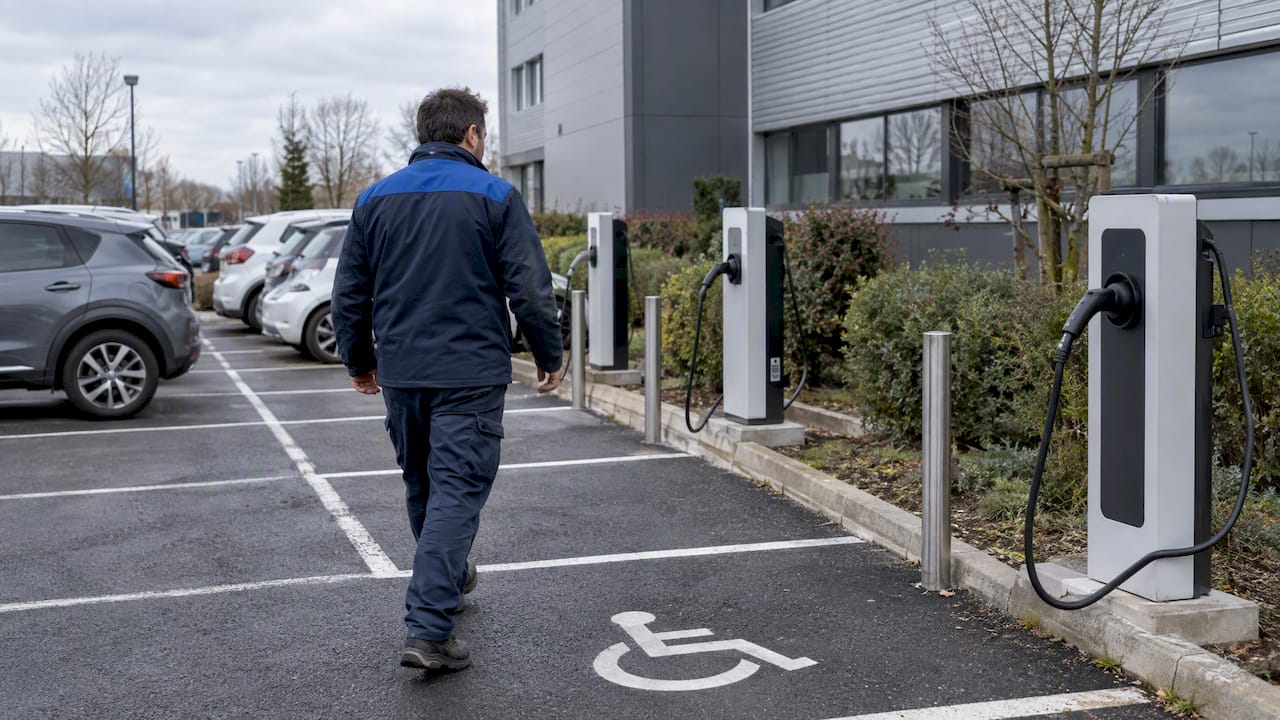
The Loi d’Orientation des Mobilités imposes progressive equipment obligations on private parking linked to tertiary buildings. Non-residential buildings with more than 20 parking spaces must equip at least 5% of those spaces with operational charging points and reserve at least one for reduced-mobility access, under rules tied to NF C 15-100 electrical compliance. Noncompliance can trigger administrative penalties, so the audit needs to map your parking count against that threshold before anything else happens.
On the installer side, the Decree of 12 January 2017, amended 4 May 2021, requires that anyone who designs, installs or maintains charging infrastructure above 3.7 kW hold a valid IRVE qualification. This decree also defines the qualification tiers your contract should reference by name.
A compliant installation also has to meet NF C 15-100, the French standard governing low-voltage electrical installations, alongside the technical references AFNOR ties to IRVE work. Enforcement sits mainly with the Direction Générale de l’Énergie et du Climat and regional DREAL offices, which can act on nonconformity findings during inspections or funding controls.
For a facility manager preparing a site, the practical obligations break down into:
- Confirm whether your parking count crosses the LOM equipment threshold and calendar your deadline accordingly.
- Require written proof that your installer holds the qualification level matching the work above 3.7 kW.
- Build NF C 15-100 compliance checks into every stage of the project, not just final commissioning.
- Keep a record of who enforces what, since DGEC and DREAL can request documentation separately.
Audit methodology: practical steps to audit site, power and constraints
A real IRVE audit is not a single site visit. It is a structured sequence that starts before anyone touches the switchboard and ends with a document a procurement team can act on.
- Collect a parking map, vehicle usage schedules, and expected duty cycles so the audit reflects actual demand rather than guesswork.
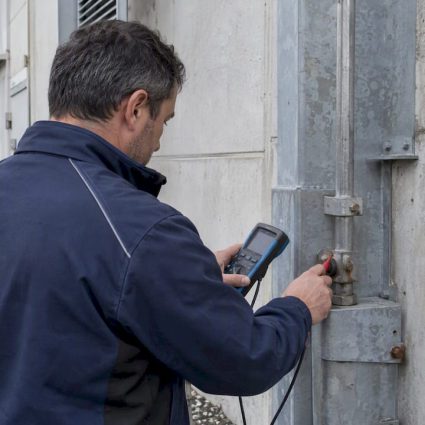
- Inspect the TGBT: check breaker ratings, existing protections, earthing continuity, surge protective devices, and the single-line diagram against what is physically installed.
- Verify NF C 15-100 compliance points on the existing installation, since gaps here often surface only once charging load is added.
- Deploy load logging on the TGBT for 7 to 14 days using recording power meters to capture peak demand, not just average draw.
- Calculate available capacity, propose a phased rollout if needed, and flag any safety or certification gaps found during inspection.
- Produce an executive summary that procurement and finance teams can use without needing an electrical background.
Pro Tip:Schedule the load logging campaign to include at least one full business cycle, including any weekend or shift-change peaks, so the measured data reflects worst-case demand rather than a quiet week.
The deliverable that matters most is the capacity calculation, because it tells you whether your existing TGBT can absorb the new charging load or whether you need a dedicated feeder, a phased installation, or a request to Enedis. A good audit report separates those options with cost and timeline implications attached, rather than leaving the facility manager to guess which path applies.

Power sizing, TGBT limits, and dynamic load management options
The single number that shapes most enterprise IRVE projects is 36 kVA. Below that threshold, a project typically qualifies as IRVE1; above it, IRVE2 qualification and heavier electrical work usually apply, and DC fast charging brings in IRVE3 requirements under the same decree framework.
Projects sitting close to the 36 kVA line benefit most from measured data rather than paper estimates. A 7 to 14 day load measurement on the existing TGBT often shows real headroom that a theoretical calculation misses, and dynamic load management can frequently avoid a grid upgrade altogether.
Dynamic load management, or pilotage énergétique, allocates available power across charging points in real time rather than reserving a fixed amount per point. That single change can let a site install more charging points without touching its Enedis contract.
- Phased rollout: install conduit and cabling for all planned points now, energize them in stages as demand grows.
- Dedicated feeders: isolate charging load from other site circuits to simplify future expansion.
- Smart charging controllers: cap simultaneous draw automatically during demand peaks.
Storage or on-site photovoltaic integration makes sense when a site has consistent daytime generation or wants to shave peak draw permanently. When measured demand clearly exceeds what the TGBT and dynamic management can absorb, an Enedis upgrade becomes the only realistic path, and planning for it early avoids a stalled project later.
Enedis connection and feasibility: process, documents and timelines
Once the audit confirms your target power, the next gate is Enedis. Submitting a feasibility request means providing a single-line diagram of the installation, the desired power level, and details of the existing point of delivery.
Lead times vary by project scope. A simple increase within existing contract limits moves faster than a request requiring network reinforcement, which can extend timelines significantly when transformer capacity or cabling work is involved. Common causes of delay include incomplete technical submissions, mismatched power requests between the audit report and the Enedis application, and sites where the existing point of delivery was never updated after previous renovations.
- Submit the single-line diagram and desired power figure together, matching exactly what the audit report specifies.
- Confirm the point-of-delivery reference number before filing, since an outdated reference is a frequent cause of rejection.
- Ask Enedis directly for a written feasibility timeline rather than relying on general estimates.
While waiting on grid work, some sites deploy a reduced number of charging points under existing capacity, using dynamic load management to stay within limits until the upgrade completes.
This interim approach keeps a fleet partially operational instead of waiting idle for months.
Verify installer qualification and contractor due diligence
Hiring an unqualified contractor for IRVE work above 3.7 kW is not just a technical risk, it is a legal one under the amended 2017 decree. Verification needs to happen before a contract is signed, not after.
- Ask the contractor for their current AFNOR Certification IRVE qualification, which covers five domains: study, installation levels 1 through 3, and maintenance.
- Cross-check the credential against a recognized directory rather than accepting a scanned certificate at face value.
- Match the qualification level to your project: study-only engagements need the study domain, while physical installation above 3.7 kW needs the relevant installation level.
- Confirm insurance coverage and ask who takes commissioning responsibility once the installation is energized.
Pro Tip:Write the exact qualification domain required (study, installation level, or maintenance) directly into your procurement documents, since AFNOR and Qualifelec both structure their listings around those categories.
Contracts should also specify maintenance commitments in writing, since a qualification valid at installation does not guarantee ongoing competence for future service work. A detailed look at qualification categories can help facility managers frame procurement language before negotiations start.
Financing and administrative controls: Advenir, TIRUERT and preserving eligibility
Enterprise IRVE projects often rely on the Advenir program or TIRUERT-linked incentives, and both come with control procedures that can claw back funding if documentation falls short.
The TIRUERT control process run on behalf of DGEC verifies point localization, confirms meter certificates, and checks that a dedicated meter feeds only EV charging equipment rather than mixed loads. Third-party agents such as Apave carry out these on-site inspections and produce a report DGEC uses to confirm continued eligibility.
Advenir maintains its own active control program, with a 2026 consultation for selecting site controllers, which signals that funded projects should expect verification rather than treat it as a remote possibility.
- Keep commissioning records showing exact installation dates and point locations.
- Retain meter certificates that clearly document the dedicated circuit feeding each charging point.
- Store these records separately from general project files so they are ready the moment a control request arrives.
Technical dossier checklist and passing inspections
A thin paper trail is the single most common reason an otherwise solid IRVE installation fails an inspection or loses funding eligibility.
The dossier should include the single-line diagram, the installer’s qualification certificate, the meter certificate tied to the dedicated circuit, and a signed commissioning report covering protections and surge protective devices.
- Keep meter readings dated and tied explicitly to the charging circuit, not the building’s general supply.
- Document SPD selection and placement against UTE C 15-443 coordination requirements, since mismatched surge protection is a frequent audit finding.
- File the commissioning report with signatures from both the installer and the facility representative, since missing signatures are a common cause of rejected controls.
The most frequent nonconformities found during audits are earthing deficiencies carried over from older installations, surge protection that was never resized for the new charging load, and commissioning paperwork missing a required signature. Each is fixable before energization if the audit catches it early, which is far cheaper than a post-installation retrofit.
Field experience and practical fixes
On several enterprise sites, the biggest schedule risk was never the charging equipment itself. It was an outdated earthing network discovered only once the IRVE audit cross-checked it against NF C 15-100, which then required grounding reinforcement before energization could proceed.
Coordinating grounding and surge protection work inside the same audit window, instead of scheduling them as separate subcontracts, kept several projects from losing months to sequential approvals. Early SPD coordination and a measured pilotage deployment avoided a grid upgrade on more than one site near the 36 kVA threshold.
Combining grounding, surge protection, and IRVE feasibility into a single coordinated audit phase prevents rework and shortens approval cycles for industrial sites with complex grounding needs.
Selecting a partner able to handle IRVE, grounding, and surge protection together, rather than three separate contractors, is often what keeps a project on schedule.
Why a compliance-first audit pays for itself
A compliance-first IRVE audit saves time, lowers total project cost, and protects funding eligibility that a rushed installation can quietly lose. Coordinate grounding and surge protection checks with the IRVE audit from day one, not after the equipment arrives.
— INDELEC
How INDELEC supports your IRVE compliance project
A company with expertise in this field supports enterprise charging projects end to end: IRVE audits, TGBT studies, grounding and surge protection coordination, and commissioning dossier preparation that holds up under Advenir or DGEC controls.

Since grounding and surge protection are often the hidden cause of delayed approvals, having one partner handle the full picture, including mobility infrastructure, keeps a project moving instead of waiting on separate subcontractors. If you are planning charging stations for a fleet or facility, request an audit or quote through INDELEC’s services page to get a clear scope before you sign anything.
Sources
For direct verification, consult the IRVE qualification decree on Legifrance for legal qualification rules, the LOM text for enterprise parking obligations, AFNOR Certification for qualification domains, and Apave’s TIRUERT control service for inspection scope.
- Legifrance — LOM and related IRVE obligations
- AFNOR Certification — Qualification IRVE
- APAVE — TIRUERT on-site control service
- Advenir — 2026 consultation
This article is general information, not a substitute for advice from a qualified lawyer. Consult a qualified legal professional about your own circumstances before acting on anything here.
FAQ
What does an IRVE audit need to check first?
An IRVE audit first confirms the installer’s legal qualification, since anyone working above 3.7 kW must hold a valid IRVE qualification under the amended decree. It then measures available power at the TGBT before any sizing decisions are made.
How many parking spaces trigger LOM charging obligations?
Non-residential buildings with more than 20 parking spaces must equip at least 5% of those spaces with operational charging points under LOM, with at least one space reserved for reduced-mobility access. Smaller sites fall outside this specific threshold but should still plan for future growth.
What is the significance of the 36 kVA threshold?
The 36 kVA threshold generally separates IRVE1 projects from IRVE2 projects, which involve a heavier qualification requirement and often more complex electrical work. Measuring real load over 7 to 14 days near that boundary is more reliable than a theoretical calculation and can determine whether a grid upgrade is actually needed.
How do I verify an installer’s IRVE qualification?
Check the contractor’s current certificate against the AFNOR Certification IRVE qualification framework, which lists study, installation levels 1 through 3, and maintenance domains. Qualifelec also maintains a recognized directory of certified installers for the same verification.
What documents does an Advenir or TIRUERT control inspect?
A TIRUERT or Advenir control typically checks point localization, meter certificates, and confirmation that a dedicated meter feeds only the EV charging equipment. Keeping commissioning records and meter certificates organized in advance is the best way to pass this check without delay.