Smart Lightning Mitigation Trends for Industry in 2026
TL;DR:
- Lightning risk management in industrial environments is shifting from reactive to proactive with AI, IoT sensors, and advanced grounding. These smart systems provide real-time detection, accurate strike prediction, and automated responses to enhance safety and minimize downtime. Implementing layered, standards-compliant solutions and regular inspections is essential for effective protection.
Lightning risk in industrial and infrastructure environments is no longer a static problem with static solutions. Smart lightning mitigation trends are reshaping how facilities managers, engineers, and risk officers approach protection. From AI-driven strike prediction to IoT sensor networks integrated with emergency response systems, the technologies available in 2026 look nothing like the copper rods and basic surge arrestors of two decades ago. This article breaks down the criteria that matter, the technologies leading the charge, and the practices that separate facilities that manage lightning risk from those that merely react to it.
Table of Contents
- Key takeaways
- 1. Smart lightning mitigation trends shaping industrial safety
- 2. Key criteria for evaluating smart lightning protection technology
- 3. IoT-enabled monitoring systems
- 4. AI and machine learning for strike prediction
- 5. Advanced grounding and bonding technologies
- 6. Eco-friendly and experimental lightning reduction technologies
- 7. Automated lightning response and shutdown protocols
- 8. Comparison of smart lightning mitigation solutions for industrial use
- 9. Best practices for implementing smart lightning mitigation strategies
- My perspective on where smart lightning protection is headed
- Protect your infrastructure with Indelec’s smart lightning solutions
- FAQ
Key takeaways
| Point | Details |
|---|---|
| IoT adoption accelerating | IoT-enabled monitoring grew 41% in 2025, making real-time detection the new baseline for industrial sites. |
| AI improves decision speed | AI prediction platforms improved forecasting accuracy by 37%, enabling pre-emptive shutdowns before strikes occur. |
| Grounding materials matter | Copper-bonded steel now accounts for 58% of installations globally, offering superior corrosion resistance. |
| Standards drive design | Compliance with international standards is no longer optional. It shapes system architecture from the ground up. |
| Phased rollout reduces risk | Implementing smart systems in stages allows staff to build competency and reduces integration failures. |
1. Smart lightning mitigation trends shaping industrial safety
The shift from reactive to proactive protection is the defining movement in lightning risk management today. For decades, industrial facilities relied on passive systems installed and largely forgotten until something went wrong. A lightning strike would cause equipment failure, production downtime, or worse, and the response was repair rather than prevention.
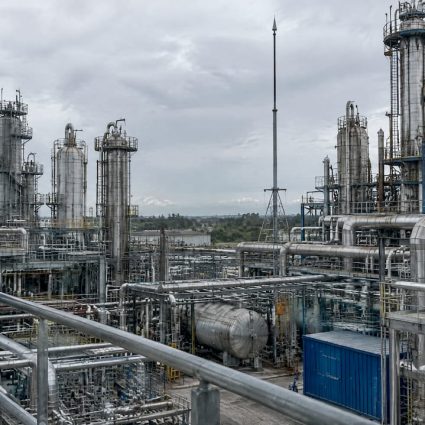
That model is no longer acceptable. Industrial facilities now account for 41% of global lightning protection installations, reflecting both the concentration of high-value assets and the recognition that passive protection alone is insufficient. Data centers, renewable energy installations, and chemical processing plants are deploying intelligent systems that detect, predict, and respond in ways that were technically impossible a decade ago.
The driver is not just technological availability. It is climate. Lightning frequency and intensity are increasing in many regions, and facilities that sized their protection systems based on historical averages are finding those assumptions increasingly outdated.
2. Key criteria for evaluating smart lightning protection technology
Before investing in any new system, your evaluation framework needs to address more than installation cost. Several factors determine whether a technology will perform when it matters.
- Predictive accuracy. AI and machine learning platforms vary significantly in their ability to process multi-variable atmospheric data. Look for systems with documented accuracy improvements and published validation data, not just marketing claims.
- IoT and cloud integration. IoT sensors on infrastructure deliver real-time lightning detection and instant alerts that feed directly into emergency response protocols. Cloud integration enables centralized data aggregation across multi-site facilities.
- Standards compliance. Any system you deploy must align with relevant international standards, including IEC 62305 and regional equivalents. Indelec provides detailed guidance on applicable lightning protection standards that affect system design and certification.
- Environmental durability. Industrial environments are harsh. Salt spray, extreme heat, mechanical vibration, and chemical exposure all degrade components. Evaluate material specifications with those conditions in mind, not lab-test conditions.
- Cybersecurity. Connected lightning protection systems communicate over networks. That creates attack surfaces. Before deployment, verify that the platform meets your organization’s cybersecurity requirements, including encrypted transmission and access controls.
- Total cost of ownership. Modular lightning rods reduce installation time by 26% and ongoing maintenance by 22%. Factor those savings into your comparison, not just the upfront purchase price.
Pro Tip:Request site-specific performance modeling from vendors before signing contracts. A system optimized for flat manufacturing facilities performs differently on a refinery with elevated structures or a wind farm across variable terrain.
3. IoT-enabled monitoring systems
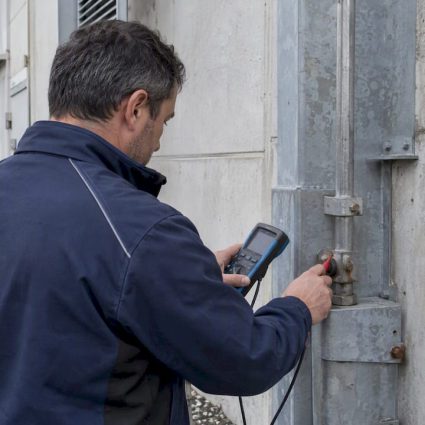
IoT sensor networks represent the most widely adopted advancement in smart lightning systems today. These networks place distributed sensors across a facility to continuously monitor atmospheric electrical field activity. When field strength crosses defined thresholds, automated alerts trigger predefined response protocols.
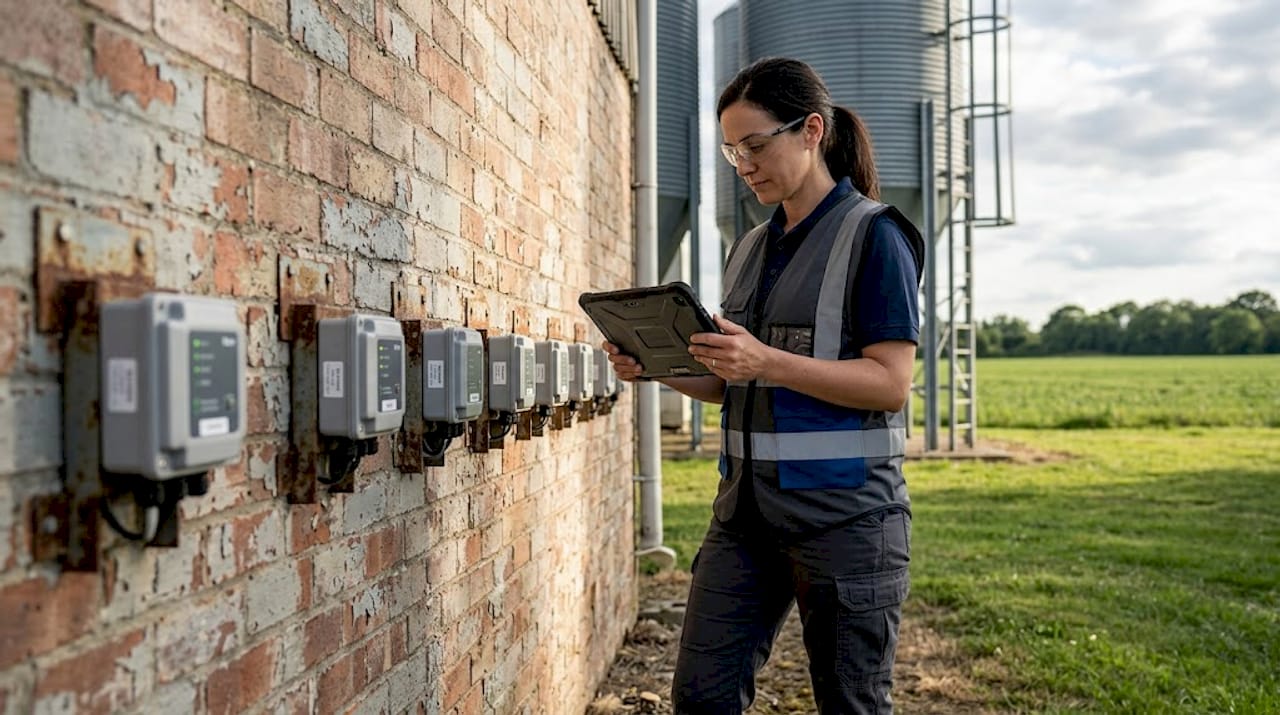
The adoption numbers are striking. Wireless surge monitoring grew 36% in commercial and manufacturing sectors in 2025 alone. Facilities that previously relied on national weather service alerts are now operating with site-specific detection that provides significantly earlier warning windows.
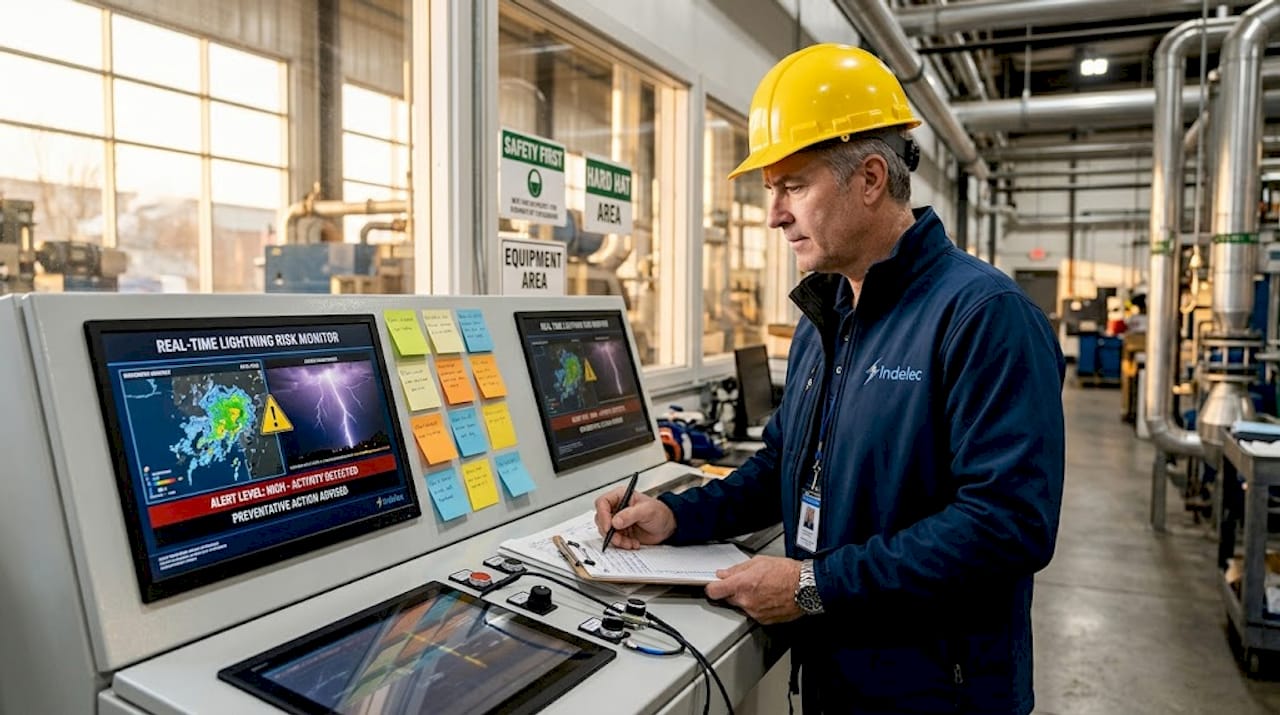
The practical advantage is response time. A centralized weather alert gives you general regional warning. An on-site sensor network tells you the electrical field above your tank farm is building toward a dangerous threshold right now, and your automated system begins protective shutdowns before anyone has to make a judgment call.
4. AI and machine learning for strike prediction
AI platforms process atmospheric pressure, humidity, temperature gradients, wind patterns, and satellite imagery simultaneously to generate strike probability maps. The output is not just a warning but a risk assessment tied to specific geographic zones within or around a facility.
AI-enabled warning systems improved operational accuracy by 33% in 2025. That accuracy gain translates directly to fewer false alarms. False alarms have a real operational cost in industrial settings. Unnecessary shutdowns disrupt production, stress equipment, and erode staff trust in the system. A more accurate AI platform reduces those costs while maintaining genuine safety margins.
The integration path for AI platforms typically involves connecting to existing meteorological data feeds, on-site sensor arrays, and facility SCADA systems. Indelec’s approach to AI and IoT for predictive protection illustrates how this integration works in practice for energy and utility infrastructure.
5. Advanced grounding and bonding technologies
Grounding is not glamorous, but poor grounding undermines every other component in a lightning protection system. Modern advanced lightning safety depends on grounding solutions that perform reliably over decades, not just at installation.
Copper-bonded steel rods are now used in 58% of installations worldwide because they combine the conductivity of copper with the mechanical strength of steel and significantly better corrosion resistance than either material alone. For facilities in coastal or high-humidity environments, that material choice directly affects long-term system integrity.
Deep earth grounding is particularly relevant for sites with high soil resistivity, which is a common challenge in arid regions or rocky terrain. Indelec’s deep earth grounding drilling service addresses exactly this problem, reaching conductivity levels that surface grounding systems cannot achieve in difficult soil conditions.
Static electricity control must be integrated with bonding and grounding strategies to safely protect industrial infrastructure from complex electrical discharges. In tank farms, for example, specialized in-tank static drain devices using ultra-sharp point technology dissipate static charge buildup before it can create ignition risk.
6. Eco-friendly and experimental lightning reduction technologies
One of the more unconventional intelligent lightning solutions gaining attention in 2026 involves not diverting lightning, but preventing it. British Columbia committed $1 million to field-test aluminum-coated nanoparticle material technology that redistributes electrical charges in clouds to reduce the conditions that produce lightning strikes.
The impetus is significant. Lightning caused 70% of wildfires in British Columbia in 2024 and accounted for 97% of total burned area. While this technology is in early field-testing and not yet applicable to facility-level protection, it signals a direction the industry is watching closely. The Prevectron3 eco-friendly approach from Indelec reflects similar thinking at the product level, where protection systems are designed with environmental impact as a design criterion, not an afterthought.
7. Automated lightning response and shutdown protocols
Automated shutdown systems represent the intersection of lightning protection technology and operational safety. When sensor networks detect imminent strike risk, automated lightning response systems can trigger a sequence of protective actions without human intervention. This matters because human reaction time is not fast enough to protect high-value equipment in many scenarios.
Smart infrastructure projects saw 46% integration of intelligent grounding and surge monitoring technologies in 2025. The trend is accelerating as facilities recognize that manual response protocols have inherent gaps. An automated system does not hesitate, overlook a notification, or misjudge the severity of a building electrical storm.
Renewable energy facilities are among the fastest adopters. Solar arrays and wind turbines represent substantial capital investment exposed to weather around the clock. Partner case studies in commercial solar deployments show how automated protection integrates with site monitoring to reduce strike-related equipment losses.
8. Comparison of smart lightning mitigation solutions for industrial use
Selecting the right combination of technologies requires understanding how they stack up across the variables that matter to your operation.
| Solution type | Accuracy / lead time | Installation complexity | Best suited for |
|---|---|---|---|
| IoT sensor networks | High / minutes to hours | Moderate | Refineries, data centers, multi-building campuses |
| AI prediction platforms | Very high / hours | High (data integration) | Large facilities with SCADA systems |
| Advanced grounding systems | N/A / structural | Low to moderate | All industrial environments as baseline |
| Wireless surge monitors | Moderate / real-time | Low | Manufacturing, commercial, renewable energy |
| Automated shutdown systems | Integrated / seconds | High (process integration) | Critical infrastructure, explosive environments |
A few additional considerations worth noting:
- AI platforms require quality data inputs. A poorly calibrated sensor network feeding an AI system produces unreliable outputs, regardless of the algorithm’s sophistication.
- Automated shutdowns carry operational risk if the trigger thresholds are set incorrectly. Calibration requires collaboration between your protection system vendor and operations team.
- Grounding system upgrades often unlock the full performance potential of overlying smart systems. A well-engineered air terminal connected to inadequate grounding does not perform to specification.
For critical and highly sensitive installations, Indelec’s protection solutions for sensitive sites address the specific challenges these environments present.
9. Best practices for implementing smart lightning mitigation strategies
Getting the technology selection right is only half the challenge. Implementation quality determines whether those technologies actually protect your facility.
Regular inspections detect vulnerabilities like disconnections and inadequate grounding that develop over time in industrial lightning protection systems. Annual inspection cycles, at minimum, are necessary to maintain safety and compliance. More frequent checks are warranted in environments with high mechanical stress or corrosive exposure.
Strategic implementation for the future of lightning mitigation should follow a phased approach:
- Phase 1: Conduct a comprehensive risk assessment and audit existing grounding and bonding infrastructure. Identify gaps in compliance with current standards.
- Phase 2: Deploy IoT sensor networks as the data foundation. This gives you the real-time visibility that makes subsequent technology additions meaningful.
- Phase 3: Integrate AI prediction platforms once your sensor data streams are validated and reliable.
- Phase 4: Add automated response capabilities with fully tested trigger thresholds and documented override procedures for operations staff.
- Phase 5: Schedule structured reviews to evaluate system performance against recorded strike events and update configurations accordingly.
Staff training is non-negotiable throughout this process. Systems that operators do not understand or trust do not get used correctly. A thorough review of climate adaptation strategies provides a useful framework for aligning your protection program with changing weather risk patterns, particularly for sites with long asset life cycles.
Pro Tip:Document every inspection, configuration change, and strike event in a centralized log. That data becomes the training dataset for your AI platform and the evidence base for insurance claims and regulatory audits.
My perspective on where smart lightning protection is headed
I’ve spent decades watching this industry evolve, and what strikes me most about the current moment is not the technology itself. It is the mindset shift underneath it.
For most of the industry’s history, lightning protection was treated as a compliance checkbox. You installed a system to meet a code requirement, and the project was closed. Nobody asked whether the system was performing or whether the risk environment had changed. In my experience, that attitude caused far more losses than any technology gap.
What I see now in the most progressive industrial organizations is fundamentally different. They treat lightning protection as a living risk management program, not a fixed installation. They review their systems annually, benchmark against updated climate data, and treat new smart lightning systems as tools for continuous improvement rather than one-time purchases.
The challenges I would caution against are overconfidence in AI outputs and underinvestment in grounding infrastructure. I’ve seen facilities invest heavily in prediction platforms while leaving their grounding systems 20 years past their useful service life. The most accurate prediction in the world does not protect your equipment if the electrical energy from a strike has nowhere to go.
My recommendation: start with grounding, get your IoT data foundation right, and then layer in intelligence. The technology is genuinely impressive today. The results depend entirely on how well you build the foundation beneath it.
— Indelec
Protect your infrastructure with Indelec’s smart lightning solutions

Indelec has been developing and deploying advanced lightning protection technology since 1955, with installations across industrial, energy, and critical infrastructure sectors globally. The Prevectron3 air terminal integrates Indelec’s patented OptiMax technology to provide measurably superior protection radius compared to conventional air terminals, validated by independent field surveys on ESE lightning rod efficiency. Indelec’s service portfolio covers everything from site risk assessment and system design through installation, certification, and ongoing maintenance, ensuring your protection program stays aligned with evolving standards and climate conditions. Contact Indelec to discuss a tailored assessment for your facility.
FAQ
What are the top smart lightning mitigation trends in 2026?
The leading trends include IoT-enabled real-time monitoring, AI-powered strike prediction platforms, automated shutdown protocols, and advanced grounding materials like copper-bonded steel. IoT adoption in industrial sectors grew 41% in 2025, making intelligent monitoring the new standard baseline.
How does AI improve lightning safety for industrial facilities?
AI platforms process multi-variable atmospheric data to predict strike probability by location and time window. In 2025, AI-enabled warning systems improved operational accuracy by 33%, significantly reducing both false alarms and missed warnings compared to conventional forecast services.
How often should industrial lightning protection systems be inspected?
Annual inspections are the recognized minimum, with more frequent checks required in corrosive or high-vibration environments. Regular inspections identify disconnections, grounding failures, and compliance gaps before they compromise system performance during a strike event.
What role does grounding play in smart lightning systems?
Grounding is the performance foundation of any lightning protection system. Copper-bonded steel grounding rods, now used in 58% of global installations, provide the corrosion resistance and conductivity that allow overlying smart components like surge monitors and automated shutdown systems to function as designed.
How do automated lightning response systems work in practice?
Automated systems connect on-site sensor networks to facility control systems. When atmospheric electrical field readings exceed defined thresholds, pre-programmed response sequences trigger protective shutdowns, equipment isolation, or staff alerts without requiring manual intervention, critical in facilities where human response time is not sufficient.