Weather-based lightning risk protection tactics that work
TL;DR:
- Lightning can cause equipment failures and operational shutdowns, making layered protection essential.
- Effective strategies combine advance detection, operational protocols, hardware maintenance, and multi-hazard readiness.
Industrial and commercial facilities face a challenge that doesn’t respect production schedules or project timelines: lightning. A single strike can knock out critical equipment, trigger shutdowns, endanger workers, and generate liability claims that take months to resolve. The real problem isn’t just the strike itself. It’s the gap between passive hardware and the kind of layered, intelligent strategy that actually keeps operations running. Proven lightning protection today demands a combination of advance detection, operational protocols, hardware maintenance, and multi-hazard readiness. This article gives facility managers and project developers a clear, structured path through the best weather-based tactics available.
Table of Contents
- Key criteria for choosing weather-based protection tactics
- Advance-warning systems and operational response protocols
- Inspection, testing, and continuity management for protection hardware
- Expanding tactics: Multi-hazard weather-based measures
- Comparing protection tactics: Which combination makes sense?
- Real-world lessons: Why protocols matter more than technology
- Enhance your facility’s weather-based protection with expert solutions
- Frequently asked questions
Key Takeaways
| Point | Details |
|---|---|
| Layered protection is essential | Combining detection systems, response protocols, and hardware ensures maximum lightning risk mitigation. |
| Inspection boosts reliability | Scheduled testing and compliance checks keep lightning protection hardware effective year-round. |
| Multi-hazard readiness matters | Weather-based tactics should address extreme heat and other hazards alongside lightning. |
| Protocols outperform technology alone | Practiced response procedures often deliver greater resilience than hardware in real-world scenarios. |
Key criteria for choosing weather-based protection tactics
Before evaluating any specific tactic, you need a realistic picture of your facility’s actual exposure. Not every site carries the same risk, and not every protection tactic is worth the same investment for every operation.
Start by assessing the following factors:
- Local lightning frequency and density. Ground flash density data shows how many strikes per square kilometer your region receives annually. High-density zones demand more aggressive layering.
- Facility exposure and asset sensitivity. Open-air processes, tall structures, and sensitive electronics all amplify vulnerability. A data center and an outdoor materials yard face very different profiles.
- Regulatory and standards obligations. Depending on your jurisdiction and industry, specific inspection and testing schedules may be legally required, not just best practice.
- Operational capability. Do you have trained staff who can execute a protection protocol during a live weather event? Do you have monitoring tools installed and active?
- Balance between proactive and reactive approaches. Passive hardware (rods, bonding, earthing) handles the strike after it happens. Weather monitoring and response protocols act before and during the event.
Operational lightning mitigation can extend well beyond passive hardware into weather monitoring, forecasting, and advance-warning-driven response procedures. This means your criteria evaluation must account for both what you’ve installed and what your team can actually execute under pressure.
Pro Tip: Run a tabletop simulation of a lightning event at your facility. Walk through every step from alert to all-clear. The gaps you find in that exercise will tell you exactly where to invest next.
Advance-warning systems and operational response protocols
Once you know your criteria, start by examining active detection and response systems. These are the cornerstone of modern weather-based protection because they buy you something hardware alone cannot: time.
How detection systems work
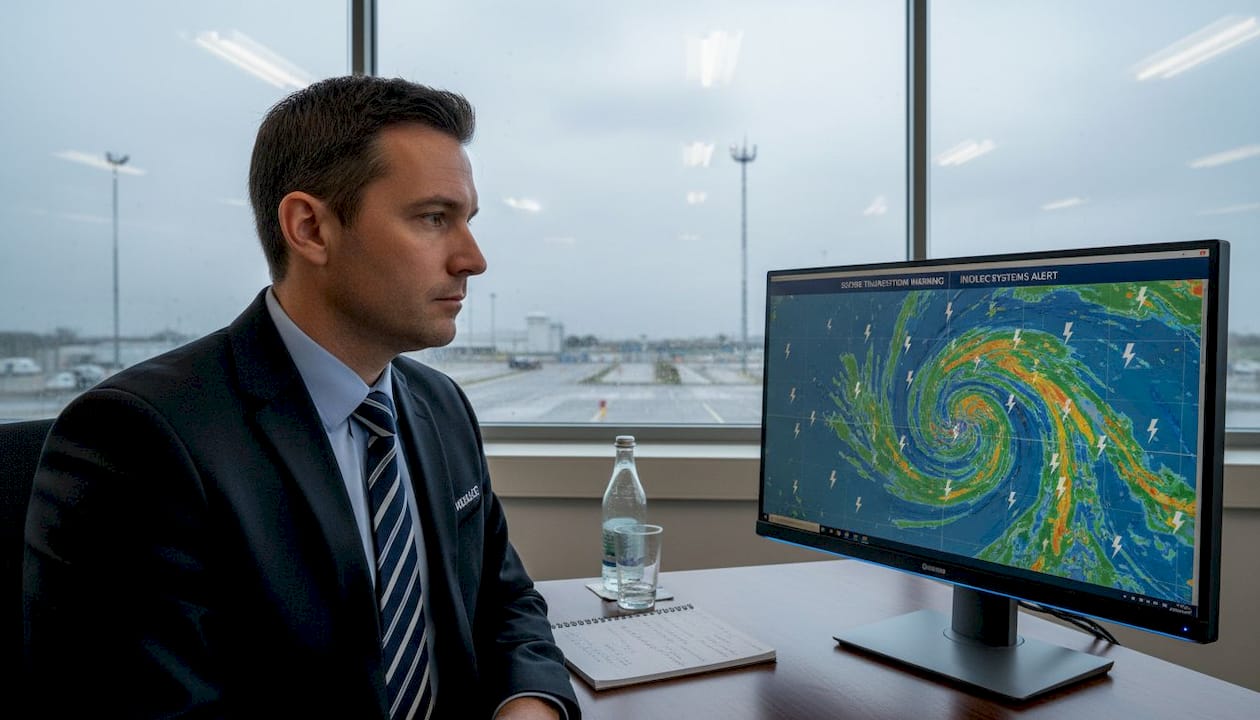
Site-specific lightning detection systems use a combination of electric field sensors, radio frequency detectors, and lightning location networks to monitor approaching storm cells in real time. Many platforms deliver automated alerts directly to operations control systems, facility apps, or on-site warning devices. The key difference from generic weather apps is precision. You’re getting location-specific, time-sensitive data that directly informs your response window.
Lightning detection systems can provide advance warning of approximately 8 to 20 minutes. Some systems with broader sensor arrays and predictive modeling deliver 15 to 25 minutes of usable lead time in practice. For a process engineer managing a chemical transfer or a site supervisor overseeing crane operations, that window is the difference between a controlled shutdown and an emergency.
Building a functional response protocol
Detection is useless without a practiced response. Here’s a practical sequence for a facility response protocol:
- Alert received. Designated operations lead or control room acknowledges warning and activates the protocol.
- Notifications issued. Supervisors, contractors, and field crews receive simultaneous notification through a defined communication tree.
- Process assessment. Identify which processes can be safely paused or shut down within the lead time window.
- Asset securing. Portable equipment, outdoor electronics, and exposed materials are secured or moved to protected zones.
- Evacuation of exposed positions. Field workers move to designated shelter areas. No exceptions for contractors or visitors.
- Confirmation and wait. All-clear criteria are defined in advance: typically 30 minutes after the last strike within a defined radius.
- Restart sequence. A defined restart checklist prevents rushed re-engagement that could cause secondary incidents.
“The most significant improvements in storm-related safety outcomes come not from hardware upgrades but from rehearsed, clearly authorized response procedures. When everyone knows their role, lead time becomes protection time.”
Climate-adaptive protection methods increasingly emphasize this integration of forecasting and operational response as a core design element, not an add-on. For facilities still treating protocols as secondary to hardware, that’s a strategic blind spot worth addressing urgently.
Distributed authority matters more than you think
One of the most common failures in real-event scenarios is decision authority bottlenecks. If only one person can trigger a shutdown and they’re unreachable, the protocol stalls. Effective systems build in clear backup authority at every level. Your infrastructure lightning protection guide should define primary and secondary decision-makers for every step.
Pro Tip: Test your communication tree every quarter, not just during annual reviews. Phone numbers change, staff turn over, and gaps in the chain don’t appear until you look for them.
Inspection, testing, and continuity management for protection hardware
Even the most advanced systems need continual oversight. Regular inspection and testing ensure that hardware remains reliable and effective, particularly after severe weather events, structural modifications, or years of service in harsh environments.
Standard inspection and testing tasks
A complete lifecycle management program for lightning protection systems includes the following:
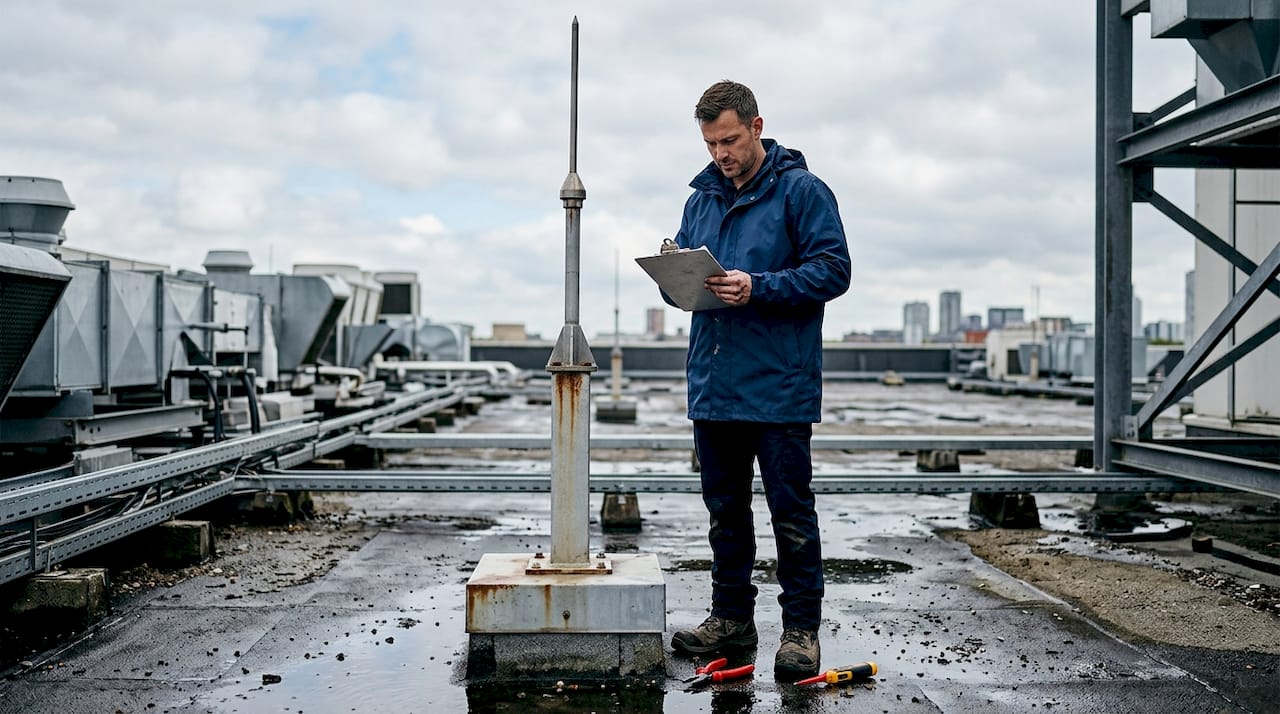
- Visual inspections. Check for physical damage to air terminals, conductor routing, bonding connections, and signage. This should happen at least annually and after any major storm event.
- Earth resistance testing. Measure the resistance of your grounding system to confirm it meets design thresholds. High resistance increases the risk of dangerous step potentials and equipment damage.
- Continuity checks. Verify that the full conductor path from air terminal to earth electrode is unbroken. Corrosion, mechanical damage, and improper repairs are common causes of continuity failure.
- Bonding arrangement audits. Confirm that all metallic structures, equipment enclosures, and utility entries are properly bonded into the main protection system.
- Reporting and remediation planning. Every test cycle should produce a formal report with identified deficiencies, prioritized remediation steps, and a follow-up schedule.
Established practice includes inspection and testing of bonding arrangements and earth resistance and continuity checks, with defined frequencies often aligned to system protection level and standards such as BS EN 62305.
Inspection frequency by system level
| Protection level | Visual inspection | Earth resistance test | Full continuity check |
|---|---|---|---|
| Level I (highest risk) | 6 months | Annually | Annually |
| Level II | Annually | Annually | Every 2 years |
| Level III/IV | Annually | Every 2 years | Every 2 years |
| Post-storm review | After major events | As warranted | As warranted |
Your risk assessment and maintenance schedule should align with these frequencies and be cross-referenced against applicable lightning standards in your region. Documenting every cycle carefully is also critical for regulatory compliance and insurance purposes.
Expanding tactics: Multi-hazard weather-based measures
Lightning is just one weather threat. Expanding tactics to include other hazards increases operational resilience and creates a more complete framework for protecting both assets and people.
Why multi-hazard thinking matters
Facilities that only plan for lightning often find themselves unprepared when a heat wave follows a storm system, or when high winds force the same kind of operational adjustments as a lightning alert. A multi-hazard approach builds a common framework: monitoring, alerting, response, and recovery. The skills and structures you develop for lightning translate directly to other weather scenarios.
Extreme heat, for example, has become a growing operational concern globally. Weather-based protection extends into extreme-heat tactics such as cool roofing systems, misting installations for outdoor waiting and work areas, oral rehydration solutions for vulnerable workers, and restricting outdoor work during peak heat hours, all of which appear in current public-sector action plans.
Practical measures for industrial and commercial sites
- Cool roof coatings. Reflective membranes reduce roof surface temperatures, cutting both heat stress risk for rooftop workers and HVAC load in climate-controlled facilities.
- Misting systems. Installed at entry points, loading docks, and outdoor break areas, misting provides meaningful temperature relief in high-heat zones.
- Work restriction schedules. Heat action plans define specific temperature and humidity thresholds at which outdoor work must be paused, rescheduled, or restructured.
- Integrated weather monitoring dashboards. A single platform that tracks lightning, heat index, wind speed, and precipitation allows your operations team to respond to multiple hazard types from one interface.
- Workforce hydration and rest protocols. Just as lightning protocols define shelter steps, heat protocols define mandatory rest intervals and hydration checkpoints.
Statistic: Heat-related illness accounts for hundreds of occupational fatalities annually across industrial sectors globally, with outdoor and semi-outdoor worksites carrying the highest exposure rates.
Climate adaptation strategies increasingly incorporate this kind of multi-hazard orientation, recognizing that weather risks cluster together and effective resilience requires a unified, not siloed, response framework.
Comparing protection tactics: Which combination makes sense?
With all tactics covered, it’s essential to synthesize their strengths in a practical comparison that guides decision-making for different facility types.
Protection tactic comparison
| Tactic | Primary benefit | Best fit | Key limitation |
|---|---|---|---|
| Lightning detection and alerting | Advance warning, lead time | All outdoor or semi-outdoor operations | Requires trained response to be effective |
| Operational response protocols | Converts lead time into safety | Sites with defined staff roles | Only works with rehearsal and authority |
| Hardware inspection and testing | System reliability assurance | All sites with installed systems | Reactive by nature; doesn’t prevent strikes |
| Multi-hazard weather monitoring | Broad operational resilience | Large or complex sites | Higher integration cost upfront |
| Cool roofing and heat mitigation | Workforce and asset protection | Outdoor-intensive operations | Limited to non-lightning weather scenarios |
Recommended combinations by facility type
- Chemical plants and refineries. Detection system plus strict shutdown protocols plus full hardware inspection cycle. The stakes around ignition risk make every element non-negotiable.
- Data centers and server farms. Hardware inspection focus plus surge and bonding verification, supplemented by integrated monitoring for early warning.
- Construction sites. Detection plus operational protocols are the primary tools, since installed hardware is often minimal or absent.
- Large commercial campuses. Multi-hazard monitoring platform with detection alerts, heat protocols, and defined evacuation routes for outdoor areas.
- Logistics and distribution hubs. Emphasis on outdoor asset securing procedures, worker evacuation routes, and regular hardware testing for large-footprint earthing systems.
The most effective approach isn’t picking one tactic. It’s building a layered mix that fits your operational reality. Protecting your facility effectively means combining passive hardware with active protocols and ongoing maintenance. A public lightning protection workflow analysis can also offer useful benchmarks for how high-exposure public infrastructure manages these same challenges.
Real-world lessons: Why protocols matter more than technology
Here’s an opinion that might push back against conventional purchasing instincts: the single most common reason lightning mitigation fails during actual events is not inadequate hardware. It’s the absence of practiced, authority-clear protocols.
We’ve seen facilities invest significantly in detection technology, install new systems, and still watch operations stall during a live event because no one was empowered to pull the trigger on a shutdown. The alert fires. The warning light activates. And then people look at each other waiting for authorization that never comes clearly enough, quickly enough.
Successful storm passage is frequently attributed to improved shutdown procedures and practiced response rather than solely to technology upgrades. That’s not an argument against investing in detection systems. It’s an argument for treating protocol development as the foundational investment, not the afterthought.
What does a protection culture actually look like in practice? It means your step-by-step protection guide is a living document, reviewed at least annually. It means new staff receive lightning protocol orientation during onboarding, not six months later. It means decision authority is mapped, tested, and documented so that any team leader on any shift can act without hesitation.
Technology amplifies readiness. It cannot substitute for it. The facilities that get this right don’t just install systems. They build habits, run simulations, and treat weather risk as an operational discipline rather than a compliance checkbox. That shift in mindset is what separates facilities with consistent safe outcomes from those that get lucky.
Enhance your facility’s weather-based protection with expert solutions
If you’re ready to elevate your facility’s weather-based defense, professional solutions offer the next step toward consistent, compliant protection.
Indelec has delivered lightning protection expertise across industrial, commercial, and infrastructure sectors since 1955. Whether you’re evaluating lightning system solutions for a new project or upgrading an existing installation, the process starts with understanding your site’s specific risk profile. Explore industry lightning standards to benchmark your current setup, and learn why for many facility types, lightning protection is not optional. Expert consultation, risk assessment, and full lifecycle support are available to match your operational needs.
Frequently asked questions
How much advance warning do lightning detection systems provide?
Most detection systems deliver 8 to 25 minutes of usable lead time for protective actions, with the range depending on the technology, sensor network, and local site conditions.
What inspection and tests are required for lightning protection systems?
Annual visual inspections, earth resistance tests, and bonding continuity checks are standard, with frequencies determined by the system’s protection level and applicable standards such as BS EN 62305.
Can weather-based protection address hazards beyond lightning?
Yes, effective weather-based protection extends to extreme heat through measures like cool roofing, misting systems, and work restriction schedules that protect both workers and assets during high-heat events.
Is technology or protocol more important for lightning risk mitigation?
Practiced shutdown procedures and clear decision authority consistently outperform hardware alone. Technology is most effective when it supports a team that already knows exactly how to respond.