Electrical protection: compliance & lightning safety guide
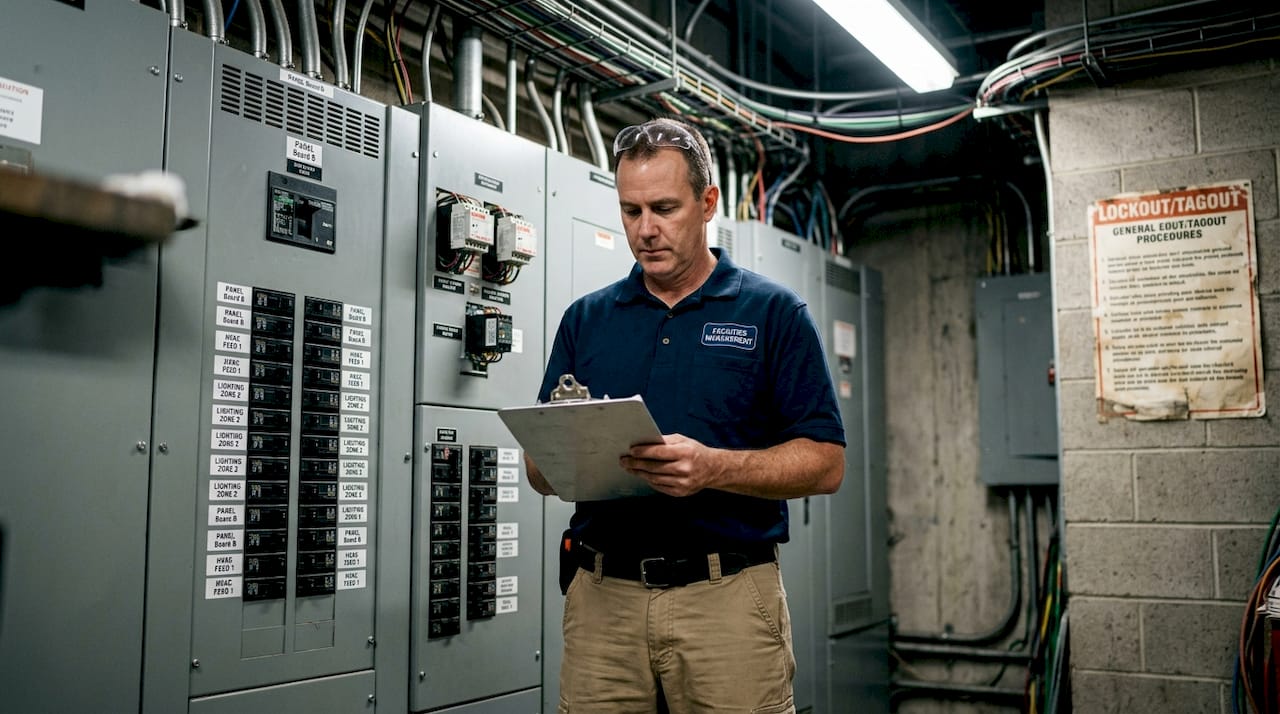
Most costly electrical incidents at industrial and commercial facilities are preventable. The gap between a facility that passes inspection and one that is truly protected is wider than most managers realize. Standard fuses and circuit breakers handle everyday faults, but they leave significant vulnerabilities in place, particularly around lightning, arc flash, and improperly coordinated device networks. This article breaks down what electrical protection actually covers, which devices and systems matter most, how lightning protection standards apply to your facility, and what best practices separate genuinely safe sites from those that are merely compliant on paper.
Table of Contents
- What is electrical protection?
- Key electrical protection devices and how they work
- Lightning protection: systems, methods, and standards
- Best practices: Coordination, compliance, and maintenance
- A better way to view electrical protection: Go beyond the code
- Expert solutions for every facility
- Frequently asked questions
Key Takeaways
| Point | Details |
|---|---|
| Layered fault protection | Combining devices like relays and breakers isolates faults before they spread, maximizing facility safety. |
| Lightning-specific systems | Dedicated lightning strategies using NFPA 780 and IEC 62305 reduce strike risk and ensure code compliance. |
| Regular maintenance matters | Quarterly check-ups and system coordination keep electrical and lightning protection effective over time. |
| Go beyond compliance | Facilities with proactive assessments and custom solutions are safer than those focused only on minimum legal requirements. |
What is electrical protection?
Electrical protection is not just a circuit breaker at the panel. It is a layered system of devices, strategies, and standards working together to keep your facility, your people, and your equipment safe from electrical faults.
Electrical protection refers to the systems and devices designed to detect and isolate electrical faults such as overcurrents, short circuits, ground faults, and lightning strikes to prevent damage, fires, and ensure safety in industrial and commercial power systems. That definition from IEEE 242 captures the full scope: it is not reactive, it is designed to act before damage spreads.
The types of faults your facility faces include:
- Overcurrent: Excessive current flow that overheats conductors and insulation
- Short circuit: A direct connection between conductors of different potential, causing near-instantaneous high current
- Ground fault: Unintended current path to ground, a leading cause of electrical fires
- Lightning strike: A transient overvoltage event that can destroy equipment and ignite fires in milliseconds
Each fault type requires a specific protective response. A fuse handles overcurrent. A ground-fault relay handles leakage to ground. A lightning protection system handles the atmospheric threat entirely. No single device covers all scenarios.
“Electrical protection is a risk management investment, not just a compliance checkbox. Facilities that treat it as the latter consistently face higher incident rates, longer downtime, and steeper insurance premiums.”
From a business continuity standpoint, the stakes are clear. Unplanned electrical downtime in industrial settings costs an average of tens of thousands of dollars per hour. Fire damage from an undetected ground fault can be catastrophic. Personnel injuries carry both human and legal consequences.
Compliance failures compound the financial risk. Facilities that cannot demonstrate adherence to lightning safety standards or relevant electrical codes may face denied insurance claims, regulatory fines, and increased liability in the event of an incident. NFPA 780 and IEEE standards are not bureaucratic hurdles. They represent decades of incident data translated into actionable requirements.
Think of electrical protection as infrastructure insurance with a measurable return. Every dollar invested in proper protection reduces the probability of a far more expensive failure event.
Key electrical protection devices and how they work
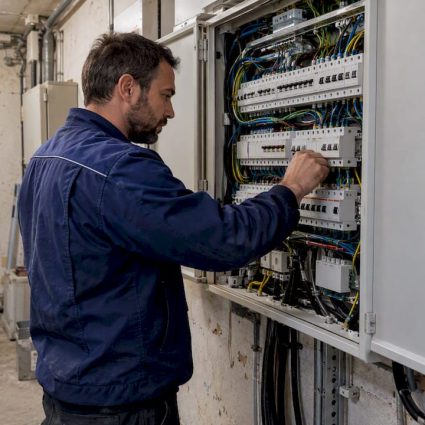
Understanding which device does what is essential for making informed decisions about your facility’s protection architecture. Key protective devices include fuses, circuit breakers, protective relays, overload relays, and ground-fault relays that interrupt fault currents. Each has a specific role, and using them in combination creates the layered protection your facility needs.
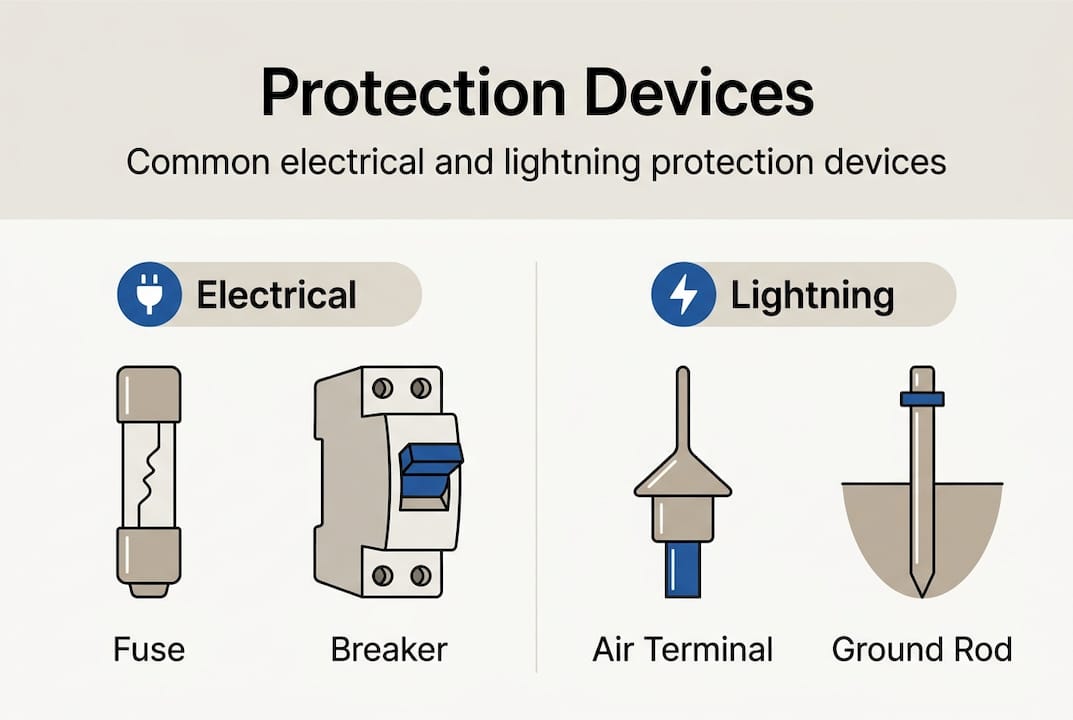
| Device | Function | Typical application | Operating range |
|---|---|---|---|
| Fuse | Melts to break circuit on overcurrent | Branch circuits, panels | 1A to 6,000A |
| Circuit breaker | Trips mechanically on overload or short circuit | Main distribution, sub-panels | 15A to 6,300A |
| Overload relay | Protects motors from sustained overcurrent | Motor control centers | Up to 630A |
| Ground-fault relay | Detects leakage current to ground | Wet areas, critical circuits | 0.03A to 5A |
| Protective relay | Monitors system parameters, triggers breakers | Substations, feeders | Application-specific |
Fuses are the simplest and fastest-acting devices. They sacrifice themselves to protect the circuit, which means they must be replaced after each operation. Circuit breakers reset, making them more practical for locations where faults may recur during troubleshooting.
Overload relays are critical for motor protection. A motor drawing 10% above its rated current for an extended period will overheat and fail. Overload relays detect this sustained overcurrent and disconnect the motor before damage occurs.
Ground-fault relays operate at very low current thresholds, as low as 0.03 amperes (A), because even small leakage currents can cause fires or electrocution over time. These are especially important in food processing, chemical plants, and anywhere water is present near electrical equipment.
The role of relays in protective schemes is to act as the intelligence layer. They measure system conditions continuously and signal breakers to open when parameters exceed safe thresholds.
- Deploy ground-fault circuit interrupters (GFCIs) in all wet and outdoor locations
- Use protective relays on feeders serving critical loads
- Coordinate overload relay settings with motor nameplate data
- Review device ratings when adding new loads to existing circuits
Pro Tip: When selecting protective devices, always verify the available fault current at the installation point. A breaker rated for 10,000A interrupting capacity installed where fault current can reach 22,000A is a serious hazard. See infrastructure safety tips for more on matching device ratings to real-world conditions.
Lightning protection: systems, methods, and standards
Lightning is not a rare event. In the United States alone, lightning strikes the ground roughly 20 million times per year. For facilities with exposed rooftops, tall structures, or sensitive electronics, a single strike can cause millions of dollars in damage and weeks of downtime.
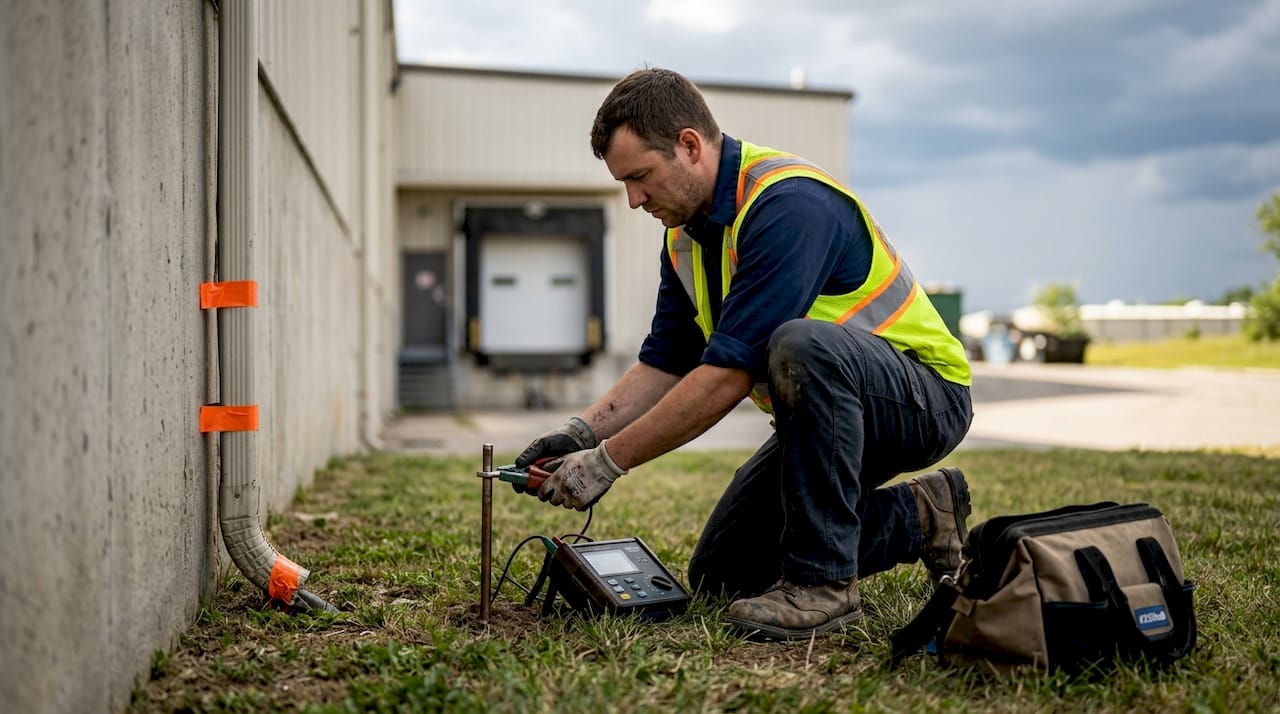
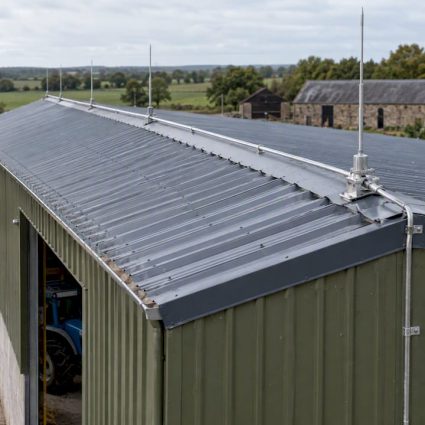
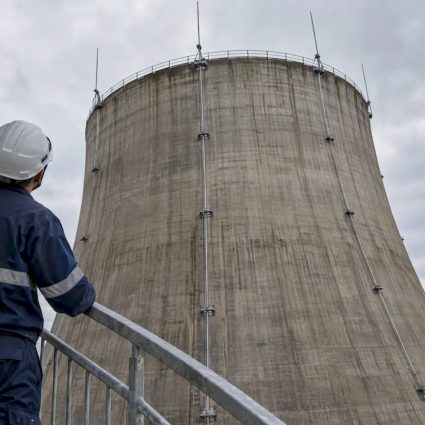
Lightning protection uses air terminals, down conductors, and grounding per NFPA 780 and IEC 62305 to intercept strikes and safely dissipate currents into the earth. These three components form the backbone of any compliant lightning protection system (LPS).
Here is how a complete LPS works in sequence:
- Air terminals (lightning rods) intercept the strike before it contacts the structure
- Down conductors carry the lightning current safely from the air terminal to ground level
- Grounding electrodes dissipate the current into the earth, away from the structure and its occupants
- Surge protection devices (SPDs) protect internal electrical systems from transient overvoltages caused by nearby strikes
- Bonding connects metallic components to equalize potential and prevent side-flash arcing
The two dominant standards, NFPA 780 and IEC 62305, share the same physical principles but differ in risk assessment methodology and specific installation requirements.
| Feature | NFPA 780 | IEC 62305 |
|---|---|---|
| Primary region | United States | International/Europe |
| Risk assessment | Simplified tables | Detailed quantitative model |
| Protection levels | Not explicitly tiered | Four protection levels (I to IV) |
| SPD requirements | Referenced separately | Integrated into standard |
| Air terminal types | Traditional and ESE | Traditional and ESE |
Ground resistance is a critical performance metric. Best practice targets a ground resistance of less than 10 ohms for most facilities, and below 1 ohm for critical infrastructure. High ground resistance means the system cannot safely dissipate lightning current, which can result in dangerous step potentials and equipment damage.
Pro Tip: Test ground resistance annually using a fall-of-potential or clamp-on method. Soil conditions change seasonally, and a system that tested well in spring may perform poorly in dry summer conditions. Review the lightning protection system application guide for site-specific design considerations, and consult protect your facility from lightning for a practical facility checklist.
Maintenance is not optional. Inspect air terminals and down conductors after every major storm, and conduct a full system inspection at least once per year. Corrosion, physical damage, and loose connections degrade performance significantly over time.
Best practices: Coordination, compliance, and maintenance
Knowing which devices exist is not enough. How you configure, coordinate, and maintain them determines whether your facility is genuinely protected or just technically compliant.
Methodologies involve selective coordination where protective devices are set to operate in sequence, closest to fault first, minimizing outages. This means the breaker or fuse nearest the fault trips before the upstream device, limiting the affected area to the smallest possible zone.
Here is a practical coordination workflow:
- Map your entire distribution system, from the utility service entrance to every branch circuit
- Identify the available fault current at each node using short-circuit analysis
- Select device ratings and trip settings that create a time-current coordination curve
- Verify coordination using software or manual time-current curve overlays
- Document settings and re-verify after any system modification or load addition
Maintenance frequency matters enormously. Quarterly maintenance for high-use industrial sites reduces arc flash risks, and contact with overhead lines causes 39 to 40% of electrocutions in occupational settings. That statistic underscores why routine inspection is not optional.
For high-use industrial facilities, quarterly electrical maintenance should include:
- Thermal imaging of switchgear, panels, and connections to detect hot spots
- GFCI testing at all protected outlets and equipment
- Torque checks on bus connections and terminal lugs
- Review of protective relay settings against current load profiles
- Visual inspection of all grounding conductors and bonding connections
Pro Tip: Thermal imaging catches problems that visual inspection misses entirely. A loose bus connection running at 80°C above ambient temperature looks normal to the eye but shows up immediately on an infrared camera. Schedule thermal scans at peak load periods for the most accurate results.
Compliance with factory safety regulations and electrical protection compliance requirements also affects your insurance position. Insurers increasingly require documented maintenance records and third-party inspection reports. Facilities that cannot produce these documents face higher premiums and potential claim denials after incidents.
For facilities in regions with increasing storm frequency, climate adaptation electrical protection strategies are becoming essential, not optional.
A better way to view electrical protection: Go beyond the code
Here is something most compliance guides will not tell you: passing an inspection does not mean your facility is protected. It means your facility met the minimum threshold on the day of the inspection. Those are very different things.
We see this pattern repeatedly. A facility completes its annual review, receives a clean report, and then experiences a significant arc flash event six months later. The root cause is almost always improperly coordinated devices or deferred maintenance, neither of which shows up on a standard inspection checklist.
Real protection requires treating IEEE 242 coordination studies as a living document, not a one-time exercise. Load profiles change. New equipment gets added. Settings drift. A coordination study from three years ago may no longer reflect your actual system.
There is also a regional knowledge gap worth acknowledging. IEEE relay practices and IEC 62305 protection levels are not interchangeable frameworks. Facilities operating under one standard while referencing guidance from the other create subtle but serious vulnerabilities.
The facilities that perform best over time are the ones that invest in regular assessments, not just code paperwork. They treat lightning safety perspective and electrical protection as a continuous operational discipline, not a periodic administrative task.
Expert solutions for every facility
Protecting your facility from electrical faults and lightning requires more than off-the-shelf hardware. It requires site-specific engineering, properly selected equipment, and ongoing expert support.

At Indelec, we design and deliver complete lightning protection systems tailored to the exact risk profile of your site, whether you manage a chemical plant, a data center, or a logistics hub. Our Prevectron3 air terminals represent decades of R&D in early streamer emission technology, offering wider protection zones with fewer installation points. Independent research confirms the ESE lightning rod efficiency advantage in real-world deployments. Contact our technical team for a site-specific risk assessment and protection study.
Frequently asked questions
What is the main goal of electrical protection?
The main goal is to detect and isolate faults quickly to prevent injuries, fires, and equipment damage before they spread through the system.
Which standards are important for lightning protection?
NFPA 780 and IEC 62305 are the primary standards, covering air terminals, down conductors, grounding, and surge protection for industrial and commercial facilities.
How often should electrical protection systems be maintained?
For most industrial sites, quarterly maintenance is recommended to reduce arc flash risks, with annual full reviews for lower-use facilities.
What are common mistakes in electrical protection planning?
Poor device coordination is the most common mistake, followed by skipping regular maintenance and underestimating real-world lightning risk at the specific site.