7 critical factors for industrial lightning protection
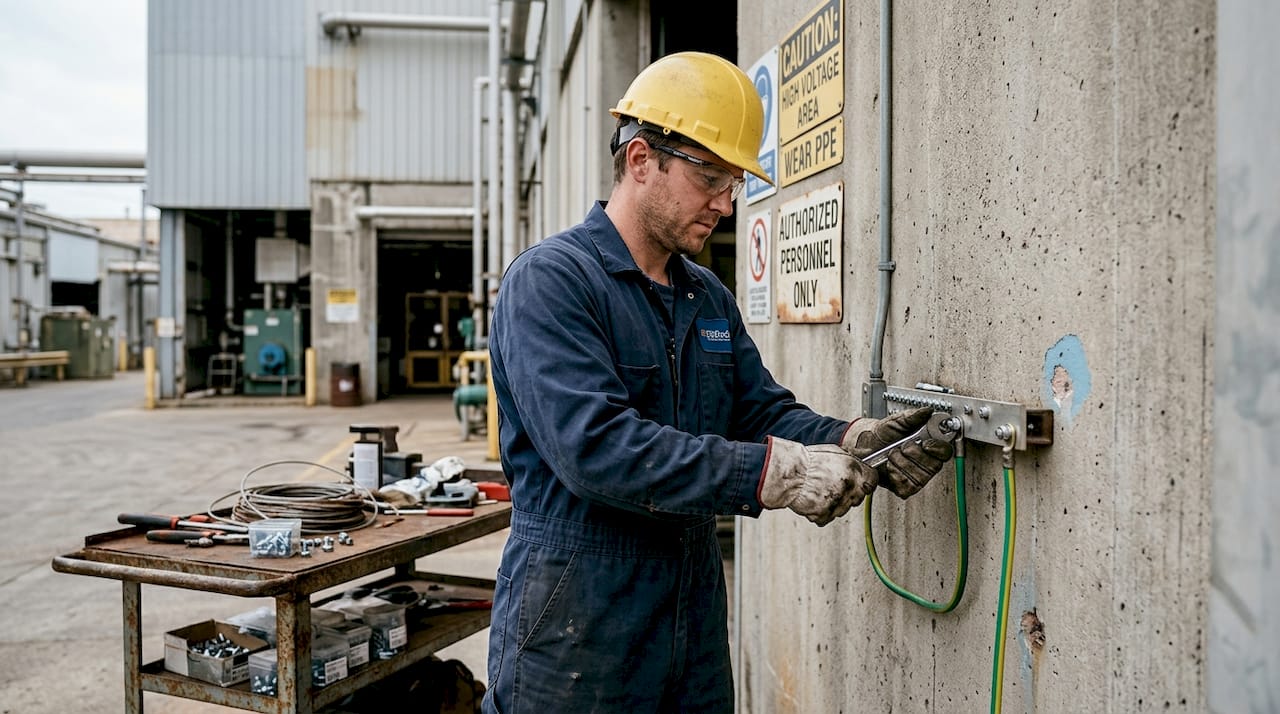
Selecting the right lightning protection system for your industrial facility is a complex decision that directly impacts infrastructure safety, operational continuity, and regulatory compliance. With multiple system types, varying cost structures, and evolving industry standards, facility managers must evaluate numerous factors to make informed choices. This article breaks down seven critical criteria that guide effective lightning protection decisions, from risk assessment and compliance requirements to budget considerations and system maintenance, helping you safeguard your facility against lightning damage while meeting industry standards.
Table of Contents
- Key takeaways
- Understanding the evaluation criteria for industrial lightning protection
- Exploring types of lightning protection systems for industrial sites
- Comparing lightning protection system options: effectiveness, cost, and maintenance
- Making the best decision for your industrial site’s lightning protection
- Ensure effective lightning protection with Indelec solutions
- FAQ
Key Takeaways
| Point | Details |
|---|---|
| Comprehensive risk assessment | Develop a tailored risk assessment that accounts for location, height, sensitive equipment, downtime costs, and potential damage from electrical surges. |
| Regulatory standards compliance | Ensure your selection aligns with IEC 62305, NFPA 780, and applicable local codes to meet safety and legal requirements. |
| Assess site sensitivity | Evaluate protection needs based on materials handled, equipment sensitivity, and critical digital infrastructure to balance safety with budget. |
| Total cost of ownership | Calculate upfront costs plus ongoing maintenance and expected service life to justify protection investments and prevent downtime. |
Understanding the evaluation criteria for industrial lightning protection
Before selecting any lightning protection system, you need to establish a clear framework for evaluating your facility’s specific needs. This framework should address four fundamental dimensions that influence protection effectiveness and long-term viability.
Start with a comprehensive risk assessment tailored to your facility’s unique characteristics. Consider your geographic location and local lightning frequency, as regions with higher strike density require more robust protection. Evaluate your structure’s height and profile, since taller buildings attract more lightning strikes. Document all sensitive equipment and critical processes that could suffer catastrophic damage from electrical surges. Factor in the potential financial impact of downtime, equipment replacement, and safety incidents.
Regulatory compliance forms the second pillar of your evaluation. Industrial facilities must meet recognized lightning protection standards to ensure both safety and legal conformity. Familiarize yourself with IEC 62305 requirements for lightning protection systems and NFPA 780 standards for installation practices. Review local building codes and industry-specific regulations that may impose additional requirements. Non-compliance exposes your facility to legal liability, insurance complications, and most importantly, preventable safety hazards.
Site sensitivity demands careful attention because not all industrial operations face equal risk. Facilities handling flammable materials, explosive substances, or toxic chemicals require enhanced protection levels. Manufacturing plants with precision equipment sensitive to electromagnetic interference need specialized shielding. Data centers and control rooms housing critical digital infrastructure must prevent even minor voltage fluctuations. Combining lightning safety and budget constraints requires balancing these sensitivity factors against available resources.
Budget constraints represent the practical reality every facility manager confronts. Protection systems vary dramatically in upfront costs, from basic air termination networks to sophisticated early streamer emission devices. Calculate total cost of ownership by including installation expenses, ongoing maintenance requirements, and expected service life. Consider the cost of inadequate protection, including potential equipment damage, production interruption, and safety incidents. A thorough cost-benefit analysis helps justify investment in appropriate protection levels.
Pro Tip: Create a risk matrix that scores your facility across multiple dimensions including strike probability, potential damage severity, and operational criticality. This visual tool helps stakeholders understand protection priorities and supports budget justification.
Exploring types of lightning protection systems for industrial sites
Industrial lightning protection systems fall into several distinct categories, each offering different approaches to intercepting strikes and dissipating electrical energy safely. Understanding these options helps you match system capabilities to your facility’s protection requirements.
Traditional air termination and grounding systems represent the most established protection approach. These systems use Franklin rods or mesh conductors mounted at the highest points of structures to intercept lightning strikes. Down conductors route electrical current to grounding electrodes buried in the earth, where energy dissipates harmlessly. This proven technology works reliably for many industrial applications and typically costs less than advanced alternatives. However, traditional systems require extensive conductor networks and multiple grounding points, which can complicate installation in existing facilities.
Advanced electronic systems employ active technology to enhance protection coverage. Early streamer emission devices generate upward streamers earlier than passive rods, theoretically extending the protection radius. Some systems incorporate charge transfer technology that continuously dissipates atmospheric charge to reduce strike probability. These technologies appeal to facilities seeking broader coverage from fewer installation points, potentially reducing material and labor costs. Critics debate the scientific validity of some active protection claims, so verify that any system meets recognized testing standards.
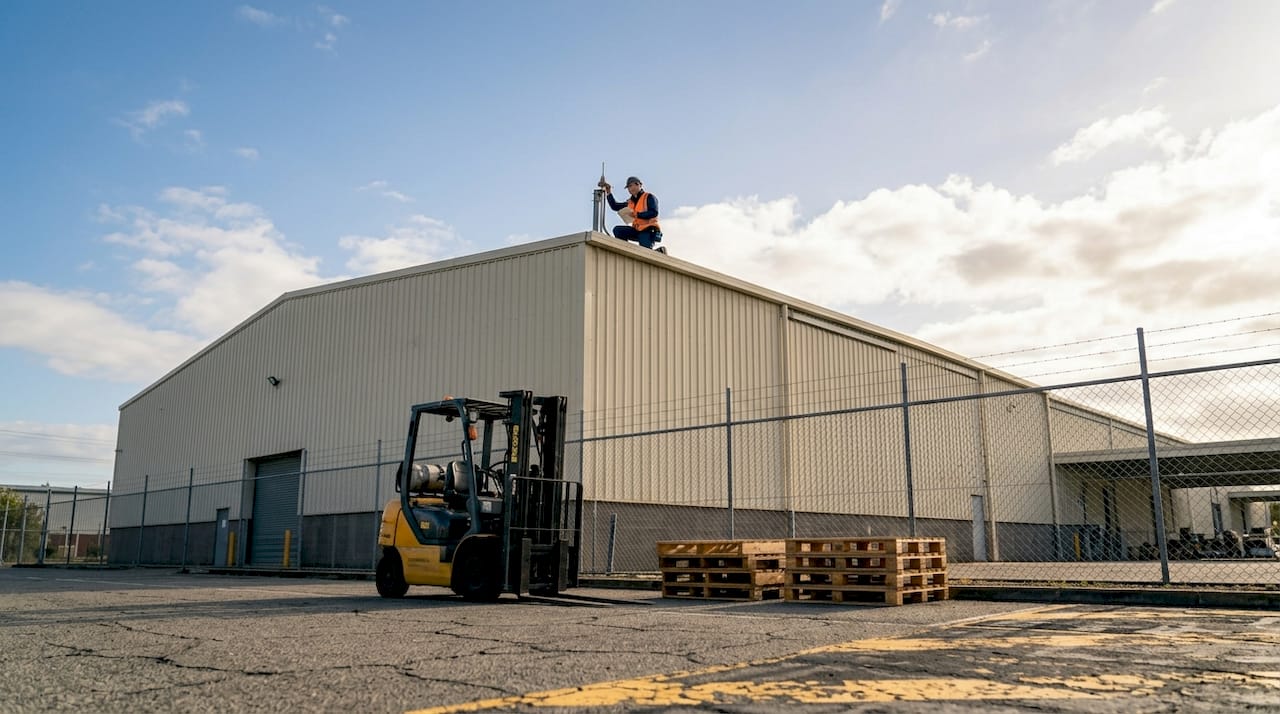
Highly sensitive installations benefit from specialized protection approaches that address electromagnetic interference and surge protection alongside direct strike prevention. These comprehensive solutions integrate external lightning protection with internal surge protective devices, shielding sensitive electronics from both direct strikes and induced currents. Facilities housing process control systems, telecommunications equipment, or precision manufacturing machinery often require this multi-layered approach.
Eco-friendly options like Prevectron3 deliver effective protection while minimizing environmental impact. These systems incorporate sustainable materials, reduce maintenance requirements through enhanced durability, and optimize energy efficiency. For industrial facilities committed to environmental responsibility, green lightning protection aligns safety requirements with sustainability goals. The technology maintains high protection efficacy while supporting corporate environmental initiatives and potentially qualifying for green building certifications.
System suitability depends heavily on your specific industrial environment. Chemical plants and refineries handling hazardous materials need systems certified for explosive atmospheres. Manufacturing facilities with large roof areas may benefit from mesh conductor networks. Telecommunications towers and other isolated tall structures often utilize early streamer emission technology. Match system characteristics to your operational profile for optimal protection.
Comparing lightning protection system options: effectiveness, cost, and maintenance
A structured comparison of protection systems across key performance dimensions helps you evaluate trade-offs and identify the best fit for your facility’s requirements and constraints.
| System type | Effectiveness rating | Installation cost | Annual maintenance | Environmental impact | Typical lifespan |
|---|---|---|---|---|---|
| Traditional Franklin rod | High for direct strikes | Low to moderate | Low | Minimal | 20-30 years |
| Mesh conductor network | Very high coverage | Moderate to high | Low to moderate | Minimal | 25-35 years |
| Early streamer emission | High with extended radius | Moderate | Moderate | Low | 15-25 years |
| Charge transfer system | Variable by conditions | Moderate to high | Moderate to high | Low | 15-20 years |
| Prevectron3 eco-system | High with sustainability | Moderate | Low | Very low | 20-30 years |
| Integrated ESE plus surge | Very high for sensitive sites | High | Moderate | Low to moderate | 15-25 years |
Effectiveness ratings reflect each system’s ability to intercept lightning strikes and protect structures. Traditional systems offer proven reliability backed by decades of field performance. Mesh networks provide the most comprehensive coverage for large flat surfaces. Advanced systems claim extended protection radii, though real-world performance depends on proper installation and site conditions. Integrated solutions combining external and internal protection deliver the highest effectiveness for facilities with sensitive equipment.
Installation costs vary significantly based on system complexity and facility characteristics. Traditional Franklin rods represent the most economical option for simple structures. Extensive mesh networks require substantial conductor material and labor, increasing costs for large facilities. Advanced electronic systems reduce material costs but may involve higher equipment expenses. Factor in site preparation, grounding system installation, and any structural modifications needed to support protection components.
Maintenance requirements influence total cost of ownership over the system’s lifespan. Traditional passive systems need periodic inspection to verify conductor integrity and grounding effectiveness. Electronic systems require more frequent testing to ensure active components function properly. All systems need regular cleaning to remove corrosion and verify electrical continuity. Budget for annual inspections and plan for component replacement as systems age. Different lightning protection system applications demand varying maintenance intensity based on environmental exposure and operational criticality.
Environmental sustainability increasingly influences protection system selection. Traditional systems using copper or aluminum conductors offer recyclability at end of life. Eco-friendly alternatives minimize material consumption and incorporate recycled content. Consider energy requirements for active systems and the carbon footprint of manufacturing and transportation. Systems with longer lifespans and lower maintenance needs reduce environmental impact over their operational life.
Pro Tip: Request detailed lifecycle cost analyses from protection system vendors, including projected maintenance schedules and component replacement timelines. This information reveals true ownership costs beyond initial purchase price and helps you budget accurately for long-term protection.
Making the best decision for your industrial site’s lightning protection
Translating evaluation criteria and system comparisons into a concrete protection decision requires a structured approach that accounts for your facility’s unique circumstances and stakeholder priorities.
Conduct a detailed facility assessment documenting all structures requiring protection, their heights and footprints, surrounding terrain, and proximity to other buildings or infrastructure. Map the location of sensitive equipment, critical processes, and areas where personnel regularly work. Gather historical data on lightning activity in your region and any past strike incidents at your facility.
Define your protection objectives based on risk tolerance and operational requirements. Determine acceptable downtime limits for various facility areas. Establish equipment damage thresholds that trigger protection upgrades. Identify regulatory compliance mandates that constrain system choices. Clarify sustainability goals that favor certain technologies.
Evaluate system options against your specific criteria using the comparison framework presented earlier. Eliminate options that fail to meet minimum effectiveness requirements or exceed budget constraints. Request proposals from qualified protection system vendors for remaining alternatives. Verify that proposed systems comply with applicable standards and regulations.
Engage stakeholders across safety, operations, maintenance, and finance departments to review shortlisted options. Safety teams assess protection adequacy and compliance. Operations evaluate potential installation disruption and ongoing maintenance impact. Maintenance staff consider serviceability and required expertise. Finance validates cost assumptions and budget availability.
Select the system that optimizes protection effectiveness, cost efficiency, and operational fit. Prioritize effectiveness over cost savings, since inadequate protection exposes your facility to catastrophic losses far exceeding system investment. Choose reputable vendors with proven installation experience and ongoing support capabilities. Verify warranty coverage and service availability.
Plan for ongoing monitoring and system evolution as your facility changes. Schedule regular inspections per manufacturer recommendations and industry standards. Document all maintenance activities and test results. Review protection adequacy whenever you add new structures, install sensitive equipment, or modify operations. Lightning protection design examples from similar facilities provide valuable implementation guidance.
Establish clear performance metrics to evaluate protection system effectiveness over time. Track lightning strike incidents and any resulting damage. Monitor maintenance costs against projections. Assess system reliability through inspection findings. Use this data to inform future protection decisions and justify system upgrades when needed.
Ensure effective lightning protection with Indelec solutions
Implementing the right lightning protection strategy requires expertise, proven technology, and ongoing support. Indelec delivers comprehensive lightning protection system application services tailored to industrial facility requirements, from initial risk assessment through system design, installation, and maintenance.
Our lightning protection solutions for sensitive installations address the unique challenges of facilities housing critical equipment and processes. We design integrated protection systems that combine external strike interception with internal surge protection, ensuring comprehensive coverage for your most valuable assets.
For facilities committed to environmental responsibility, our eco-friendly lightning protection systems deliver proven protection while supporting sustainability goals. With over 65 years of lightning protection expertise and thousands of installations worldwide, Indelec provides the technical knowledge and reliable solutions you need to safeguard your industrial infrastructure.
FAQ
What are the key risk factors to assess for lightning protection in industrial facilities?
Risk factors include facility location in areas with high lightning frequency, structure height and profile that attract strikes, and proximity to sensitive equipment vulnerable to electrical damage. You should also evaluate the presence of flammable or explosive materials, critical processes that cannot tolerate interruption, and the potential financial impact of lightning-related incidents. A thorough risk assessment scores these factors to determine appropriate protection levels.
How do eco-friendly lightning protection systems like Prevectron3 differ from traditional methods?
Prevectron3 systems maintain high protection efficacy while minimizing environmental impact through sustainable materials and reduced maintenance requirements. These systems incorporate recycled content, optimize material usage, and feature enhanced durability that extends service life. The technology delivers the same strike interception capability as traditional systems while supporting corporate sustainability initiatives and potentially qualifying for green building certifications.
Which industry standards must industrial facilities comply with for lightning protection?
Facilities must adhere to IEC 62305 international standards for lightning protection system design and installation, along with NFPA 780 standards widely recognized in North America. Compliance ensures your protection system meets scientifically validated safety requirements and legal obligations. Many industries impose additional sector-specific standards, and local building codes may mandate particular protection levels based on structure type and occupancy.
How often should lightning protection systems be inspected and maintained?
Most protection systems require annual visual inspections to verify conductor integrity, connection tightness, and grounding effectiveness. Facilities in harsh environments or with critical operations may need semi-annual inspections. After any lightning strike or severe weather event, conduct immediate inspection to identify damage. Comprehensive testing of grounding resistance and system continuity should occur every three to five years, with more frequent testing for systems protecting highly sensitive installations.
What factors determine the total cost of ownership for lightning protection systems?
Total cost includes initial equipment purchase, installation labor and materials, site preparation and structural modifications, and ongoing maintenance expenses over the system’s lifespan. Factor in inspection costs, periodic testing requirements, and eventual component replacement. Consider indirect costs like installation downtime and the potential expense of inadequate protection, including equipment damage, production interruption, and safety incidents. Systems with higher upfront costs often deliver lower total ownership costs through reduced maintenance and longer service life.