Adapt lightning protection to climate change risks
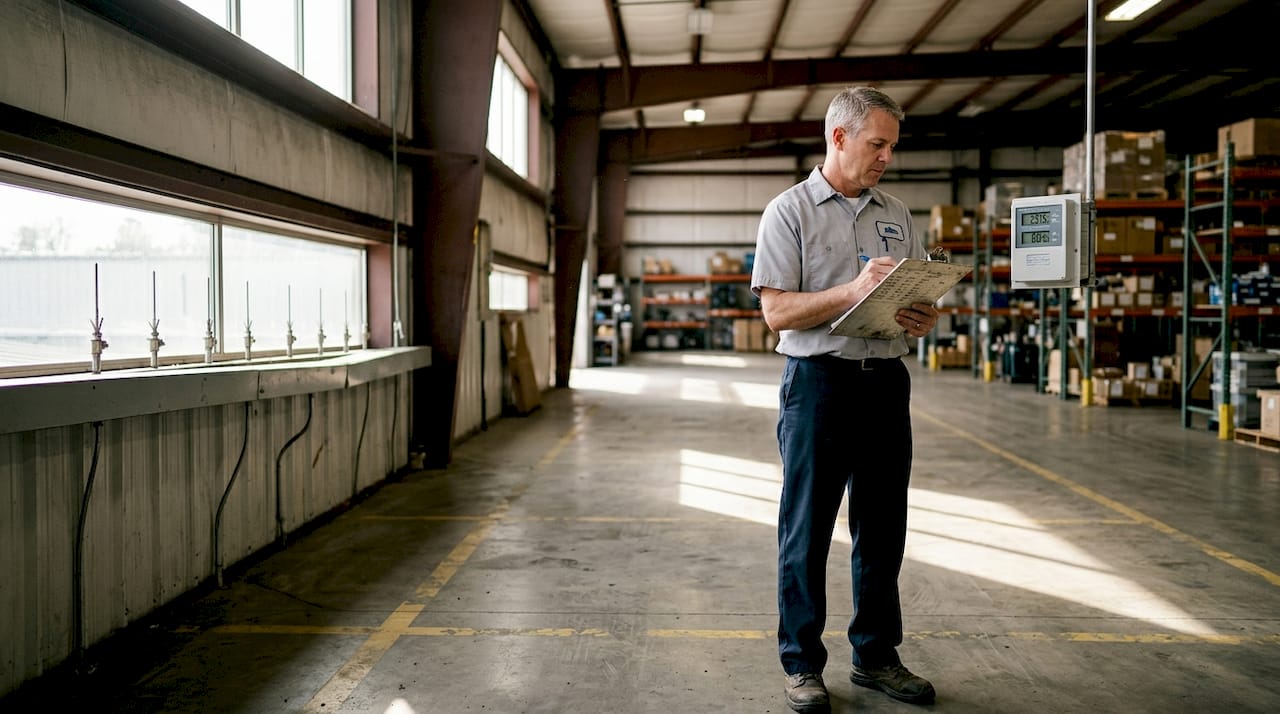
Climate change is reshaping thunderstorm patterns worldwide, increasing both the frequency and intensity of lightning strikes at industrial facilities. Traditional lightning protection systems, designed for historical weather norms, may no longer provide adequate coverage against these evolving threats. Facility managers and engineers must now integrate climate adaptation strategies into their lightning protection planning to safeguard critical infrastructure, prevent costly downtime, and maintain regulatory compliance. This guide explains how to upgrade protection systems effectively, leveraging advanced technologies and design principles that respond dynamically to changing atmospheric conditions and heightened lightning risks.
Table of Contents
- Key takeaways
- Understanding climate change effects on lightning risk
- Core principles of adaptive lightning protection systems
- Comparing traditional and climate adaptive lightning protection solutions
- Implementing climate adaptive lightning protection in industrial facilities
- Explore advanced lightning protection solutions with Indelec
- What is climate adaptation in lightning protection?
Key Takeaways
| Point | Details |
|---|---|
| Rising lightning risk | Climate change is increasing the frequency and intensity of thunderstorms, expanding exposure for industrial facilities. |
| Dynamic risk assessment | Modern protection integrates environmental data to assess lightning risk in real time and adjust coverage. |
| Early streamer emission | Advanced systems using early streamer emission offer improved efficiency against stronger, more widespread discharges. |
| Regulatory adaptation | Regulatory compliance now includes climate adaptation considerations and requires updated protection strategies. |
| Adaptable protection design | Designs that can be adjusted for regional climate shifts reduce long term safety risks and asset downtime. |
Understanding climate change effects on lightning risk
Rising global temperatures are fundamentally altering atmospheric conditions, creating more frequent and intense thunderstorms that generate higher lightning activity. Industrial facilities face escalating risks from direct strikes and secondary impacts like power surges, equipment damage, and fire hazards. Climate change increases lightning activity and severity, raising facility risk profiles beyond what historical data predicted. You must recognize that protection systems designed for past weather patterns may leave critical infrastructure vulnerable to these new threats.
Regional lightning characteristics are shifting as well, with areas previously experiencing low strike density now seeing significant increases. Facilities in these transitional zones face particular challenges, as existing protection infrastructure was never sized for current threat levels. Understanding this evolving risk landscape is essential for effective protection design and investment planning. You need to reassess your facility’s lightning exposure using updated climate models and regional strike data rather than relying solely on decades old statistics.
The secondary effects of increased lightning activity compound direct strike risks. More frequent storms mean higher probabilities of electromagnetic interference, ground potential rise, and cascading failures across interconnected systems. Industrial sites with sensitive electronics, automated control systems, or explosive materials face magnified consequences from each strike. Your risk assessment must account for both primary lightning damage and these indirect pathways that can disable operations even without a direct hit.
“Facilities that fail to adapt their lightning protection to changing climate conditions face exponentially higher risks of catastrophic failures, extended downtime, and regulatory penalties as standards evolve to reflect new environmental realities.”
Key factors driving increased lightning risk include:
- Higher atmospheric moisture content from warmer temperatures fuels more powerful thunderstorm development
- Shifting jet stream patterns alter storm tracks, bringing lightning to previously low risk regions
- Increased storm intensity produces stronger electrical fields and more energetic lightning discharges
- Extended storm seasons lengthen the annual exposure window for industrial facilities
- Urban heat island effects concentrate thunderstorm activity near industrial zones
Core principles of adaptive lightning protection systems
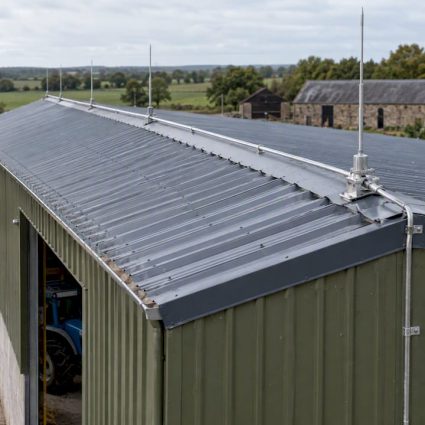
Basic lightning protection relies on air terminals, down conductors, and grounding systems to intercept lightning and safely channel electrical current into the earth. These passive systems work by providing a preferred path for lightning discharge, protecting structures and equipment from direct strikes. Climate adaptation requires systems that respond faster and offer greater coverage because stronger storms generate more powerful lightning with expanded strike zones. You need protection that accounts for these intensified electrical characteristics rather than assuming historical strike patterns will continue.
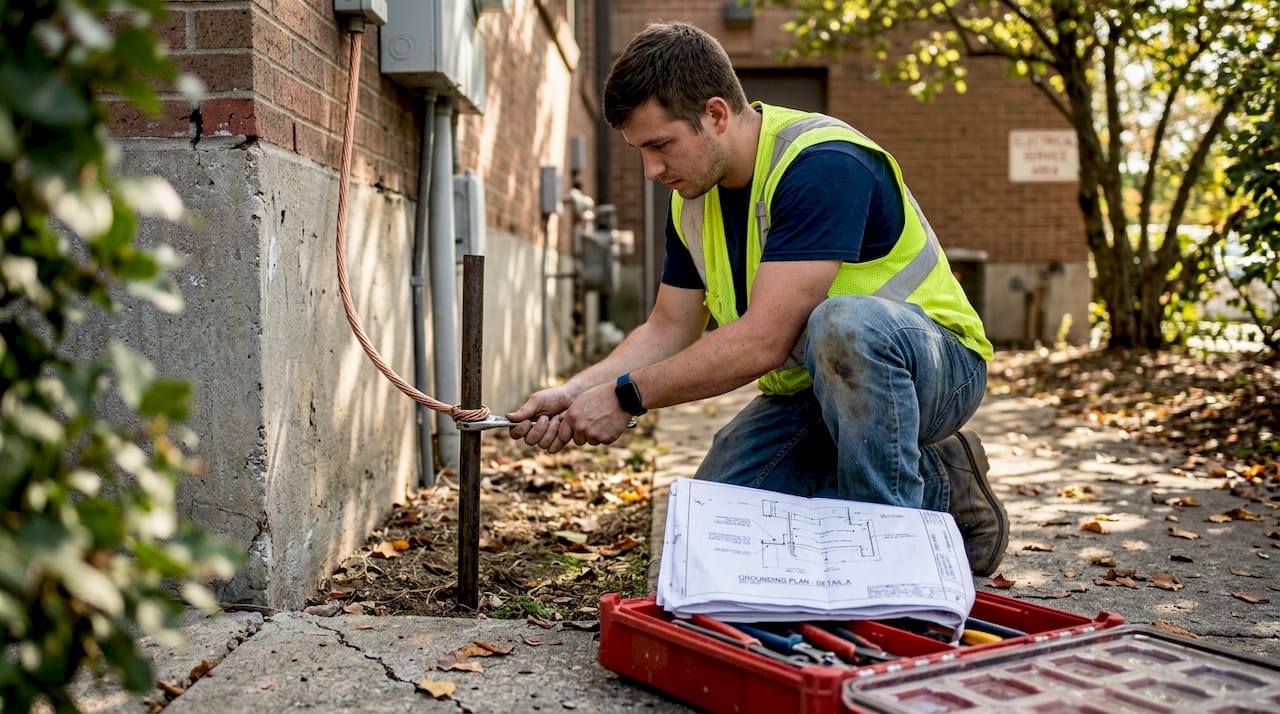
Early streamer emission rods offer higher efficiency tailored to climate challenges by actively emitting upward streamers milliseconds before lightning attachment occurs. This head start extends the protection radius significantly compared to passive Franklin rods, creating larger safety zones with fewer installation points. ESE technology proves particularly valuable for sprawling industrial sites where comprehensive coverage using traditional methods would require prohibitively dense rod spacing. The active emission mechanism ensures reliable interception even as lightning intensity increases.
Adaptive designs incorporate environmental sensors that monitor atmospheric conditions in real time, enabling dynamic risk assessment and automated system responses. Temperature, humidity, and electrical field sensors detect approaching storms and can trigger protective measures like equipment shutdowns or surge suppressor activation before strikes occur. These intelligent systems learn from local weather patterns and adjust sensitivity thresholds to minimize false alarms while maximizing protection. You gain predictive capability that transforms lightning protection from purely reactive to proactively managed.
Materials selection becomes critical for climate adaptive systems, as components must withstand harsher conditions without degradation. Corrosion resistant alloys, UV stabilized insulators, and thermally stable grounding materials ensure long term reliability despite temperature extremes and increased moisture exposure. Regular inspection protocols must verify that environmental stresses have not compromised system integrity. Your maintenance program should include accelerated testing cycles for facilities in regions experiencing rapid climate shifts.
Compliance with updated standards integrates climatic factors into protection design and certification processes:
- Assess facility risk class using current climate data rather than historical averages
- Calculate protection zones accounting for increased lightning intensity and strike radius
- Select ESE or adaptive technologies appropriate for updated risk profiles
- Integrate monitoring systems that provide real time threat assessment and logging
- Document design assumptions and climate adaptation measures for regulatory review
- Schedule verification testing at intervals reflecting accelerated environmental stress
Pro Tip: When upgrading existing protection systems, prioritize facilities with critical operations or hazardous materials first, then expand coverage systematically based on updated risk rankings that incorporate climate projections for your region.
Comparing traditional and climate adaptive lightning protection solutions
Traditional lightning protection systems rely on fixed coverage zones calculated from historical lightning density maps and standard protection angles. These passive designs assume consistent strike characteristics and use Franklin rods or simple air terminals positioned according to rolling sphere or protective angle methods. While reliable for stable climates, traditional systems lack flexibility to respond to changing storm patterns or increased lightning intensity. You may find that protection designed a decade ago no longer provides adequate coverage given current atmospheric conditions.
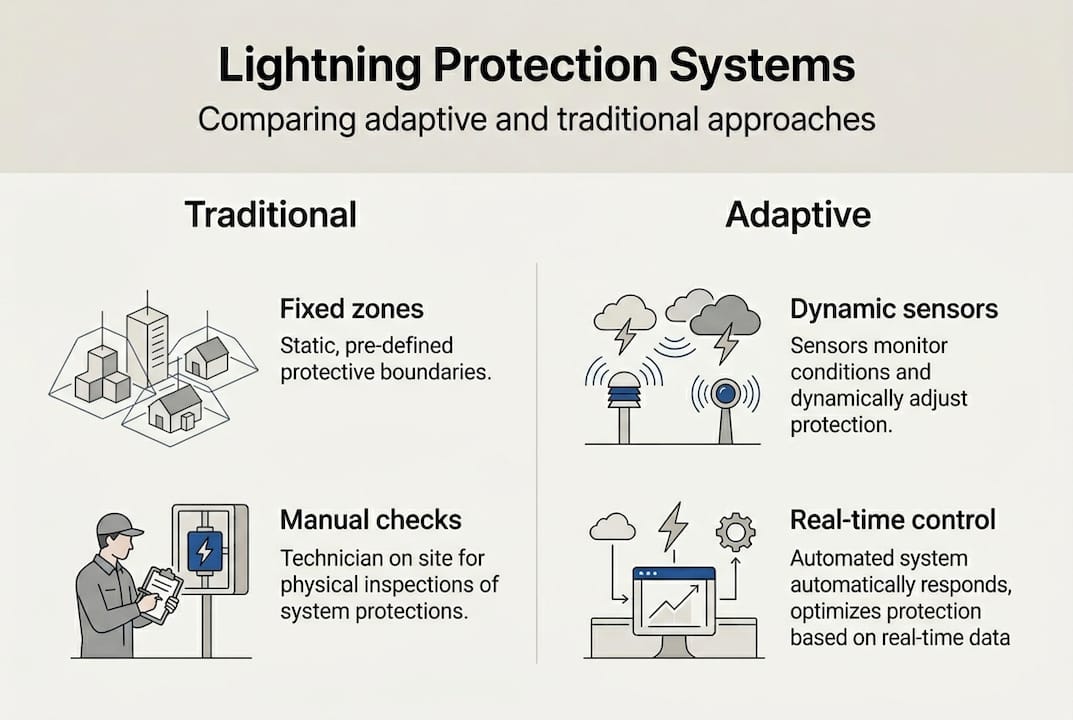
Adaptive systems adjust coverage and response dynamically using environmental sensors and intelligent controllers that modify protection parameters in real time. These active designs continuously monitor atmospheric electrical fields, temperature gradients, and humidity levels to predict strike probability and optimize system readiness. Adaptive lightning protection systems better mitigate risks under increased lightning activity conditions by responding to actual threat levels rather than statistical averages. Your facility gains protection that scales with storm severity instead of assuming worst case scenarios at all times.
| Feature | Traditional systems | Climate adaptive systems |
|---|---|---|
| Coverage calculation | Fixed zones from historical data | Dynamic zones adjusted for current conditions |
| Response mechanism | Passive interception only | Active emission plus predictive monitoring |
| Interception efficiency | Standard based on design codes | Enhanced through ESE and real time optimization |
| Installation complexity | Straightforward, well established | Requires sensor integration and calibration |
| Maintenance requirements | Periodic visual inspection | Continuous monitoring with automated diagnostics |
| Initial investment | Lower upfront cost | Higher due to advanced components and integration |
| Long term value | May require frequent upgrades | Adapts to changing conditions without redesign |
| Regulatory compliance | Meets baseline standards | Exceeds standards with climate adaptation documentation |
Comparison highlights reveal that traditional systems offer simplicity and lower initial costs but may require expensive retrofits as climate impacts intensify. Adaptive systems demand higher upfront investment and specialized expertise for installation and maintenance, yet provide superior protection and future proofing against escalating lightning risks. The choice depends on your facility’s risk tolerance, budget constraints, and operational criticality. High value or hazardous installations justify adaptive technology, while lower risk sites might phase in upgrades over time.
Key advantages of adaptive systems include:
- Real time threat assessment reduces false alarms and optimizes protective responses
- Extended protection zones minimize infrastructure requirements and installation costs
- Automated diagnostics identify component degradation before system failures occur
- Data logging provides documentation for insurance claims and regulatory compliance
- Scalable architecture allows incremental upgrades as budgets and risks evolve
Pro Tip: Consider hybrid approaches that combine traditional grounding with adaptive ESE terminals and monitoring, allowing you to upgrade protection incrementally while maintaining baseline coverage and spreading investment across multiple budget cycles.
Implementing climate adaptive lightning protection in industrial facilities
Evaluating existing protection begins with comprehensive risk assessment using updated climate data and regional lightning statistics. You must compare current system specifications against projected storm intensity and frequency for your location over the next 10 to 20 years. Engage lightning protection specialists to conduct site surveys that identify coverage gaps, aging components, and areas where increased strike density creates new vulnerabilities. This baseline assessment reveals whether simple upgrades suffice or complete system redesign becomes necessary to maintain adequate protection levels.
Selecting adaptive technologies requires matching system capabilities to your facility’s specific risk profile and operational requirements:
- Determine protection level needed based on facility classification and consequence of failure
- Calculate coverage requirements using updated lightning density maps and climate projections
- Evaluate ESE rod specifications for protection radius and emission timing characteristics
- Assess monitoring system features including sensor types, data logging, and integration capabilities
- Review vendor experience with climate adaptive installations in similar industrial environments
- Compare total cost of ownership including installation, maintenance, and expected service life
Integration with monitoring and IoT based early warning systems transforms lightning protection from passive defense to active risk management. Modern systems connect atmospheric sensors, ESE controllers, and facility management platforms to provide real time threat visibility and automated responses. You can configure alerts that notify personnel of approaching storms, trigger equipment shutdowns for sensitive processes, or activate surge protection devices before strikes occur. This integration enables data driven decisions about operations during high risk periods, balancing safety against productivity impacts.
Proper system design and maintenance are critical for dependable adaptive lightning protection across diverse facility types. Regular maintenance ensures responsiveness of adaptive components, particularly sensors and electronic controllers that may drift out of calibration or suffer environmental damage. Establish inspection schedules that verify physical integrity of air terminals and conductors, test grounding system resistance, and validate sensor accuracy against reference standards. Your maintenance program should include firmware updates for intelligent controllers and periodic recalibration of environmental monitoring equipment.
Training facility staff on adaptive system capabilities ensures effective utilization and appropriate responses to threat warnings. Personnel must understand how to interpret monitoring data, respond to automated alerts, and manually override system functions when necessary. Develop clear protocols for storm response procedures, including equipment shutdown sequences, personnel safety measures, and post strike inspection requirements. You need documented procedures that integrate lightning protection into broader emergency management frameworks and business continuity planning.
Compliance considerations for adaptive systems include:
- Verify that ESE and monitoring technologies meet local electrical codes and lightning protection standards
- Document climate adaptation assumptions and design calculations for regulatory review
- Maintain calibration records and maintenance logs demonstrating ongoing system reliability
- Coordinate with insurance providers to ensure coverage recognizes adaptive protection investments
- Update facility risk assessments annually to reflect changing climate conditions and system performance
Explore advanced lightning protection solutions with Indelec
As climate driven lightning risks continue escalating, partnering with specialized providers ensures your facility benefits from cutting edge adaptive protection technologies. Indelec offers efficient ESE lightning rods and comprehensive lightning protection system applications optimized for current atmospheric conditions and regulatory requirements. Their engineering services provide customized designs that address your specific site characteristics, operational constraints, and budget parameters while ensuring compliance with evolving safety standards.

Explore detailed case studies and product specifications on the Indelec website to discover how adaptive lightning protection solutions deliver measurable safety improvements and risk reduction for industrial facilities worldwide. Their technical experts can assess your current protection adequacy and recommend upgrade pathways that balance immediate needs against long term climate adaptation strategies.
What is climate adaptation in lightning protection?
Climate adaptation in lightning protection means designing and updating systems to address increased lightning risks resulting from changing atmospheric conditions. It ensures facilities remain protected even as thunderstorm patterns, strike frequency, and lightning intensity evolve beyond historical norms. Adaptive approaches incorporate climate projections into risk assessments and select technologies that respond dynamically to current threat levels rather than relying solely on past weather data.
How does climate change increase lightning risk for industrial sites?
Warmer temperatures increase thunderstorm frequency and intensity, directly boosting lightning strike probabilities at industrial facilities. Increased lightning activity is linked to climate change through enhanced atmospheric moisture and energy that fuel more powerful electrical storms. This heightens risks of equipment damage, fire, and operational downtime without properly upgraded protection systems.
What technologies improve lightning protection under climate change?
Early streamer emission rods deliver improved interception for climate adaptive systems by extending protection zones and responding faster to lightning threats. Adaptive systems include environmental sensors and monitoring platforms that enable real time risk management and automated protective responses. These technologies provide superior performance against intensified storms compared to traditional passive protection methods.
How can we implement climate adaptive lightning protection effectively?
Evaluate current risk profiles using updated climate data and regional lightning statistics to identify protection gaps. Select adaptive technologies appropriate for your facility’s risk class and operational requirements, then establish maintenance programs that ensure reliable system performance. Design examples show best practices for sensitive site protection including sensor integration and monitoring protocols. Train staff on system capabilities, threat interpretation, and emergency response procedures to maximize protection effectiveness.