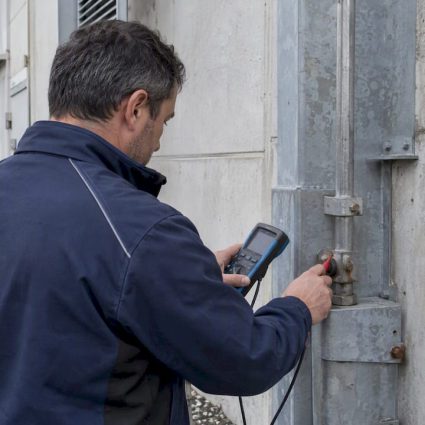
Protection for Military Facilities: A 2026 Defense Guide

TL;DR:
- Protection for military facilities involves integrating doctrines, physical systems, and engineering controls to defend against evolving threats. It emphasizes layered security, proactive risk management, and engineering standards to maintain operational resilience. Adapting to threats like drones requires passive defenses, unified sensor data, and a strong organizational safety culture.
Protection for military facilities is defined as the strategic integration of doctrines, physical systems, and engineering controls that defend military personnel, assets, and operations from conventional and non-conventional threats. Defense contractors, military facility managers, and government officials must understand what is protection for military facilities before they can design, fund, or evaluate any security program. The Department of Defense frames this under force protection doctrine, which preserves operational effectiveness by minimizing vulnerabilities across personnel, equipment, information, and infrastructure. Emerging threats, from small drones to aging munitions bunkers, have pushed this doctrine well beyond fences and guards into a multidisciplinary engineering and command challenge.
What is protection for military facilities, and what does it cover?
Protection for military facilities is the full set of measures that keep a base operational under threat. The industry term is “force protection,” and it spans physical security, structural engineering, threat intelligence, and command procedures. The goal is not simply to stop an attack. The goal is to preserve mission capability before, during, and after any incident.
Force protection doctrine covers four categories: personnel, equipment, information, and facilities. Each category carries its own threat profile and its own set of countermeasures. A fuel depot faces different risks than a command center, and protection planning must reflect that difference. Treating every building the same is the fastest way to misallocate resources.
The Department of Defense also recognizes the protection warfighting function as a core operational discipline. Commanders manage risk across multidomain operations, not just at the perimeter. That framing matters because it shifts the conversation from reactive security to proactive risk management.
What are the primary physical security measures protecting military bases?
Physical security for military facilities works in layers. No single barrier stops a determined adversary. The combination of standoff distance, surveillance, access control, and rapid response is what creates a credible defense.
The core components of a layered perimeter system include:
- Perimeter barriers: Reinforced fences, concrete vehicle barriers, and anti-ram bollards establish the outer boundary and force any attacker to slow down.
- Access control points: Staffed checkpoints with credential verification, vehicle inspection, and biometric readers control who enters and exits.
- Ground surveillance: Fixed cameras, ground-based radar, and motion sensors cover the space between the outer fence and interior structures.
- Low-altitude airspace monitoring: Radar and radio-frequency detection systems track small unmanned aerial systems that can fly over any fence.
- Rapid response units: Roving patrols and quick-reaction forces close the gap between detection and interdiction.
Integrated sensor data fed into a unified command workflow reduces ambiguity and improves response speed. A guard who sees an alert on one screen and a drone track on another, with no shared picture, will hesitate. A guard with a single integrated display acts faster.
The most common weakness in base perimeter security is siloed systems. Access control logs, camera feeds, and radar tracks often sit in separate software platforms with no automatic correlation. Modern installations address this by routing all sensor data into a single command center display.
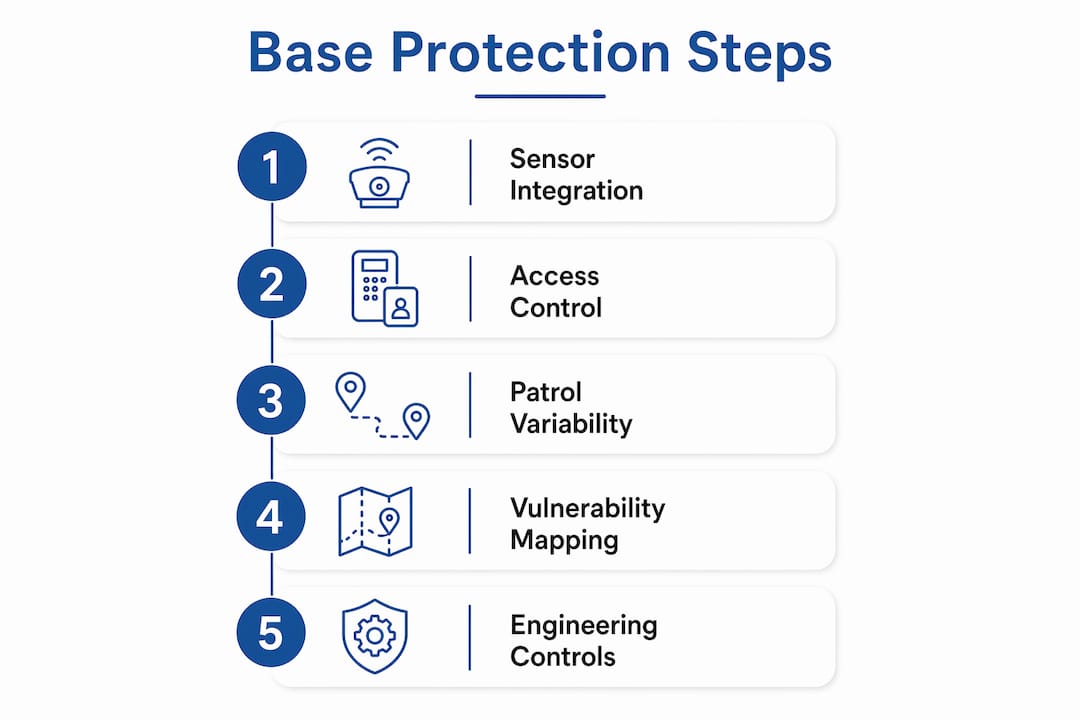
Pro Tip:When conducting a military site vulnerability assessment, map every sensor’s coverage zone on a physical diagram. Gaps between camera fields of view are the first places an adversary will probe.
How does the Force Protection Condition (FPCON) system govern security posture?
The FPCON system is the DoD’s primary tool for adjusting security rigor in response to threat intelligence. It gives commanders a standardized language for communicating risk and a structured set of actions at each level.
The five FPCON levels operate as follows:
- FPCON Normal: Routine security measures apply. No specific threat has been identified. Standard access control and patrol schedules are in effect.
- FPCON Alpha: A general threat of possible terrorist activity exists. Random vehicle inspections begin, and personnel are reminded of reporting procedures.
- FPCON Bravo: A more predictable threat of terrorist activity is present. Visible security measures increase, vehicle searches become more frequent, and access points may be reduced.
- FPCON Charlie: An incident has occurred or intelligence indicates an imminent attack. Non-essential personnel are restricted, and all vehicles undergo thorough inspection.
- FPCON Delta: An attack has occurred or is about to occur. Maximum security measures are in effect. The installation locks down, and only mission-essential movement continues.
Commanders apply FPCON levels selectively. A base in a low-threat region may hold at Normal while a port facility in an active theater operates at Bravo as a baseline. The system is designed for flexibility, not uniformity.
Unpredictability is a deliberate feature of FPCON implementation. Commanders are encouraged to vary patrol routes, inspection frequencies, and access point staffing even within a single FPCON level. Predictable patterns create exploitable windows. Randomized measures deny adversaries the ability to time an attack around a known gap.
The relationship between FPCON and operational readiness is direct. Higher FPCON levels consume more personnel hours and restrict movement, which affects training schedules and logistics. Commanders must balance security posture against mission tempo, which is why threat intelligence quality matters so much.
What structural and engineering safety measures ensure military facility resilience?
Physical barriers stop people. Engineering controls stop physics. Blast overpressure, fire, electrical surge, and structural collapse are threats that no guard can intercept. Military facility safety depends on designing these risks out of the infrastructure before construction begins.
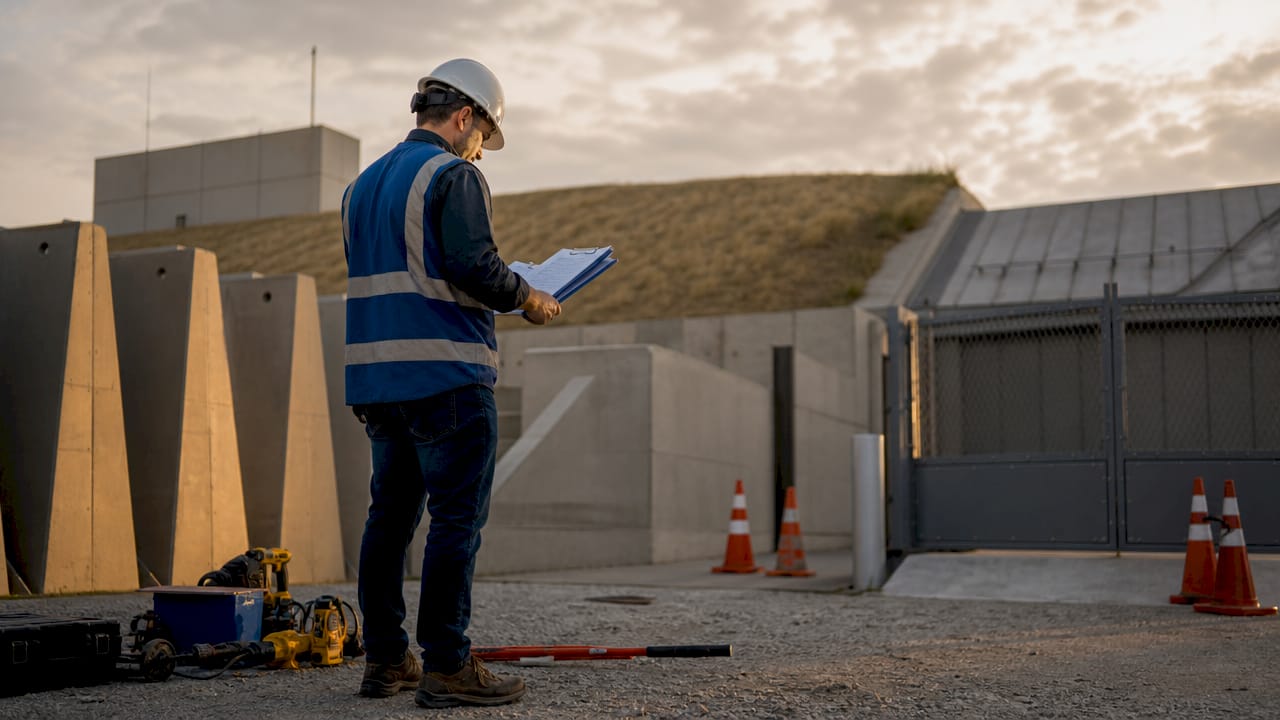
The Facility Explosives Safety Mandatory Center of Expertise (FES MCX) is the DoD’s primary authority on munitions facility design and inspection. FES MCX conducts structural reviews of both new construction and legacy facilities, enforcing standards that cover blast containment, quantity-distance arcs, and lightning protection.
| Engineering Control | Purpose | Standard Applied |
|---|---|---|
| Quantity-distance (QD) arcs | Safe separation between explosive storage and occupied buildings | DoD 6055.09-M |
| Lightning protection systems | Prevent ignition of munitions from electrical surge | IEC 62305, NFPA 780 |
| Blast-resistant construction | Contain detonation effects within a defined zone | UFC 3-340-02 |
| Fire suppression systems | Suppress ignition before it reaches stored munitions | NFPA 13 |
| Earth-covered magazine audits | Detect structural deterioration in legacy bunkers | FES MCX inspection protocols |
Quantity-distance arcs are non-negotiable. When a facility cannot meet QD requirements due to space constraints, a formal risk acceptance document must be signed by senior command leaders. That signature is not a workaround. It is a documented acknowledgment of residual risk that triggers additional compensatory measures.
Legacy earth-covered magazines present a specific challenge. These bunkers were built decades ago, and their concrete integrity degrades over time. FES MCX inspectors use concrete core drills and structural checklists to detect internal cracking and moisture intrusion before those defects become catastrophic.
Lightning protection is not a secondary concern at munitions facilities. A direct strike or a nearby ground surge can ignite stored ordnance. Indelec’s lightning protection system applications address exactly this scenario, providing grounded, compliant systems designed for high-sensitivity sites where a single electrical event can trigger cascading failures.
Pro Tip:Request a copy of the risk acceptance document for any munitions facility before signing off on a construction or renovation contract. If one does not exist, the facility may be operating outside DoD standards.
Task Force SAFE demonstrated what disciplined engineering inspection achieves in practice. Electrical fire incidents dropped by 94% and electrical shock incidents dropped by 92% in hazardous military environments after specialized safety inspections were implemented. Those numbers show that engineering controls, consistently applied, produce measurable results.
How are evolving threats like drones reshaping protection strategies?
Small unmanned aerial systems (UAS) have changed the threat calculus for every military installation. A drone can fly over any fence, carry a payload, conduct reconnaissance, or jam communications. Traditional perimeter security was not designed to counter this threat vector.
The Pentagon’s response is the HOP framework, which stands for Harden, Obscure, and Perimeter. HOP addresses drone threats through a combination of structural and passive defense measures that do not rely solely on electronic countermeasures.
The key elements of the HOP framework include:
- Hardened roofs: Reinforced overhead structures on critical buildings reduce the damage a drone-delivered payload can cause.
- Tensioned netting: Physical netting systems installed above sensitive areas intercept small UAS before they reach their target.
- Obscuration: Reducing the visual and electronic signature of high-value assets makes targeting harder for adversaries using commercial drones.
- Extended perimeter defense: Counter-UAS measures deployed beyond the fence line create a detection and engagement zone before a drone reaches the installation boundary.
- Integrated airspace monitoring:Low-altitude radar and RF sensors feed into the same command picture as ground surveillance, giving operators a unified threat display.
The integration challenge is significant. Ground threat data and airspace threat data historically lived in separate systems managed by separate teams. Merging those feeds into a single command picture requires both technical integration and organizational change. Installations that have completed this integration report faster detection-to-response times and fewer false alarms.
Counter-UAS measures also require legal authority to employ. Jamming and kinetic intercept options are federally regulated, and installation commanders must coordinate with the FAA and relevant DoD authorities before deploying active countermeasures. Passive measures like netting and hardening carry no such restrictions, which is why HOP emphasizes them as the first line of defense.
Key Takeaways
Effective protection for military facilities requires layered physical security, dynamic threat-level management, engineering controls, and adaptive counter-UAS measures working as a unified system.
| Point | Details |
|---|---|
| Force protection is a doctrine | It covers personnel, equipment, information, and facilities under a single DoD framework. |
| FPCON drives security posture | Five levels from Normal to Delta allow commanders to scale measures to specific threat intelligence. |
| Engineering controls are non-negotiable | Blast resistance, lightning protection, and QD arcs must be designed in before construction begins. |
| Drone threats require passive defenses | HOP framework measures like hardened roofs and tensioned netting work without legal restrictions on active countermeasures. |
| Integration is the force multiplier | Unified command pictures combining ground and airspace sensor data reduce response time and decision errors. |
Indelec’s perspective on what actually makes military protection work
The technical standards are clear. The FPCON levels are documented. The engineering requirements are codified. What the manuals do not capture is why two installations with identical systems produce completely different safety outcomes.
The difference is culture. A protection program that treats every person as a safety stakeholder outperforms one that assigns safety to a dedicated team and considers the job done. When a logistics specialist reports a suspicious vehicle and a maintenance technician flags a corroded grounding rod, those observations feed the same risk management picture that commanders rely on. No sensor network replaces that.
From Indelec’s experience working on highly sensitive site protection, the most overlooked gap is almost always electrical and lightning protection at munitions and fuel facilities. Facility managers focus on access control and surveillance because those threats are visible. Lightning is invisible until it is catastrophic. The installations that treat lightning protection as a compliance checkbox rather than an operational requirement are the ones that call us after an incident.
The goal that FES MCX describes as “silence” is the right frame. Zero incidents. No downtime. No investigations. Silence means the protection program is working. Every dollar spent on proactive engineering review, integrated command systems, and cultural training is a dollar that buys operational continuity. That is the return on investment that defense contractors and facility managers should be presenting to decision-makers.
— Indelec
Indelec’s lightning protection solutions for military installations
Military facilities face a threat that no access control system addresses: lightning. A single strike near a munitions storage area, a fuel depot, or a communications hub can trigger fires, equipment failure, and mission interruption.

Indelec has specialized in lightning protection for critical infrastructure since 1955, with deployments in high-sensitivity military and industrial environments worldwide. Indelec’s systems cover lightning rods, grounding networks, surge protection, and full compliance documentation aligned with IEC 62305 and NFPA 780. For facility managers and defense contractors who need a system that meets DoD engineering review standards, Indelec provides technical consulting, installation, and certification services. Explore Indelec’s military-grade protection services to see how lightning safety integrates with your broader facility protection program.
FAQ
What is force protection in the military?
Force protection is a DoD doctrine that preserves operational effectiveness by defending personnel, equipment, information, and facilities from conventional and non-conventional threats. It is implemented across all branches of the U.S. military as a core warfighting function.
What are the five FPCON levels?
The five Force Protection Condition levels are Normal, Alpha, Bravo, Charlie, and Delta, ranging from routine security to full lockdown in response to an imminent or active attack.
Why is lightning protection required at military facilities?
Lightning protection is required because a direct strike or electrical surge near munitions, fuel, or communications infrastructure can cause ignition, equipment failure, or data loss. Standards like IEC 62305 and NFPA 780 govern compliant system design for military sites.
What is the HOP framework for drone defense?
HOP stands for Harden, Obscure, and Perimeter. It is the Pentagon’s framework for countering small unmanned aerial systems using structural measures like hardened roofs and tensioned netting rather than relying solely on electronic countermeasures.
What does a military site vulnerability assessment cover?
A military site vulnerability assessment evaluates perimeter barriers, access control points, surveillance coverage, airspace monitoring, structural engineering controls, and command integration to identify gaps that adversaries could exploit.