Power quality protection: strategies for reliable facilities
TL;DR:
- Power quality protection addresses voltage sags, harmonics, transients, and other disturbances to prevent equipment failure.
- Implementing layered active and hybrid mitigation strategies offers significant ROI through reduced downtime and equipment degradation.
- Adhering to international standards, continuous monitoring, and facility-specific solutions ensure optimal power quality and regulatory compliance.
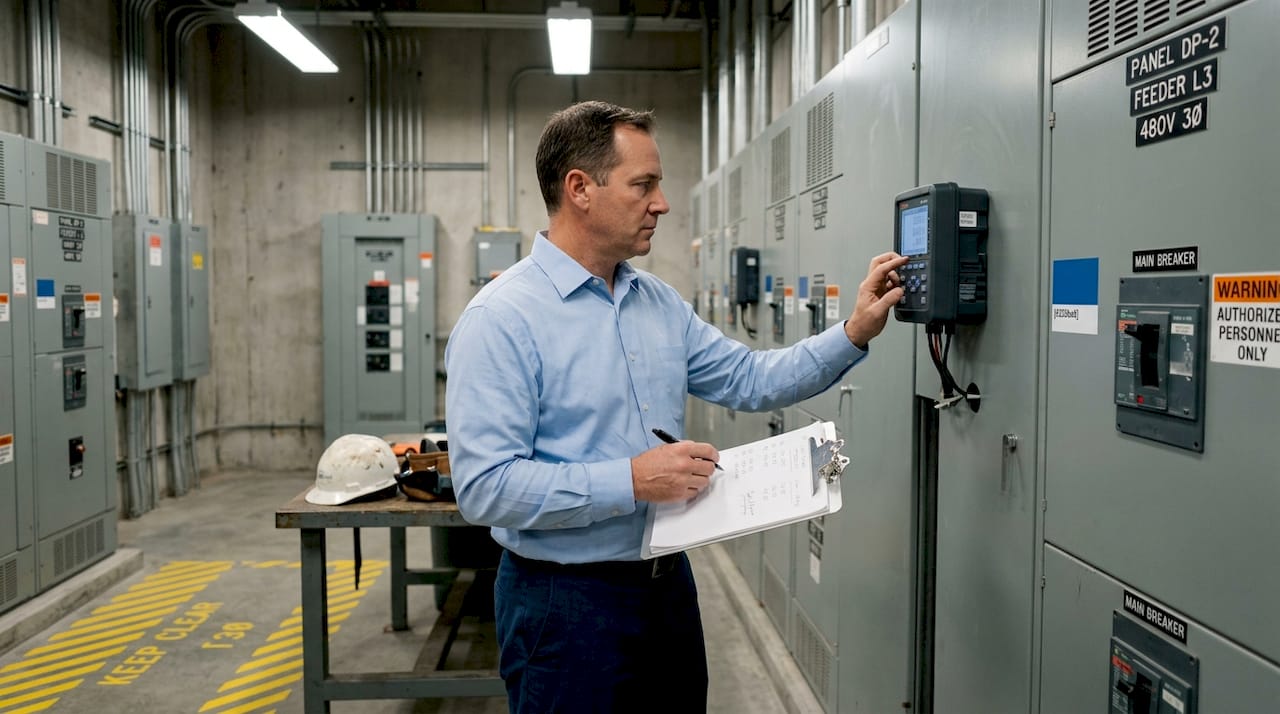
Voltage sags, harmonics, and transients are silently draining budgets and cutting equipment life across industrial and commercial facilities. Many managers assume a basic surge protector is enough, but unmanaged power quality causes avoidable downtime and thousands in unnecessary costs every year. Power quality protection is a broader discipline, covering everything from harmonic filtering and voltage regulation to surge suppression and real-time monitoring. This guide breaks down the core concepts, relevant standards, proven methodologies, and facility-specific best practices so you can build a protection strategy that actually holds up under real operating conditions.
Table of Contents
- Power quality protection: Definition, risks, and core concepts
- Key standards and frameworks for power quality protection
- Methodologies: Monitoring, diagnostics, and mitigation strategies
- Best practices for facility-specific PQ management
- A fresh perspective: Why active, layered protection is the real game-changer
- How Indelec solutions support power quality and facility reliability
- Frequently asked questions
Key Takeaways
| Point | Details |
|---|---|
| Identify PQ vulnerabilities | Use monitoring and diagnostics to find hidden power quality problems before they cause downtime. |
| Follow key standards | Comply with IEEE and IEC guidelines for THD, voltage monitoring, and device accuracy to ensure reliability. |
| Tailor mitigation strategies | Match device selection and configuration to your facility’s unique loads and edge cases for maximum protection. |
| Prioritize active protection | Layer active devices for renewables and dynamic loads to avoid resonance and penalties. |
| Integrate solutions for ROI | Strategic investment in PQ and lightning protection reduces operational costs and provides quick financial payback. |
Power quality protection: Definition, risks, and core concepts
Power quality protection refers to the full set of strategies and devices used to minimize electrical disturbances that degrade equipment performance, increase energy costs, and trigger unplanned downtime. It is not just about surge protection. It covers a spectrum of disturbances that most facilities experience daily without realizing the source.
The main disturbance types include:
- Voltage sags: Short-duration drops in voltage, often caused by motor startups or faults on the grid
- Voltage swells: Temporary overvoltages, typically from sudden load disconnections
- Harmonics (THD): Waveform distortion caused by non-linear loads like variable frequency drives (VFDs), LED lighting, and UPS systems
- Flicker: Rapid, repetitive voltage fluctuations that affect sensitive controls and lighting
- Transients: Fast, high-energy spikes from lightning, switching events, or capacitor bank operations
Voltage sags make up 90% of all recorded power disturbances, making them the single biggest threat to equipment reliability in most facilities. Yet they are often invisible until a PLC resets, a drive trips, or a batch process fails mid-cycle.
Harmonics are equally damaging over time. THD reduced from over 24% to under 3 to 5% in facilities using active or hybrid filter systems, which translates directly to lower transformer heating, reduced neutral conductor overloading, and longer cable life.
“Power quality protection is not a one-time fix. It is an ongoing operational discipline that connects equipment health, energy efficiency, and regulatory compliance.”
For facilities with complex electrical infrastructure, integrating a lightning protection system application alongside internal PQ measures creates a more complete defense. Transients from lightning strikes are one of the fastest paths to equipment failure, and they interact with existing harmonic conditions in ways that amplify damage. Understanding lightning standards also helps align your protection approach with recognized benchmarks, reducing both liability and risk.
The business case is clear. Downtime in industrial facilities costs far more than the capital investment in protection equipment. Beyond direct losses, poor PQ triggers regulatory penalties, accelerates motor and transformer degradation, and voids equipment warranties.
Key standards and frameworks for power quality protection
Standards give facility managers a structured baseline for what “good” power quality actually looks like. Without them, it is easy to invest in the wrong equipment or miss compliance requirements that carry financial consequences.
The four frameworks most relevant to industrial and commercial facilities are:
| Standard | Focus area | Key requirement |
|---|---|---|
| IEEE 519 | Harmonic limits at PCC | THD below 5% (voltage), 8% (current) |
| IEEE 1159 | PQ monitoring methodology | Class A meter accuracy, event classification |
| IEEE 1250 | Voltage quality for sensitive equipment | Sag/swell tolerances, equipment compatibility |
| IEC 61000-4-30 | Measurement methods and accuracy | Class A accuracy for compliance-grade monitoring |
IEEE 519 sets THD limits at the point of common coupling (PCC), which is where your facility connects to the utility. Exceeding these limits can result in utility penalties and equipment interference claims. IEEE 1159 governs how you measure and classify disturbances, while IEEE 1250 addresses voltage quality for sensitive loads specifically.
A practical compliance checklist for facility managers:
- Install Class A power quality meters at all critical distribution points
- Establish a baseline THD measurement at the PCC before making any changes
- Identify all non-linear loads and map their harmonic contribution
- Compare measured values against IEEE 519 and IEC 61000-4-30 thresholds
- Document monitoring results and retain records for regulatory review
- Schedule quarterly reviews to catch drift before it becomes a violation
Referencing electrical standards as part of your facility’s compliance program ensures that your PQ strategy aligns with both international norms and local regulatory requirements. This is especially important for facilities operating across multiple jurisdictions, where standards may differ in their specific thresholds and measurement intervals.
Compliance is not just about avoiding penalties. It is also a signal to insurers, clients, and regulators that your facility operates to a recognized standard of care.
Methodologies: Monitoring, diagnostics, and mitigation strategies
Knowing the standards is one thing. Applying them operationally requires a clear methodology that moves from measurement to action.
Monitoring is the foundation. Class A power quality meters, as specified under IEC 61000 Class A monitoring, capture harmonic analysis up to the 63rd order and transient events in under half a cycle. This level of resolution is essential for identifying the true source of disturbances rather than chasing symptoms.
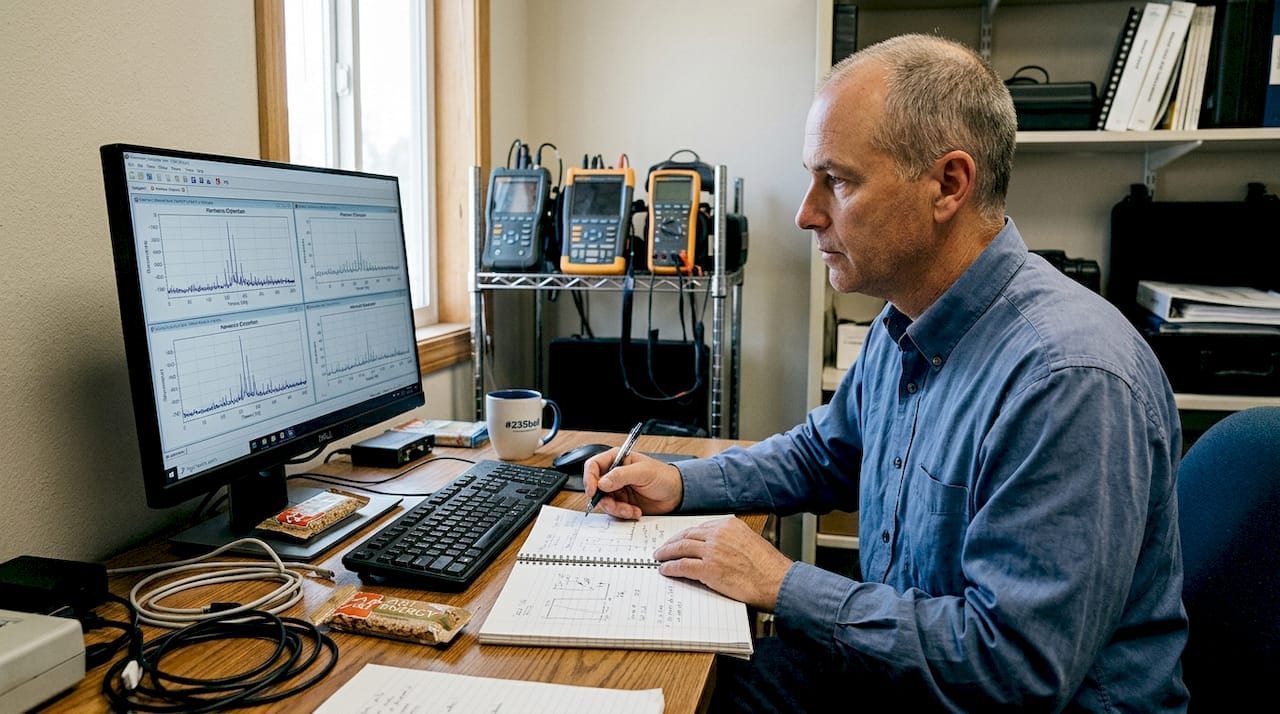
Diagnostics follow monitoring. A harmonic assessment maps which loads are contributing to THD and at which frequencies. Root cause analysis for sags and transients identifies whether the source is internal (motor starts, VFD switching) or external (utility grid events, nearby lightning). Monitoring per IEEE 1159 provides the structured framework for this process.
Mitigation is where capital investment decisions happen. The main options are:
- Passive filters: Tuned LC circuits that absorb specific harmonic frequencies; low cost, but fixed response
- Capacitor banks: Improve power factor but can amplify harmonics if not properly coordinated
- Active filters (SAPF): Inject counter-harmonics in real time; effective across a wide frequency range
- Hybrid units: Combine passive and active elements for cost-effective performance at high load percentages
| Mitigation type | THD reduction | Power factor improvement | Best application |
|---|---|---|---|
| Passive filter | Moderate | Limited | Fixed harmonic loads |
| SAPF (active) | High (to <5%) | Significant | Dynamic/variable loads |
| Hybrid filter | High | High | Mixed or heavy non-linear loads |
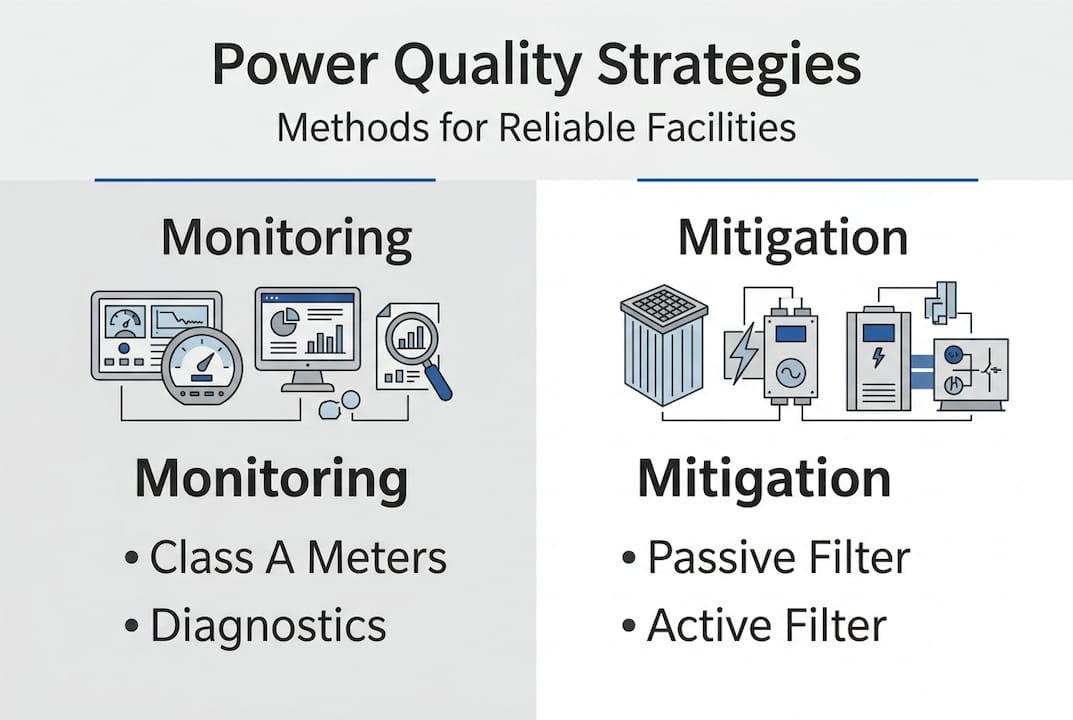
Pro Tip: For facilities with renewable energy integration or variable speed drives, active devices are strongly preferred. Passive filters cannot respond fast enough to dynamic harmonic profiles, and they can create resonance conditions that worsen the problem.
For facilities managing surge protection in industrial settings, layering surge suppression devices with active harmonic filters creates a more complete protection stack. Sensitive installations benefit most from this integrated approach, as outlined in guidance for protecting sensitive installations.
Best practices for facility-specific PQ management
Generic PQ solutions rarely deliver optimal results. The right approach depends on your load profile, the nature of your operations, and the specific disturbances your facility generates or is exposed to.
For facilities where non-linear loads exceed 50% of total connected load, hybrid SAPF systems are the recommended baseline. Below that threshold, well-coordinated passive filters may be sufficient. The key is accurate load characterization before specifying any mitigation equipment.
Regenerative loads need bidirectional devices, and this is a point many facility engineers overlook. Cranes, elevators, and regenerative drives push energy back into the distribution system during deceleration. Standard unidirectional filters cannot handle this, and improper power factor correction in these environments can actually amplify harmonic distortion rather than reduce it.
Common mistakes to avoid:
- Installing capacitor banks without harmonic analysis, which can create resonance
- Selecting passive filters based on nameplate kVAR alone without frequency tuning
- Ignoring neutral conductor loading when LEDs and VFDs dominate the load mix
- Treating PQ as a one-time project rather than an ongoing monitoring discipline
Pro Tip: Use the PQ pyramid approach: monitor first, diagnose second, mitigate third. Skipping the monitoring step is the most expensive mistake a facility can make, because it leads to misdiagnosed problems and misapplied solutions.
For facilities with outdoor infrastructure or exposure to weather events, integrating electrical infrastructure safety practices with your PQ program closes a critical gap. A structured facility lightning safety workflow ensures that transient events from external sources are addressed at the source, not just absorbed downstream.
Edge cases worth planning for include microgrid-connected facilities and those with significant solar or battery storage. These environments introduce bidirectional power flows and inverter-generated harmonics that require active, adaptive mitigation strategies.
A fresh perspective: Why active, layered protection is the real game-changer
Most facilities still treat power quality as a reactive problem. Something trips, someone investigates, a filter gets added. This approach consistently underestimates the real cost of poor PQ, which is not just the equipment that fails but the production that stops, the penalties that accrue, and the regulatory scrutiny that follows.
Conventional wisdom says surge protection covers the big risks. It does not. Surges are dramatic but infrequent. Harmonics and sags are quiet, constant, and cumulative. The ROI from reduced downtime and avoided penalties consistently outweighs the capital cost of active mitigation, often within 18 months.
The facilities that get this right invest in layered protection: real-time monitoring feeds diagnostic insight, which drives targeted mitigation using active or hybrid devices. This is not over-engineering. It is the only approach that keeps pace with modern load profiles, including renewables, microgrids, and regenerative equipment.
For facilities managing highly sensitive installations, the stakes are even higher. A single unmitigated transient or prolonged harmonic condition can cause cascading failures across interconnected systems. Layered, active protection is not a premium option. It is the baseline for serious facility management.
How Indelec solutions support power quality and facility reliability
At Indelec, we work with facility managers who need more than off-the-shelf protection. Our approach connects lightning and surge defense with the broader power quality framework your operations depend on.

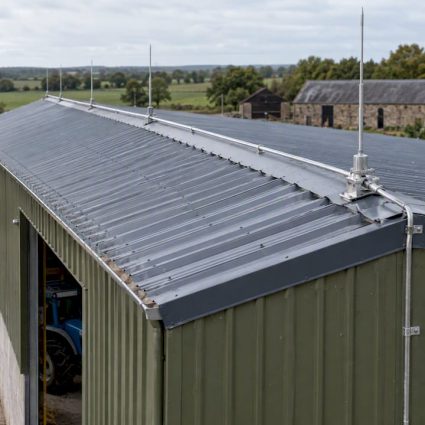
Our Prevectron3 lightning rod is engineered to intercept lightning-induced transients before they reach your distribution system, reducing one of the most damaging sources of power disturbances at the source. Combined with our lightning protection applications, we deliver end-to-end coverage that addresses both external and internal threats. We also provide audits, tailored system design, and ongoing technical support to help your facility stay compliant and resilient as load profiles and standards evolve.
Frequently asked questions
What are the most common power quality issues in industrial facilities?
Voltage sags account for 90% of recorded power disturbances, with harmonics from VFDs and non-linear loads running a close second. Both cause equipment stress and unplanned downtime that adds up quickly.
How do I know if my facility needs advanced power quality protection?
Frequent unexplained equipment trips, non-linear loads above 50% of your total load, or recurring downtime are clear indicators. Hybrid SAPF is recommended for facilities where non-linear loads dominate the load mix.
What’s the ROI for investing in active power quality mitigation?
Typical payback is around 18 months, with annual energy savings averaging $36,000 and energy cost reductions near 9.8%, depending on facility size and load profile.
Are PQ protection solutions relevant for lightning and surge management?
Absolutely. Comprehensive PQ protection includes surge and lightning mitigation as foundational layers, ensuring that transient events from external sources do not compromise sensitive equipment or trigger cascading failures.