Climate change and lightning risk: Protect your facility now
TL;DR:
- Lightning strike risk is increasing globally due to climate change, especially in the tropics and mid-latitudes.
- Rising lightning activity elevates wildfire, equipment damage, and operational downtime risks for facilities.
- Effective protection requires continuous adaptation, modern systems, and region-specific risk assessments over time.
Lightning was never a minor nuisance for industrial and commercial facilities, but the scale of the threat has shifted dramatically. Empirical projections show roughly a 12% increase in lightning strikes for every 1°C of global warming, which means the historical data your protection system was designed around is already becoming obsolete. For facility managers responsible for continuous operations, sensitive equipment, and regulatory compliance, this is not an abstract climate concern. It is a fast-moving operational risk that demands both immediate attention and a long-term adaptive strategy.
Table of Contents
- Why lightning risk is increasing: Climate science in focus
- Business risks: Lightning strikes, wildfire, and operational impact
- Facility protection essentials: Adapting lightning protection to climate change
- Regional risk assessment: Customizing strategies for your facility
- Why ongoing adaptation—not static compliance—defines modern protection
- Connect with the latest lightning protection solutions
- Frequently asked questions
Key Takeaways
| Point | Details |
|---|---|
| Lightning risk is rising | Lightning frequency and wildfire risk are projected to increase sharply with climate change. |
| Financial impact is severe | Downtime from lightning events can cost facilities tens to hundreds of thousands of dollars per hour. |
| Tailored protection is essential | Facility strategies must adapt to regional risk trends, evolving climate patterns, and site specifics. |
| Ongoing review is critical | Annual lightning risk assessments and grounding checks are necessary as conditions change. |
Why lightning risk is increasing: Climate science in focus
The connection between a warming atmosphere and more frequent lightning is grounded in well-established atmospheric physics, but the data coming through now makes the projections concrete and urgent.
Warmer air holds more moisture and produces more convective energy, which is the engine that drives thunderstorm development. Satellite observation data confirms that lightning activity has already started climbing globally. The clearest regional signal comes from the tropics, where storm intensity is amplifying fastest. Lightning frequency could rise up to 50% in the tropics and approximately 20% in mid-latitude regions by the end of the century, based on current warming trajectories.
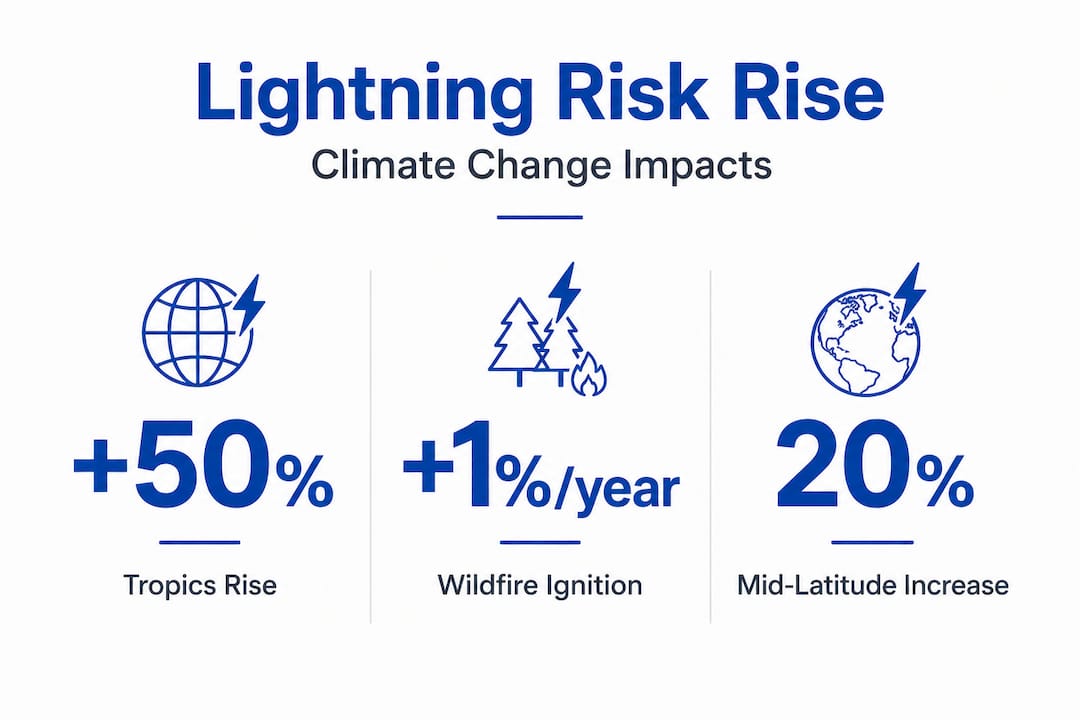
The downstream effects are significant. Lightning-ignited wildfire risk has been increasing at roughly 1% annually between 2014 and 2021, with projections showing a potential 50% increase by 2100 under a moderate emissions scenario. Africa, South America, and the USA are already seeing consistent, measurable rises in this risk. For any facility operating near forested or grassland areas, this secondary threat layer cannot be ignored.
That said, the science is not uniformly alarming everywhere. Some climate models actually forecast a global lightning decrease due to changes in cloud ice flux and precipitation patterns at high latitudes. The key variable is regional. Models driven by Convective Available Potential Energy, or CAPE, project strong lightning increases. Models emphasizing precipitation-linked effects at polar latitudes show more muted or even declining trends.
| Region | Projected lightning change | Primary driver |
|---|---|---|
| Tropics | Up to +50% | CAPE increase, moisture surge |
| Mid-latitudes | Around +20% | Warmer, more unstable air masses |
| USA and Africa | Consistent rise | Combined CAPE and wildfire coupling |
| Arctic and high latitudes | Stable or declining | Precipitation pattern shifts |
The practical takeaway for facility managers is this: stop relying on historical lightning ground flash density maps as your primary risk benchmark. Those maps reflect past conditions. Climate adaptation strategies now need to account for forward-looking projections specific to your region, not just what the last 30 years of records show.
Key scientific conclusions facility managers should act on:
- Tropical and sub-tropical facilities face the steepest near-term risk increases.
- USA-based industrial sites are already seeing rising wildfire ignition risk from lightning.
- High-latitude facilities should monitor local trends carefully before assuming stability.
- No facility in a historically moderate-risk zone should assume that zone will remain moderate.
Business risks: Lightning strikes, wildfire, and operational impact
Understanding the physical risk is only half the story. Here is what rising lightning activity actually means for your operations, bottom line, and compliance obligations.
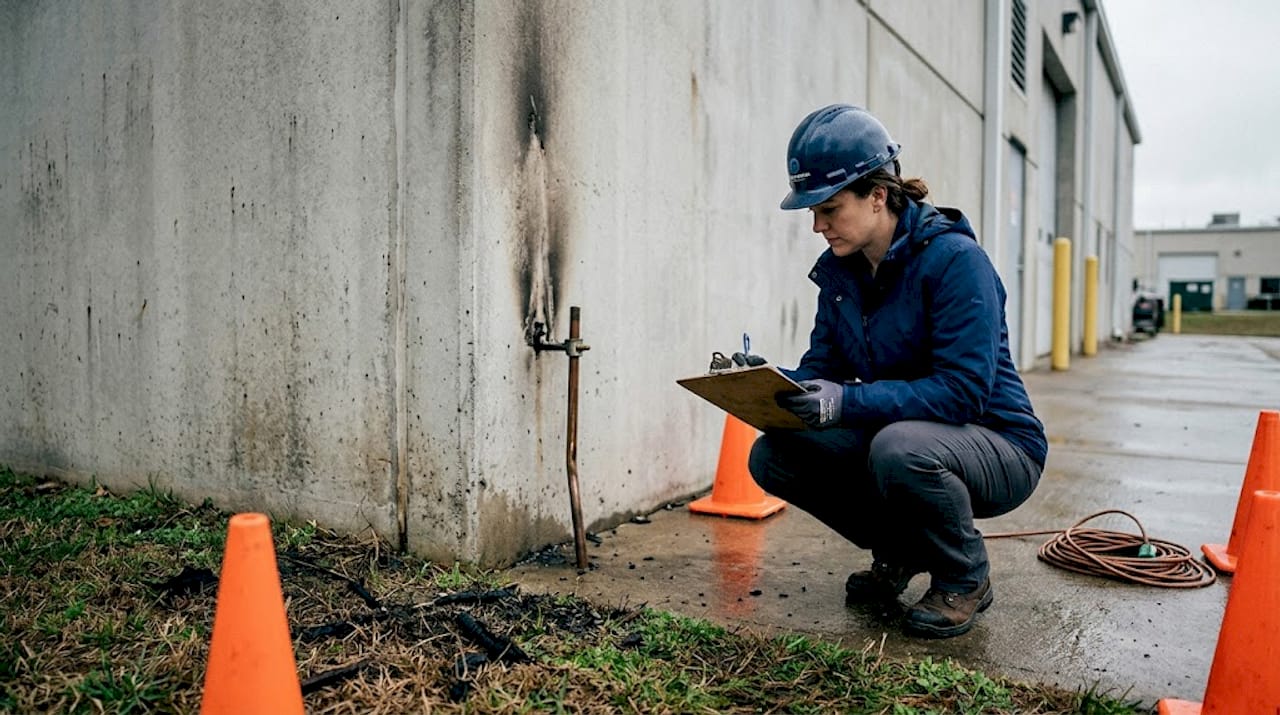
Lightning damage to industrial facilities arrives in three forms: direct strikes to structures, electromagnetic pulse effects that damage sensitive electronics without a direct hit, and wildfire ignition that can disable or destroy operations over a wide area. The third category is the fastest-growing risk, and many facilities are not structured to address it in their protection planning.
For facilities with continuous operations, the financial exposure from lightning-caused downtime is severe. Unplanned downtime costs range from $10,000 to $250,000 per hour for large industrial operations, depending on the sector and scale. A single poorly timed strike during peak production can generate losses that dwarf years of lightning protection investment.
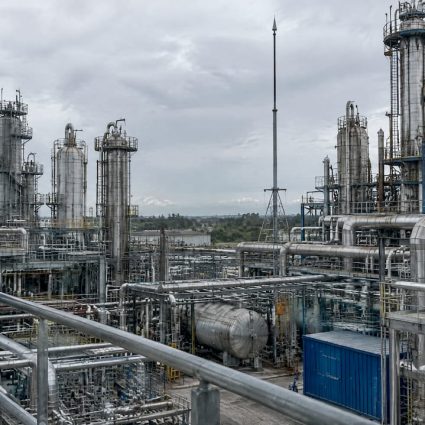
Beyond direct financial loss, regulatory exposure is expanding. Standards such as NFPA 780 and BS EN IEC 62305 are mandatory for COMAH and ATEX-classified sites, which include oil and gas processing, chemical manufacturing, and explosive materials handling. Non-compliance at these sites does not just mean fines. It can trigger operational shutdowns, voided insurance coverage, and personal liability for facility managers.
“A lightning event is a low-frequency, high-consequence scenario. That is exactly the category that organizations systematically underinvest in until the loss event forces a reckoning.”
The rising wildfire ignition risk in the USA and Africa adds another layer of exposure for facilities in those regions. Outdoor storage, pipelines, and perimeter infrastructure that would survive a direct strike may not survive a wildfire ignited by a nearby cloud-to-ground flash. This demands that wildfire risk be folded into your lightning protection planning rather than managed as a separate environmental risk.
Here is a practical comparison of direct vs. indirect lightning exposure to help frame where investment should go:
| Risk type | Example scenario | Financial exposure | Protection priority |
|---|---|---|---|
| Direct structural strike | Strike to roof, plant, or tower | High (structural damage) | High |
| Electromagnetic surge | Equipment failure from nearby strike | Medium to very high | High |
| Wildfire ignition | Lightning-ignited grass or forest fire | Very high (facility loss) | Increasing rapidly |
| Regulatory non-compliance | Audit failure at COMAH/ATEX site | High (shutdown risk) | Mandatory |
- Conduct a full direct and indirect strike risk assessment using current local ground flash density data.
- Identify all ATEX and COMAH-classified zones within your facility footprint.
- Review your insurance policy language for lightning and wildfire coverage gaps.
- Map outdoor assets, storage, and perimeters that face wildfire exposure from nearby ignition sources.
- Confirm your building lightning safety plan includes secondary wildfire scenarios, not just direct-strike scenarios.
Pro Tip: Request a copy of the lightning protection design certificate and the last inspection report from your facility’s engineering team. If either is more than three years old or references historical ground flash density data only, a reassessment is overdue.
Review your applicable lightning protection standards now, before your next regulatory audit or insurance renewal creates the urgency for you.
Facility protection essentials: Adapting lightning protection to climate change
Translating science and risk into actionable protection is where the gap between well-protected and vulnerable facilities gets decided. The good news is that the toolkit available to facility managers is more capable than it was a decade ago.
A complete, modern Lightning Protection System, or LPS, combines several layers working together. Traditional components remain the backbone: air termination systems including lightning rods, down conductors, equipotential bonding, and surge protection devices for sensitive electronics. These are not optional extras. They are the base layer of any compliant system.
What is changing is how facilities monitor, adapt, and verify these systems over time. Combining traditional LPS with emerging technologies such as AI-driven monitoring platforms and Discrete Antenna Systems, known as DAS, is now considered best practice for critical operations. AI monitoring platforms can track real-time strike data, flag grounding degradation before it becomes a failure point, and generate alerts during high-risk storm windows. DAS technology improves the performance of air termination systems on complex structures where traditional rod placement has coverage limitations.
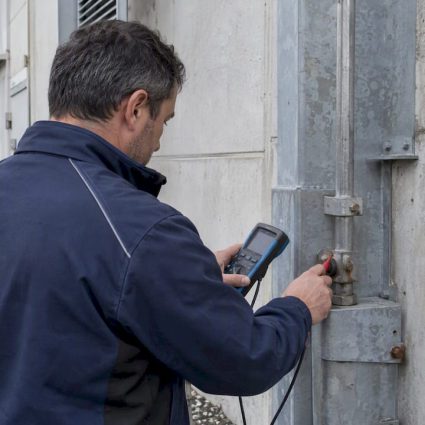
Grounding is the silent foundation of every LPS. Poor grounding is one of the most common failure modes in existing systems, and climate change compounds this by increasing both strike frequency and surge intensity. Annual verification that grounding resistance stays below 10 ohms is a non-negotiable maintenance standard. Soil moisture changes driven by climate shifts can alter grounding resistance significantly between annual checks, so testing after extended dry periods is also worth adding to your maintenance schedule.
Core protection upgrade priorities:
- Replace or supplement rod-based air termination with early streamer emission rods where site geometry limits standard coverage.
- Install transient voltage surge suppressors (TVSS) at all critical equipment panels.
- Establish an electrical infrastructure protection review cycle tied to your broader climate risk calendar.
- Use AI monitoring dashboards to move from reactive maintenance to predictive management.
- For oil/gas and polar region facilities, engage specialist consultants who understand ATEX zone requirements and permafrost-related grounding challenges.
Pro Tip: Do not wait for a strike event to schedule your next grounding test. Build it into your annual preventive maintenance calendar alongside fire suppression and electrical panel inspections. The cost of a grounding test is negligible. The cost of discovering degraded grounding after a strike is not. Explore your lightning protection applications options early so upgrades can be sequenced within budget cycles rather than forced by emergencies.
Regional risk assessment: Customizing strategies for your facility
Core best practices apply everywhere, but regional specifics transform both the nature of the risk and the design of required solutions. A one-size-fits-all approach to lightning protection is increasingly indefensible given the divergence in regional climate projections.
Consider two facilities operating under similar ATEX classifications: one in equatorial West Africa, one in northern Scandinavia. The West African facility faces consistent and rising wildfire ignition risk from lightning, dramatically higher ground flash density, and temperatures that accelerate soil resistance changes. The Scandinavian facility sits in a high-latitude region where precipitation shifts may stabilize or even reduce direct strike frequency, but where permafrost thaw is creating new grounding challenges that did not exist in the original system design.
Oil/gas facilities and Arctic-area operations represent exactly the edge cases where standard protection designs fail without regional adaptation. Permafrost-affected soil changes grounding electrode performance unpredictably. Facilities in the USA face a different edge case: the compounding risk of lightning-ignited wildfires in proximity to above-ground storage and pipeline corridors, which standard LPS design does not directly address.
| Region | Primary emerging risk | Recommended focus |
|---|---|---|
| Tropical zones | Strike frequency surge | Higher-density air termination, surge protection |
| USA (southeast/west) | Wildfire coupling | Perimeter fire risk in LPS scope |
| Africa (sub-Saharan) | Combined strike and wildfire | Full risk reassessment under new projections |
| Arctic and sub-Arctic | Grounding instability | Grounding electrode system redesign |
| Mid-latitudes (Europe) | Moderate increase in storm severity | Surge protection and system integrity review |
A site-specific lightning risk audit should cover:
- Current vs. projected local ground flash density using updated regional climate data.
- Soil resistivity measurements across seasonal extremes to validate grounding performance.
- Proximity analysis of forested or grassland areas for wildfire ignition exposure.
- Regulatory classification review (NFPA, IEC 62305, local codes) against current facility configuration.
- Identification of any structural additions or modifications since the last full LPS design review.
For facilities operating on highly sensitive sites, including chemical plants, data centers, and energy infrastructure, a regional risk audit should be commissioned every three to five years rather than treated as a one-time project. The industrial lightning guide framework provides a practical starting structure for these reviews.
Local regulation is another variable that cannot be averaged out. Permit requirements, inspection intervals, and acceptable LPS design methodologies vary considerably between jurisdictions. Facilities operating internationally need to track regulatory updates in each country, not just at their home base.
Why ongoing adaptation—not static compliance—defines modern protection
Here is a perspective drawn from nearly seven decades of working alongside facility teams across industrial, energy, and infrastructure sectors: the most dangerous moment in any lightning protection program is when a facility manager says “we’ve passed our audit, we’re covered.”
Compliance to a current standard is a starting point, not a destination. Standards are always written to reflect past conditions and past failure modes. They lag reality by design, because the regulatory process is slow and consensus-driven. That means a facility that treats compliance as the finish line is always, structurally, behind the actual risk curve.
What separates well-protected operations from vulnerable ones over a ten-year window is not which standard they comply with. It is whether they have built ongoing risk review into their operational DNA. Facilities running annual LPS reviews, grounding tests, and surge protection audits consistently catch degradation and design gaps before strike events expose them. Facilities on a “set and forget” cycle discover those gaps the hard way.
The shift that climate change demands is a move from thinking about lightning protection as infrastructure to thinking about it as a resilience cycle. Infrastructure is static. A resilience cycle generates data, flags changes, triggers reviews, and produces upgrades on a rolling basis. AI monitoring platforms are making this shift practical and cost-effective even for mid-sized operations. Digital grounding sensors, real-time strike proximity alerts, and modular surge protection upgrades mean you no longer have to wait for the next inspection cycle to know your system is performing.
The 2026 lightning industry guide lays out this shift from compliance posture to resilience posture in detail. The core message is the same as what experience teaches directly: in a climate that is actively shifting the risk baseline, static protection produces compounding exposure. Active adaptation is the only approach that keeps pace.
Connect with the latest lightning protection solutions
If this article has clarified the scale of the evolving risk you face, the next step is moving from awareness to action with the right technical partner.
Indelec has been designing, installing, and certifying lightning protection systems across industrial, commercial, and infrastructure sectors since 1955. Our R&D-driven approach means our solutions are built for the risk environment you face today and tomorrow, not the one from thirty years ago. Our Prevectron3 lightning rods represent the latest in early streamer emission technology, providing optimized protection radius for complex industrial structures. If you are ready to assess your current exposure and identify the right upgrade path for your facility, explore our full range of system applications or contact our technical team for a site-specific consultation.
Frequently asked questions
How much is lightning activity expected to increase globally by 2100?
Lightning frequency could rise by up to 50% in the tropics and by around 20% in mid-latitude regions, with the scale of increase depending heavily on local climate dynamics and the emissions trajectory followed.
What is the cost impact of unexpected lightning downtime for industrial sites?
Unplanned downtime costs between $10,000 and $250,000 per hour for large industrial operations, making even a brief outage from a lightning event a significant financial event.
What standards should industry sites follow for lightning protection?
NFPA 780 and BS EN IEC 62305 are mandatory for COMAH and ATEX-classified sites, and these remain the baseline standards for most high-risk industrial lightning protection design and compliance.
Are lightning strikes increasing everywhere equally due to climate change?
No. Increases are most consistent in the tropics, USA, and Africa, while high-latitude regions may see stable or even declining direct strike frequency due to precipitation and cloud dynamics, though grounding challenges are increasing in those areas.
How often should lightning risk assessments and grounding tests be repeated?
Annual grounding verification below 10 ohms is recommended for all facilities, with full risk reassessments every three to five years or whenever significant structural changes, regulatory updates, or major shifts in local climate conditions occur.