Airport Lightning Protection: 3 Mistakes Facility Teams Make
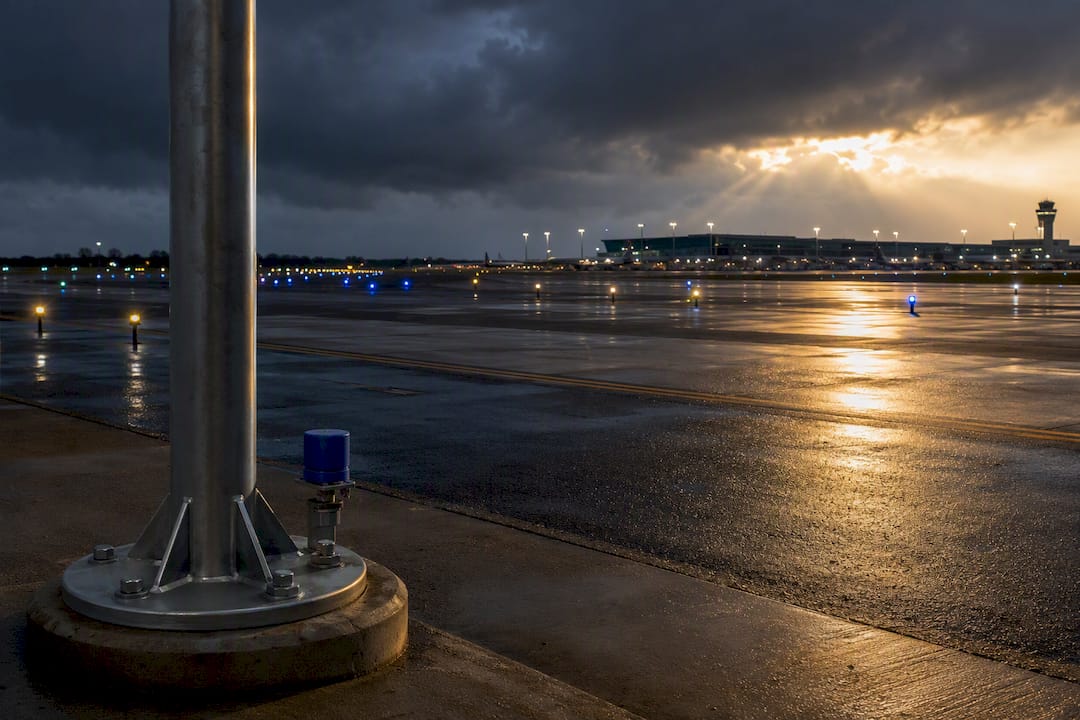
Effective lightning protection for an airport has to do two things at once: keep people on the ramp and in the terminal safe, and keep critical systems (navigation, lighting, power, communications) running or safely recoverable after a strike. That means air terminals, continuous down conductors, equipotential grounding, surge protection devices, and a detection-to-operations workflow that actually gets followed. If your airport hasn’t had a site-specific lightning risk assessment (ARF) and technical study (ET) in the last several years, that’s the next call to make, before you buy another piece of hardware.
TL;DR:
- Lightning protection systems must include reliable air terminals, continuous down conductors, and a well-integrated grounding network to address the unique exposure of open-airfield environments.
- Site-specific risk assessments and technical studies are essential to map vulnerable structures, soil resistivity variations, and proper surge device placement, avoiding reliance on generic standards.
- Maintenance involves regular testing of soil resistivity, grounding impedance, conductor continuity, and surge protection devices, with detailed documentation to ensure ongoing system integrity.
- Operational procedures should clearly define lightning detection thresholds, decision protocols, and redundancy measures to minimize ramp closures and prevent unsafe conditions.
- Many failures stem from broken bonding, unconnected grounding meshes, and outdated surge devices, emphasizing the importance of system engineering and proper maintenance over additional hardware purchases.
Table of Contents
- Why Airports Are Unusually Exposed to Lightning
- What Are the Core Components of an Airport Lightning Protection System?
- When Should an Airport Close the Ramp for Lightning?
- Which Standards Govern Airport Lightning Protection Design?
- What Should an Airport Risk Assessment and Technical Study Cover?
- How Often Should Airport Lightning Protection Be Tested and Maintained?
- How Do Airports Turn Detection Data Into Safe Ramp Decisions?
- What Most Airports Get Wrong About Lightning Protection
- Get a Site-Specific Lightning Protection Plan for Your Airport
- Sources
- FAQ
Why Airports Are Unusually Exposed to Lightning
Airports collect lightning risk the way a stadium collects rain. Long runways, wide open aprons, and tall isolated structures like control towers and approach lighting masts create a large physical footprint with few competing tall objects nearby to intercept a strike first. That geometry alone makes airfields statistically more exposed than a comparable industrial site tucked among other buildings.
The consequence isn’t just a higher hit count. It’s what gets hit. A single flash near an airfield can compromise several systems that have nothing to do with each other structurally but everything to do with each other operationally.
- Control towers and radar housings, where a strike can disrupt communications and surveillance simultaneously
- Runway and approach lighting circuits, which run long distances underground and act as conductive pathways for induced surges
- Fuel farms and refueling infrastructure, where any spark risk carries outsized consequences
- Terminal power distribution and baggage systems, which cascade into delays the moment they trip offline
The operational fallout is often worse than the physical damage. A lightning-triggered ramp closure that runs 30 or 45 minutes longer than necessary, because nobody trusted the detection system, costs more in delayed flights and idle ground crews than most hardware failures do. Ramp workers, fuelers, and baggage handlers are also standing in the most exposed spot on the entire property when a storm cell moves in, which is why the operational side of this problem deserves as much attention as the engineering side.
What Are the Core Components of an Airport Lightning Protection System?
A compliant system is a chain, not a single device, and airports stress every link in that chain harder than a typical commercial building does.
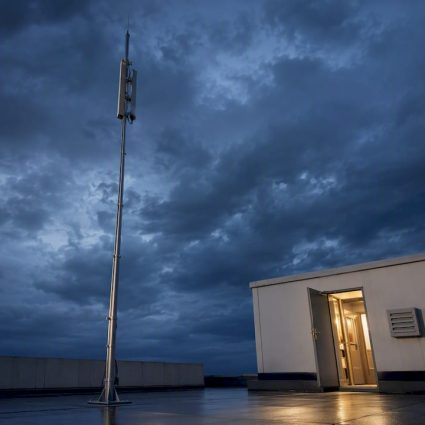
- Air terminals. Whether you’re using conventional rods or early streamer emission (ESE) terminals, the goal is defining a reliable capture zone that accounts for the airfield’s unusual mix of low sprawling structures and a handful of tall isolated ones. Placement matters more than product selection here.
- Down conductors. These need continuous, unbroken paths from terminal to ground, with mechanical protection against vehicle strikes, wildlife, and de-icing chemical exposure, plus corrosion-resistant hardware given how much airfield infrastructure sits exposed to weather year-round.
- Grounding systems. Airports often need more than a single ground rod cluster. Deep-earth electrodes, ground rings around key structures, and counterpoise conductors buried along runway lighting circuits all come into play depending on soil resistivity, which can vary significantly across a single airfield footprint.
- Equipotential bonding. This is the step most often shortchanged, and it’s the one that prevents side-flash between runway lighting circuits, terminal grounding, navigation aids, and nearby substations. A measured grounding-improvement program that maps soil resistivity and ties disparate grounding meshes together tends to outperform ad-hoc air terminal additions over the long run.
- Surge protection devices (SPDs). These belong both at main distribution boards and at the entry points of sensitive instrumentation, radar, and communications equipment, since induced surges travel through power and signal lines even when the direct strike lands hundreds of meters away.
Pro Tip:Before adding a single new air terminal, get a continuity and grounding-impedance survey done across the existing network. Most airfield lightning problems trace back to broken bonding, not insufficient interception.
When Should an Airport Close the Ramp for Lightning?
Detection systems only matter if the operational rules built around them are clear enough that a shift supervisor doesn’t have to guess. Three technology types typically feed these decisions:
- Cloud-to-ground (CG) stroke detection networks, which triangulate strike location and distance in near real time
- Local electric-field mills, which sense the atmospheric charge buildup that often precedes a strike
- Integrated weather inputs, including radar and short-term forecasts, layered on top of raw strike data
A widely used baseline has airports pausing ramp operations once lightning is detected within about 8 kilometers (5 miles), resuming only after 15 consecutive minutes pass with no further strikes inside that radius. That figure is a starting point, not a universal rule. Your own ARF should confirm whether local storm behavior, terrain, or traffic volume justifies a tighter or looser radius.
The real failure point usually isn’t the sensor. It’s the handoff. ACRP Report 8 on airport lightning warning systems found that combining lightning stroke data with local sensors and weather observations reduces unnecessary closures while improving the safety case for the ones that do happen. A system that’s too sensitive trains staff to ignore it; one that’s too loose gets people hurt. Blending inputs is how you narrow that gap.
Which Standards Govern Airport Lightning Protection Design?
Design work for airfield lightning protection sits under a layered set of references, and knowing which one governs which deliverable saves real time during procurement.
- IEC 62305 (parts 1 through 4) sets the general international framework for risk assessment, structural protection, and surge protection measures, and is the baseline most engineering studies build from.
- NFC 17-102 provides sector guidance often referenced alongside IEC 62305 for early streamer emission systems and related design parameters.
- Aerodrome-specific technical specifications, including dedicated design standards for civil airport lightning protection, address the airfield’s particular mix of open terrain, buried lighting circuits, and navigation infrastructure that generic building codes don’t fully anticipate.
- EASA’s easy-access rules for aerodromes provide the regulatory backbone for European aerodrome design and operational safety requirements, which any new-build or major upgrade needs to reference directly.
In practice, these standards translate into three concrete deliverables: a documented design report showing calculated protection levels, test evidence from commissioning (continuity, resistivity, impedance), and certification paperwork that ties the installed system back to the standard it was designed against. Skip any one of those three and you have a system that might work but can’t prove it does. Indelec’s own lightning standards overview walks through how these frameworks interact for infrastructure projects generally.
What Should an Airport Risk Assessment and Technical Study Cover?
An ARF (analyse du risque foudre) quantifies exposure. An ET (étude technique) turns that exposure into a buildable design. Together they’re the deliverable that separates a defensible airport lightning protection strategy from a collection of purchased hardware.
A properly scoped ARF/ET package should produce:
- A capture-zone and vulnerability map covering every structure, mast, and buried circuit on the airfield, not just the terminal building.
- Multi-point soil resistivity testing, since airfields frequently span multiple soil types across a single site and a single reading near the terminal tells you nothing about resistivity out near the approach lights.
- A full SPD schedule specifying device class, location, and let-through voltage for every entry point into sensitive systems, not a generic “add surge protection” line item.
- A grounding layout showing electrode positions, counterpoise routing, and how separate grounding meshes tie together for equipotentiality.
- Acceptance test criteria written into the contract before installation starts, so there’s no ambiguity about what “commissioned and verified” actually means.
Pro Tip:If a proposal doesn’t mention equipotential bonding by name, or its maintenance plan is a single vague line about “periodic checks,” treat that as a red flag. Vague maintenance language is usually a sign the vendor hasn’t thought through the airfield’s specific grounding topology.
Indelec’s technical guidelines for airport lightning protection system design covers this scoping process in more depth, including how to structure the drawings and test documentation you should expect back from any engineering study.
How Often Should Airport Lightning Protection Be Tested and Maintained?
A system commissioned correctly can still degrade within a few seasons if nobody checks it. Airfield conditions (de-icing salt, vehicle traffic, ground movement) accelerate corrosion and connection loosening faster than most facility managers expect.
Commissioning and periodic testing should cover:
- Soil resistivity mapping at multiple points, repeated periodically since resistivity shifts with moisture and seasonal changes
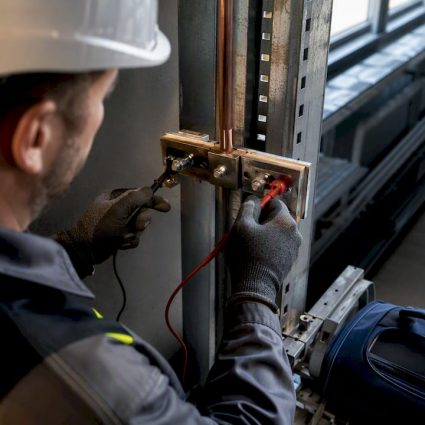
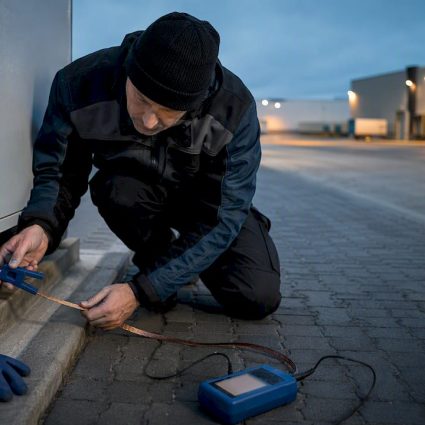
- Ground impedance measurement at each electrode and ring, using a calibrated ground impedance meter rather than a simple continuity check
- Down conductor continuity testing along the full run, not just at the base connection
- Visual inspection of mechanical connections for corrosion, loosening, or physical damage from vehicles or wildlife
- SPD health indicators, since most modern surge devices show a visual or remote status flag when they’ve absorbed a surge and need replacement
Pro Tip:Log every test result with date, technician, and measured value, not just a pass/fail checkbox. When an insurer or regulator asks for proof of an active maintenance program, a checkbox tells them nothing; a resistivity trend line over three years tells them everything.
Recordkeeping isn’t paperwork for its own sake. It’s the evidence trail that shows a system was maintained to standard, which matters both for compliance and for any post-incident review. Indelec’s step-by-step guide to infrastructure lightning protection lays out a commissioning and maintenance checklist that maps directly onto this testing cadence.
How Do Airports Turn Detection Data Into Safe Ramp Decisions?
The best sensor network in the world doesn’t help if the closure decision depends on one supervisor’s judgment call at 2 a.m. Airports that handle this well treat the operational procedure as seriously as the hardware.
- Publish trigger and rollback criteria in writing, using a baseline like 8 km / 15 minutes and documenting any local adjustments with the reasoning behind them
- Build redundant alerting, visual, aural, and digital, so a closure notice reaches ramp crews even if one channel fails or gets missed with an AI-based worker-safety and alerting platform like LifeSafety.ai
- Run drills with ramp crews and ground contractors, and fold lightning procedures into every contractor safety briefing, not just full time staff training
- Feed radar and short-term forecast data into the same decision system as raw strike detection, since that combination is what actually reduces unnecessary ramp closures without compromising personnel safety
None of this works without a clear chain of command. Someone specific needs authority to call a closure and a resumption, and that authority needs to be written down, not assumed.
What Most Airports Get Wrong About Lightning Protection
The failures Indelec sees most often aren’t exotic. They’re the same three, repeated across different airfields: a down conductor interrupted by a later renovation that nobody re-tested, grounding meshes for the tower, the runway lighting, and the terminal that were never bonded together, and SPDs that quietly failed a season ago and were never flagged for replacement.

The fix is rarely more hardware. It’s usually bonding what already exists. Tying separate grounding meshes into one equipotential network, adding counterpoise conductors along airfield lighting runs, and installing deep-earth electrodes where soil resistivity runs high, these interventions solve more real incidents than another air terminal ever does. Insiders in the field consistently point to insufficient equipotentiality, not insufficient interception, as the root cause behind avoidable damage.
If there’s one thing worth pushing back on, it’s the instinct to treat lightning protection as a hardware purchase instead of an engineered system with a maintenance obligation attached. A terminal building can absorb a design flaw for years without anyone noticing. An airfield, with its buried lighting circuits and safety-critical navigation gear, usually can’t.
— INDELEC
Get a Site-Specific Lightning Protection Plan for Your Airport
A leading company in lightning protection systems has a long history and extensive installation experience worldwide across industrial, commercial, and infrastructure sites, including airfields with open-apron, tall-structure exposure profiles similar to those discussed above.

If your airport hasn’t had an ARF/ET completed in recent years, or if your existing system was expanded piecemeal over multiple projects without a unified grounding strategy, that’s the gap worth closing first. Indelec’s lightning protection services cover the full sequence: risk assessment, technical design, installation, and ongoing verification and maintenance, so the system that gets commissioned is the same one that gets tested five years later. When requesting a quote or site survey, ask specifically what tests will be performed, what documentation you’ll receive, and what the project timeline looks like from ARF through commissioning.
For airfields evaluating grounding upgrades specifically, Indelec’s deep earth grounding services address the high-resistivity soil conditions that often complicate airport-scale grounding networks. Start by requesting a site assessment through Indelec’s full services page to scope what your airfield actually needs before committing to a design.
Sources
- Ground Strike – Flight Safety Foundation
- Reassessing airport tower lightning protection systems – Fluke
- Spécification technique pour la conception technique de la protection contre la foudre des aéroports civils
- Guidelines for Airport Ramp Closures Due to Lightning – Vaisala (PDF)
FAQ
What Is the Best Protection Against Lightning for an Airport?
There’s no single “best” component. The most reliable approach combines air terminals sized to the site’s capture-zone map, continuous down conductors, an equipotentially bonded grounding network, and SPDs at every sensitive equipment entry point, backed by a documented detection and closure procedure.
Can Lightning Strike an Aircraft?
Yes. Commercial aircraft are struck by lightning fairly routinely and are engineered to conduct the current safely through the fuselage and off the aircraft, which is why the greater operational risk at airports centers on ground infrastructure, fueling operations, and ramp personnel rather than aircraft in flight.
Is a Surge-Protection Circuit Breaker Mandatory?
Requirements depend on the applicable electrical code and the specific circuit’s exposure and criticality, so this isn’t a blanket answer. Airport facility teams should confirm requirements through their governing electrical code and the aerodrome-specific technical specification rather than assuming a single national rule covers every building on site.
What Regulations Govern Lightning Protection at Airports?
Airport lightning protection design typically draws on the IEC 62305 series for general risk assessment and structural protection, sector guidance like NFC 17-102, aerodrome-specific technical specifications for civil airports, and EASA’s aerodrome regulation framework for European operations. A site-specific ARF/ET should confirm exactly which references to apply to your particular project.