Facility Managers: ARF First Lightning Protection for Historic Sites
Start with a formal lightning risk assessment (ARF), not a lightning rod catalog. If the assessment shows significant risk, the right response is a standards-compliant system, sized and routed to disturb as little historic fabric as possible, backed by surge protection and a written maintenance plan. Skipping straight to installation, or skipping the assessment altogether, is how historic buildings end up either exposed or scarred by protection they never needed.
TL;DR:
- Conduct a site-specific lightning risk assessment first to determine if protection is necessary and establish the appropriate Lightning Protection Level.
- Design and install a standards-compliant system that minimizes impact on historic fabric, including discreet conductors and reproduction or concealed terminals.
- Ensure documentation covers risk calculations, precise drawings, earth resistance tests, and a written maintenance plan before installation begins.
- Only use contractors with proven heritage experience, requiring independent assessments, detailed testing, and ongoing maintenance records.
- Schedule regular inspections and testing after strikes or adverse weather to maintain system effectiveness and update maintenance protocols accordingly.
Table of Contents
- Why a Formal Lightning Risk Assessment Comes First
- Standards and Documentation Every Design Must Meet
- Air Terminals, Conductors, Earthing, and Surge Protection Explained
- Keeping the System Discreet Without Compromising Protection
- Choosing and Managing a Specialist Contractor
- Inspection, Testing, and What to Do After a Strike
- What Indelec Brings to Heritage Lightning Protection Projects
- Prioritizing Protection When Budgets Are Tight
- Get an ARF and a Conservation-Aware Design From Indelec
- Standards and Guidance Worth Consulting
- Sources
- FAQ
Why a Formal Lightning Risk Assessment Comes First
A lightning risk assessment, often called an ARF (analyse du risque foudre) in French technical practice, is the calculation that tells you whether a historic building needs protection at all, and if so, how much. Skipping it means guessing, and guessing on a listed building tends to go one of two bad ways: over-engineered ironwork bolted onto a facade that never needed it, or a bare tower that takes a direct hit with no path to ground.
The assessment weighs strike frequency for the region, the building’s height and isolation, how many people occupy it, and what’s inside that can’t be replaced. A wooden roof truss dating to the 1600s, an organ, archival collections, stained-glass. All of that factors into the calculation the same way it would for a modern industrial risk study, just with irreplaceability added to the equation.
What the ARF typically covers:
- Regional lightning flash density and the building’s exposure (height, isolation, surrounding terrain)
- Occupancy patterns and life-safety risk
- Value and vulnerability of contents, including archives, art, and mechanical systems (organs, clocks, bells)
- Construction materials and how they conduct or resist a strike
- Existing services (electrical, telecom) that could carry a surge into the building
The output assigns a Lightning Protection Level, typically Level I through IV, with most churches and similarly tall, isolated structures landing at Level IV, though the ARF is always site-specific rather than a blanket rule by building type. Local authorities, heritage bodies, or insurers sometimes require this assessment before approving other conservation work, particularly where scaffolding or roof access is already planned.
Standards and Documentation Every Design Must Meet
Design work on a historic structure has to satisfy the same technical rigor as any other lightning protection project, just applied with more restraint. In France, that means working from NF C 17-102, the reference standard for early streamer emission air terminals, alongside the international EN/IEC 62305 family that governs risk assessment, design, and testing more broadly. Preservation authorities layer heritage-specific expectations on top, particularly around what gets attached to historic masonry and how.
A competent designer should produce a defined set of deliverables before anyone touches the roofline:
- Risk calculations tied to the ARF results
- Scaled drawings showing air terminal placement, conductor routing, and earthing points
- Test reports confirming earth resistance values meet the standard’s targets
- A written inspection and maintenance schedule, not a verbal promise
Surge protection also has to be coordinated with the building’s existing electrical installation under national wiring regulations. A lightning protection system without properly specified surge protective devices leaves fire alarms, security systems, and HVAC controllers exposed to induced surges even when the strike itself never touches the building directly.
Air Terminals, Conductors, Earthing, and Surge Protection Explained
Every lightning protection system rests on the same three components: air termination, down conductors, and an earthing system. The job is not to stop lightning from striking. It’s to give the strike a low-resistance path to ground so the current never has a reason to travel through timber, stone, or wiring instead.
For historic buildings, the engineering challenge is doing that without turning a facade into a visible cage of copper strapping. Here’s how the pieces typically come together:
- Air terminals sit at the highest points, towers, spires, ridgelines, sized and spaced according to the assigned protection level.
- Down conductors route current from the terminal to the ground, ideally hidden behind buttresses, inside downpipe cavities, or along architectural returns where they disappear from sight lines.
- Earthing electrodes disperse the current safely, using driven rods, ring earths, or deep bore electrodes where shallow soil or rock makes standard driving impractical.
- Surge protective devices get installed at the service entrance and at sensitive equipment panels, coordinated with the building’s existing electrical distribution.
Copper conductors around 8mm in diameter, sheathed or colored to match masonry, are a common choice for sympathetic installations because they blend against stone without sacrificing conductivity. Towers and spires usually need an air-termination grid or mesh rather than a single rod, since a lone terminal can leave large sections of roof outside the protected cone.
Pro Tip:Ask your designer for a bonding diagram before installation starts, not after. Bells, clock mechanisms, and other historic metalwork inside a tower need a documented decision on whether they’re bonded into the system or deliberately isolated, and getting that wrong can send a surge straight into equipment nobody meant to protect.

Keeping the System Discreet Without Compromising Protection
Conservation-minded design gives you three real options for visible components: concealment behind existing architectural features, reproduction terminals that mimic period ironwork, or sympathetic surface mounting using color-matched materials. Which one fits depends entirely on the building’s exposure and what’s already on the roof.
- Route conductors behind buttresses, inside rainwater downpipes, or along masonry joints wherever the geometry allows.
- Check whether an existing historic lightning system can be repaired or upgraded rather than replaced outright. Preservation guidance treats these older systems as having heritage value in their own right, not just as obsolete hardware.
- Use reproduction finials or terminals where a visible air terminal is unavoidable, matching the profile of existing weathervanes or cross fixtures.
- Flag any groundworks for new earth electrodes to the relevant heritage authority. Trenching near a scheduled monument or archaeologically sensitive site often triggers a requirement for archaeological supervision during excavation.
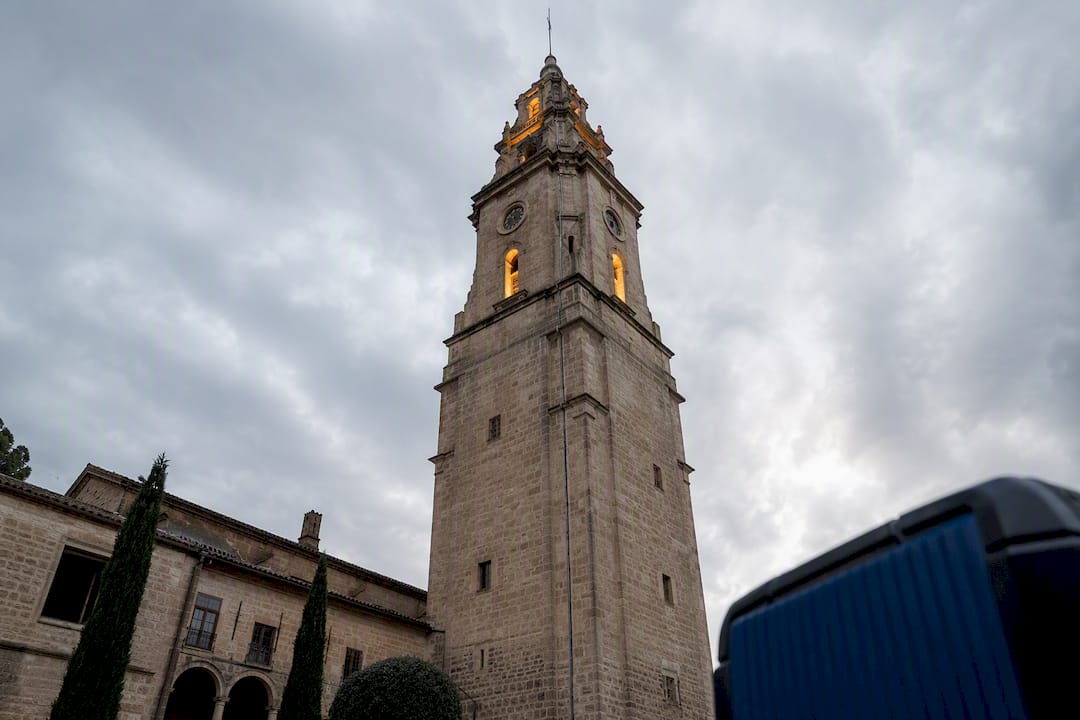
A tower-only system is frequently the right call for a church or similar structure. It protects the highest-risk point, the point most likely to take a direct strike, without wrapping the entire building envelope in conductor runs it may not need.
Choosing and Managing a Specialist Contractor
Selecting a contractor for a historic building isn’t the same exercise as sourcing lightning protection for a warehouse. Heritage experience has to be a hard requirement, not a nice-to-have, because a contractor unfamiliar with historic fabric can cause more damage than the strike itself through careless drilling, mismatched fixings, or conductor runs that ignore load-bearing stonework.
A sound procurement process looks like this:
- Commission the ARF and the technical study (ET) from a party independent of whoever ends up installing the system, so the risk assessment isn’t shaped by a sales incentive.
- Write conservation oversight into the contract explicitly, including who signs off on fixing methods and routing before work begins.
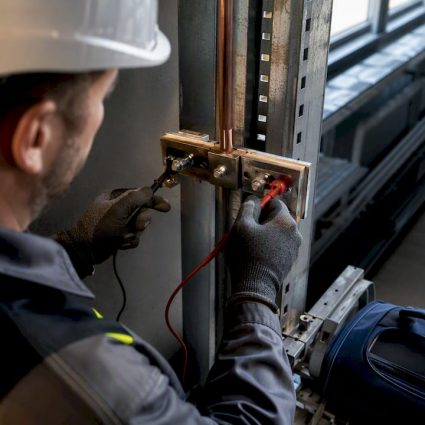
- Require documented testing at every stage, not just a final commissioning certificate.
- Specify exactly what handover includes: as-built drawings, earth resistance test results, and a maintenance schedule with named intervals.
Contractors who bid low by skipping the independent risk assessment step, or who treat conservation oversight as optional, tend to cost more in remedial repairs than they saved on the original quote.
Inspection, Testing, and What to Do After a Strike
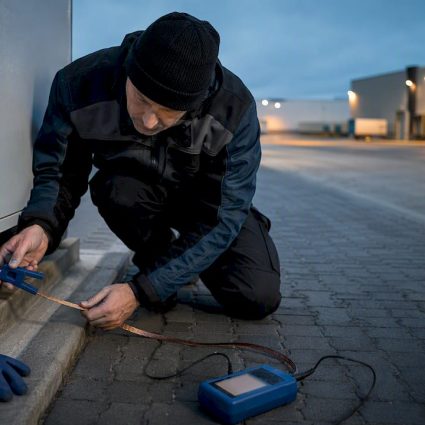
A lightning protection system is only as good as its upkeep. Annual visual inspections catch loose fixings, corroded joints, and conductor damage from wind or general weathering before they become failure points. Earth resistance and continuity testing on a periodic cycle confirms the system still meets the resistance values it was designed to hit, since soil conditions and connections both degrade over time.
- Schedule a full inspection after any confirmed or suspected strike, even if there’s no visible damage.
- Keep test results and maintenance records in the building’s conservation log, alongside other structural and mechanical records.
- Budget for surge protective device replacement on a defined cycle. SPDs degrade with each surge event they absorb and don’t last indefinitely.
- Plan access methods (scaffolding, rope access) that avoid repeated fixing points into masonry.
Pro Tip:Keep the maintenance schedule on the same clock as other roof and fabric inspections. Combining site visits reduces both cost and the number of times contractors need physical access to sensitive stonework.
What Indelec Brings to Heritage Lightning Protection Projects
A company specializing in lightning protection since 1955, with an R&D center focused on adapting air terminal and earthing technology to changing standards and climate conditions. For historic sites, that experience translates into ARF and technical study work, conservation-aware installation, and ongoing verification and maintenance, including a documented case study on protecting an iconic heritage monument.
Whoever you hire, hold them to the same bar:
- An independent risk assessment before any design work starts
- Documented calculations, drawings, and test reports at handover
- A named maintenance schedule with defined inspection intervals
- Demonstrated experience on protected or listed structures, not just standard commercial roofs
Prioritizing Protection When Budgets Are Tight
Most historic building owners don’t have the budget to do everything in one project cycle, and that’s fine as long as the sequence is right. Commission the ARF early and run it alongside your conservation approval process, not after, since the two often need the same site access and the same conversations with heritage officers.
Phasing is a legitimate strategy. Protecting the tower or spire first, then extending to the full envelope in a later phase, spreads cost without leaving the highest-risk point exposed. What isn’t negotiable is documentation: insist on written test results and a maintenance schedule in the contract, not a verbal assurance. A system with no test record is a system nobody can verify is actually working when it matters.
— INDELEC
Get an ARF and a Conservation-Aware Design From Indelec
Certain providers run the full sequence described here directly: the lightning risk assessment, the technical study, conservation-sensitive design, certified installation, and the testing and maintenance program that keeps it all documented. This matters on a historic building because the same team that calculates your risk level can also size the surge protection, route the conductors around sensitive fabric, and provide test reports a heritage authority or insurer may ask to see.

If you manage a listed building, a museum, or another culturally significant site, start with the lightning protection services page to see how ARF, technical study, installation, and maintenance fit together, or review the broader services overview for related work like deep earthing and surge protection. Request a site survey and quote directly, and get the risk assessment scheduled before your next conservation approval cycle closes.
Standards and Guidance Worth Consulting
- NF C 17-102 and the EN/IEC 62305 standard family for design, testing, and risk calculation methodology
- Preservation Brief 50 for heritage-specific installation and repair guidance
- Historic England’s lightning protection guidance for design and archaeological coordination
- Church of England guidance on lightning protection for bonding decisions around historic metalwork
Sources
- Legifrance (reference to standards / legal framework)
- Preservation Brief 50: Lightning Protection for Historic Structures (NPS)
- Historic England: Lightning protection – design and installation for historic buildings
- Church of England: Lightning protection for churches
FAQ
What Is the Protected Zone Around a Historic Monument?
The protected area depends on the air terminal’s height and the Lightning Protection Level assigned by the risk assessment, not a fixed universal distance. A properly designed air-termination grid or terminal placement is calculated to cover the full roof profile, including towers and spires, based on that site-specific assessment.
Is a Surge Protective Device Required by Law?
Requirements vary by jurisdiction and by what the risk assessment identifies, but surge protective devices are considered a standard part of a compliant lightning protection system under the EN/IEC 62305 standard family. Skipping surge protection leaves electrical and life-safety systems exposed even when the air terminal and conductors work exactly as designed.
How Far Should Lightning Protection Extend Around a Historic Building?
There’s no single fixed distance. The zone of protection comes from the height of the air terminal, its placement, and the protection level set by the ARF, which is calculated for that specific building rather than applied as a blanket rule.
What Is the Best Lightning Protection for a Historic Building?
The best system is the one that follows a documented risk assessment and applies standards-based design with minimal visual and physical impact on historic fabric. Indelec’s lightning protection services cover the full sequence, from ARF through installation and maintenance, so the design decisions and the testing records stay connected from day one.