French Lightning Compliance: Close Six Month, Annual, Two Year Gaps
Mise en conformité foudre in France means aligning your site’s lightning protection with the NF EN 62305 series, NF C 17-102, and the arrêté governing your installation category, backed by a current ARF and ET. The immediate action is simple: commission or update those two documents now, confirm your installation sits within the two-year deadline after the risk analysis, and verify you haven’t missed the six-month initial inspection, the annual visual check, or the two-year complete technical review.
TL;DR:
- Lightning protection documentation must reference NF EN 62305 and NF C 17-102 standards, with all related files validated within two years of risk analysis.
- Initial verification by an independent body must occur within six months of installation, with annual visual inspections and biennial technical reviews required by law.
- Most compliance failures result from outdated or incomplete paperwork, such as ARFs that do not reflect recent site changes or unresolved inspection reserves.
- Keeping a centralized, up-to-date dossier tracked by a qualified verifier reduces the risk of gaps and ensures timely verification after lightning impacts.
- Engaging a single provider for risk analysis, installation, and maintenance, like INDELEC, simplifies compliance management and minimizes handoff errors.
Table of Contents
- Which Standards and Laws Govern Lightning Compliance in France?
- What Documents and Deadlines Does an Inspection Require?
- How Do You Verify and Maintain Lightning Protection?
- What Are the Most Common Compliance Failures?
- How INDELEC Supports Mise en Conformité Foudre
- Owning Compliance on Site
- Request an Audit or ARF/ET Review
- Sources
- FAQ
Which Standards and Laws Govern Lightning Compliance in France?
Three normative pillars define the technical baseline. The NF EN 62305 series covers risk management (part 1), risk assessment (part 2), physical damage protection to structures (part 3), and protection of electrical and electronic systems (part 4). NF C 17-102 is the French national standard specific to early streamer emission lightning rods, a technology widely used but not covered by the IEC-derived 62305 family. Together they define what “protected” actually looks like on paper, according to LPS Manager’s analysis of French compliance requirements.

Standards alone don’t create legal obligation, though. That happens through regulatory texts: the Arrêté du 4 October 2010 (as modified) for classified installations (ICPE), and the Arrêté du 15 janvier 2008 relatif à la protection contre la foudre, which sets the documentation and inspection rules ICPE operators must follow. The practical consequence: your ARF and ET need to explicitly reference NF EN 62305 or an equivalent norm to satisfy the arrêté. An inspector checking your dossier against current lightning protection standards is really checking two things at once, technical adequacy and legal traceability.
What Documents and Deadlines Does an Inspection Require?

An ICPE inspector will ask for a specific paper trail, not a verbal assurance that “the lightning rods are fine.” The core dossier includes the ARF (analyse du risque foudre), the ET (étude technique) that translates that risk into a protection design, the notice of verification and maintenance, the carnet de bord logging every intervention, the DOE (dossier des ouvrages exécutés), and your verification reports.
The statutory clock runs on several tracks at once:
- Protections identified in the ET must be installed within a maximum allowed period after ARF validation, typically around two years.
- The initial verification, by an independent body, must happen within a few months of installation, generally understood to be up to half a year.
- A visual inspection is required annually.
- A complete technical inspection is required every couple of years.
- After any confirmed lightning impact, verification is required within 1 month.
- Any reserve flagged during an inspection must be resolved within 1 month.
Date every document the moment it’s produced, not when it’s filed. Centralize the carnet de bord in one place, ideally digital, so a site transfer or staff turnover doesn’t leave gaps nobody can explain three years later. Guidance on structuring that documentation properly is worth reviewing before your next audit, not after.
How Do You Verify and Maintain Lightning Protection?
Verification isn’t one activity. It’s three distinct checks with different scopes, and mixing them up is how sites end up with a false sense of security.
- Initial complete verification. Performed by an independent verifier after installation, this confirms the system as built matches the ET. It cannot be self-certified.
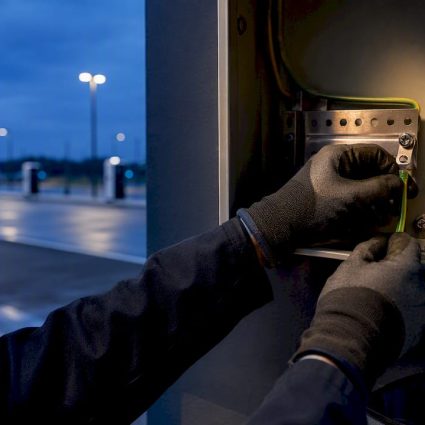
- Annual visual inspection. A walk-through check of air terminals, down conductors, and connections for corrosion, mechanical damage, or vegetation interference.
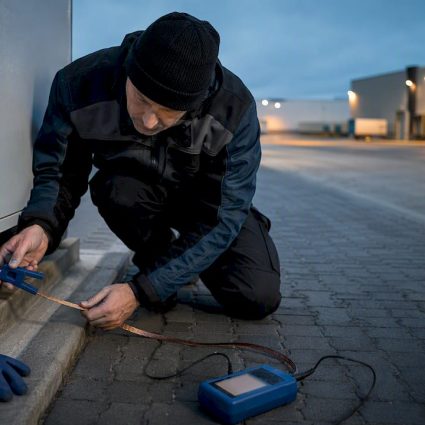
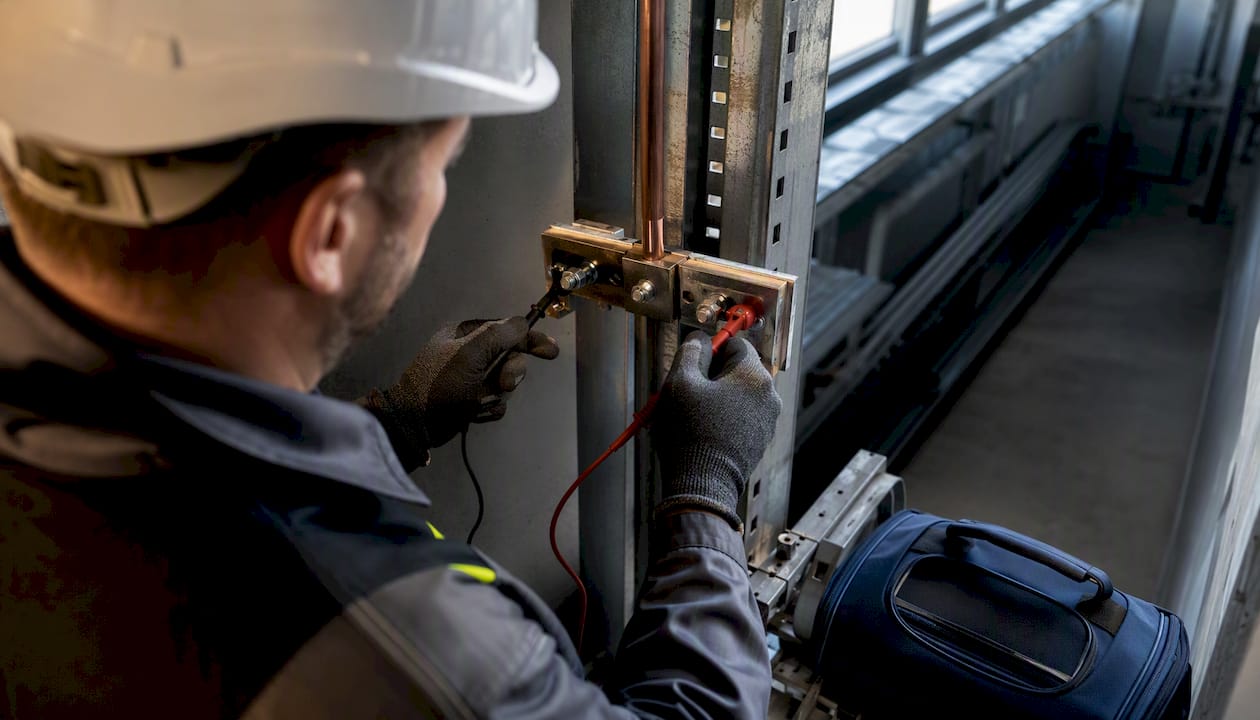
- Complete technical inspection every two years. This includes ground resistance testing, continuity checks on conductors, and functional testing of surge protection devices.
Who performs these checks matters as much as the schedule. The QUALIFOUDRE scheme, managed by INERIS, defines certification levels from N1 to N4 for verifiers and installers, along with training prerequisites. When an ET relies on legacy components whose specifications aren’t fully documented, QUALIFOUDRE guidance calls for a special mission to validate them rather than assuming continued adequacy. Ask any verifier for their certification level before signing a contract.
Fold your inspection dates into your CMMS or GMAO system alongside other critical safety equipment. A lightning check that lives only in someone’s inbox gets missed the year that person changes jobs.
Pro Tip:Wire your lightning strike counters into an alert workflow, not just a logbook. A counter that records an impact but doesn’t trigger a work order defeats the one-month post-strike verification deadline before anyone notices the clock started.
What Are the Most Common Compliance Failures?
Most non-conformity findings on ICPE sites aren’t hardware failures. They’re paperwork and calendar failures. Industry analysis of inspection outcomes points to a consistent pattern: compliance erodes between two verification cycles, not because equipment degrades faster than expected, but because nobody was tracking the interval.
The recurring culprits:
- An ARF that predates a building extension, new hazardous storage, or a process change, so it no longer describes the actual risk.
- An ET that references equipment that’s since been replaced or removed.
- A missing or self-performed initial verification where an independent body was required.
- A carnet de bord with gaps, or one that exists only as scattered emails.
- Reserves from a prior inspection still open past the one-month deadline.
- No inspection triggered after a documented lightning strike.
Fixing this starts with reconstitution, not new equipment purchases. Rebuild and date the dossier, reconcile the ARF against the site as it exists today, close every outstanding reserve, and bring in a qualified verifier to validate any legacy component the ET still references. Treat anything touching electrical safety or fire risk as immediate; treat scheduling gaps in otherwise sound systems as next-cycle maintenance.
How INDELEC Supports Mise en Conformité Foudre
INDELEC produces the ARF and ET, then carries that same technical file through installation and into verification and maintenance contracts, rather than handing you off to a different provider at each stage. That continuity matters more than it sounds: a single firm tracking your dossier from risk analysis through the two-year technical inspection closes the handoff gaps where deadlines usually get lost.
Services relevant to compliance often include lightning counter supply and monitoring, deep earth grounding for sites where soil resistivity undermines an otherwise sound design, and turnkey installation sized to the ET’s specifications. [Case study and certification details to be inserted.]
If your dossier currently sits across three vendors and two spreadsheets, that fragmentation is itself a compliance risk worth addressing before the next inspection cycle.
Owning Compliance on Site
Assign one person as dossier owner. Not a committee, not “facilities in general.” Someone whose name is on the carnet de bord and whose calendar carries the six-month, annual, and biennial dates.
Compliance isn’t a purchase you make once. It’s a rhythm you maintain, and the sites that stay compliant are the ones where inspection dates live inside the same maintenance system as fire extinguisher checks and elevator certifications. A single qualified partner who keeps producing and updating that documentation year over year beats juggling vendors every time a deadline sneaks up.
— INDELEC
Request an Audit or ARF/ET Review
INDELEC is a direct path to closing your compliance gaps, not another vendor to coordinate around your existing ones. Where a facility manager might otherwise chase separate firms for the risk analysis, the technical study, the installation, and the verification contract, Some providers position themselves as carrying a client’s file through every stage backed by extensive international engineering experience across many installations worldwide.

If your ARF is more than a few years old, or you’re not certain when your last complete technical inspection happened, that’s the starting point. Visit the lightning protection services page to scope an ARF or ET, or go to the main services overview to request an audit covering installation, verification, and grounding work in one pass. Getting a documented answer now costs less than discovering the gap during an ICPE inspection.
Sources
Keep these close, not buried in a shared drive you’ll search for later:
- FAQ QUALIFOUDRE V4.0 — INERIS
- Arrêté du 15 janvier 2008 relatif à la protection contre la foudre
- Lightning protection: safety and compliance in France — LPS Manager
FAQ
What is the lightning protection standard in France?
France applies the NF EN 62305 series for risk assessment and structural protection, alongside NF C 17-102, the national standard specific to early streamer emission lightning rods.
Is a lightning risk study mandatory in France?
Yes, for ICPE and other regulated installations covered by the relevant arrêtés, an ARF and a follow-up ET are required to determine and design the necessary protection.
What does installing a surge protection device cost?
INDELEC does not publish fixed pricing for surge protection devices or installation; product details are listed on its surge protection category page, with quotes available on request.
What are the regulations for lightning rods in France?
Lightning rod installations must comply with NF C 17-102 or an equivalent standard referenced in the site’s ET, and for ICPE sites, follow the inspection cadence set by the governing arrêté, including verification within six months of installation and complete technical checks every two years.