Under 10 Ohms: Mountain Lightning Protection Plans for Site Owners
Mountain infrastructure needs a complete lightning protection system: air terminals, down conductors, a low-impedance earthing network, correctly placed Type 1 and Type 2 surge protection, and backed by a written maintenance plan. The first move isn’t buying equipment. It’s commissioning a site-specific risk analysis under NF EN IEC 62305-2 from a qualified installer and requiring proof of Qualifoudre certification before any bid gets signed.
TL;DR:
- Mountain lightning protection systems demand site-specific risk analysis and deep earth grounding methods due to high soil resistivity.
- Grounding networks should spread current over multiple interconnected electrodes, not rely on a single rod, to achieve resistance below 10 ohms.
- Installers must provide certifiable proof of Qualifoudre accreditation, including detailed resistivity measurements, before project approval.
- Maintenance inspections are critical, with annual checks for public buildings and immediate post-strike assessments to prevent system failure.
- Using durable materials like stainless steel and tinned copper extends equipment lifespan against harsh mountain weather.
Table of Contents
- System Components: What You Must Install and Why
- Design Constraints and Adaptations for Mountain Sites
- Installation Checklist and Realistic Timeline
- Standards, Certifications, and When They Apply
- Maintenance, Inspection, and Post-Strike Verification
- How to Choose and Evaluate a Provider for Mountain Lightning Protection
- Why a Standards-First, Site-Specific Approach Reduces Risk
- Get a Site-Specific Lightning Protection Plan From Indelec
- Sources
- FAQ
System Components: What You Must Install and Why
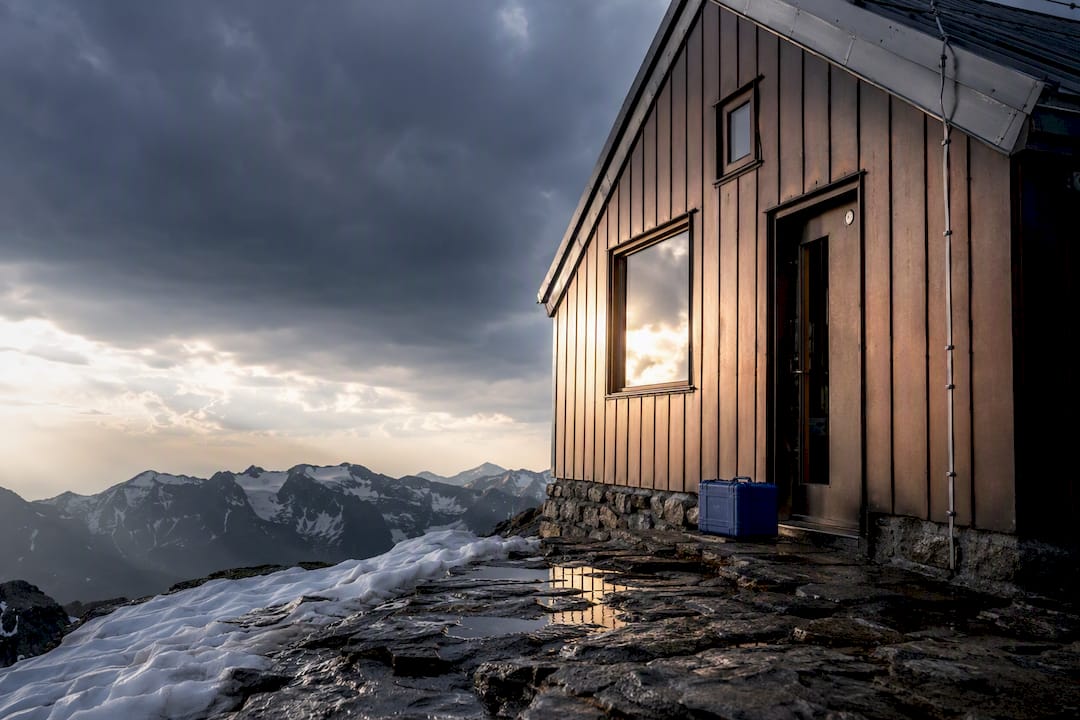
A mountain refuge or a technical building on a ridge takes far more direct strikes per year than a similar structure in a valley. Every component in the chain has to work, because altitude removes the margin for a weak link.
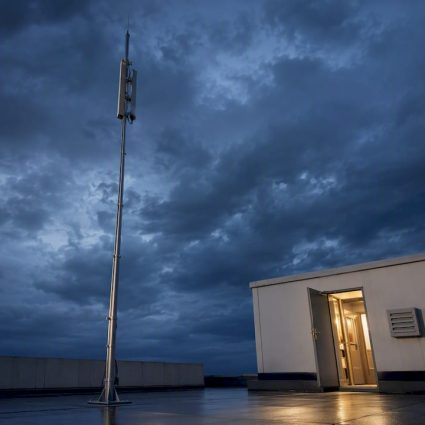
The air terminal, or paratonnerre, is the capture point. Whether it’s a simple rod or an early streamer emission device, its job is to intercept the strike before it hits the roof, an antenna, or a fuel tank. Down conductors carry that current from the terminal to the ground, and they need mechanical protection wherever they cross a walkway, a ladder route, or an area exposed to snow slide.
The earthing system is where most mountain installations succeed or fail. On rocky or thin soil, a single ground rod rarely gets close to a usable resistance value, so installers typically switch to interconnected patte d’oie or triangulated stake configurations to spread the current over more contact area. Equipotential bonding ties every metal mass in the building (railings, tanks, structural steel) to the same reference, and coordinated Type 1 and Type 2 surge protection devices absorb the transient voltage that would otherwise travel through the power and data lines and destroy equipment inside.
- Air terminals capture the strike at the highest point of exposure.
- Down conductors route the current, protected from mechanical damage at access points.
- Earthing electrodes disperse current into the ground, usually as an interconnected network rather than a single rod.
- Bonding and surge protection stop the residual voltage from reaching sensitive equipment.
A complete protection system only performs as well as its weakest component, and on exposed terrain, that weak point is almost always the earthing network.
Design Constraints and Adaptations for Mountain Sites
Mountain geology changes the entire design brief. Granite, schist, and shallow topsoil all resist current flow far more than the loamy soils engineers design for in standard guides, so a design that works at 200 meters of elevation often fails outright at 2,000.
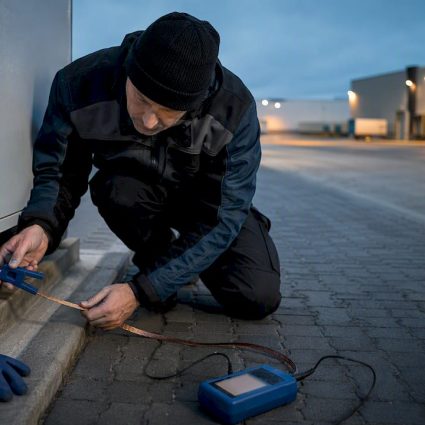
Soil resistivity testing, typically with the Wenner four-point method, has to happen before anyone commits to an earthing layout. When the readings come back high, which they usually do above the treeline, the fix is deep electrode drilling or conductive backfill using bentonite or conductive gels rather than trying to force a shallow rod to comply. Multiple interconnected electrodes spread the load and bring resistance down where a single rod would leave the building exposed.

Anchoring and waterproofing raise separate problems. Roofs on refuges and technical shelters take heavy wind loading and thermal cycling that loosens standard fixings within a few seasons, so mounting hardware needs to be rated for that movement without breaking the waterproof membrane underneath.

When a site has several air terminals covering different structures, whether a main building plus a nearby mast or fuel store, separation distances between conductors and metal masses need to be calculated individually rather than copied from a flat template. Material choice matters just as much: stainless steel and tinned copper resist the corrosion that comes from freeze thaw cycles, road salt drift, and UV exposure at altitude far better than galvanized steel does over a 20-year service life.
Pro Tip:Ask your installer for the actual Wenner resistivity readings, not just a pass/fail summary. A site reading of 800 ohm meters versus 3,000 ohm meters completely changes whether you need one drilled electrode or an array of six, and that difference shows up directly in the quote.
Installation Checklist and Realistic Timeline
Installation on a mountain site rarely runs on a simple schedule. Weather windows are short, access is often limited to a few months a year, and each phase depends on the one before it clearing inspection.
- Survey and risk analysis. The installer delivers a written NF EN IEC 62305-2 risk study identifying required protection levels and component specifications before any material gets ordered.
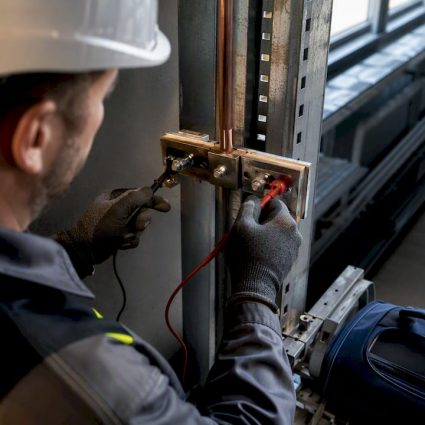
- Excavation and electrode placement. Trenching and drilling happen according to the resistivity data, with the joint de contrôle (the low-impedance test joint) installed roughly 2 meters above ground for future measurement access.
- Conductor routing. Down conductors get fixed along calculated paths, with roof-mounted circuits secured at intervals of about 33 centimeters to withstand wind and snow loading.
- Surge protection connection. Parafoudres tie into the main distribution board with short, straight connections, keeping the cumulative length of the L1, L2, and L3 conductors under 0.5 meters to limit residual voltage.
- Initial verification. Earth resistance gets measured at the joint de contrôle, continuity gets checked end to end, and the installer issues a first conformity report before handover.
A refuge project at altitude commonly needs two separate site visits across a season: one for survey and drilling, one for final conductor work and testing, once weather allows safe roof access.
Standards, Certifications, and When They Apply
Every mountain lightning protection project should reference the same normative backbone, regardless of whether the building is a refuge, a pylon base station, or a technical shelter.
- NF EN IEC 62305, parts 1 through 4, define general principles, risk analysis methodology, and the physical damage and installation requirements that govern the whole design.
- NF C 17-102 covers down conductor specifications and installation detailing, particularly for early streamer emission terminals.
- UTE C 15-443 guidance governs how parafoudres connect into the distribution system and which class applies where.
- NF EN 61643 classifies surge protection devices, with Type 1 required near the service entrance on buildings with an air terminal nearby, and Type 2 at downstream distribution panels.
- Qualifoudre certification, verified by INERIS, is the mark that identifies installers actually competent to design and install to these standards, not just sell hardware.
Inspection frequency also runs off regulation, not preference: ERP buildings need annual checks, IGH structures biennial ones, and ICPE sites follow a schedule tied to their classification level.
Recent revisions to NF EN IEC 62305-2 modernized the risk analysis methodology, so a risk study written five years ago may no longer reflect current practice. If a bidder hands you a study that predates the update, ask them to redo it.
Maintenance, Inspection, and Post-Strike Verification
A lightning protection system that never gets inspected is a liability dressed up as a safety feature. The maintenance and traceability side of the job matters as much as the initial install.
- Inspection intervals: annual for buildings open to the public (ERP), every two years for high-rise structures (IGH), and per-classification for ICPE sites, plus a mandatory check after any confirmed strike.
- What gets checked: earth resistance at the joint de contrôle, conductor continuity, the physical condition of fixings after freeze thaw cycles, and the status indicator on Type 2 surge devices, which shows visually when a module needs replacing.
- What gets recorded: a carnet d’entretien logging every visit, plus the conformity certificate and test reports from the original install and each subsequent check.
- Common corrective work: replacing corroded fixings, re-driving or adding electrodes where resistance has drifted above target, and swapping worn surge protection modules.
Skipping a single inspection cycle on an exposed ridge site is a different risk than skipping one on a sheltered valley building. The strike frequency alone justifies tighter oversight.
How to Choose and Evaluate a Provider for Mountain Lightning Protection
Not every installer who quotes a lightning protection job has actually done one at altitude. The bid documents tell you fast whether they have.
- Require a site-specific NF EN IEC 62305-2 risk analysis and a soil resistivity report as part of the proposal, not an afterthought added later.
- Ask for Qualifoudre attestation directly, along with proof of insurance and references from comparable mountain or high-altitude projects.
- Confirm the technical scope covers deep-earth grounding options, documented earth resistance measurement, correct surge device placement, and a first verification report at handover.
- Request a written maintenance contract alongside the installation quote, including measurement reports and a formal certificate of conformity.
Indelec has worked in lightning protection since 1955, running projects that span exposed and technically demanding sites, with an in-house R&D center behind its capture and earthing technology. That kind of track record matters most on terrain where a standard template design simply doesn’t hold up.
Why a Standards-First, Site-Specific Approach Reduces Risk
Generic lightning protection quotes fail mountain buildings because they price a flat design against unpredictable rock and weather. The perspective built on decades of experience and continuous R&D into capture and earthing technology is that the risk analysis has to come before the hardware, every time, with no exceptions for budget or schedule pressure.
— INDELEC
Get a Site-Specific Lightning Protection Plan From Indelec
Indelec is the direct route to a lightning protection system actually engineered for your site, not a catalog part dropped onto a mountain roof and hoped for the best. Services include the NF EN IEC 62305-2 risk analysis itself, deep earth grounding drilling for high-resistivity rock, Prevectron3 air terminals engineered for exposed and high-wind locations, plus full installation and certification.

At first contact, ask for a site survey, certification attestation, a sample risk report, and a maintenance offer covering post-installation inspection. That gives you a clear basis to compare against any other bid on the table. Start with Indelec’s lightning protection system application page to see how the design process works for buildings and installations exposed to severe conditions, and request a quote for your site from there.
Sources
- Plan d’implantation des paratonnerres (Loiret guide)
- NF EN IEC 62305-1: Protection contre la foudre – Principes généraux (AFNOR listing)
- Paratonnerres : rôle, installation et réglementation (Systemelec overview)
FAQ
What Is the Minimum Earth Resistance for Lightning Protection?
Earthing systems should target a resistance under 10 ohms, achieved through interconnected electrodes rather than a single ground rod, especially on resistive mountain soils.
Where Should Type 1 and Type 2 Surge Protectors Go?
Type 1 devices belong near the incoming electrical service when an air terminal is present or close to it, while Type 2 devices protect downstream distribution panels, both connected with cable runs kept as short as possible.
What Does Qualifoudre Certification Actually Verify?
Qualifoudre identifies installers whose competence has been checked against a technical referential overseen by INERIS, covering both design and installation quality for lightning protection systems.
How Often Should a Mountain Building’s System Be Inspected?
Buildings open to the public require regular inspection, typically yearly, and high-rise structures require inspection at roughly biennial intervals, and any building should be inspected promptly after a confirmed strike, regardless of its normal inspection schedule.
Why Do Rocky Mountain Sites Need Deep Drilling for Earthing?
Rocky or thin soil resists current flow far more than typical ground, so achieving usable resistance often requires deep electrode drilling or conductive backfill instead of a shallow rod.