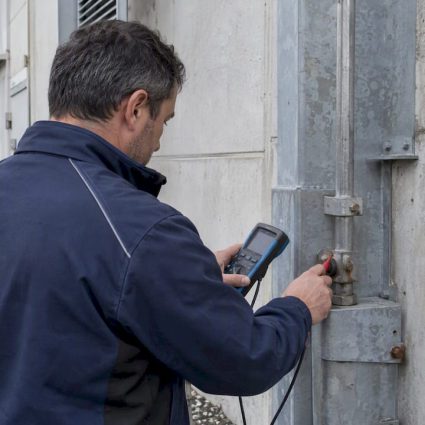
Lightning Protection for ICPE Sites: A Compliance Guide

If your site is classified as an Installation Classée pour la Protection de l’Environnement (ICPE) subject to authorization in France, lightning protection is not optional. The Arrêté of 4 October 2010 (as modified) mandates a four-stage process: Analyse du Risque Foudre (ARF), Étude Technique (ET), installation, and periodic third-party verification. Your single immediate action is to commission an ARF from a certified, competent body. Everything downstream depends on it.
Key legal deadlines to map now:
- ARF commissioned from a competent body (starting point)
- Étude Technique completed following ARF conclusions
- Installation of protections no later than two years after the ARF (or before commissioning for new sites)
- Full third-party inspection within six months after installation
- Annual visual checks thereafter
- Full verifications at regular periodic intervals, alternating with visual checks
- Post-strike inspection after any recorded lightning event
Some ICPE sites subject to registration or declaration also face mandatory lightning protection requirements for specific activities (silos, explosives depots, certain warehouses) through applicable Arrêtés Ministériels de Prescriptions Generals (AMPGs). Always verify against the AMPG that governs your classified activity.
Key Takeaways
Lightning protection for ICPE sites in France is a mandatory, sequenced legal process: ARF determines whether and what to protect, the ET specifies how, installation must be complete within two years, and independent verification must follow within six months.
| Point | Details |
|---|---|
| ARF is the legal starting point | Commission it from a QUALIFOUDRE-certified body before any other protection work begins. |
| Two-year installation deadline | Protections must be installed no later than two years after the ARF is completed. |
| Independent verification required | The body conducting inspections cannot be the same entity that installed the system. |
| Full verification every two years | Annual visual checks alternate with full verifications; post-strike checks are mandatory within one month. |
| Indelec end-to-end capability | Indelec covers ARF, ET, installation, grounding, and independent verification for ICPE sites across France. |
Table of Contents
- What does French law require for ICPE lightning protection?
- What are the four mandatory stages for ICPE compliance?
- Who is qualified to perform ARF, ET, and inspections?
- What must the ARF, ET, and verification notice contain?
- How do verification schedules and post-strike procedures work?
- Operational checklist for ICPE managers
- What facility managers consistently get wrong about lightning compliance
- Indelec covers every stage of your ICPE compliance process
- Sources
What does French law require for ICPE lightning protection?
The primary legal reference is the Arrêté of 4 October 2010 (as modified), which sets out the full framework: ARF and ET obligations, documentation retention, the two-year installation deadline, and the verification schedule. For specific activity categories, the applicable AMPG supplements or specifies these requirements.
Two normative standards define how each stage must be executed:
- NF EN 62305 series (parts 1–4): the technical backbone. Part 2 governs the ARF methodology; part 3 covers protection system design and verification. These are available through AFNOR’s catalog and should be referenced explicitly in every tender document.
- NF C 17-102: applies specifically to Early Streamer Emission (ESE) air terminals, which are widely used on French industrial sites. Compliance with this standard is a prerequisite when specifying ESE devices.
Article 18 of the Arrêté of 4 October 2010 (as modified) requires that any ICPE subject to authorization conduct an ARF according to NF EN 62305-2. Where the ARF concludes that protection is necessary, an Étude Technique must be produced, protections installed within two years, and the installation verified by an independent competent body. The ARF, ET, notice of verification and maintenance, and the carnet de bord must be held on site and made available to the inspection authority at any time.
Recordkeeping is not a formality. The ARF, ET, notice of verification and maintenance, and the carnet de bord are all legally required documents that must remain on site and be available to inspectors. Losing them during an audit is treated the same as not having done the work.
What are the four mandatory stages for ICPE compliance?
The process runs in strict sequence. Each stage produces a deliverable that feeds the next.
Stage 1: Analyse du Risque Foudre (ARF)
The ARF is the decision document. It determines whether protection is required and, if so, to what level. The methodology follows NF EN 62305-2 and evaluates three risk components: R1 (risk of loss of human life), R2 (risk of loss of service to the public), and R3 (risk of loss of economic value). The R1 threshold is set at a very low acceptable level.
Inputs the ARF must consider include local lightning density (the kéraunique level for the site’s geographic zone), building configuration, and a full inventory of critical equipment and Means of Risk Control (MMR). The model ARF format used in practice shows how scope, feared events, calculation notes, and mission limits are documented. The ARF concludes with a determination of required protection levels (Système de Protection contre la Foudre, or SPF) and identifies which structures and equipment need protection.
Stage 2: Étude Technique (ET)
Where the ARF requires protection, the ET specifies exactly how to achieve it. The ET must define device types and siting, grounding and earth resistance requirements, surge protection measures for indirect effects, installation modalities, and the structure of the carnet de bord. It also produces the notice of verification and maintenance, which sets out the test methods, frequencies, and post-strike procedures the site must follow.
Stage 3: Installation
Installation must be carried out by competent personnel and must implement the ET specifications precisely. The two-year deadline from ARF to completed installation is a hard legal constraint. For new sites, installation must be complete before commissioning.
Stage 4: Verifications
Inspections must include a full verification within six months after installation, full verifications every two years, annual visual inspections, and special checks after any recorded strike. All verifications must be performed by a body independent from the installer. Remedial work identified during inspection must be completed within one month.
Deliverables at each stage:
- ARF: scope document, list of feared events, NF EN 62305-2 calculation notes, identification of elements requiring protection, SPF determination, assumptions and limits of mission
- ET: device specifications and siting drawings, grounding requirements, surge protection plan, installation modalities, notice of verification and maintenance, carnet de bord template
- Installation: as-built drawings, measurement records (earth resistance, continuity), initial carnet de bord entry
- Verification: inspection report, updated carnet de bord entry, list of non-conformities and remediation deadlines
Who is qualified to perform ARF, ET, and inspections?
Not every provider can legally sign off on these documents. For verifications specifically, the independence requirement is absolute: the body conducting inspections cannot be the same entity that installed the system.
Recognized qualifications to require in procurement:
- QUALIFOUDRE certification: the primary French industry qualification for lightning protection providers. It covers ARF, ET, installation, and verification missions. Requiring QUALIFOUDRE (or equivalent demonstrated competence) in your tender documents is the most direct way to filter qualified providers.
- Evidence of competence in NF EN 62305 and NF C 17-102 application
- Liability insurance covering ARF/ET and verification missions
- References for ICPE work specifically (not just commercial buildings)
- Sample inspection report and carnet de bord template provided at tender stage
The independence requirement has practical contracting implications. If you use one firm for ARF and ET, you must contract a separate, independent body for the six-month post-installation inspection and all subsequent periodic verifications. Some operators try to use the same provider for everything. That is non-compliant and will be flagged during an administrative inspection.
Lightning protection certification guidance covers the full certification and verification process in detail, including what to look for in provider credentials.
Pro Tip:Ask each candidate verifier to provide a sample inspection report and a blank carnet de bord template as part of their tender submission. This tells you immediately whether their documentation meets the regulatory standard before you sign anything.
What must the ARF, ET, and verification notice contain?
Knowing what a compliant deliverable looks like lets you accept or reject work with confidence rather than relying on the provider’s word.
ARF required contents:
- Defined scope (structures and equipment covered)
- List of feared events (loss of life, loss of service, economic damage)
- Reference to NF EN 62305-2 methodology and calculation software used
- Local kéraunique level and site configuration data
- Inventory of MMR (Means of Risk Control) and critical equipment
- Risk calculations (R1, R2, R3) with notes
- Identification of elements requiring protection
- Required SPF level(s)
- Assumptions and limits of the mission
ET required contents:
- Precise device specifications (type, model, technical parameters)
- Siting and installation drawings
- Grounding system design and target earth resistance values
- Surge protection (parafoudre) measures for MMR and critical equipment
- Installation modalities and contractor requirements
- Notice of verification and maintenance (test methods, frequencies, post-strike procedures)
- Carnet de bord structure and initial entry template
Notice of verification and maintenance required contents:
- Tests to perform: continuity of down conductors, earth resistance measurement, visual condition of air terminals and connections
- Measurement methods and acceptable thresholds
- Inspection frequency (annual visual, two-year full, post-strike)
- Post-strike procedure: record the event, visual check within one month, full inspection if damage is suspected
- Record templates for carnet de bord entries
How do verification schedules and post-strike procedures work?
The inspection regime is fixed by regulation and cannot be negotiated down. Here is what the calendar looks like in practice:
Recurring inspection schedule:
- Full verification within six months of installation completion
- Annual visual inspection every year (condition of air terminals, connections, down conductors, earth electrode access points)
- Full verification every two years (continuity, earth resistance measurement, surge protection device condition, conformity to ET specs)
- Special inspection after any recorded strike: visual check within one month; full verification if damage is suspected or if the strike was recorded on the carnet de bord as significant
What a full verification covers:
- Electrical continuity of all down conductors
- Earth resistance measurement against ET-specified thresholds
- Physical condition of air terminals, clamps, and connections
- Surge protection device (parafoudre) condition and replacement status
- Conformity of the installed system to ET drawings and specifications
- Review of carnet de bord entries since the last inspection
Bureau Veritas confirms that combining direct strike protection (air terminals and down conductors) with indirect protection (surge protection devices and proper earthing) is the standard expected by verifiers. A system that protects the building but leaves MMR and control equipment exposed to induced overvoltages will fail a full inspection.
Post-strike procedure, step by step:
- Record the strike date and estimated intensity in the carnet de bord immediately
- Commission a visual inspection within one month
- If damage is suspected or confirmed, commission a full verification
- Complete any remedial works within one month of the inspection finding
- Log all actions and outcomes in the carnet de bord
Pro Tip:Set calendar reminders for the annual visual check and two-year full verification at the moment you accept the installation. Do not rely on the verifier to prompt you. The legal obligation sits with the facility operator, not the contractor.
Operational checklist for ICPE managers
Use this checklist to build procurement specifications, accept deliverables, and maintain compliance through the site’s operational life.
Procurement checklist:
- Require QUALIFOUDRE certification (or documented equivalent competence) from all ARF, ET, and installation providers
- Include an explicit independence clause: the verification body cannot be the same entity as the installer
- Request sample inspection report and blank carnet de bord template at tender stage
- Require proof of measurement equipment calibration (earth resistance meter, continuity tester)
- Specify NF EN 62305 and NF C 17-102 compliance in technical requirements
- Request references for ICPE work specifically
Acceptance checklist at delivery:
- Verify ET specifications are fully implemented in as-built drawings
- Check earth resistance measurements against ET-specified thresholds
- Confirm carnet de bord initial entry is complete and signed
- Verify notice of verification and maintenance is included and covers all required elements
- Confirm surge protection devices are installed for all MMR identified in the ARF
Ongoing compliance tasks:
- Schedule annual visual checks and two-year full verifications in the site’s maintenance calendar
- Maintain the carnet de bord with every inspection entry, measurement record, and strike event
- Conduct post-strike visual checks within one month of any recorded event
- Complete remedial works within one month of any non-conformity identified during inspection
- Keep ARF, ET, notice of maintenance, and all inspection reports on site and accessible
Sample commissioning timeline:
- Commission ARF from a QUALIFOUDRE-certified body
- Receive ARF conclusions and determine SPF requirements
- Commission ET from a competent body (may be the same as ARF provider)
- Procure and install protections per ET specifications (deadline: two years from ARF)
- Commission independent full verification (deadline: six months after installation)
- Enter all records in carnet de bord; file ARF, ET, and inspection report on site
- Schedule first annual visual check and first two-year full verification
Pro Tip:Include a contract clause requiring the installer to hand over a verified carnet de bord with the initial entry completed, the notice of verification and maintenance signed, and all measurement records attached before you release final payment. Without this clause, chasing documentation after project close is a near-certainty.

What facility managers consistently get wrong about lightning compliance
The most common gap is not the lightning rod. Most ICPE operators commission an ARF, install air terminals, and consider the job done. What they miss is the indirect effects side: surge protection for MMR and critical control equipment. The ARF identifies these assets. The ET must specify parafoudres for them. But in practice, surge protection is often treated as an optional add-on rather than a mandatory element of the protection system. A full verification will flag this immediately.

The second gap is documentation independence. Operators sometimes accept a verification report from the same firm that installed the system, either because it is more convenient or because the installer offered it as a package. That arrangement is non-compliant. The independence requirement exists precisely because a self-verifying installer has no incentive to flag deficiencies in their own work.
The third gap is the carnet de bord. Facilities that have done everything else correctly sometimes cannot produce a complete carnet de bord during an administrative inspection because entries were not made consistently, or the document was stored somewhere other than the site. The carnet de bord is a legal document. Treat it the way you would treat a statutory register.
Integrated protection strategies that address both direct and indirect effects are the standard the regulation was written to achieve. The ARF and ET process exists to get you there systematically, not to generate paperwork.
Indelec covers every stage of your ICPE compliance process
Indelec has been designing and installing lightning protection systems since 1955, with the technical depth to handle every stage of the ICPE compliance process from a single point of accountability.

Services aligned with the four legal stages:
- ARF and Étude Technique: risk analysis and technical studies conducted by certified specialists, producing compliant documentation ready for regulatory inspection
- Installation: air terminals including the Prevectron3 ESE system, down conductors, grounding systems, and surge protection for MMR
- Grounding works: deep earth grounding drilling for sites where standard earth electrode installation cannot achieve ET-specified resistance values
- Verification and maintenance contracts: independent inspection services with full carnet de bord documentation
Indelec’s R&D center and decades of ICPE project experience mean the technical team understands the specific constraints of authorized installations. To request a quote or to discuss your site’s compliance status, visit the Indelec lightning protection services page.
Sources
Keep these sources on hand when drafting tender documents, reviewing deliverables, or preparing for an administrative inspection.
Legal texts:
- Legifrance
- Protection des installations contre la foudre | Bureau Veritas France
- Annexe 13 – ANALYSE RISQUE FOUDRE (model ARF, AISNE)
Standards:
Practical resources:
All documents produced under this process (ARF, ET, notice of verification and maintenance, inspection reports, and all carnet de bord entries) must be retained on site and made available to the inspection authority without delay.
This article is general information, not a substitute for advice from a qualified lawyer. Consult a qualified legal professional about your own circumstances before acting on anything here.