Types of Lightning Detectors: A Professional Guide
TL;DR:
- Lightning detection systems are categorized into ground-based electric and magnetic sensors, mobile units, and space-based optical instruments, each serving different operational purposes. Ground-based E-field sensors provide pre-strike warnings by monitoring atmospheric charge buildup, while magnetic sensors locate strikes after they occur with high accuracy through triangulation. Combining these methods enhances detection reliability, and satellite sensors offer broad regional monitoring but cannot replace local ground systems for personnel safety.
Lightning detection systems are classified into three primary categories: ground-based electric and magnetic field sensors, mobile detection units, and space-based optical instruments. Each type operates on a distinct physical principle, covers a different geographic scale, and serves a different role in professional risk management. Choosing the wrong category for your site means either missing early warnings or paying for coverage you cannot use. This guide breaks down every major detector type, compares the leading networks and products, and gives you a direct framework for matching the right lightning safety equipment to your operational requirements.
1. Types of lightning detectors: ground-based electric field sensors
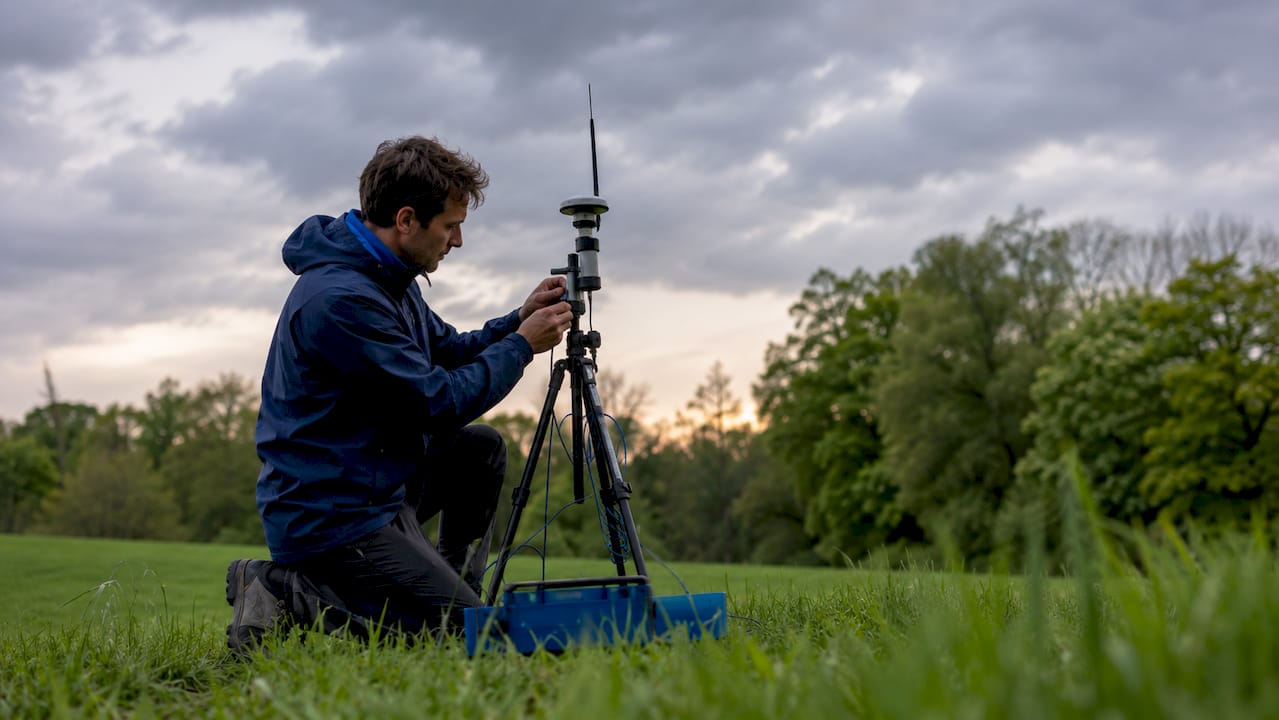
Ground-based electric field detectors, known as E-field sensors, monitor changes in atmospheric electrostatic charge as a thunderstorm develops. This is the only detector category that provides genuine pre-strike warnings. Because E-field sensors read the charge buildup that precedes a lightning stroke, they can alert personnel before the first bolt reaches the ground.
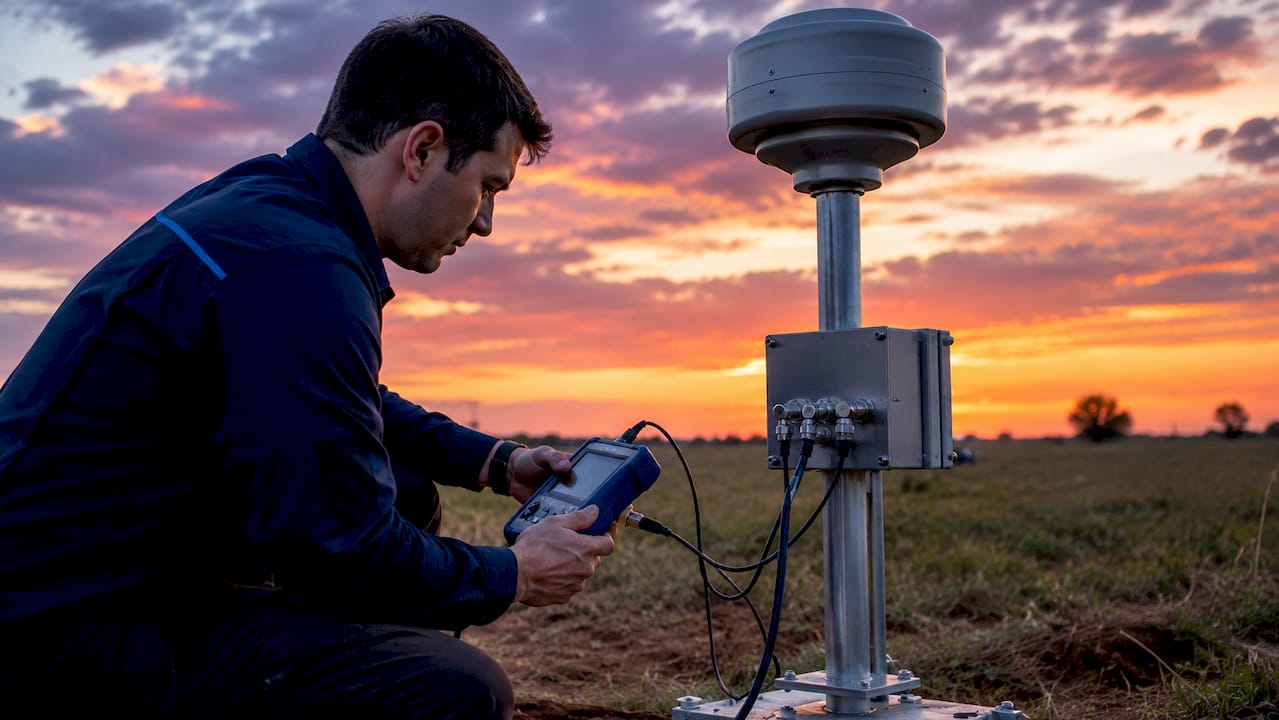
Professional lightning detection systems are categorized by sensing method: E-field, magnetic field, or combined systems that merge both to improve accuracy and reduce false alarms. The Campbell Scientific LW110 is a widely deployed example. It issues first strike warnings within a 7-mile radius based on continuous electric field measurement, giving safety officers a meaningful lead time to clear outdoor areas before a strike occurs.
E-field detectors from manufacturers such as Biral and Boltek cover short to medium ranges. Boltek’s short-range units provide coverage up to 24 miles with sub-mile accuracy, while their long-range models extend beyond 300 miles for advance storm notice. Range class must match your site footprint and the lead time your safety protocol requires.
Key capabilities of E-field detectors:
- Pre-strike atmospheric warning before the first return stroke
- Configurable alarm thresholds for site-specific risk tolerance
- Suitable for airports, golf courses, construction sites, and outdoor events
- Compact, fixed installation with low maintenance overhead
Pro Tip:Set your E-field alarm threshold conservatively during commissioning. An overly sensitive threshold generates nuisance alerts; an overly permissive one defeats the purpose of early warning. Work with your installer to calibrate against local storm climatology.
2. Magnetic field detectors and how they locate strikes
Magnetic field detectors, or H-field sensors, measure the electromagnetic pulse generated by a lightning return stroke. Unlike E-field sensors, they do not detect pre-strike conditions. They detect the stroke itself, which means they are optimized for precise strike location rather than early warning.
H-field sensors are the backbone of large-scale lightning detection networks. When multiple sensors receive the same electromagnetic pulse, time-of-arrival triangulation calculates the strike’s ground position. The National Lightning Detection Network (NLDN) uses this method across 187 or more sensors in the United States, achieving ±84 meters location accuracy and classifying lightning type with 95% precision. That level of accuracy is critical for post-event analysis, insurance documentation, and infrastructure damage assessment.
The trade-off is timing. Detection timing differences matter operationally: H-field systems detect electromagnetic pulses after strokes occur, while E-field systems sense atmospheric conditions before strokes happen. For sites where personnel must be cleared minutes in advance, H-field networks alone are insufficient.
3. Combined E-field and H-field systems
Combined systems integrate both sensing methods into a single platform, delivering the pre-strike warning capability of E-field measurement alongside the strike-location precision of H-field triangulation. This architecture reduces false alarms because the system can cross-validate atmospheric charge anomalies against actual stroke detections.
Biral’s sensor line and several industrial-grade platforms from specialized manufacturers offer this combined approach. For highly sensitive installations such as petrochemical plants, data centers, or military facilities, combined systems represent the professional standard. The additional cost is justified when a false negative carries catastrophic consequences and a false positive triggers costly operational shutdowns.
4. Mobile lightning detection systems
Mobile lightning detection systems use co-located direction and sense antennas mounted on a single platform, typically an aircraft or research vehicle, to provide real-time lightning detection during movement. The co-location of antennas is what distinguishes mobile systems from fixed networks, which rely on geographically separated sensors for triangulation.
Aviation is the primary use case. Onboard storm detectors give flight crews direct awareness of convective activity along their route without dependence on ground network data links. Field research teams, mobile command units, and outdoor event safety coordinators also deploy portable lightning detectors in vehicle-mounted configurations.
Operational characteristics of mobile systems:
- Self-contained detection without reliance on external network infrastructure
- Direction-finding capability from a single location
- Lower absolute accuracy than multi-sensor triangulation networks
- Effective for real-time situational awareness rather than precise strike mapping
The limitation is geometric. A single sensor location cannot triangulate a strike position with the same accuracy as a network of three or more sensors. Mobile systems tell you a storm is close and its approximate bearing. They do not tell you a strike landed at a specific GPS coordinate with sub-100-meter precision.
5. Space-based lightning detectors: satellite optical sensors
Space-based lightning detection uses optical sensors aboard geostationary satellites to detect the light pulse emitted by a lightning channel. NOAA’s Geostationary Lightning Mapper (GLM) aboard GOES-16 and GOES-19 operates from 35,786 km altitude, using a near-infrared filter at 777.4 nm to isolate the atomic oxygen emission specific to lightning channels. This approach detects both cloud-to-ground and intra-cloud flashes continuously across the entire Western Hemisphere.
The coverage advantage is unmatched. GLM monitors oceans, mountain ranges, and remote regions where no ground sensor network exists. For national meteorological agencies, offshore energy operators, and transoceanic aviation, this fills a critical gap.
Detection efficiency, however, varies with solar conditions. GLM detection efficiency peaks above 90% at night and drops to approximately 70% during daytime due to solar background interference. The system uses background subtraction algorithms to compensate, but daytime performance remains lower than nighttime.
| Feature | GLM (Space-Based) | NLDN (Ground-Based) |
|---|---|---|
| Coverage area | Western Hemisphere | Continental U.S. |
| Detection type | Cloud-to-ground + intra-cloud | Primarily return strokes |
| Location accuracy | Regional (kilometers) | ±84 meters |
| Daytime efficiency | ~70% | Not affected by solar conditions |
| Nighttime efficiency | >90% | Not affected by solar conditions |
| Best use case | Broad regional monitoring | Precise strike location |
Pro Tip:Never use GLM data alone for site-level safety decisions. Satellite optical data confirms storm presence and tracks convective development across large regions. For personnel protection at a specific facility, you need a ground-based sensor with local strike-location or pre-strike warning capability.
6. Comparing major lightning detection networks
The two most referenced ground-based networks in North America are NLDN and Earth Networks’ ENTLN. They represent opposite ends of the precision-versus-sensitivity spectrum, and understanding that trade-off is central to selecting the right lightning detection system for your application.
NLDN prioritizes accuracy. Its 187-plus sensors are tuned to return stroke signals, producing precise location data and reliable lightning type classification. The network is the standard reference for utility companies, aviation authorities, and forensic lightning analysis.
Earth Networks ENTLN uses more than 1,800 sensors worldwide tuned to faint in-cloud signals. This sensitivity enables earlier storm detection because in-cloud activity precedes ground strikes by several minutes. The trade-off is more noise and less precise event classification compared to NLDN. For outdoor event managers or school district safety officers who need maximum lead time, ENTLN’s sensitivity is an asset. For engineers documenting strike locations for infrastructure analysis, NLDN’s precision is the priority.
Different lightning detection networks interpret “events” differently, which directly affects dashboards, historical logs, and alert justification in safety applications. An ENTLN alert and an NLDN alert for the same storm may show different event counts. Safety officers must understand which network their platform uses before writing alarm protocols into standard operating procedures.
7. Choosing the right lightning detector type for your site
Matching detector type to operational need is a decision framework, not a product selection exercise. Start with three questions: What is your site footprint? What lead time does your safety protocol require? What level of location accuracy do you need for post-event analysis?
Small sites under one square mile with personnel safety as the primary concern should prioritize local E-field detectors. The Campbell Scientific LW110 or a Biral fixed sensor provides the pre-strike warning that networked H-field systems cannot. Large industrial complexes, airports, or multi-site operations benefit from integration with a strike-location network like NLDN, supplemented by on-site E-field sensors for early warning. For remote or offshore assets, GLM satellite data provides the only viable continuous monitoring option, though it must be paired with ground sensors when personnel are present.
Alarm verification and threshold tuning often distinguish professional lightning detectors more than hardware features alone. Operational settings must be tailored to your risk workflows and compliance requirements. A detector that triggers a facility-wide shutdown at the first atmospheric anomaly will be disabled by frustrated operators within weeks. One calibrated to your specific storm climatology and integrated with your facility control system will be used correctly every time.
Pro Tip:For highly sensitive sites such as ammunition storage, fuel terminals, or critical data infrastructure, consult Indelec’s sensitive site design examples before specifying a detection system. The integration between detection, protection, and grounding must be designed as a single system, not assembled from separate vendor catalogs.
For sites subject to regulatory compliance, review the applicable lightning protection standards before finalizing your detector specification. Standards such as IEC 62305 define risk assessment methodologies that directly influence which detector category and coverage radius your site legally requires.
Key takeaways
The most effective lightning detection strategy combines an E-field sensor for pre-strike warning with a networked strike-location system for post-event analysis, scaled to site size and integrated with facility safety controls.
| Point | Details |
|---|---|
| E-field sensors give pre-strike warning | Only E-field detectors sense atmospheric charge buildup before a stroke occurs. |
| H-field networks deliver location precision | NLDN achieves ±84 meters accuracy by triangulating electromagnetic pulses across 187+ sensors. |
| Space-based GLM fills remote coverage gaps | GLM monitors the Western Hemisphere continuously but drops to ~70% efficiency in daytime conditions. |
| Network choice shapes alert logic | NLDN and ENTLN count events differently, which directly affects alarm thresholds and safety protocols. |
| Alarm calibration determines real-world value | Threshold tuning and system integration matter more than sensor hardware for operational effectiveness. |
Indelec’s perspective on detection technology in 2026
After nearly seven decades working on lightning protection across industrial, infrastructure, and sensitive-site applications, the pattern we see most often is this: organizations invest in detection hardware and underinvest in integration. A well-specified E-field sensor connected to nothing but a local alarm light is not a safety system. It is a data point.
The shift we are watching in 2026 is the move toward detection systems that feed directly into facility management platforms, triggering automated responses rather than relying on a human to see an alert and act. IoT-connected sensors feeding AI-driven analytics platforms are beginning to appear in high-end industrial deployments. The technology is real, but the operational discipline to configure it correctly remains the limiting factor.
One thing we consistently tell clients: do not let the satellite data fool you into thinking you have local coverage. GLM is a superb tool for regional storm tracking and offshore monitoring. It is not a substitute for a calibrated ground sensor at your facility perimeter. The two systems answer different questions, and both questions matter.
The other underappreciated factor is interpreting lightning strike data correctly once you have it. Raw detection output without trained interpretation leads to either alarm fatigue or missed events. Invest in training your safety officers to read what the system is actually telling them.
— Indelec
Protect your site with Indelec’s lightning protection solutions

Detection tells you a storm is coming. Protection determines whether your infrastructure survives it. Indelec’s Prevectron3 air terminal uses patented OptiMax technology to provide reliable, eco-friendly strike interception for industrial and commercial sites worldwide. Backed by Indelec’s R&D center and more than 65 years of field experience, the Prevectron3 integrates with grounding systems and detection networks to form a complete protection architecture. Whether you are specifying a new installation or auditing an existing system, Indelec’s technical team provides risk assessment and installation services aligned with IEC 62305 and international standards. Contact Indelec to discuss your site’s detection and protection requirements.
FAQ
What are the main types of lightning detectors?
The main types are ground-based electric field (E-field) sensors, magnetic field (H-field) sensors, combined E/H systems, mobile detectors, and space-based optical sensors aboard satellites like GOES-16 and GOES-19.
How do electric field lightning detectors work?
E-field detectors continuously measure changes in atmospheric electrostatic charge caused by storm development, issuing pre-strike warnings before the first return stroke reaches the ground.
What is the most accurate lightning detection network?
NLDN is the most precise ground-based network in North America, achieving ±84 meters location accuracy and 95% lightning type classification precision using time-of-arrival triangulation across 187 or more sensors.
Can satellite lightning detectors replace ground-based systems?
No. NOAA’s GLM provides continuous hemispheric coverage but drops to approximately 70% detection efficiency during daytime and cannot deliver the local strike timing or pre-strike warning that ground sensors provide for personnel safety.
What detector type is best for outdoor event safety?
E-field detectors or total lightning networks like Earth Networks ENTLN are best for outdoor events because both prioritize early warning over precise strike location, giving safety teams the lead time needed to clear crowds before a storm arrives.