3 SPD Types French Installers Must Coordinate Under UTE C 15-443
UTE C 15-443 is the French technical guide governing selection and installation of surge protective devices (SPDs) in low-voltage electrical installations, covering both atmospheric and switching overvoltages. It works alongside NF C 15-100, which sets the actual mandatory triggers for SPD fitment. Start by checking whether your building carries an external lightning protection system or falls under a specific NF C 15-100 clause; if neither applies, run a risk assessment using the guide’s own criteria before deciding.
TL;DR:
- Most installations with overhead supply lines or high local thunderstorm activity must have a Type 1 SPD at the service entrance to comply with NF C 15-100.
- Risk assessments should consider building height, location, supply configuration, and critical equipment value to determine if SPD installation is necessary where thresholds are not mandated.
- Cascading SPDs require correct coordination of impulse current, discharge current ratings, and voltage protection levels to prevent insufficient surge clipping.
- Proper installation demands short wiring, unified bonding, and careful earthing resistance measurement to ensure SPD effectiveness against lightning and switching overvoltages.
- Regular inspection and maintenance, including recording device parameters and earthing quality, are essential to validate ongoing compliance and performance.
Table of Contents
- What UTE C 15-443 Covers and How It Relates to NF C 15-100
- When SPDs Are Mandatory Versus When You Need a Risk Assessment
- Choosing the Right SPD: Types, Ratings, and Cascade Coordination
- Installation Rules That Actually Protect the Building
- Documentation and Testing That Satisfy AFNOR and CONSUEL Expectations
- What Indelec Has Learned Applying This Guide to Complex Sites
- How Indelec Supports UTE C 15-443 Compliance From Assessment to Certification
- Standards, Guides, and Training Worth Keeping on File
- Sources
- FAQ
What UTE C 15-443 Covers and How It Relates to NF C 15-100
The guide addresses protection of low-voltage electrical installations against overvoltages caused by atmospheric discharges and switching events. It focuses on selection and erection of SPDs rather than the broader wiring rules that govern an installation.
In practice, UTE C 15-443 is advisory technique layered on top of NF C 15-100’s binding requirements. NF C 15-100 tells you when an SPD must be fitted; UTE C 15-443 tells you which one and how to install it. Engineers working in France should keep both documents on hand, along with EN/IEC 61643-11, the product standard that governs SPD construction and test classification. The official French text is sold through AFNOR’s catalog, and it’s worth buying the current edition rather than relying on older PDF excerpts circulating online, since table references and application tables have been refined over successive editions.

When SPDs Are Mandatory Versus When You Need a Risk Assessment
NF C 15-100 forces the issue in a handful of well-defined cases. Outside those, the decision falls to a risk assessment, and that’s where most facility managers get tripped up, either over-specifying protection nobody needed or skipping it where it mattered.
SPD fitment becomes mandatory under NF C 15-100 when:
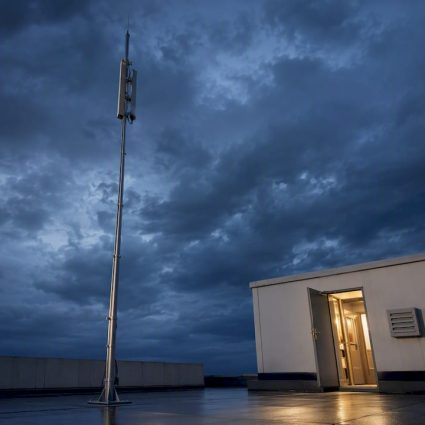
- An external lightning protection system (LPS) is present on the building, in which case a Type 1 SPD is required at the service entrance.
- The installation feeds sensitive or safety-critical circuits (medical premises, fire safety systems, certain public buildings).
- The supply line is partly or fully overhead, exposing the installation directly to induced surges.
- Local keraunic level (Nk), a measure of thunderstorm-day frequency, exceeds thresholds practitioners commonly treat as the point where risk outweighs the cost of protection.
Where none of these apply, UTE C 15-443 recommends a structured risk assessment: estimate exposure based on building height, location, supply configuration, and the value or criticality of connected equipment, then weigh that against installation cost. Formapelec’s training on applying the guide to specific cases like exterior lighting is a useful reference for anyone doing this calculation for the first time.
Choosing the Right SPD: Types, Ratings, and Cascade Coordination
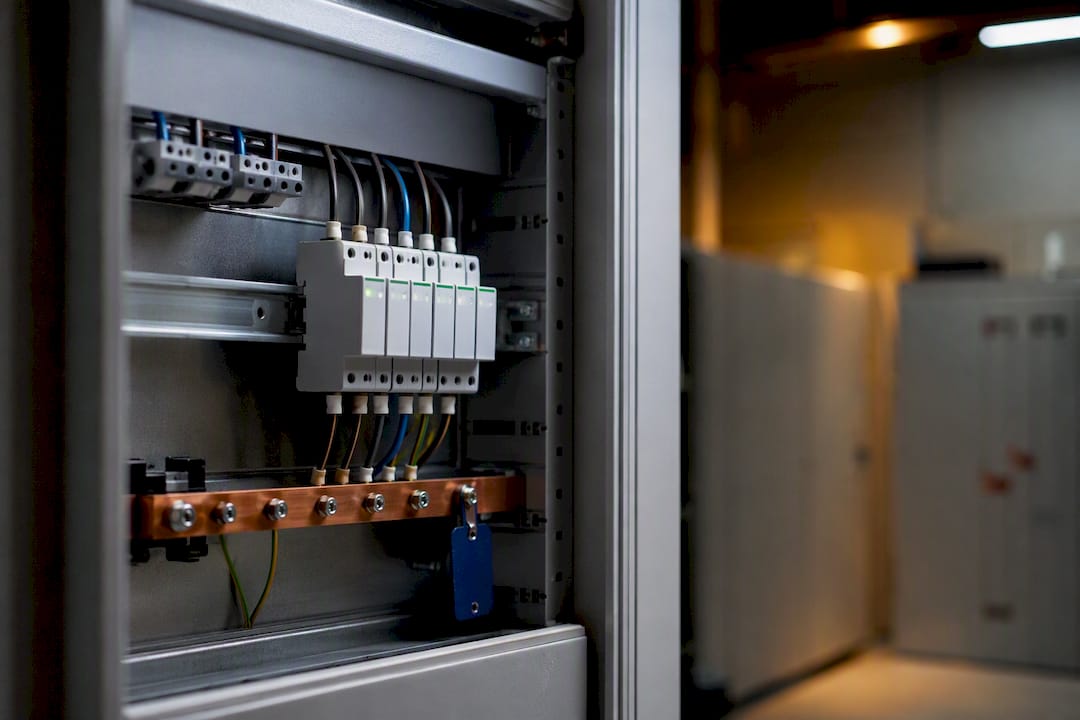
Three SPD types do different jobs, and mixing them up is the most common specification error in the field. Type 1 handles the massive current from a direct or near-direct lightning strike and sits at the service entrance, typically right after the meter. Type 2 protects the distribution board against residual and induced surges. Type 3 sits close to sensitive terminal equipment, cleaning up whatever gets through the first two stages.
The numbers on the datasheet matter more than the type label alone:
- Iimp (impulse current, in kA) applies to Type 1 devices and reflects the discharge current from a direct strike, typically rated 12.5kA to 25kA per pole depending on exposure.
- In (nominal discharge current) describes the repetitive surge a Type 2 device is built to handle without degrading, commonly 5kA to 20kA.
- Imax gives the maximum surge current the device survives once without necessarily surviving a repeat hit.
- Up (voltage protection level) is the residual voltage let through during a surge. Lower Up means better protection, but it must stay coordinated with the withstand voltage of downstream equipment.
Cascade coordination ties all three together: a Type 1 with a high Up left uncoordinated with a Type 2 downstream can let a surge through both stages unclipped. Manufacturer coordination tables exist for exactly this reason, and checking them against your specific device pairing takes minutes but prevents an expensive failure.
Pro Tip:Never size an SPD in isolation from the rest of the cascade. A perfectly rated Type 2 installed downstream of an incompatible Type 1 can leave a voltage gap that both devices miss entirely.
Installation Rules That Actually Protect the Building
An SPD only performs as well as its connections. Long, looping leads between the device and the busbar add inductance, and inductance adds voltage drop exactly when you need it least, during the microsecond spike of a surge.
The guide’s installation logic rests on a few non-negotiables:
- Keep connecting leads as short as physically possible to minimize inductance and voltage drop between the SPD and the protected busbar.
- Bond all equipotential connections at a single reference point near the SPD, not scattered across the enclosure.
- Where an external LPS exists, coordinate the SPD earth connection with the building’s main earthing terminal to avoid dangerous potential differences between systems.
- Route SPD conductors away from parallel runs with sensitive signal cables to limit induced coupling.
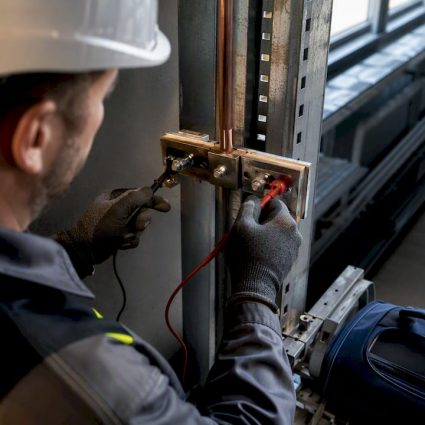
- Record cable lengths, earthing resistance readings, and torque values for every termination at commissioning.
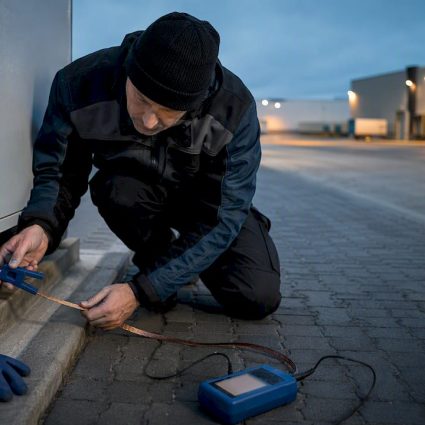
Earthing resistance is the detail most often glossed over on site, yet it drives whether the SPD’s clamped voltage actually stays low relative to local ground. A complete facility guide to surge protection installation walks through how earthing quality changes SPD performance across different building types, and it’s worth reviewing before finalizing layout on any installation with an existing LPS.
Documentation and Testing That Satisfy AFNOR and CONSUEL Expectations
CONSUEL inspectors and internal auditors both want the same paper trail: proof that the SPD installed matches the standard cited, and proof it was tested at commissioning.
Keep the following on file for every SPD installation:
- The EN/IEC 61643-11 product certificate for each device, confirming its type classification and rated parameters.
- Manufacturer installation instructions and coordination tables used to justify the cascade design.
- A commissioning record showing continuity checks, earthing resistance measurements, and visual inspection of connections.
- Periodic inspection logs, since SPDs degrade with repeated surge events and status indicators need checking on a schedule, not just at installation.
If a client or insurer questions compliance after a lightning event, an independent test report or certified product documentation carries far more weight than a manufacturer’s marketing sheet. Building that habit into every project file saves disputes later.
What Indelec Has Learned Applying This Guide to Complex Sites
Risk assessment on paper and risk assessment on a live industrial site rarely match. Design teams routinely find that the theoretical Nk-based calculation undersells exposure at sites with multiple metal structures, overhead supply runs, or dense EV charging infrastructure, where induced surges travel through unexpected paths.
For control rooms and EV charging hubs, the deciding factor usually isn’t the SPD type at all. It’s whether the earthing system was designed as one coordinated network or bolted together after the fact. A coordinated SPD cascade paired with deep earthing measures tends to outperform a higher-spec device sitting on a weak ground reference. That’s the pattern worth remembering before specifying anything from a datasheet alone.
— INDELEC
How Indelec Supports UTE C 15-443 Compliance From Assessment to Certification
The parts of this process that are hardest to get right alone include exposure assessment, SPD cascade design, installation, and the testing that produces a defensible compliance record.

Contact Indelec if any of these apply to your site: an external LPS already installed and needing a coordinated Type 1 at the service head, a high local keraunic level that pushes past the comfortable risk-assessment threshold, an EV charging installation where induced surges travel through unfamiliar paths, or a post-strike inspection where you need documented proof of what failed and why. Indelec’s risk assessment, installation, and maintenance services cover the full sequence from initial exposure calculation through certified commissioning records, and its work on external lightning protection system application ties directly into how SPD cascades get earthed and coordinated on real buildings. Reach out for a site assessment before your next SPD specification, rather than after an incident forces the question.
Standards, Guides, and Training Worth Keeping on File
- The UTE C15-443 standard text, purchased directly through AFNOR’s catalog for the current edition.
- NF C 15-100 and EN/IEC 61643-11 for the mandatory-fitment clauses and product classification rules respectively.
- Formapelec’s application training for hands-on guidance applying the guide to specific installation types.
- For sites involving photovoltaic arrays, cross-check against UTE C 15-712-1, since PV installations carry their own SPD placement logic layered on the same base principles.
Sources
- UTE C15-443 (guide PDF excerpt)
- Application du Guide Technique UTE C 15-443 — Formapelec training
- NF C 15-100 electrical installation guide (reference excerpt)
FAQ
Is UTE C 15-443 Legally Binding in France?
UTE C 15-443 is a technical guide, not a binding regulation on its own; mandatory SPD fitment comes from NF C 15-100, and the guide tells you how to implement that requirement correctly.
Do I Need an SPD if My Building Has No External Lightning Rod?
Not automatically. Without an external LPS or another NF C 15-100 trigger, fitment is decided through a risk assessment weighing keraunic level, supply configuration, and equipment sensitivity.
What’s the Difference Between Type 1 and Type 2 SPDs?
Type 1 handles direct-strike current at the service entrance, rated in Iimp; Type 2 protects the distribution board against residual surges, rated in nominal discharge current (In).
How Often Should Installed SPDs Be Inspected?
Periodic inspection should follow manufacturer guidance and check the device’s status indicator, since repeated surge events degrade SPD components even without visible failure.
Where Can I Get Help Assessing Whether My Site Needs an SPD Upgrade?
Indelec’s lightning protection services cover site risk assessment and cascade design for facilities uncertain whether their current SPD setup meets current exposure levels.