The Role of Lightning Protection Coordinator Explained

TL;DR:
- A lightning protection coordinator manages every phase of a system, from risk assessment to long-term maintenance, for full compliance. They ensure standards like IEC 62305 and NFPA 780 are properly applied, and coordinate with multidisciplinary teams to maintain system integrity. Their ongoing role includes inspections, updates, and training to prevent failures and protect facilities effectively.
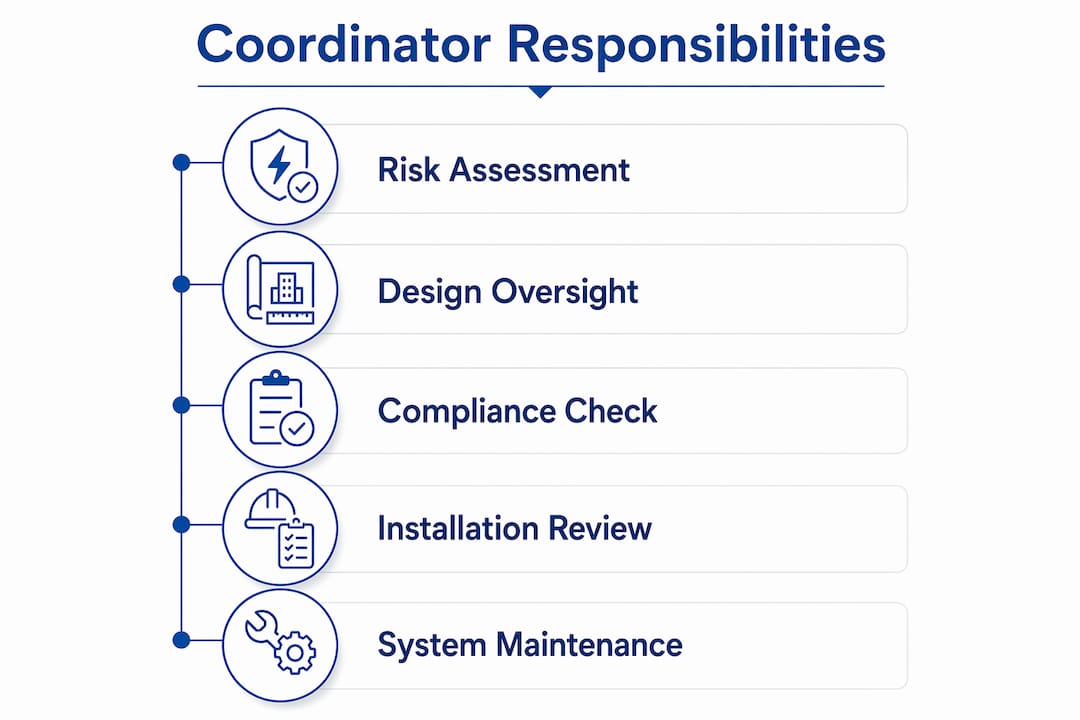
A lightning protection coordinator is defined as the qualified professional responsible for overseeing every phase of a lightning protection system, from initial risk assessment through installation, compliance verification, and long-term maintenance. This role sits at the intersection of engineering, project management, and regulatory compliance. Standards like IEC 62305 and NFPA 780 form the technical backbone of the coordinator’s work, providing the frameworks that govern system design and protection levels. Without this function, infrastructure safety programs lack the single point of accountability needed to translate complex standards into compliant, functioning systems.
What are the core responsibilities of a lightning protection coordinator?
The lightning protection coordinator holds responsibility for every decision that affects system integrity, from component selection to final sign-off. This is not a purely technical role. It combines engineering judgment, contractor oversight, and documentation discipline in equal measure.
The core duties break down as follows:
- Conduct or oversee lightning risk assessments. The coordinator applies IEC 62305-2 or NFPA 780 to quantify annual probabilities of dangerous events, integrating local ground flash density and structural parameters into a site-specific protection plan.
- Determine the required lightning protection level (LPL). Each LPL drives specific design requirements for air terminals, down conductors, and grounding systems. The coordinator selects the appropriate level based on risk calculation outputs.
- Coordinate with engineers, technicians, and contractors. The coordinator acts as the central communicator, managing budgets, timelines, and compliance reporting across all project phases.
- Specify and verify certified components. All air terminals, conductors, clamps, and grounding electrodes must comply with IEC 62561. Substituting unrated components compromises system integrity and voids compliance.
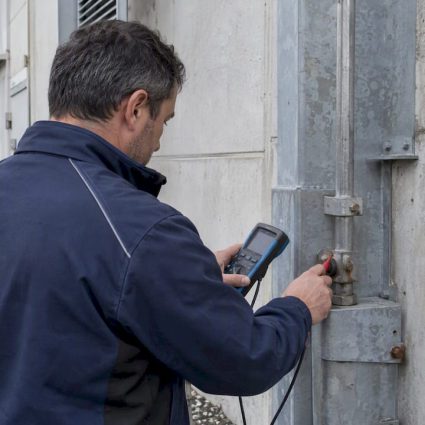
- Monitor ongoing maintenance and compliance checks. Scheduled inspections verify that ground resistance stays below 10 ohms and that all components remain structurally sound.
- Maintain installation files and documentation. Complete records support future audits, insurance claims, and system updates.
Pro Tip:Assign a single coordinator to each project from the risk assessment phase onward. Handing off coordination mid-project is the most common cause of documentation gaps and compliance failures.
How does a lightning protection coordinator manage risk assessment and compliance?

Risk assessment is the foundation of every compliant lightning protection system. The coordinator does not simply check boxes. They build a quantitative case for the protection level the site requires.
The IEC 62305-2 framework calculates risk by combining the local ground flash density, the structure’s physical dimensions, its use, and the consequences of a strike. The result is an annual probability of loss that the coordinator compares against tolerable risk thresholds. This calculation-based framework provides technical justification for every design decision, which is critical when presenting to regulators or insurers.
The coordinator must also understand where IEC 62305 and NFPA 780 diverge. IEC 62305 suits complex, high-risk structures where a site-specific risk calculation is warranted. NFPA 780 offers practical rules for conventional buildings, providing prescriptive installation guidance without requiring a full probabilistic analysis. Coordinators working across international projects must be fluent in both.
The steps in a structured risk assessment process follow this sequence:
- Gather site data. Collect ground flash density maps, structural drawings, occupancy type, and contents classification.
- Apply the IEC 62305-2 formula. Calculate the annual number of dangerous events and the corresponding risk values for each loss category.
- Select the protection level. Match the calculated risk to the appropriate LPL, which sets the interception efficiency and component specifications.
- Document the assessment. Record all inputs, calculations, and conclusions. Digital tools store this data permanently linked to the responsible engineer and the assessment date.
- Review and update. Reassess whenever the structure changes, occupancy shifts, or updated ground flash density data becomes available.
The table below shows how the two primary standards compare across key assessment dimensions:
| Dimension | IEC 62305 | NFPA 780 |
|---|---|---|
| Approach | Risk-based, calculation-driven | Prescriptive, rule-based |
| Best suited for | Complex, high-risk structures | Conventional buildings |
| Output | Site-specific LPL and system specs | Standardized installation requirements |
| Documentation depth | Extensive quantitative records | Design compliance checklists |
What technical and coordination skills does a lightning protection coordinator need?
Technical knowledge alone does not make an effective coordinator. The role demands a specific combination of engineering literacy, standards fluency, and people management.
The key competencies include:
- System component knowledge. The coordinator must understand how air terminals, down conductors, grounding systems, and surge protective devices function as an integrated network. A lightning protection system is a three-pillar structure built on interception, conduction, and dissipation. Failure in any one pillar cannot be compensated by the others.
- Standards fluency. Coordinators must work confidently with IEC 62305, NFPA 780, IEC 62561, and UL 96A. Each standard governs a different aspect of system design or component certification.
- Multidisciplinary team coordination. The coordinator interfaces with structural engineers, electrical contractors, facility managers, and insurers. Clear communication across these groups prevents specification errors from reaching the installation phase.
- Project management. Budgeting, scheduling, and milestone tracking are daily tasks. Coordinators who lack project management discipline create cost overruns and compliance gaps.
- Inspection and testing capability. The coordinator must be able to conduct or interpret ground resistance tests, continuity checks, and visual inspections of all system components.
- Training and reporting skills. Facility staff need to understand lightning safety awareness. The coordinator translates technical requirements into practical guidance for non-specialist personnel.
Pro Tip:Build your standards library before you need it. Coordinators who wait until a project starts to read IEC 62305-2 lose critical time during the risk assessment phase. Treat standards review as ongoing professional development, not project preparation.
Why is the lightning protection coordinator vital in infrastructure safety management?
The coordinator’s value is not limited to technical compliance. Their presence determines whether a lightning protection system actually protects the facility or merely appears to.
A properly coordinated system addresses both external and internal threats. The external lightning protection system intercepts and conducts the strike current safely to ground. Surge protective devices then suppress the transient overvoltages that propagate through electrical and data lines inside the building. IEC 62305-4 mandates SPD installation alongside external protection for exactly this reason. Without a coordinator tracking both layers, facilities routinely install external systems and leave internal equipment unprotected.
“Lightning protection is often misunderstood as merely installing rods. In reality, it requires engineering a full system where detail and standard compliance across all components are essential.”
The coordinator also reduces legal and financial exposure. Documented risk assessments and compliance records demonstrate due diligence to insurers and regulators. When a strike event occurs, facilities with complete coordinator-maintained documentation recover faster and face fewer liability disputes. The coordinator’s role in building lightning safety is therefore as much about business continuity as it is about physical protection.
How does a lightning protection coordinator keep systems effective over time?
A lightning protection system installed to specification on day one will degrade without structured oversight. The coordinator’s ongoing duties are as demanding as the initial design work.
Routine responsibilities include:
- Scheduled inspections. Ground resistance must stay below 10 ohms. Visual checks confirm that conductors, clamps, and air terminals remain mechanically intact and free of corrosion.
- Triggered reassessments. Any structural modification, change in occupancy, or addition of sensitive equipment requires a fresh risk evaluation under IEC 62305-2.
- Documentation updates. Every inspection, test result, and component replacement must be recorded. Digital tools that link records to specific engineers and dates make this audit trail reliable and retrievable.
- Staff training. Facility personnel need periodic refreshers on lightning safety protocols, evacuation procedures, and the limits of the installed system.
- Standards monitoring. IEC and NFPA update their standards on regular cycles. The coordinator tracks revisions and determines when system upgrades are required to maintain compliance.
Pro Tip:Schedule your annual inspection before the peak lightning season in your region. Catching a corroded ground connection or a loose conductor clamp before the season starts costs a fraction of what post-strike repairs demand.
Integrating IEC 62305 risk-based assessments with NFPA 780 practical standards enables cost-effective protection tailored to site complexity. Coordinators who treat maintenance as a continuous program rather than a reactive task consistently deliver better long-term outcomes.
Key takeaways
The lightning protection coordinator is the single professional accountable for translating IEC 62305 and NFPA 780 requirements into a fully compliant, continuously maintained system that protects both structure and equipment.
| Point | Details |
|---|---|
| Central accountability | One coordinator must own the project from risk assessment through long-term maintenance. |
| Standards fluency | Coordinators must apply IEC 62305, NFPA 780, IEC 62561, and UL 96A across different project phases. |
| Internal and external protection | SPDs under IEC 62305-4 are mandatory alongside external systems to protect electrical equipment. |
| Documentation discipline | Complete records of assessments, inspections, and component changes support compliance and reduce liability. |
| Continuous reassessment | Any structural or occupancy change triggers a new risk evaluation to maintain system validity. |
What Indelec has learned about lightning coordination in practice
After nearly seven decades working on lightning protection projects across industrial, commercial, and infrastructure sectors, the pattern that causes the most preventable failures is clear: coordination is treated as a phase rather than a function. Teams bring in a coordinator to sign off on a design, then move on. The system gets installed, the file gets closed, and nobody owns what happens next.
The coordinators who deliver lasting results treat their role as permanent. They stay engaged through the first inspection cycle, they track standards updates, and they build relationships with facility managers who will call them when something looks wrong. That ongoing presence is what separates a compliant system from a safe one.
The other consistent gap is internal protection. External lightning rods get specified correctly. SPD coordination gets deferred, delegated to an electrician who is not reading IEC 62305-4, and the result is a facility that survives a direct strike but loses its server room to a transient overvoltage. The coordinator’s job is to prevent exactly that outcome by owning the full system, not just the visible parts on the roof.
The future of this role will require more data literacy. Digital risk assessment tools are already changing how assessments are documented and updated. Coordinators who build competency in these platforms now will be better positioned as standards continue to evolve.
— Indelec
Indelec’s professional lightning protection services
Indelec has been engineering compliant lightning protection systems since 1955, working across industrial facilities, commercial buildings, and critical infrastructure worldwide.

For infrastructure safety professionals, Indelec offers complete lightning protection solutions covering risk assessment, system design, certified component supply, installation supervision, and ongoing maintenance. Every engagement is grounded in IEC 62305 and NFPA 780 compliance, with full documentation maintained throughout the system’s life. Indelec’s technical consulting services support coordinators at every stage, from initial LPL determination to post-installation inspection programs. Contact Indelec to discuss your facility’s protection requirements with a specialist.
FAQ
What is the role of a lightning protection coordinator?
A lightning protection coordinator oversees all phases of a lightning protection system, including risk assessment, design specification, installation supervision, compliance verification, and ongoing maintenance. They serve as the single point of accountability for system integrity and standards compliance.
Which standards does a lightning protection coordinator apply?
Coordinators primarily apply IEC 62305 for risk-based assessment and system design, NFPA 780 for prescriptive installation guidance, IEC 62561 for component certification, and UL 96A for additional product compliance requirements.
What is the difference between a lightning protection coordinator and a lightning safety officer?
A lightning safety officer typically focuses on personnel safety protocols and evacuation procedures during lightning events. A lightning protection coordinator focuses on the engineering, installation, and compliance of the physical protection system itself.
How often should a lightning protection system be inspected?
Routine inspections should occur on a scheduled annual basis, with additional triggered reviews following any structural modification, occupancy change, or significant lightning event. Ground resistance must be verified to stay below 10 ohms during each inspection.
Why are surge protective devices part of the coordinator’s responsibilities?
IEC 62305-4 mandates that surge protective devices be installed alongside external lightning protection systems to suppress transient overvoltages inside buildings. Without coordinated SPD specification, electrical equipment remains vulnerable even when the external system functions correctly.