Protection for Port Facilities: A 2026 Security Guide
TL;DR:
- Protection for port facilities involves layered physical controls and procedural measures to defend against threats like terrorism and theft. Security roles are clearly assigned under the ISPS Code, requiring documented plans, trained personnel, and regular assessments, with safety and security systems integrated to prevent conflicts at emergency points. Human training and technology play crucial roles in maintaining effective security, with continuous drills and cybersecurity practices essential for resilience.
Protection for port facilities is defined as the coordinated set of physical barriers, procedural controls, and regulatory compliance measures that defend port infrastructure against terrorism, unauthorized access, cargo theft, and criminal activity. Port facility managers and security professionals operate within a framework anchored by the ISPS Code, which became mandatory for all 148 contracting parties to the SOLAS convention in 2004. That regulatory foundation assigns specific roles, requires documented security plans, and establishes three operational security levels that govern daily procedures. Understanding what is protection for port facilities means understanding how physical, procedural, and human elements work together as a single system.
What are the essential security measures for port facility protection?
Port facility protection relies on layered physical controls, not any single barrier. Each layer compensates for weaknesses in the others, so a breach at one point does not compromise the entire facility.
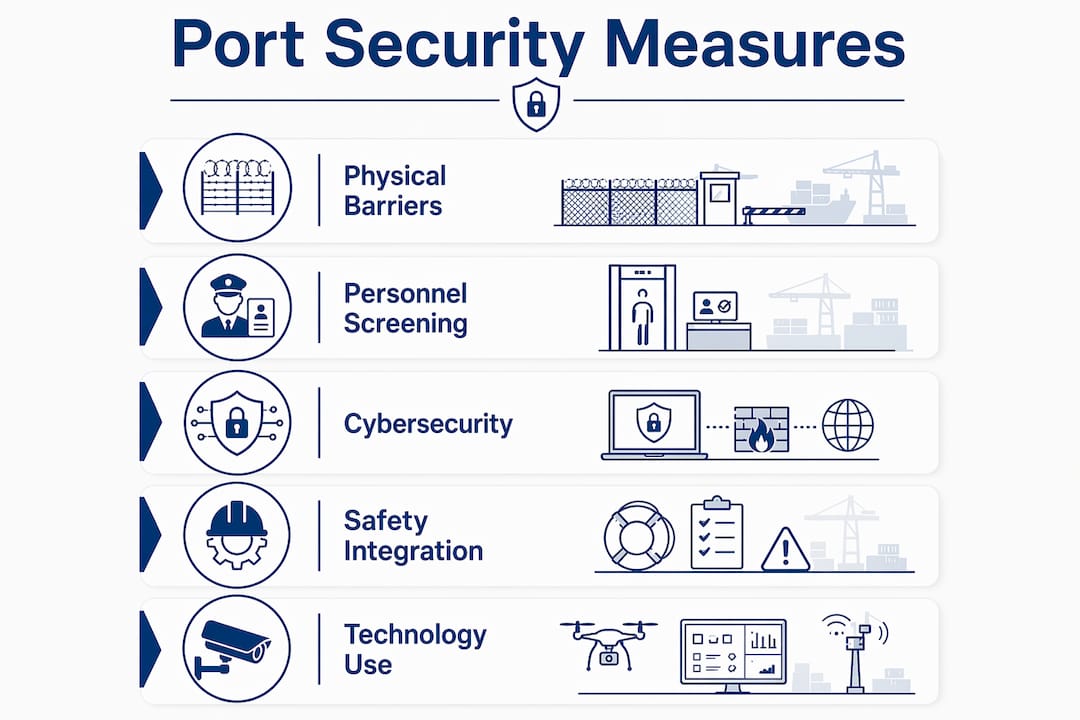
The core physical measures include:
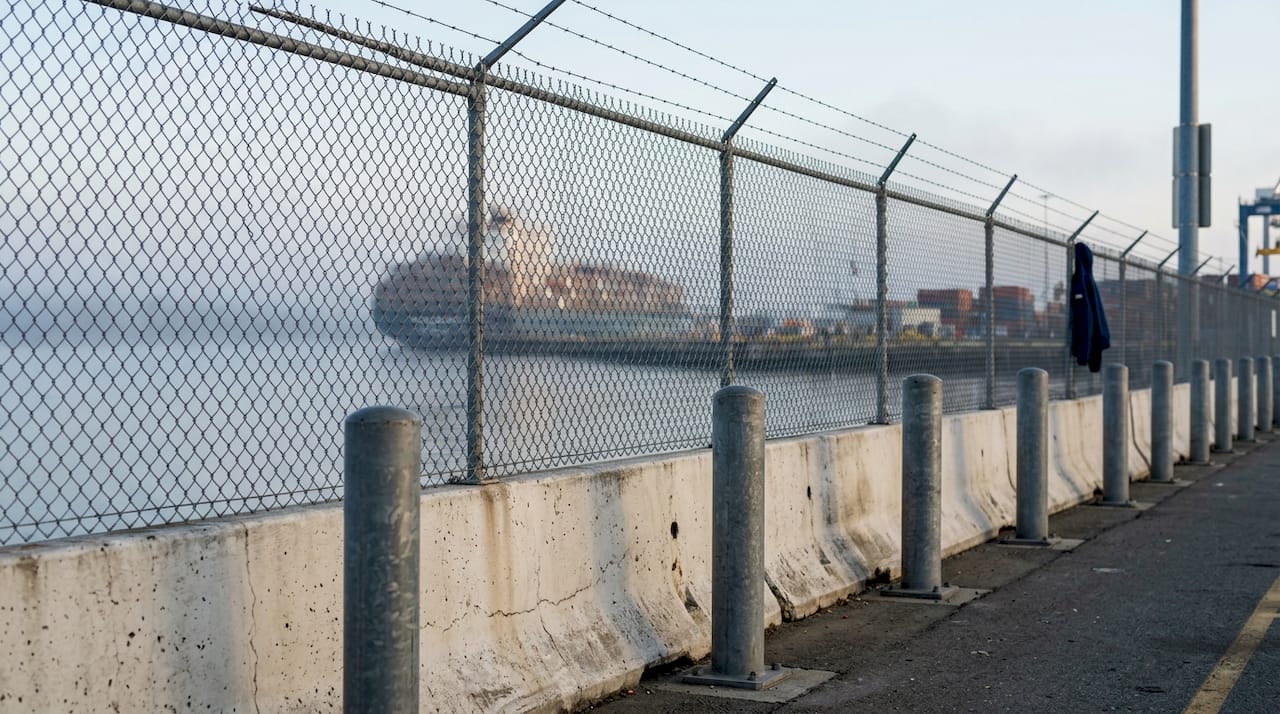
- Perimeter fencing and walls rated to delay forced entry, with no gaps at drainage points or utility crossings
- Access control systems using card readers, biometric verification, or staffed checkpoints at all vehicle and pedestrian entry points
- CCTV surveillance covering blind spots, container yards, and waterside berths with recorded footage retained for audit purposes
- Lighting at a minimum illumination level across all active and inactive areas, including seldom-used service roads
- Vehicle standoff protection using bollards and barriers rated to stop vehicle-borne threats at a defined standoff distance from critical assets
Industry guidance in 2025–2026 increasingly mandates bollards and standoff protection for critical assets. That shift reflects lessons from vehicle-ramming incidents at other critical infrastructure sites worldwide.
Personnel screening adds a procedural layer on top of the physical one. Every person entering a restricted zone requires verified identification, and visitor logs must be maintained and available for inspection. Cargo handling security extends this logic to goods: manifests are checked against physical loads, and sealed containers are inspected for tampering before release.
Cybersecurity for operational technology is the layer most facilities underinvest in. Physical perimeter security can be undermined by targeted cyber-attacks on operational technology networks, which means port operators must design segregated OT networks to prevent breaches through IT infrastructure. A surveillance camera system connected to an unsecured IT network is not a secure surveillance system.
Pro Tip:Conduct a physical walk-through of your perimeter at night. Lighting gaps, fence sag points, and camera blind spots are far easier to identify in low-light conditions than on a daytime site plan.
How do security roles and regulations shape port facility protection?
The ISPS Code assigns clear accountability at every level of port security. Without named, trained individuals in each role, compliance documents become paperwork without operational effect.
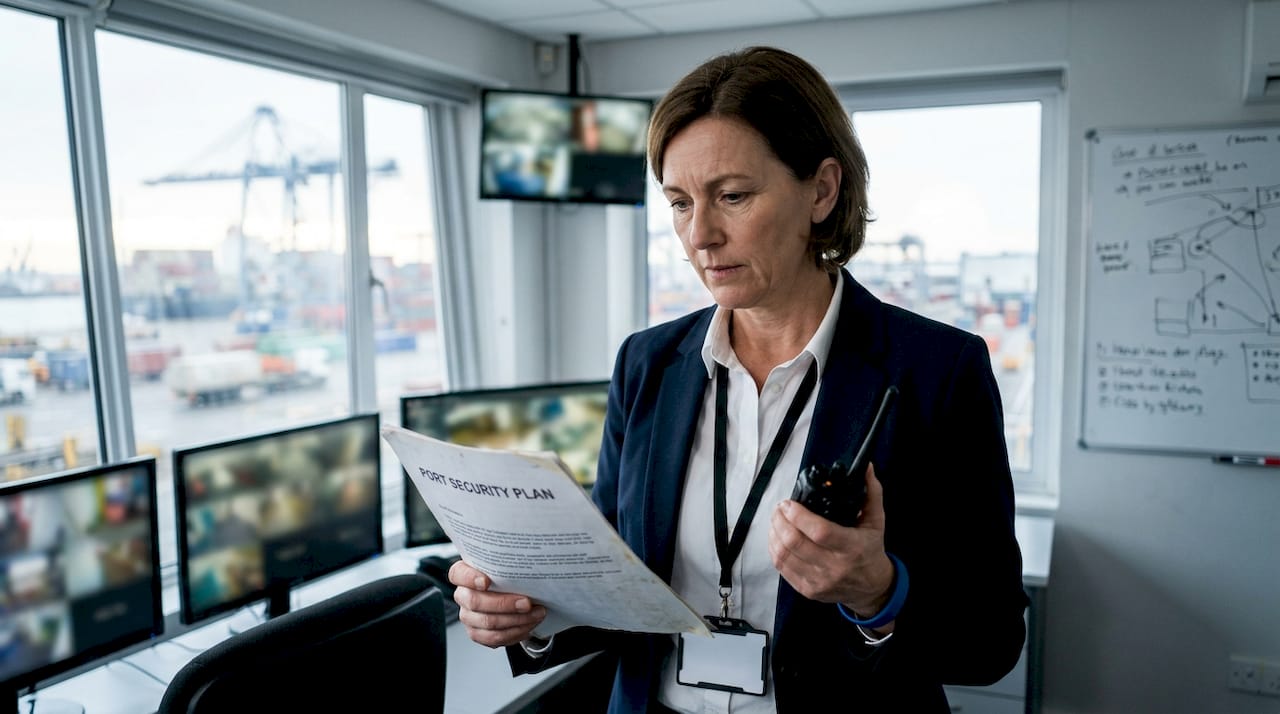
- Port Facility Security Officer (PFSO): The PFSO is the designated individual responsible for developing, implementing, and reviewing the Port Facility Security Plan (PFSP). This officer coordinates with ship security officers, national authorities, and law enforcement. The role requires formal training and certification, not just appointment by title.
- Security Level 1 (normal operations): Minimum protective measures are maintained continuously. Access control, surveillance, and cargo checks operate at baseline intensity.
- Security Level 2 (heightened threat): Additional personnel are deployed, access points are reduced, and cargo inspections increase in frequency and depth. Facility plans like the Georgia Ports Authority’s SOP describe the specific procedural adjustments required at this level.
- Security Level 3 (imminent threat): Near-total lockdown. Only essential personnel with verified authorization enter the facility. All vessel movements may be suspended pending authority clearance.
- Recognized Security Organizations (RSOs):ISPS compliance is validated by RSOs or national authorities through Port Facility Security Assessments and plan approvals, not self-certification. Internal assessments alone leave regulatory gaps during official audits.
The PFSP itself must document how the facility responds at each security level, who holds authority to escalate, and how that escalation is communicated. Audits by RSOs or national maritime authorities verify that the plan matches actual practice on the ground. Facilities that treat the PFSP as a filing exercise rather than an operational document consistently fail those audits.
Security assessments must be repeated whenever the facility undergoes significant physical changes, when the threat environment shifts, or on a schedule defined by the national authority. A plan written in 2019 and never updated does not reflect the current threat picture.
What is the interplay between safety management and security in port facilities?
Safety and security are not the same discipline, but they share enough overlap that managing them separately creates gaps and conflicts. UK government guidance advocates combined systems to maintain accessibility while securing ports. That recommendation exists because security measures, if designed without safety input, can block emergency egress routes or delay first responder access.
The practical conflicts between safety and security include:
- Emergency exits that must remain unlocked for life safety but create unauthorized access points if not monitored
- Hazardous cargo zones that require rapid emergency access but also demand the highest access restrictions
- Muster points located near perimeter fences that could expose personnel during a security incident
A unified Safety and Security Management System resolves these conflicts by design rather than by exception. The system defines which safety requirement takes precedence in each scenario and documents the compensating security measure that applies when a safety override is activated. For example, an emergency exit that must remain unlocked is paired with a continuous CCTV feed and an alarm triggered on opening.
Merging safety and security into a single management system reduces hazards and improves operational flow. The efficiency gain comes from eliminating duplicate inspections, conflicting procedures, and the organizational friction that occurs when two separate departments issue contradictory instructions to the same workforce.
Port facility managers responsible for sensitive installation protection recognize that electrical hazards, including lightning strikes on fuel storage and crane systems, sit at the intersection of safety and security. A lightning strike that disables a surveillance system creates a security gap. That gap must be addressed in both the safety plan and the security plan.
What are human-factor considerations and technology roles in enhancing port facility protection?
Technology does not secure a port. People operating technology correctly secure a port. Security managers report that failures stem mainly from human error or lack of preparedness, not technology limits. That finding reframes where investment produces the highest return.
The human-factor priorities for port security professionals are:
- Continuous training for all staff, not just security personnel. Dock workers, administrative staff, and contractors are often the first to observe anomalies.
- Realistic drills that simulate security level escalations, including the procedural steps required at Levels 2 and 3
- Coordination protocols between private security teams and local law enforcement, coast guard, and customs agencies
- Insider threat awareness programs that establish reporting channels without creating a culture of suspicion that damages workforce morale
Advanced surveillance technologies like drones, AI-assisted camera analytics, and automated anomaly detection improve coverage and reduce the cognitive load on human operators. AI surveillance systems flag unusual vessel movements or unauthorized perimeter approaches without requiring an operator to watch every feed simultaneously. Drones extend visual coverage to waterside areas that fixed cameras cannot reach.
Cybersecurity for operational technology deserves its own training track. Staff who manage access control systems, CCTV networks, and vessel tracking software need to recognize phishing attempts and unauthorized device connections as security threats equal to a physical breach.
Pro Tip:Run an unannounced tabletop exercise at Security Level 2 with your PFSO and department heads. The gaps in communication and decision authority that surface in a tabletop are far cheaper to fix than the gaps discovered during an actual incident.
Effective port security requires a culture where every staff member understands their role in threat detection, extending beyond mere ISPS Code compliance. That culture is built through repetition, clear expectations, and visible leadership commitment, not through a single annual training session.
Key takeaways
Port facility protection is most effective when physical controls, regulatory compliance, unified safety-security management, and continuous staff training operate as a single integrated system.
| Point | Details |
|---|---|
| ISPS Code is the baseline | All 148 SOLAS contracting parties must maintain documented security plans, designated officers, and validated assessments. |
| Layered physical controls are non-negotiable | Perimeter fencing, access control, surveillance, lighting, and vehicle standoff protection each address distinct threat vectors. |
| Security levels drive operational response | Levels 1, 2, and 3 define specific procedural requirements; facilities must train staff to execute each level without delay. |
| Safety and security must be unified | Separate management systems create conflicts at emergency exits, hazardous zones, and muster points that reduce protection effectiveness. |
| Human factors determine real-world outcomes | Technology fails when staff are untrained; continuous drills and insider threat awareness programs close the gap that hardware cannot. |
Indelec’s perspective on port protection beyond compliance
Compliance with the ISPS Code is the floor, not the ceiling. After working with critical infrastructure operators across industrial and maritime environments since 1955, the pattern is consistent: facilities that treat a passed audit as the finish line are the ones that experience incidents between audit cycles.
The most durable protection strategies share one characteristic. They are built into the facility’s physical design from the start. Security by design integrates bollards, lighting zones, access control points, and surveillance coverage into site planning before construction begins. Retrofitting those elements after a facility is operational costs significantly more and produces a less coherent result.
Electrical protection is one area where the security-by-design principle is consistently overlooked. A lightning strike on a port’s crane control system or fuel storage area does not just create a safety event. It creates a security event. Surveillance systems go offline. Access control systems fail. The facility’s security posture collapses at the exact moment when a physical response is most needed. Integrating lightning protection systems into the facility’s security architecture from the design phase eliminates that vulnerability at a fraction of the cost of post-incident remediation.
The facilities that perform best over time invest equally in physical controls, procedural discipline, and human capability. No single element substitutes for the others.
— Indelec
Indelec’s protection technologies for port facility security
Port facilities face electrical threats that standard security planning rarely addresses in depth. Lightning strikes on fuel terminals, crane systems, and communication infrastructure create cascading failures that compromise both safety and security simultaneously.

Indelec has specialized in electrical protection for critical infrastructure since 1955. The Prevectron 3 lightning rod with OptiMax patented technology provides early streamer emission protection designed for large, exposed installations like port terminals and container yards. Indelec’s grounding and installation services support full regulatory compliance and long-term system reliability. For port facility managers building or upgrading their protection architecture, Indelec’s technical team provides site-specific assessments and certified installation programs that align with international safety standards.
FAQ
What is the ISPS Code and why does it matter for ports?
The ISPS Code is the international framework requiring port facilities to maintain security plans, designated officers, and risk assessments. It is mandatory for all 148 contracting parties to the SOLAS convention.
What are the three security levels in port facility protection?
Security Level 1 is normal operations, Level 2 is a heightened threat requiring additional measures, and Level 3 is an imminent threat requiring near-total access restriction and possible suspension of vessel movements.
Who is responsible for port facility security compliance?
The Port Facility Security Officer (PFSO) holds primary responsibility for developing, implementing, and reviewing the Port Facility Security Plan, coordinating with national authorities and Recognized Security Organizations.
How does cybersecurity fit into port facility protection?
Cyber-attacks on operational technology networks can disable physical security systems like surveillance and access control. Port operators must maintain segregated OT networks to prevent IT breaches from creating physical security gaps.
Why should safety and security management be unified at port facilities?
Separate safety and security systems create conflicts at emergency exits and hazardous zones. A unified management system defines which requirement takes precedence in each scenario and documents the compensating measure that applies.