Protection zones: safeguard industrial facilities in 5 steps

TL;DR:
- Lightning protection zones (LPZs) control electromagnetic energy to prevent equipment damage.
- Proper zone implementation requires strategic placement of surge protective devices at boundaries.
- Validating zones through testing and monitoring enhances facility resilience and reduces operational risks.
Most facility managers assume that mounting a few lightning rods on the roofline counts as a complete protection strategy. It does not. The real work happens inside your building, at every boundary where electrical energy can flow unchecked after a strike. Lightning protection zones, or LPZs, define those boundaries with precision and give you a structured way to stop surges before they reach sensitive equipment. This article walks you through what protection zones are, how they are classified, how to implement them correctly, and how to verify they are actually doing their job.
Table of Contents
- What are protection zones in lightning protection?
- Types of protection zones and their boundaries
- How to implement protection zones: Best practices and standards
- Testing, validation, and monitoring for protection zone effectiveness
- The overlooked ROI of protection zone thinking
- Ready to level up your facility’s lightning defense?
- Frequently asked questions
Key Takeaways
| Point | Details |
|---|---|
| Protection zones defined | Protection zones establish boundaries that limit lightning and surge impact inside facilities. |
| Proper zoning ensures compliance | Following IEC 62305-4 and best practices keeps your facility safe and regulation-ready. |
| Testing and monitoring matter | Regular validation through testing and monitoring is crucial for confidence in ongoing lightning defense. |
| ROI extends beyond compliance | Well-implemented zones cut downtime and risk, offering significant financial and operational benefits. |
What are protection zones in lightning protection?
A protection zone is a defined region within or around a structure where the electromagnetic environment is controlled to a specific level. The concept exists because a single lightning strike does not just threaten the point of impact. It sends electromagnetic energy radiating through every conductor connected to your building, including power lines, data cables, and grounding networks. Without boundaries to stop that energy, it reaches and destroys sensitive electronics deep inside the facility.
The Lightning protection zone concept is formalized in IEC 62305-4, using a boundary-by-boundary approach so that residual voltages are limited and electromagnetic compatibility (EMC) between devices is maintained. Each boundary acts as a filter, reducing the surge energy that passes through it. This means that by the time electrical disturbance reaches your most sensitive systems, it has been attenuated to a harmless level.
What assets are typically at risk without defined protection zones? The list is long:
- Programmable logic controllers (PLCs) and SCADA systems
- Communication servers and network switches
- Uninterruptible power supplies (UPS) and inverters
- Instrumentation panels and sensors
- Data storage and edge computing hardware
Think of zone protection like a series of airlocks. Each lock reduces the pressure of the threat. Skip one, and the pressure arrives at full force. Understanding surge protection in industrial facilities starts with recognizing that equipment failure rarely traces back to a direct hit. Induced surges, often traveling through kilometers of cable, cause the majority of lightning-related damage in industrial environments.
The LPZ framework shifts your mindset from “we installed lightning rods” to “we have defined and controlled every electromagnetic boundary in our facility.” That shift is where real protection begins.
This boundary-based thinking is what separates compliant, resilient facilities from those that suffer repeated and expensive equipment failures after every major storm.
Types of protection zones and their boundaries
Now that you grasp the basic idea, let’s look at the specific zone types and how each one is defined in practice.
The standard defines three primary zones, each representing a progressively more controlled electromagnetic environment.
| Zone | Location | Threat level | Residual risk |
|---|---|---|---|
| LPZ0 | Outside structure, direct exposure | Full lightning current possible | Highest |
| LPZ1 | Inside structure, shielded from direct strike | Partial surge, attenuated current | Moderate |
| LPZ2 | Inner rooms, equipment enclosures | Heavily attenuated surges | Lowest |
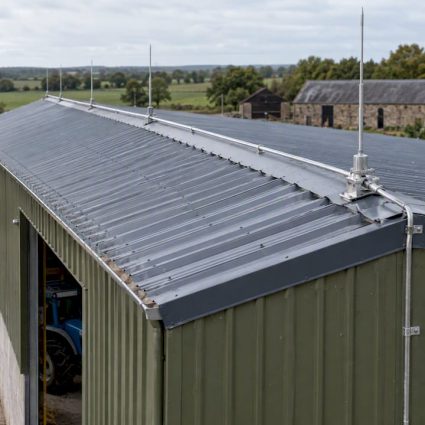
LPZ0 covers everything outside and directly exposed to the atmosphere. Rooftops, antenna mounts, outdoor switchgear, and perimeter fencing all fall here. LPZ1 begins at the building envelope, typically at the point where cable entries, conduits, and structural shielding create a measurable reduction in electromagnetic disturbance. LPZ2 is an inner zone, often a specific room or equipment cabinet, where additional shielding and surge protection further reduce residual energy.
The boundary-by-boundary approach in IEC 62305-4 ensures coordination between surge protective devices (SPDs) placed at each crossing point. Here is a practical sequence for establishing zone boundaries in a real facility:
- Identify the outer envelope. Map every point where cables, pipes, and conductors enter the building from outside.
- Define LPZ1 boundaries. These typically coincide with the main distribution board, the building skin, and cable shielding at entry points.
- Locate inner zones. Find rooms housing sensitive equipment and assess existing shielding, such as metal enclosures or reinforced concrete.
- Map intersecting systems. Identify every power, data, and control line that crosses between zones.
- Assign SPDs to each boundary. Each zone crossing needs an appropriately rated surge protective device.
Your facility’s zone layout will depend heavily on building geometry, structural materials, and the nature of installed systems. A reinforced concrete structure with metallic cable trays already provides some inherent shielding, while open steel-frame buildings with exposed cabling require explicit measures at every boundary. You can also explore lightning safety for facility managers to see how zone mapping integrates with broader site safety planning.
How to implement protection zones: Best practices and standards
Understanding the zones is one thing; actually implementing them is where compliance and safety take center stage.
IEC 62305-4 defines two main design approaches. The rule-based method provides straightforward routing and shielding guidelines based on structural parameters. The real-world application method, sometimes called the detailed design approach, uses empirical data and site-specific analysis to optimize SPD placement and shielding efficiency. For large or complex facilities, the detailed approach almost always delivers better outcomes and lower residual risk.
| Design approach | Best for | Trade-off |
|---|---|---|
| Rule-based | Simple, standard structures | May overspecify or underprotect |
| Detailed design | Complex, high-value facilities | Requires expert analysis and more upfront effort |
At each zone boundary, the implementation needs to address three physical elements: wiring, shielding, and bonding. Every conductor crossing a zone boundary must pass through an SPD rated for that boundary’s expected surge level. Shielding, whether it is the building structure itself or a metal cabinet, must be electrically continuous. Bonding ensures there is no potential difference between adjacent metallic systems at the boundary, which is a common but overlooked failure point.
A critical factor that the IEC 62305-4 standard emphasizes is EMC coordination between devices. Choosing an SPD with the wrong voltage protection level (Up) for a given zone boundary can leave equipment inadequately protected even when every other element is correct. Reviewing industry lightning protection standards helps you confirm that your SPD selection aligns with both IEC requirements and the specific immunity levels of your installed equipment.
Pro Tip: When commissioning a new zone boundary, document the exact SPD model, installation date, rated discharge current, and voltage protection level in a centralized asset register. This documentation becomes essential during audits, insurance reviews, and warranty claims after a surge event. A well-documented zone system is a defensible zone system.
For a practical illustration of how these principles apply on a real site, reviewing a sensitive site implementation reveals how shielding choices and SPD coordination interact in high-consequence environments.
Testing, validation, and monitoring for protection zone effectiveness
Even a well-designed zone system must be checked and maintained. Here is how facilities ensure ongoing effectiveness.
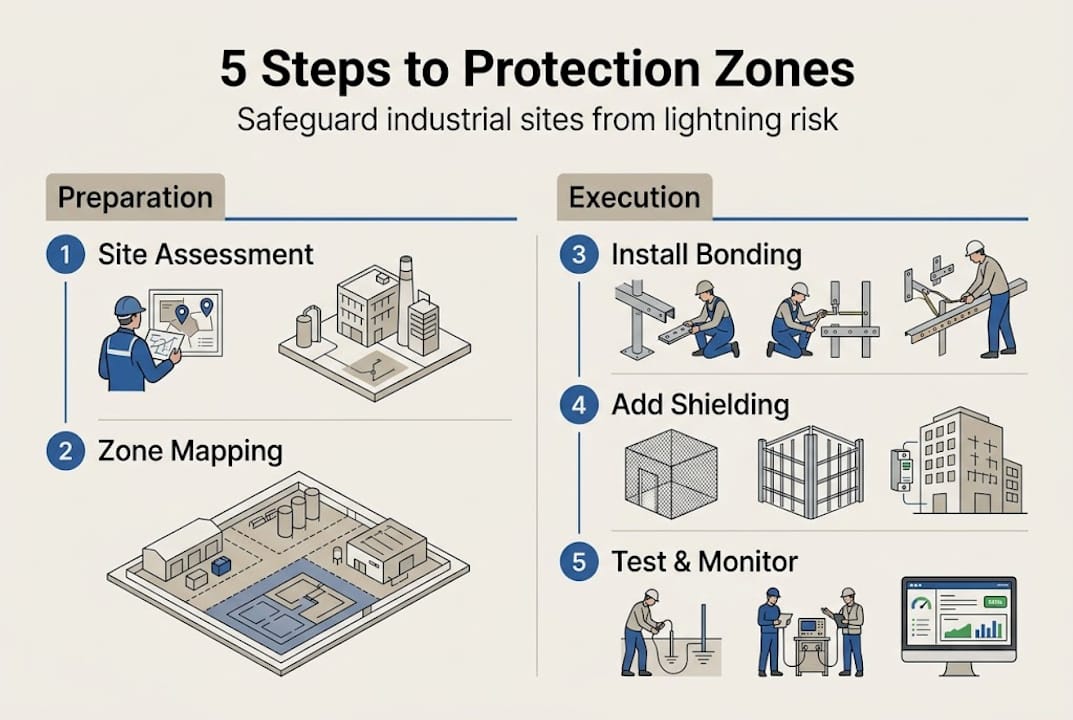
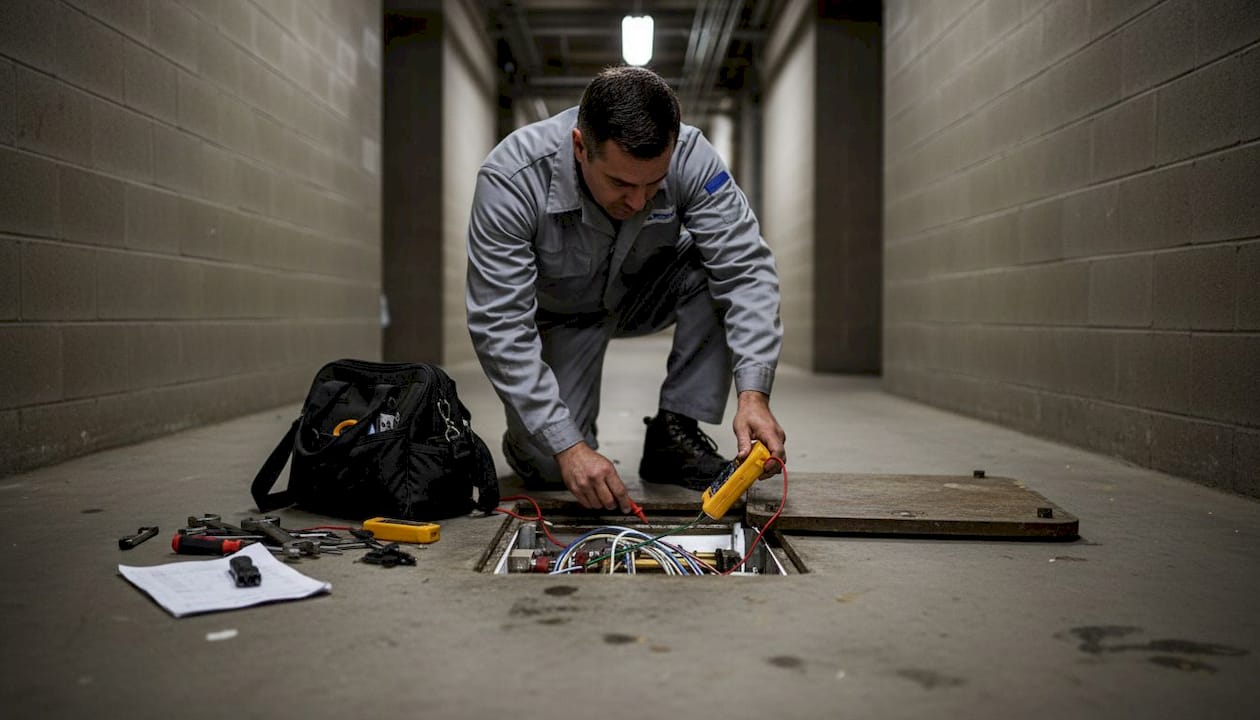
Designing zones on paper and installing the hardware is not the finish line. The real test is whether the system performs as specified when a surge actually occurs. Current-injection testing can validate transfer impedance and internal current coupling in real industrial structures, providing empirical evidence that goes beyond rule-based assumptions. In practical terms, this means injecting a controlled test current at one zone boundary and measuring what actually appears at the next. If the attenuation does not match your design parameters, you have a problem you can fix before a storm finds it for you.
Common validation and monitoring methods include:
- Current-injection testing to measure actual transfer impedance at each zone boundary
- Visual inspection of all bonding connections, cable entry points, and SPD condition indicators
- Continuity testing of structural shielding and equipotential bonding networks
- SPD status monitoring using built-in remote indication or dedicated smart monitoring modules
- Periodic surge event logging to track cumulative stress on installed protective devices
Routine audits should happen on a defined schedule, typically annually for most industrial facilities and after every significant storm event. The audit should check not just the SPDs, but the bonding points, cable routing discipline, and the physical integrity of shielding enclosures. Any modifications to the building or its electrical systems should trigger a zone review, because new cable runs or equipment additions frequently introduce unplanned zone boundary violations.
Pro Tip: Invest in SPDs with remote status indication or integrate them into your building management system (BMS). Many facility teams discover that an SPD has operated and degraded only when the next surge finds it incapable of protecting the load. Real-time monitoring eliminates that blind spot and helps you see real-world protection standards in action across your asset base.
Monitoring technology has advanced considerably. Wireless-enabled SPD status sensors, combined with cloud-based dashboards, allow remote verification of zone integrity across multiple sites from a single operations center. For multi-site facility managers, this capability transforms zone management from a reactive task into a proactive, data-driven program.
The overlooked ROI of protection zone thinking
Most facilities treat lightning protection as a checkbox on a compliance form. That mindset costs money in ways that never appear on the original capital budget.
When a facility skips rigorous zone design and validation, the real losses show up months or years later: an automation controller fails during a storm, a production line goes down for 36 hours, and the engineering team spends weeks trying to trace the root cause. None of that downtime gets linked back to the absence of a proper LPZ2 boundary in the initial design. That connection is rarely made, which is exactly why the problem repeats.
A thoughtful zone scheme, designed and documented from the start, gives you leverage with insurers, auditors, and clients who need evidence of operational resilience. We have seen well-documented zone systems directly support lower insurance premiums and faster regulatory approvals on industrial projects. The upfront effort in design and validation pays back through fewer unplanned shutdowns, predictable maintenance cycles, and a defensible compliance record. Reviewing a contractor guide for industrial sites can help you integrate zone thinking into procurement and construction planning before the first cable is pulled.
The facilities that treat protection zones as a strategic investment, not a regulatory burden, are the ones that operate without interruption through severe weather seasons.
Ready to level up your facility’s lightning defense?
If you now see the value of protection zones, the next step is connecting that knowledge to a validated, site-specific implementation. At Indelec, we have been designing and certifying lightning protection systems since 1955, and protection zone coordination is central to every solution we deliver.

Our engineering teams work with facility managers to map zone boundaries, specify the right SPDs for each crossing point, and document everything to applicable standards. Whether you are retrofitting an existing site or designing protection for a new facility, we bring the technical depth to get it right the first time. Explore our system application examples to see how zone-based protection translates into real-world safety and compliance for facilities like yours.
Frequently asked questions
What is the IEC 62305-4 standard and why is it important for protection zones?
IEC 62305-4 provides the boundary-by-boundary framework for controlling residual voltages and maintaining EMC across all zones in a facility, making it the foundational compliance reference for surge and lightning zone design.
How can I check if my facility’s protection zones are actually working?
Current-injection testing validates actual transfer impedance at zone boundaries, and when paired with visual inspections and smart SPD monitoring, it gives you empirical confirmation that each zone performs as designed.
Do protection zones only apply to power systems, or should other infrastructure be included?
Protection zones must cover both power and communication systems, as the LPZ boundary approach in IEC 62305-4 explicitly coordinates protection across all critical infrastructure lines entering or crossing each zone.
What’s the main risk if my facility lacks defined protection zones?
Without protection zones, lightning-induced surges travel unchecked through your electrical and data infrastructure, causing equipment damage, unplanned downtime, and potential regulatory liability that far exceeds the cost of proper zone implementation.