Lightning Protection for Cranes: A Practical Guide for Site Owners
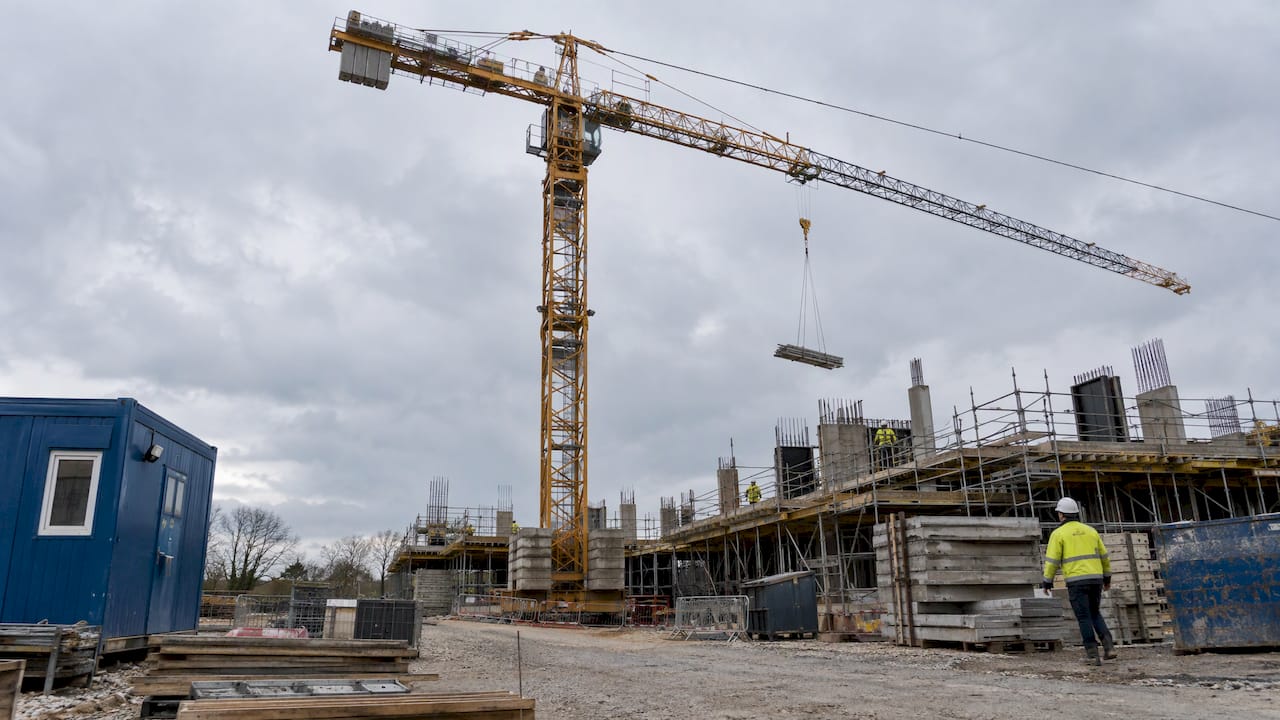
A crane is the tallest conductive object on most sites, so it is the most likely point of impact. Protecting it takes three things: a low-resistance earth connection at the base, continuous bonding through the structure, and a clear storm procedure for the people around it. Design and installation belong with competent persons working to the EN IEC 62305 series. This guide covers what each element involves, which references apply in France, and how contractors and facility managers can organize responsibility, testing and records.
TL;DR
- Lightning can induce dangerous voltages in a crane’s structure, so anyone touching the crane or its load during a storm is at risk, according to UK Construction Plant-hire Association guidance.
- The structure usually gives good continuity. What matters is a verified earth connection at manufacturer-approved points, with resistance below 10 ohms in the CPA guidance.
- In France, the manufacturer’s instructions and the site’s storm procedure decide what operators do when a storm approaches. Weather forecasts should be checked before work starts.
- Responsibility for supply, installation, testing and maintenance must be named in writing, and test records kept.
- Our lightning risk analysis, installation and verification teams can cover the whole chain for your site.
Table of Contents
- Why cranes attract lightning
- How crane lightning protection works
- Tower cranes: what is specific
- Standards and responsibilities in France
- What to do when a storm approaches
- Inspection, testing and maintenance
- A planning checklist for contractors and facility managers
- Perspective
- How we can help
- FAQ
- Sources
Why cranes attract lightning
A crane boom or tower reaches well above everything around it. Steel is a good conductor, and the structure is grounded, at least in principle, through its base. The result is a path that lightning can follow, and a crane that stands taller than its surroundings will often be the preferred point of attachment.
The danger is not only the strike itself. According to guidance from the Construction Plant-hire Association, lightning can induce significant voltages in the crane structure. That creates a risk of fatal electrocution for anyone in direct or indirect contact with the crane or the load during a storm. This includes the operator, the banksman, the rigger holding a tagline and the person leaning on the base.
There are also consequences beyond people:
- Electrical equipment on the crane. Control systems, drives, cameras, anemometers and radio links are all exposed to surges conducted along cables and through the structure.
- Neighboring buildings and utilities. If the earth connection is poor, current seeks other paths, including site cabling, temporary power and the foundations of the building under construction.
- Downtime. A strike that damages a crane control system stops lifting, and a stopped crane can stop the whole site.
The point of a protection scheme is to give the current a deliberate, low-impedance route to earth, and to keep people away from the places where it can still cause harm.
How crane lightning protection works
The structure as a conductor
A crane does not need a separate down conductor in the way a masonry building does, because the steelwork can carry current. The CPA guidance notes that the structure generally provides good continuity. The weak points are the joints and interfaces: slewing ring, mast sections, bolted connections, ballast and rail or foundation interfaces. Each one must be assessed to confirm that the electrical path is continuous.
Earthing at the base
The base is where the current leaves the crane. The CPA advises connecting the base at manufacturer-approved earthing points and checking that resistance to earth is below 10 ohms. If the inherent resistance exceeds 10 ohms, the same guidance says the crane base must be bonded to a suitable earth network, using a single core cable of at least 70 mm² cross-section.

These figures come from UK guidance, and your crane manufacturer’s documentation takes precedence on the exact earthing points and values for a given model. The principle holds everywhere: measure, do not assume.
Why impedance matters, not just resistance
Lightning is a very fast, high-frequency event. French technical experts writing in the Cahiers Techniques du Bâtiment point out that a metallic structure can conduct lightning, but high-frequency currents need low-impedance paths. A properly designed earth-termination system is therefore essential to dissipate the energy of a strike safely.
In practice this means three things on a crane site:
- Short, direct bonding conductors rather than long loops.
- Several well-spaced earth electrodes where one is not enough.
- Soil conditions taken into account. Temporary ground, fill and dry gravel are poor conductors. When surface electrodes cannot reach a good horizontal layer, deeper electrodes may be needed, as with deep earth grounding drilling.
Bonding what the crane touches
A crane rarely stands alone. It is fed by a temporary supply, it may run on rails, and it sits close to scaffolding, site cabins and the structure being built. Equipotential bonding keeps these elements at the same potential during a strike, so that no dangerous voltage difference appears between them. The design of that bonding is part of the protection study, not an afterthought.
Tower cranes: what is specific
Tower cranes raise the questions above in their sharpest form. They are tall, they stay on a site for months, they are often fixed to a foundation that is itself part of the earth system, and the operator works at the top.
Points worth addressing for a tower crane:
- Air termination at the highest point. The jib tip, counter-jib and tower top are the points of attachment. Whatever is installed there must be mounted so that it does not interfere with the crane’s movement, wind loading or slewing.
- Continuity through the mast. Mast sections are bolted or pinned. The connection between sections, and between the tower and the slewing ring, is where continuity can be lost through paint, corrosion or wear.
- The earth connection at the foundation. On a fixed or ballasted base, the foundation arrangement determines the achievable resistance. A measured value decides whether an additional connection is needed.
- The operator’s cab. The operator sits in a metallic structure but remains exposed to touch voltages if they contact controls or conductive parts at the wrong moment. This is why storm procedures matter as much as hardware.
- Power and data cables. The temporary supply to the crane is a route for surges into the control system. Surge protection at the crane’s incoming supply and on sensitive circuits is part of a complete scheme, using products such as surge protection devices.
- Aircraft warning. Cranes that exceed certain heights may need aerial marking. We supply aerial warning lights as part of our product range.
Mobile and crawler cranes have different configurations, but the same logic applies: the boom is the highest point, the chassis is the path to earth, and the people on the ground are the main concern.
Standards and responsibilities in France
Which references apply
Two layers matter for a crane on a French site:
- Crane safety standards. The INRS publication on tower cranes explains that NF EN 14439 sets safety requirements for tower cranes, and that compliance with harmonized European standards gives a presumption of conformity with the relevant French regulations.
- Lightning protection standards. The CPA guidance states that lightning protection for tower cranes must be designed, installed, tested and maintained by competent persons in accordance with the BS EN IEC 62305 series and BS 7430 for earthing. The French equivalents of the 62305 series are the NF EN IEC 62305 documents. For an overview of the framework, see our page on lightning standards.
Whether a specific project requires a formal lightning risk analysis depends on the site, the crane and your contract documents. That is a question for the engineer responsible and your health and safety coordinator.
Who is responsible
Crane projects often fail on responsibility, not on technology. The CPA recommends that users establish competent and clear responsibilities for supply, installation, testing and maintenance, prepare an escape-route and lighting plan, and retain inspection and test records. It also notes that the user of the crane, the hirer, generally holds responsibility for ensuring the crane is inspected and maintained, although the tasks may be delegated to the crane owner.
For a contractor, this means settling five questions before the crane arrives:
| Question | What to agree in writing |
|---|---|
| Who supplies the lightning protection components? | Crane owner, hirer or a specialist, with the scope listed |
| Who installs and connects the earth system? | A competent person, named, with their qualifications |
| Who tests it, and when? | At erection, at defined intervals and after a strike |
| Who keeps the records? | One named holder, available on site |
| Who decides to stop work in a storm? | A named person and a written trigger |
What to do when a storm approaches
Hardware only reduces risk. The people on the site decide the outcome when a storm arrives.
French construction prevention guidance published by PreventionBTP sets out the logic:
- Before work. Site teams should check Météo-France forecasts.
- At the first signs of a storm. The operator should leave the post, and everyone else should leave the crane’s action zone.
- If the operator cannot leave. They should stay in the cab without touching the controls.
- Always. The manufacturer’s instructions detail the grounding arrangement and what operators must do during a storm. They belong in the site’s storm procedure.
To make this work on a real site:
- Put the trigger in writing, so nobody has to decide under pressure.
- Brief every operator and banksman on it at induction.
- Mark the crane’s action zone and the safe assembly point, and keep the escape route lit and clear.
- Do not use the load or the hook as a place to shelter or hold on.
- After a storm, do not restart lifting until the person responsible has confirmed the crane is safe to use.
Inspection, testing and maintenance
A lightning protection system that was good on the day of installation can degrade within months on a working site. Bolted joints loosen, cables are damaged by vehicles, temporary earth electrodes dry out, and cranes are dismantled and moved.
We recommend structuring the programme around events rather than only calendar dates:
| Moment | What to check |
|---|---|
| After erection, before first use | Visual inspection of all bonding, measured resistance to earth, documentation of the values |
| During the project | Periodic visual inspection and resistance measurement at an interval agreed with the competent person |
| After a strike or suspected strike | Inspection of the structure, connections and electrical equipment before lifting resumes |
| After a change | Re-measurement whenever the crane is extended, moved, re-based or the ground around it altered |
| At dismantling | Final record of the state of the system and archive of all test results |
Every check should produce a record. The CPA’s guidance on retaining inspection and test records is not a formality: when a crane is hired between sites, those records show the next user what has been done. The right interval for each check should be set by the competent person in line with the manufacturer and the applicable standards.
For permanent installations such as a gantry crane in a plant or a port crane, the logic is the same but the timescale is longer. Our guide to maintaining grounding systems covers the practices that apply to earth networks in service.
A planning checklist for contractors and facility managers
Before a crane goes up or a fixed crane is added to your facility, work through these steps:
- Assess the risk. Look at the site’s exposure, the crane’s height, what is nearby and who is on the ground. Our lightning risk assessment guide explains the method.
- Read the manufacturer’s documents. Identify the approved earthing points and any limits on adding equipment to the structure.
- Measure the earth. Get a real resistance figure for the base, and decide whether an additional earth network is needed.
- Design bonding and surge protection together. The structure, supply, rails and neighboring metalwork should be one coherent scheme.
- Assign responsibilities. Use the table above and put names against each line.
- Write the storm procedure. Include the weather source, the trigger, the action zone and the escape route.
- Plan inspections. Decide who tests, when, and where the records are kept.
- Review at every change. A new location is a new earth system.
For wider context on how these steps fit a whole site, our guides to lightning protection for building contractors and the facility lightning safety workflow go further.
Perspective
Since 1955, our work has been protecting structures from the effects of lightning, and cranes show why a systems approach matters. A crane is temporary, mobile and often rented, and so responsibility is blurred between owner, hirer and contractor. In our experience, that is where risk lives.
We believe the most reliable results come from treating a crane as part of the site’s overall protection scheme: risk analysis first, then technical study, then installation of earthing, bonding and surge protection, then verification and maintenance. We offer each stage, with grounding systems, deep earth electrodes, surge protection devices and lightning rods in our range, so one competent party can be accountable from design to records.
With more than 280,000 installations behind us and a dedicated R&D center, we design solutions around the specific site, not around a generic template. A crane working on soft ground, beside a live plant or in an exposed coastal location does not need the same answer as one on a dense urban plot. Getting that answer right at the start costs far less than a stopped site.
INDELEC
How we can help
If you are planning crane operations, or managing a facility with fixed cranes, we can take on the full lightning protection chain: lightning risk analysis and technical study, installation, and inspection and maintenance. Our product range includes earthing and grounding components, surge protection devices and lightning conductors, and we also provide deep earth drilling when ground conditions require it.

To discuss your site, start from our lightning protection services page and send us the crane type, location and schedule.
FAQ
Is a crane safe during a lightning strike?
Not reliably. Lightning can induce significant voltages in the crane structure, and anyone touching the crane or the load may be at risk of electrocution, according to the CPA guidance. The safest course is to leave the crane and its action zone at the first signs of a storm, following the site procedure.
What should a tower crane operator do if a storm arrives while they are in the cab?
French construction prevention guidance says the operator should leave the post at storm signs, and others should leave the action zone. If the operator cannot leave, they should stay in the cab and not touch the controls, as set out by PreventionBTP. The manufacturer’s instructions give the detail for each crane.
What earth resistance should a crane base have?
The CPA guidance asks for resistance to earth below 10 ohms, measured at manufacturer-approved earthing points. Where the crane’s own resistance is higher, it calls for bonding to a suitable earth network with a single core cable of at least 70 mm². Check the manufacturer’s documents for your model.
Which standards apply to crane lightning protection?
NF EN 14439 covers tower crane safety, as explained by INRS. For lightning protection itself, the CPA points to the EN IEC 62305 series, with design, installation, testing and maintenance by competent persons. Your engineer confirms what applies to your project.
Who is responsible for testing a crane’s lightning protection?
The CPA guidance says the user, or hirer, generally holds responsibility for ensuring the crane is inspected and maintained, though tasks may be delegated to the crane owner. Settle who supplies, installs, tests and keeps records in writing before the crane is erected.
Sources
- Construction Plant-hire Association, tower crane lightning protection guidance (2025)
- PreventionBTP, protection of cranes against lightning
- INRS, Grues à tour
- Cahiers Techniques du Bâtiment, Le paratonnerre, protection normalisée contre la foudre