Lightning Protection for Wastewater Treatment Plants
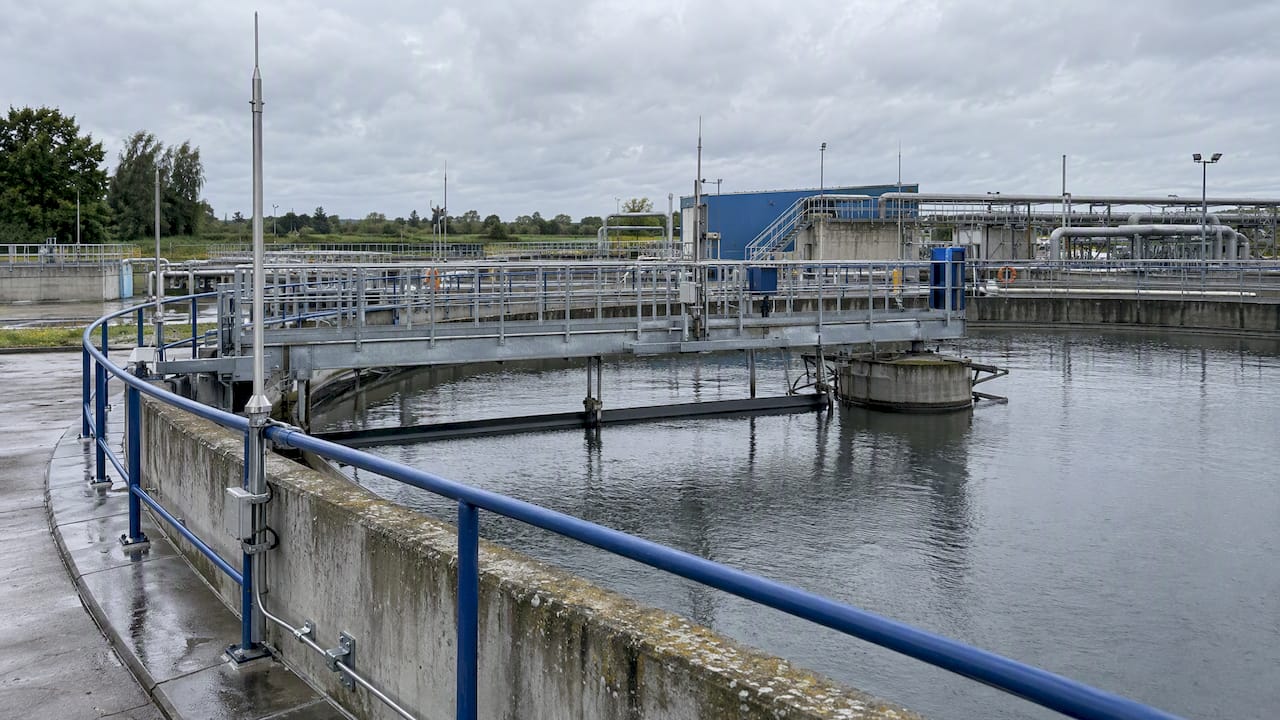
A wastewater treatment plant needs a coordinated lightning protection system, not a single lightning rod. That means a lightning risk analysis (ARF) first, then a technical study, then external protection, equipotential bonding, earthing and surge protection devices sized to the plant’s real exposure. Where the plant falls under French ICPE rules, verification and record-keeping are set by regulation. This guide walks through each step in the order a facility owner, contractor or engineering consultancy has to handle them.
TL;DR
- Treatment plants combine large footprints, wet conductive concrete, long cable runs and sensitive digital controls, so indirect strikes and surges are often a bigger threat than a direct hit.
- For plants covered by the French ICPE regime, the ARF follows NF EN 62305-2 and a competent body defines measures in a technical study, implemented within two years of the ARF.
- Expect an initial complete check within six months of installation, annual visual checks and complete checks every two years, with a logbook and repairs within one month.
- A lightning rod alone does not protect SCADA, PLCs, sensors and pump drives: external protection, earthing, bonding and coordinated surge protection must work as one system.
- After any recorded strike, a visual inspection of the affected protection systems is due within one month.
Table of Contents
- Why treatment plants are exposed
- What French rules apply
- Step 1: the lightning risk analysis
- Step 2: design the protection as one system
- A worked example of how zones drive the design
- Step 3: install and verify
- Our perspective
- Working with a specialist
- Questions readers ask
- Sources
Why treatment plants are exposed
A treatment plant is a bad place to be when lightning arrives, for reasons that have little to do with how often it is struck. Water-industry engineering press points to large sites, proximity to water, wet and conductive concrete, and extensive metal infrastructure as the factors that raise lightning and power-quality risks at wastewater plants. Tanks, clarifiers, walkways, handrails, pipework and cable trays all form a conductive network spread over hectares.
The same source notes that older plants with analog controls can be damaged by voltage transients, but digital controls are far more susceptible. That is the real problem for modern sites. A plant today runs on PLCs, variable-speed drives, online analyzers, level and flow sensors, and remote telemetry linking pumping stations to a central supervisor. Each of those is a low-voltage electronic device connected to cables that can pick up a surge from a strike hundreds of meters away.
In practice, lightning affects a plant in four ways:
- Direct strike on a stack, mast, building roof, biogas structure or elevated tank, with the risk of fire, structural damage and danger to staff.
- Strike near the site or on a connected line, inducing surges in power, data and instrumentation cables.
- Earth potential rise, where current flowing into the soil creates voltage differences between separate structures and equipment.
- Process downtime, the consequence that usually costs the most: pumps stopped, aeration lost, alarms and remote control down, with discharge compliance at stake.
Outlying assets matter as much as the main plant. Remote pumping stations and lift stations are often single-structure sites with exposed power and telemetry lines. They are the most likely to lose their communications first.
What French rules apply
Start by establishing whether the plant is a listed installation under the ICPE regime (installations classées pour la protection de l’environnement). Not every treatment plant is, and the answer depends on its classification and authorization. The rules below apply when it is.
The 2010 order and its amendments
The lightning provisions come from the 2010 ICPE order, amended in 2011 and again in 2022. The order of 28 February 2022 specifies that the provisions cover authorized installations where lightning could harm the interests listed in Article L. 511-1 of the Environmental Code. It also sets the standards: the ARF follows NF EN 62305-2, and verifications may follow NF EN 62305-3, NF EN 62305-4 or NF C 17-102.
The order of 19 July 2011 adds the sequence that matters most in practice:
- A competent body carries out the ARF under NF EN 62305-2 (November 2006 version).
- Following the ARF, a competent body defines prevention and protection measures in a technical study.
- A competent body implements those measures within two years of the ARF.
- The ARF is updated after substantial changes, revisions of the safety study, or changes affecting its inputs.
The two-year deadline is also a point insurers pay attention to. We cover that angle in our article on the insurers’ two-year rule on French ICPE sites, and the wider compliance picture in our lightning protection guide for ICPE sites.
Which standards sit behind the measures
The framework set out in the 2008 circular calls for a technical study that defines direct protection, bonding and surge protection according to the risk levels the ARF produces. It refers to NF EN 62305-3 and -4, NF EN 61643 for surge protective devices, and UTE C 15-443 for surge protection in low-voltage installations. You can find an overview of the standards family on our lightning standards page.
Who is competent to do the work
The regulation requires a “competent body” and the reference point in France is the QUALIFOUDRE label. Awarded by INERIS, it identifies companies competent in lightning protection and helps them meet the requirements of the amended 2010 order. INERIS also reviews lightning protection studies critically, and it is generally consulted on complex installations. When you tender an ARF or technical study, ask for the label and the reference sheet of the people who will sign the study.
Step 1: the lightning risk analysis
The ARF is where the money is decided. It tells you what must be protected, to what level, and what can be left alone. For a treatment plant, a sound ARF does the following:
- Divides the site into zones. Process buildings, the control room, sludge and biogas areas, the inlet works, outlying pumping stations and administration buildings do not carry the same consequences of failure.
- Maps the incoming services. Power feeders, telecom lines, instrument loops and any line crossing between structures all count, because surges travel along them.
- Uses the right strike density. The QUALIFOUDRE FAQ states that the local Nsg density supplied by Météorage goes into the R1 calculation without being halved. An ARF that halves it understates the risk.
- Looks at consequences beyond the fence. Pollution of a receiving watercourse after a pump or aeration failure is a consequence of the kind the regulation cares about.
The output is a set of protection levels and recommended measures, which the technical study then turns into a design: where air terminals go, how many down conductors, which surge protective devices at which boards, and how earthing is to be improved.
If you want to understand how risk assessment fits into a wider facility decision, our piece on why assessing infrastructure risk pays off gives the business case.
Step 2: design the protection as one system
The common failure on treatment plants is a protection scheme built from separate purchases: a lightning rod installed in one project, surge protectors added after a breakdown in another, earthing left as it was. Each piece may be fine and the whole still fails. Four layers have to be designed together.
External protection
This is the air terminal and down conductor part. On a plant it typically concerns tall structures (stacks, mast-mounted antennas, biogas holders, digester tops), buildings with sensitive equipment, and walkways or handrails that people use during storms. Options include early streamer emission air terminals under NF C 17-102, Franklin rods, mesh cage or catenary systems under NF EN 62305-3. The ARF and the technical study decide which, not the catalog. Our lightning conductors range covers the air terminals, and the down conductors, masts and fixings that go with them.
Whatever is installed must be maintained. See our practical guide on how to maintain lightning rods.
Earthing and equipotential bonding
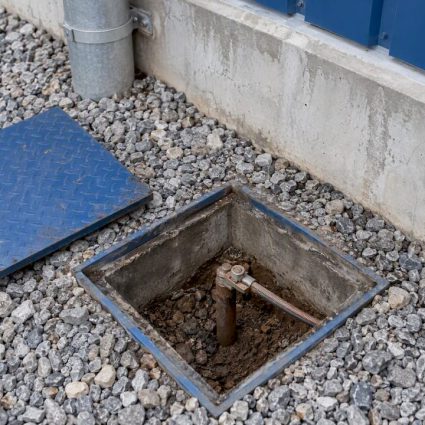
On a wet site with so much metal, bonding is what keeps people and electronics from being exposed to potential differences. Separate earth systems for lightning, power and instrumentation create exactly those differences during a strike. The aim is a bonded network in which structures, cable trays, pipework, and the electrical and lightning earths are linked, with low-impedance earth electrodes suited to the soil.

Ground conditions vary widely across a large site. Where surface resistivity is high or the site is rocky, deeper electrodes may be the practical answer: we run deep earth grounding drilling for that. Our earthing products cover the components, and our guide on maintaining grounding systems explains periodic measurement.
New loads on the site also change the earthing picture. Plants that add charging points for service or fleet vehicles need that earthing designed in from the start, and the earthing and PME options for EV chargers illustrate the survey-to-commissioning logic that applies to any new earthed load, even though supply-earthing arrangements differ from country to country.
Surge protection
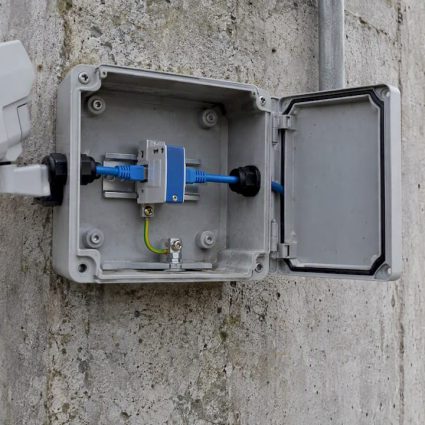
This layer protects what actually fails: electronics. The design principle is coordination. Protective devices at the main incoming board take the larger share of the surge energy, further devices at sub-distribution boards limit what gets through, and fine protection at the equipment, with dedicated devices on signal, data and telecom lines, completes the chain. The circular points to NF EN 61643 and UTE C 15-443 for that coordination.
The points to check on a plant:
- The main low-voltage board and every sub-board feeding process areas.
- PLC and SCADA cabinets, including their instrument loops and communications lines.
- Outlying pumping stations, where one board often serves everything.
- Lines entering or leaving a structure, including those running between separate buildings on the site.
Our surge protection devices page lists the range, and two guides explain the thinking behind surge protection for industrial facilities and how installation is done.
Strike monitoring
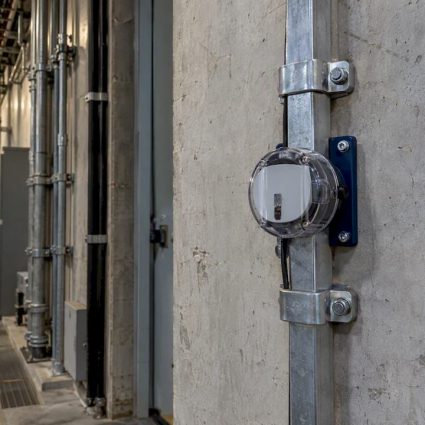
A lightning strike counter records events on a protected structure. That matters twice over for an ICPE plant: it helps you decide when an inspection after a strike is needed, and it gives you a factual record when talking to your insurer. See our lightning strike counters.
A worked example of how zones drive the design
Take a mid-size municipal plant with an inlet works, aeration basins, a sludge building, a control building and two remote lift stations. The ARF would probably separate the outcomes like this:
| Area | What is at stake | Typical measures to evaluate |
|---|---|---|
| Control building | PLCs, SCADA, telecom link, staff presence | Surge protection at incoming board and on data lines, bonding to the main earth |
| Aeration basins and blowers | Drives, process continuity | Surge protection on drive feeders, bonding of metallic walkways and handrails |
| Sludge or biogas area | Fire or explosion consequences | Direct protection decided by the study, with attention to hazardous-area constraints |
| Remote lift stations | Pump control, telemetry | Surge protection at the single board, protection on the telemetry line, local earthing |
| Tall structures | Direct-strike damage, staff safety | Air terminal and down conductors sized to the protection level |
This table is an illustration of how to read an ARF, not a design. The real answer depends on the site’s zones, services and calculated risk, which is why the technical study comes before any purchase order.
Step 3: install and verify
The regulatory timeline is explicit. Under the 2011 order, installations require:
- A complete check by a competent body distinct from the installer, within six months of installation.
- An annual visual check.
- A complete check every two years.
- A logbook kept by the operator.
- Repair of any deficiency within one month.
If a lightning strike is recorded, a qualified body must carry out a visual inspection of the impacted protection systems within one month, under Article 21 of the 2010 order, as relayed in the same text.
Some practical consequences follow for a plant operator:
- Separate installer and verifier. Plan your contracts so the verifying body is independent of the installing company.
- Keep one folder. ARF, technical study, as-built drawings, earth measurements, verification reports and repair records belong in the logbook, ready for an inspector or an insurer.
- Treat the one-month repair window seriously. Spare parts for surge devices and air terminal components should be available, not on a six-week lead time.
- Trigger an ARF update after changes. A new process building, a digester addition or a new control system is a substantial change in the sense of the regulation.
- Test during work, not after. Earth electrode measurements are easier to correct while trenches are open.
Our industrial lightning protection guide and our guide for building contractors set out how installation is organized on live industrial sites, and our overview of common lightning hazards in facilities helps maintenance teams spot problems between inspections.
Our perspective
We have been in lightning protection since 1955, and the pattern we see on treatment plants is consistent: the lightning rod gets the attention and the electronics get the damage. A plant can have a perfectly good air terminal and still lose its PLC and telemetry on the same strike, because nobody coordinated surge protection and bonding with it. Our view is that the ARF and technical study should be treated as engineering deliverables, not paperwork to satisfy a deadline, because they decide where the budget goes.
We also think plant owners should resist buying in separate lots. When one team handles the risk analysis, the design, the installation and the maintenance plan, the interfaces between external protection, earthing and surge protection are owned by someone. That is where most post-installation problems start. Our R&D center works on the technical side of this, and the installed base behind our experience, over 280,000 installations, is the reason we insist on verification and maintenance being planned from day one rather than after the first failure.
— INDELEC
Working with a specialist
If you manage a plant, or advise one, we can handle the chain from the ARF and technical study to installation, verification and maintenance. Our lightning protection services cover each of those steps, and our Indelec services overview shows the rest of the offer, including deep earth electrodes. Send us the site plan, the list of structures and your current electrical single-line diagram, and we can tell you what an ARF would need to cover.
Questions readers ask
Is a lightning rod enough to protect a treatment plant?
No. A lightning rod addresses direct strikes on a structure, but most damage to plant electronics comes from surges on power and signal cables. The technical study defines direct protection, bonding and surge protection together, based on the ARF results.
Does every treatment plant need an ARF?
The regulatory obligation applies to installations covered by the ICPE lightning provisions, where lightning could harm the interests protected by Article L. 511-1. Whether your plant is a listed installation depends on its classification, so check your authorization or ask your DREAL. Even outside the regulation, an ARF is the sound basis for a protection budget.
How often must protection be checked?
For ICPE sites, there is a complete check within six months of installation by a competent body distinct from the installer, an annual visual check, and a complete check every two years. A logbook is kept and deficiencies are repaired within one month. A recorded strike triggers a visual inspection of the affected systems within one month.
What is QUALIFOUDRE and why does it matter?
It is a label awarded by INERIS that identifies companies competent in lightning protection. It helps companies meet the requirements of the amended 2010 order, so it is a practical filter when you select who carries out the ARF, the technical study or the verification.
Sources
- Grounding and bonding for wastewater treatment plants, WWD
- Arrêté du 28 février 2022, Légifrance
- Arrêté du 19 juillet 2011, article 2, Légifrance
- Circulaire du 24/04/08, AIDA INERIS
- Protection foudre / QUALIFOUDRE, INERIS
- FAQ QUALIFOUDRE, version of 30 November 2023, INERIS