IoT Lightning Monitoring: What It Does and What It Doesn’t
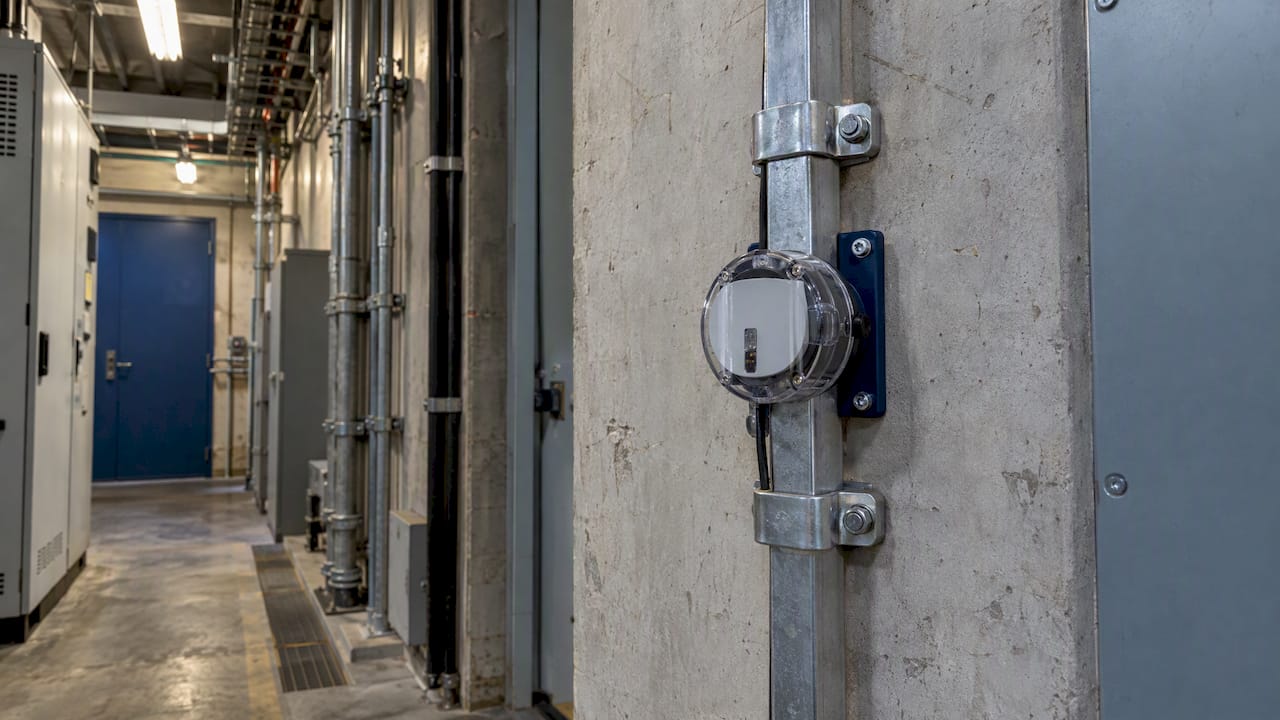
IoT lightning monitoring is a network of connected sensors that detect electrical storm activity or lightning-related events, send the data to a cloud platform and turn it into alerts and maps your team can act on. It tells you a storm is near or that a strike happened. It does not replace a lightning risk analysis, a lightning protection system or the periodic inspections French rules require. This guide explains what the sensors measure, how the data travels, where the limits are, and how to fit monitoring into a compliance program on an industrial or public site in France.
TL;DR
- IoT monitoring covers three different things: atmospheric detection (storm warning), strike counting on your own conductors, and the health of your protection system (surge protectors, earthing). Decide which one you need before buying anything.
- Detection sensors support operational decisions (stop a crane lift, pause outdoor work). They do not protect equipment.
- For French ICPE sites, a recorded strike triggers a visual inspection within one month, so a reliable strike record has real compliance value.
- Coverage, timing accuracy and connectivity are the main limits. Ask for them in writing.
- Start from the lightning risk analysis (ARF): it tells you what to monitor and why.
Table of Contents
- Three things people call “lightning monitoring”
- How the data gets from sensor to screen
- What facility teams can actually decide from the data
- Limits you should price in
- A quick selection grid
- How to deploy it on a site: a practical sequence
- Our perspective
- Where Indelec fits
- Mistakes we see on monitored sites
- FAQ
- Sources
Three things people call “lightning monitoring”
The search term covers very different systems. Mixing them up is the most common reason projects disappoint.
1. Atmospheric detection and storm warning. Sensors measure the electric field or the electromagnetic pulses produced by lightning. An academic review of lightning monitoring for energy supply explains the split: atmospheric electric field sensors and lightning sensors detect electric fields and electromagnetic fields respectively. The same review notes that combining both lets you track thundercloud development and movement, whereas a lightning sensor alone cannot tell you where a storm will appear before it produces discharges.
2. Strike counting and event recording on the protection system. A counter sits on a down conductor and records each current pulse that passes through it. This is the data that says “this building was hit”, independent of what a regional network reported. Connected versions push that event to your maintenance software.
3. Condition monitoring of the protection chain. Surge protective devices, earthing resistance and equipotential bonds can carry sensors that report status. Connected surge protectors, for instance, are described in research as measuring voltage or current impulses and sending them to cloud storage for analysis.
The first answers “should we stop work now?”. The second answers “was my structure struck, and do I need to inspect?”. The third answers “is my protection still working?”. Most sites eventually want all three, but they have different owners (operations, maintenance, the compliance manager) and different budgets.

How the data gets from sensor to screen
The architecture is similar whatever the vendor.
- Sensing. An antenna, field mill or current sensor captures the event.
- Local processing. A small controller timestamps the event and filters noise. Timing matters: the Blitzortung project documentation explains that locating a strike requires high-frequency waveform sampling and microsecond-accurate GPS time-stamping. A cheap sensor without precise timing can say “lightning nearby” but not “where”.
- Transmission. Cellular (4G/LTE-M), LoRaWAN or a wired link carries the message to a gateway or platform. Remote sites such as pumping stations or telecom masts usually rely on cellular or LoRaWAN.
- Platform. Data is stored, processed and rules are applied. A published low-cost research system, for example, used FIWARE to collect and process detection data and displayed results on Google Maps via RStudio and Shiny. Commercial platforms do the same job with their own dashboards and APIs.
- Presentation and alerts. Maps, thresholds, SMS, email, sirens or a message into your supervision system (SCADA or building management).
The point for a facility manager: the sensor is the cheap part. The value, and the risk, sits in alert rules, who receives them, and whether anyone has written down what happens next.
What facility teams can actually decide from the data
Monitoring only earns its cost when it changes a decision. These are the realistic ones.
Operational decisions during a storm
A storm warning with a defined radius around the site lets you set stages. A typical scheme uses a distant-activity stage (prepare), a close-activity stage (stop exposed work) and an all-clear delay after the last detected discharge. The thresholds and the all-clear delay belong in your site procedure, set by your safety manager, not by the vendor’s default.
Typical actions:
- Pause crane lifts, work on roofs, tank-top work and aerial platforms.
- Hold truck loading and unloading of flammable products.
- Bring maintenance staff off exposed structures such as masts and chimneys.
- Alert outdoor event or sports-ground managers on public sites.
The standard behind this is NF EN IEC 62793. AFNOR describes it as defining the characteristics of thunderstorm warning systems, used to implement preventive measures with sensors or networks that provide real-time information on electrical activity (edition of October 2020). If a supplier says its alerts are “compliant”, ask which clauses of the standard it addresses and how performance was demonstrated.
Maintenance and inspection decisions
A recorded strike on your structure is the trigger for a different workflow: check the conductors, connections, surge protectors and earthing, and record the findings. For classified sites, the rule is explicit. Under the Decree of 19 July 2011 amending the decree of 4 October 2010, applicable ICPE facilities need a complete verification every two years by a competent body, an annual visual check by a competent body, and a visual inspection within one month after a recorded lightning strike.
That last requirement is where connected counters help. Without a record, a strike on a remote tank farm may go unnoticed for months. With one, the event creates a ticket automatically and the one-month clock is visible.
Insurance and audit evidence
Time-stamped logs show an auditor or an insurer that you detect events and respond to them. They support, but do not replace, the verification reports. We cover what insurers expect in the two-year rule for lightning protection on French ICPE sites.
Limits you should price in
Honest vendors will tell you these. Check that yours does.
Detection is not protection. An alert gives you minutes to act on people and processes. It does nothing for a transformer, a PLC or a data line when a strike occurs. Air terminals, down conductors, earthing and surge protection remain the barrier. See our overview of industrial lightning protection for reliable facilities.

Coverage and accuracy vary with the method. A single local sensor sees activity within its own range and cannot locate strikes precisely. Location needs several time-synchronized stations, as the Blitzortung documentation above explains. A field sensor can warn earlier than a pulse sensor, because it sees charge build-up before the first discharge, but it is prone to false alerts if installed near local interference or poorly grounded.
Connectivity fails exactly when you need it. Storms disturb power and sometimes networks. Specify battery or UPS backup, a fallback channel (cellular if the primary is wired) and a local alarm that works without the cloud.
Sensors need maintenance too. Antennas are exposed, batteries age, firmware needs updates, and a device mounted at height needs a safe access plan. Include these in your maintenance schedule.
IoT adds a cybersecurity surface. A connected device on your operational network is a new entry point. Ask for network segmentation options, encrypted transport and a patch policy. Your IT or OT security lead should approve the design before installation.
Data is not a compliance document. Dashboard history does not replace the verification reports from a competent body. Keep both.
A quick selection grid
| Need | Best-fit technology | What it gives you | What it does not give you |
|---|---|---|---|
| Stop outdoor work before a storm hits | Field sensor plus pulse sensor, or a regional detection service with a defined radius | Warning stages and all-clear | Protection of equipment |
| Know whether your structure was struck | Strike counter on a down conductor, with remote reporting | Event record to start the one-month inspection | Warning before the strike |
| Know if protection is still healthy | Connected surge protectors, earthing checks | Status and fault alerts | Replacement of periodic verification |
| Map activity across many sites | Network-based detection with a platform | Centralized view for a multi-site operator | Precise per-structure strike data |
If you are unsure which row applies, the answer usually comes from your risk analysis, not from a product catalogue.
How to deploy it on a site: a practical sequence
- Start from the lightning risk analysis. For ICPE sites, the 2011 decree already requires an ARF to determine the needed protection levels, with systems compliant with French or equivalent EU standards. The ARF tells you which structures and processes are critical, so you monitor those first. Our guides on lightning risk assessment and lightning protection for ICPE sites explain how this works in practice.
- Write the response procedure first. Who receives the alert at 2 a.m.? What stops, who confirms, and who authorizes restart? Technology without this is noise.
- Choose the layers. Warning for people and processes, counters for structures, condition monitoring for the protection chain. Add them in order of risk, not novelty.
- Survey the site. Check cellular or LoRaWAN coverage at mounting points, power availability, mounting height, interference sources and access for maintenance.
- Integrate. Push alerts into the tools your team already uses: supervision, maintenance management, or the safety desk. A separate app nobody opens will not be used.
- Test and document. Run a test alert, record the response time, and file the results with your lightning protection deliverables. Our article on the deliverables French facility managers must keep lists what an inspector expects to see.
- Review yearly. Compare alerts with actual events, adjust radii and delays, and fold sensor checks into the annual visual inspection.
Our perspective
We have worked on lightning protection since 1955, and more than 280,000 installations have taught us one thing: failures rarely come from missing data. They come from a protection system that was designed without a risk analysis, installed without documentation, or never checked after the first strike.
So we treat IoT monitoring as a layer on top of a sound system, not a substitute. A warning service can keep your people out of danger. A strike counter can tell you which structure needs inspecting. A connected surge protector can tell you its protection has been used up. None of them replaces well-designed air terminals, down conductors, earthing and equipotential bonding, verified by a competent body at the intervals the regulation sets.
Our advice to site owners is to sequence the work. Get the risk analysis and technical study right. Make sure the installation and its verification are current. Then add monitoring where it removes a real blind spot: unmanned sites, high-consequence processes, multi-site portfolios, or structures where a strike would halt production. Choose open, documented interfaces so your data is not locked into one platform, and keep the sensor inventory in the same maintenance plan as the rest of the protection system.
— INDELEC
Where Indelec fits
If you are building or reviewing a lightning protection program, we cover the physical and documentary base that monitoring depends on: lightning risk analysis and technical study, installation, and verification and maintenance, plus hardware such as lightning strike counters and surge protection. Tell us your site type and what you want to know in real time, and we will help you decide which layer to add first.
Mistakes we see on monitored sites
- Buying sensors before the risk analysis. The result is coverage of the wrong buildings.
- No named recipient. Alerts go to a shared mailbox and no one acts.
- Default thresholds. A radius copied from a brochure does not match your processes or the time you need to secure a task.
- No fallback. The cloud is unreachable during the storm and nothing sounds locally.
- Treating the dashboard as the inspection. The regulation asks for competent-body verification and a visual check after a strike, not a graph.
- Ignoring the earthing. Monitoring a protection system with a degraded earth connection tells you about problems you could have prevented. See how to maintain grounding systems.
FAQ
Does IoT lightning monitoring protect my site from a strike?
No. It detects storm activity or records events so people and processes can react. Protection comes from the lightning protection system and surge protection, designed from a risk analysis and verified at the required intervals.
Is monitoring mandatory on French ICPE sites?
The 2011 decree cited above requires a lightning risk analysis, protection where it is needed, periodic verification and a visual inspection within one month after a recorded strike. It does not make connected sensors the rule in itself, but a reliable strike record helps you meet that inspection requirement. Check your site’s own prefectoral order for specific obligations.
What standard applies to storm warning systems?
NF EN IEC 62793 defines the characteristics of thunderstorm warning systems used to put preventive measures in place. Ask any supplier how its system and alert stages relate to that standard.
How accurate is lightning location from IoT sensors?
It depends on the method. Precise location needs several synchronized stations with GPS time-stamping at microsecond level. A single low-cost sensor mainly tells you that activity is near, not exactly where it struck.
Where should I start?
With the risk analysis and the current state of your protection system. Then define the alert procedure and add the sensor layer that closes your biggest blind spot. Our lightning protection services cover those first steps.
Sources
- Lightning monitoring system for sustainable energy supply: a review (Renewable and Sustainable Energy Reviews, 2015)
- Development of a low-cost IoT system for lightning strike detection (MDPI Electronics, 2019)
- Blitzortung.org and Lightningmaps.org project documentation
- AFNOR: NF EN IEC 62793, thunderstorm warning systems
- Légifrance: Arrêté du 19 juillet 2011, article 2