Save up to 80% on French Charging Station Costs for Fleets and Sites
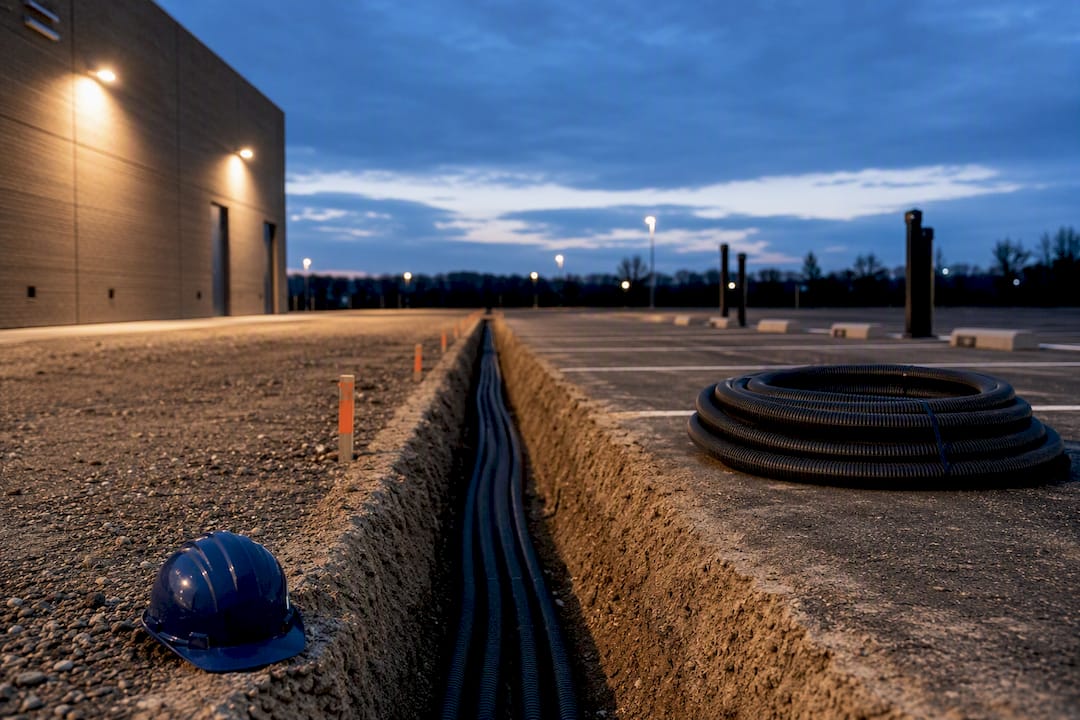
Installing an AC 7 to 22 kW charging point in France typically costs between approximately 1,200 and 4,000 € HT installed, a DC 50 kW station commonly ranges from about 20,000 to 40,000 €, and DC 125 kW+ fast chargers generally cost in the range of 50,000 to 80,000 €. The two levers that cut net cost the most are smart load management to dodge a grid upgrade and filing your funding paperwork before commissioning, not after.
TL;DR:
- Civil works and electrical panel upgrades can significantly increase installation costs, especially when trenching, utility crossing, or reinforcement are involved.
- Obtaining early Enedis technical studies and ensuring your site can support the planned load avoids unexpected reinforcement fees and delays.
- Properly sizing and planning for future fleet growth with headroom in your electrical infrastructure reduces expensive retrofits and subscription-tier increases.
- Funding assistance from Advenir and regional grants can cover up to 80% of costs if applications are submitted before commissioning, not afterward.
- Site location influences costs more than the charger type, with urban areas incurring higher civil works and rural sites often requiring additional electrical reinforcement.
Table of Contents
- What Does It Actually Cost to Install a Charging Point in France?
- Why Do Two Quotes for the Same Charger Differ So Much?
- How Much Can Advenir and Other French Aids Reduce the Bill?
- How Do You Size a Fleet Without Triggering an Enedis Upgrade?
- What Does It Cost to Run Charging Points After Installation?
- What Compliance Steps and Timeline Should You Budget For?
- What Exactly Are You Paying Enedis For?
- Are Public Charging Points More Expensive to Install Than Private Ones?
- Does Location Change the Price More Than the Charger Itself Does?
- Will Charging Costs Change in the Next Few Years?
- What Happens If You Need More Power Than You Planned For?
- What Do Charger Installers Routinely Miss on Their Quotes?
- Get Your Charging Site Audited Before You Sign a Single Contract
- Sources
What Does It Actually Cost to Install a Charging Point in France?
The price band depends almost entirely on power class and what the site already has in the ground.
An AC 7 to 22 kW point, the workhorse for offices, retail sites, and light fleets, typically installs for 2,000 to 4,000 € HT per point once you factor in mounting, wiring, and basic protections. Bare-bones single-point jobs with an existing electrical panel nearby can come in closer to 1,200 €. DC fast chargers change the math entirely: a 50 kW DC unit runs 20,000 to 40,000 € installed, justified mainly for high-turnover fleet depots or public sites where dwell time is short. Beyond 125 kW, expect 50,000 to 80,000 € or more, largely driven by transformer and cabling requirements rather than the charger hardware itself.
What moves the price within each band:
- Pilotable, OCPP-compliant chargers cost more upfront than dumb units but are usually required for funding eligibility.
- Remote supervision and billing modules add hardware and software licensing costs.
- Redundant communications (cellular backup alongside Ethernet) raise unit cost but reduce downtime risk.
- Enclosure and vandal-resistance options matter more for public or unsupervised sites than for gated fleet depots.
The charger you pick is a smaller decision than most buyers assume. The install context decides the real bill.
Why Do Two Quotes for the Same Charger Differ So Much?
Two installers quoting the identical charger model can land 8,000 € apart, and the gap almost never comes from the hardware line.
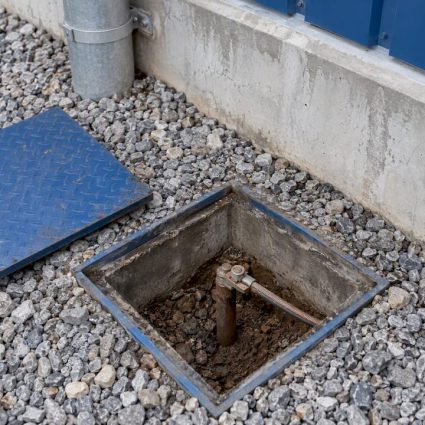
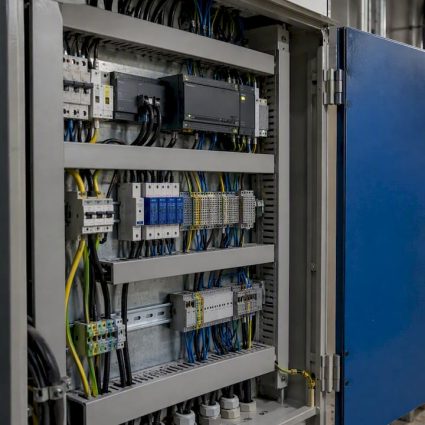
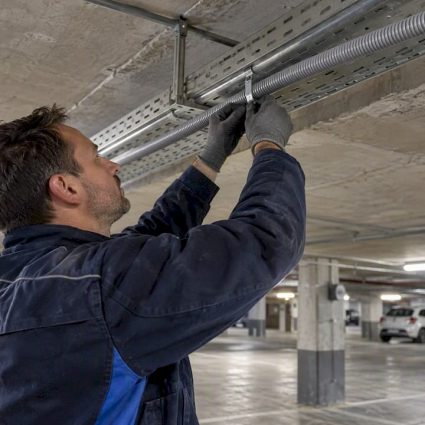
Civil works drive the split. Trenching cost scales with distance from the electrical room to the charging bay, and parking layout constraints (crossing a fire lane, working around underground utilities) can double labor time on an otherwise simple run. Then there’s the electrical panel itself: many sites need a TGBT upgrade, added protections, and compliance work to meet NF C 15-100-7-722, the French standard governing EV charging circuits. That work alone can run several thousand euros on an older building.
The line item that catches buyers off guard is Enedis. A connection upgrade or kVA increase, when triggered, adds both cost and months to the schedule.
Points worth checking before you sign a contract:
- Ask whether the quote includes trenching and surface restoration, or treats it as a separate variable cost.
- Confirm whether panel upgrades and NF C 15-100-7-722 compliance are itemized or bundled into a vague “electrical works” line.
- Get a written answer on whether your existing contracted power supports the new load, or whether Enedis involvement is required.
- Decide upfront whether you want one contractor managing all trades or separate contracts for civil, electrical, and charger installation. Bundled contracts reduce coordination headaches; separate contracts often cost less but shift risk onto you.
How Much Can Advenir and Other French Aids Reduce the Bill?
The Advenir program remains the backbone of French charging subsidies, and when stacked correctly with regional grants and fiscal treatments, some projects report cumulative support cutting net cost by up to roughly 80%. That’s the headline. The catch is procedural: aid eligibility depends on filing before commissioning, not after.
- Advenir typically covers a percentage of hardware and installation costs, capped per point, with tighter caps for higher-power stations.
- Regional and local grants can stack on top of Advenir, but each program has its own documentation window.
- Companies can generally amortize charger hardware and recover VAT under standard business asset rules, which meaningfully lowers effective cost over the depreciation period.
- The most common pitfall: commissioning the station before the aid application is validated, which can void eligibility entirely.
How Do You Size a Fleet Without Triggering an Enedis Upgrade?
The coefficient de foisonnement is the tool that lets you install more charging points than your raw contracted power would suggest. Enedis guidance builds this into professional installation sizing because charging demand rarely peaks simultaneously across every point.
A CFN of around 0.4 is common in French practice: it assumes that not every vehicle charges at full power at the same moment, so a load management system (LMS) can share available capacity across points dynamically rather than reserving full power for each one. Pair that with OCPP-compliant pilotable chargers, and you can often install six or eight points on infrastructure sized for three or four running flat out. Funding programs increasingly require this pilotable capability anyway, so the sizing benefit and the eligibility requirement point the same direction.

You still need an Enedis upgrade in one scenario: when realistic simultaneous demand, not worst-case theoretical demand, exceeds your contracted kVA. A depot where every van plugs in at 6 p.m. and needs full charge by 6 a.m. has different simultaneity math than an office lot where arrivals stagger across three hours.
Pro Tip:Model your actual arrival and departure patterns before assuming you need more power. Most sites overestimate simultaneous demand and end up paying for an Enedis upgrade they didn’t need.
What Does It Cost to Run Charging Points After Installation?
Installation is the headline number, but recurring costs shape whether the project pays for itself. Budget supervision at roughly 10 to 20 € per point per month and maintenance at 20 to 50 € per point per month, on top of the electricity itself.
Here’s a worked example for a small fleet deployment: four AC 22 kW points at a typical facility.
| Item | Estimate |
|---|---|
| Chargers (4 × approximately 3,000 €) | 1,200 to 4,000 € |
| Civil and electrical works | approximately 1,200 to 4,000 € |
| Total installed cost | approximately 20,000 to 40,000 € |
| Recurring supervision + maintenance (4 points) | approximately 120 to 280 €/month |
That range comes from a standard four-point AC deployment, before any Advenir or regional aid is applied. Payback timing depends heavily on two variables you control less than you’d like: how often the points actually get used, and where electricity pricing lands. A fleet that charges vehicles nightly at high utilization pays back faster than a site where two of four points sit idle most days.
What Compliance Steps and Timeline Should You Budget For?
France requires installation by an IRVE-qualified installer for any charging station above basic residential thresholds, referencing NF C 15-100-7-722 for the electrical circuit design itself. Skipping this qualification doesn’t just risk safety. It can void insurance coverage and funding eligibility outright.
A realistic project timeline runs in four phases:
- Site study (1 to 3 weeks): electrical audit, load assessment, and layout planning.
- Physical works (2 to 8 weeks): trenching, panel upgrades, and charger mounting.
- Enedis raccordement, when required (6 to 16 weeks): this is the phase buyers most often underestimate in their scheduling.
- Commissioning and certification: functional testing, OCPP connectivity verification, and final sign-off.
Require these deliverables at handover: as-built electrical drawings, a signed commissioning certificate, and documented proof of OCPP connectivity. Missing any of the three creates problems the next time you apply for aid or face an insurance audit.
What Exactly Are You Paying Enedis For?
“Raccordement” gets used as a catch-all term, but Enedis involvement covers several distinct cost items that project budgets frequently lump together or miss entirely.
The base connection fee covers the physical link between your site and the public grid, typically a fixed contribution scaled to distance and the size of the new connection. Separate from that is any kVA increase fee: if your existing contracted power doesn’t cover the new charging load, even after applying CFN-based sizing, Enedis charges to upgrade your subscription tier, and that fee scales with how much additional capacity you request.
Then there’s the study phase itself. Enedis charges for the technical study that determines whether your existing transformer and local network segment can absorb the new load, or whether upstream reinforcement is needed. On sites with older or undersized local infrastructure, this study can reveal that Enedis needs to reinforce a transformer serving your street, a cost that gets passed through and can add weeks to months to your timeline.
Finally, budget for the metering and billing setup, particularly relevant for fleet operators who want separate metering for charging load versus building consumption. This isn’t optional if you plan to bill charging as a distinct cost center or claim energy-related tax treatments.
The practical takeaway: request an Enedis technical study early, before finalizing your charger count and layout. A study that comes back clean, meaning no reinforcement needed, saves both the reinforcement cost and the 6 to 16 week wait that comes with it.

Are Public Charging Points More Expensive to Install Than Private Ones?
Yes, generally, and the gap comes from requirements private fleet depots simply don’t carry.
A private installation, a gated fleet depot or an employee parking lot, can use simpler enclosures, standard-duty cabling, and skip vandal-resistant housings entirely. Access control is often just a locked gate. Public-facing installations, by contrast, need weatherproof and impact-resistant enclosures, integrated payment or RFID systems, and usually a higher standard of remote monitoring since the operator can’t rely on a security guard walking past at 6 p.m.
Public sites also carry heavier compliance obligations around accessibility and signage, and they’re frequently subject to more demanding uptime requirements written into concession contracts or public procurement terms. A public charging hub aiming for near-continuous availability needs redundant communications and often a service-level agreement with the maintenance provider, both of which raise the recurring cost side, not just the installed price.
The one place private installations can end up costing more per point: low-utilization sites. A public charger sees enough traffic to justify supervision and maintenance costs across many charging sessions. A private fleet point used by two vehicles a day carries the same monthly supervision fee against far less usage, which stretches the payback timeline even though the installed cost was lower to begin with.
Does Location Change the Price More Than the Charger Itself Does?
Often, yes. Urban sites and rural sites face almost opposite cost pressures.
In dense urban settings, the electrical infrastructure is usually adequate (transformers sized for commercial density), but civil works get expensive fast. Underground utilities, tight parking geometry, and permitting requirements around public rights-of-way all add labor hours that have nothing to do with the charger itself. A site in central Lyon or Paris can pay a premium on trenching and permitting even when the charger and panel upgrade are straightforward.
Rural and peripheral sites flip the problem. Civil works are often cheaper, more open space, easier trenching, but the existing electrical infrastructure may not support the new load at all. A rural industrial site on the edge of a small town might have a nearby transformer sized for light commercial use decades ago, meaning even a modest fleet deployment triggers an Enedis reinforcement study and the associated cost and delay.
The practical implication: don’t assume urban means expensive and rural means cheap, or vice versa. Request the electrical capacity assessment early regardless of location, and budget civil works based on your specific site’s parking layout and utility routing rather than a generic urban or rural assumption.
Will Charging Costs Change in the Next Few Years?
Two forces are already reshaping the cost curve for 2026 projects: regulatory tightening under the Loi d’Orientation des Mobilités and hardware cost trends in DC fast charging.
On the regulatory side, LOM obligations are pushing more commercial and public sites toward mandatory charging infrastructure, which is increasing installer capacity and, over time, should exert downward pressure on labor costs as the market matures. Funding windows tied to these obligations also mean projects filed correctly in the near term capture aid that may tighten or phase out as compliance becomes the baseline rather than the incentive.
On the hardware side, DC fast charger costs have historically dropped as production scales, similar to the trajectory seen in other power electronics categories. Expect the DC 50 kW and 125 kW+ bands to compress somewhat over the next several years, though grid connection costs, tied to Enedis infrastructure rather than charger manufacturing, are less likely to fall at the same pace.
The practical guidance for 2026 buyers: don’t wait for hardware prices to drop if a funding window is open now. The aid captured today often outweighs the hardware savings from waiting two or three years, especially given how administrative timing already determines whether you qualify at all.
What Happens If You Need More Power Than You Planned For?
Expanding a charging installation after the fact almost always costs more than sizing correctly the first time.
If you add points beyond what your original CFN-based sizing and LMS configuration were designed for, you risk pushing simultaneous demand past your contracted kVA, triggering the Enedis upgrade you avoided during initial design. That upgrade, doable during original planning as part of a bundled project, becomes a standalone project when done later: separate study fees, a separate connection fee, and a separate works phase, none of which enjoy the economies of scale of doing it all at once.
There’s also a subscription-tier effect worth understanding. Increasing contracted kVA moves you into a higher subscription bracket with Enedis, raising your fixed monthly grid fee regardless of how much energy you actually draw. Facility managers sometimes discover this only after adding two or three charging points to an already-tight system, when the fixed subscription cost jump surprises the finance team more than the one-time upgrade fee did.
The fix is planning headroom into your original CFN model. If you expect fleet growth over the next three to five years, size your LMS and panel capacity for that growth now, even if you don’t install every point on day one. Conduit and panel capacity are cheap to over-provision during initial works and expensive to retrofit later.
What Do Charger Installers Routinely Miss on Their Quotes?
Most charger-only quotes stop at the electrical panel and the charging unit. They skip surge protection devices and grounding adequacy entirely, and that gap shows up later as either a costly retrofit or, worse, equipment damage from a lightning-induced surge traveling through the grid connection into sensitive charging electronics.
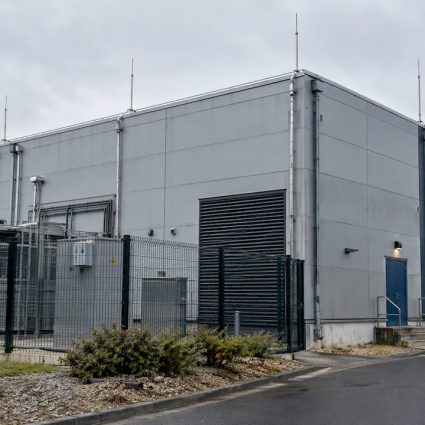
Surge and earthing design needs to enter the project during the layout study, not after commissioning. Sites in exposed locations, industrial parks, or anywhere classified ICPE carry real lightning exposure that charger-only contractors rarely scope. Adding protection after the fact means reopening trenches and re-running earthing conductors, work that costs far more retrofitted than designed in from the start.
The missing line items to ask about explicitly: surge protection devices sized for the charger’s power electronics, and deep grounding work if the site’s existing earthing doesn’t meet the resistance values the installation needs.
— INDELEC
Get Your Charging Site Audited Before You Sign a Single Contract
Indelec is the specialist a charger-only contractor can’t replace: where they stop at the panel, an audit from Indelec covers CFN-based sizing, surge and earthing design, and coordination with your chosen installer so protection isn’t bolted on after the fact.

Engaging Indelec before works begin means grounding and surge protection get designed into the layout instead of retrofitted later, which is where most cost overruns on charger projects actually come from. It also keeps your funding dossier clean: an IRVE-qualified audit trail matters when Advenir or regional aid reviewers check documentation. For sites with real lightning exposure, Indelec’s Prevectron3 lightning protection integrates directly into the same electrical design as your charging infrastructure. Request a site audit now, before your installer breaks ground.
Sources
- Enedis technical guidance (CFN) — Enedis
- Utilitaires
- Borne de recharge entreprise : prix, aides et devis 2026 — MaBorneAuto
- Installation costs guide — Speeder