How to Develop Lightning Emergency Protocols for Safety Teams

TL;DR:
- Effective lightning protocols require a detailed written plan, clear authority delegation, and compliant shelter identification to ensure safety. Regular drills, ongoing training, and strict post-storm procedures are essential for OSHA compliance and personnel protection. Physical infrastructure such as lightning rods and surge protectors must work in tandem with procedural protocols to minimize lightning-related risks.
Lightning emergency protocols are structured plans that define exactly how a facility or worksite suspends operations, evacuates personnel, and resumes work safely when thunderstorms threaten. Under OSHA’s General Duty Clause (29 CFR § 5(a)(1)), any outdoor worksite with more than 10 employees must maintain a written lightning safety plan. Knowing how to develop lightning emergency protocols is not optional for safety professionals. It is a legal and operational requirement that directly determines whether your team survives a strike event or becomes an OSHA case study.
What are the essential components of an effective lightning emergency protocol?
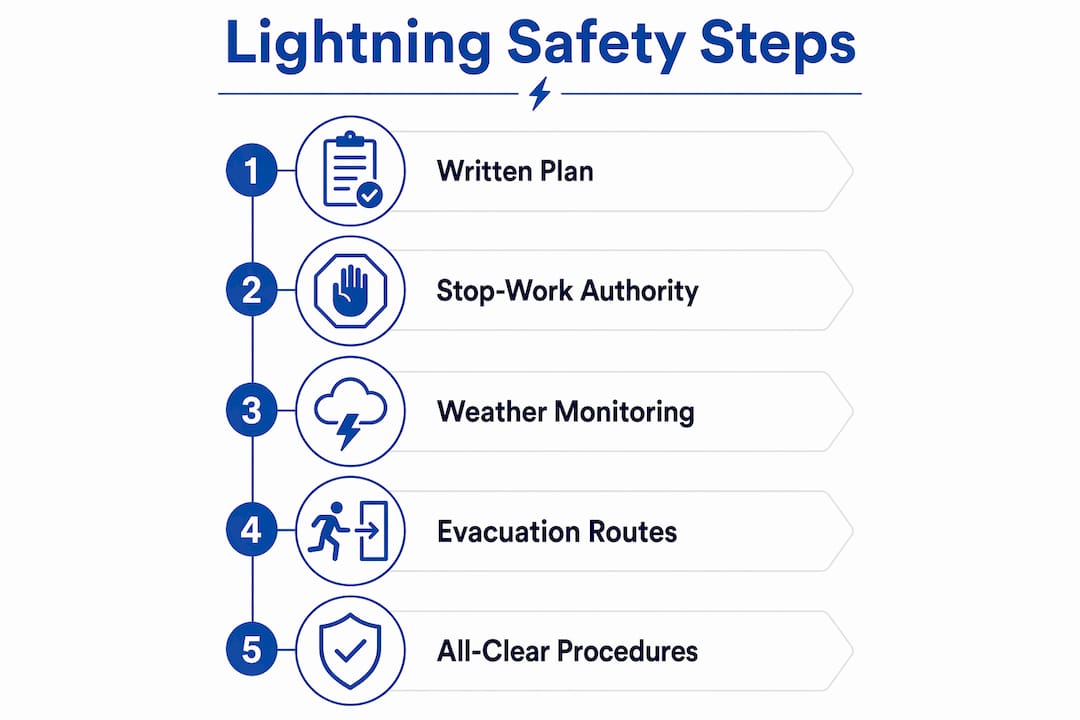
A lightning emergency protocol, also called a Lightning Safety Plan (LSP) in formal OSHA and NOAA documentation, must address five non-negotiable components. Missing any one of them creates both compliance gaps and real danger for your workforce.
1. A written emergency action plan specific to lightning
Verbal instructions do not satisfy OSHA’s written plan requirement. The document must name the worksite, describe the hazard, and outline specific response steps. Generic storm plans that lump lightning in with wind or rain events will not pass an OSHA audit.
2. A designated competent person with stop-work authority
Every shift must have one named individual with the explicit, documented authority to halt all outdoor work. This person does not ask for permission. The authority is pre-granted and written into the plan.
3. Weather monitoring tools and notification procedures
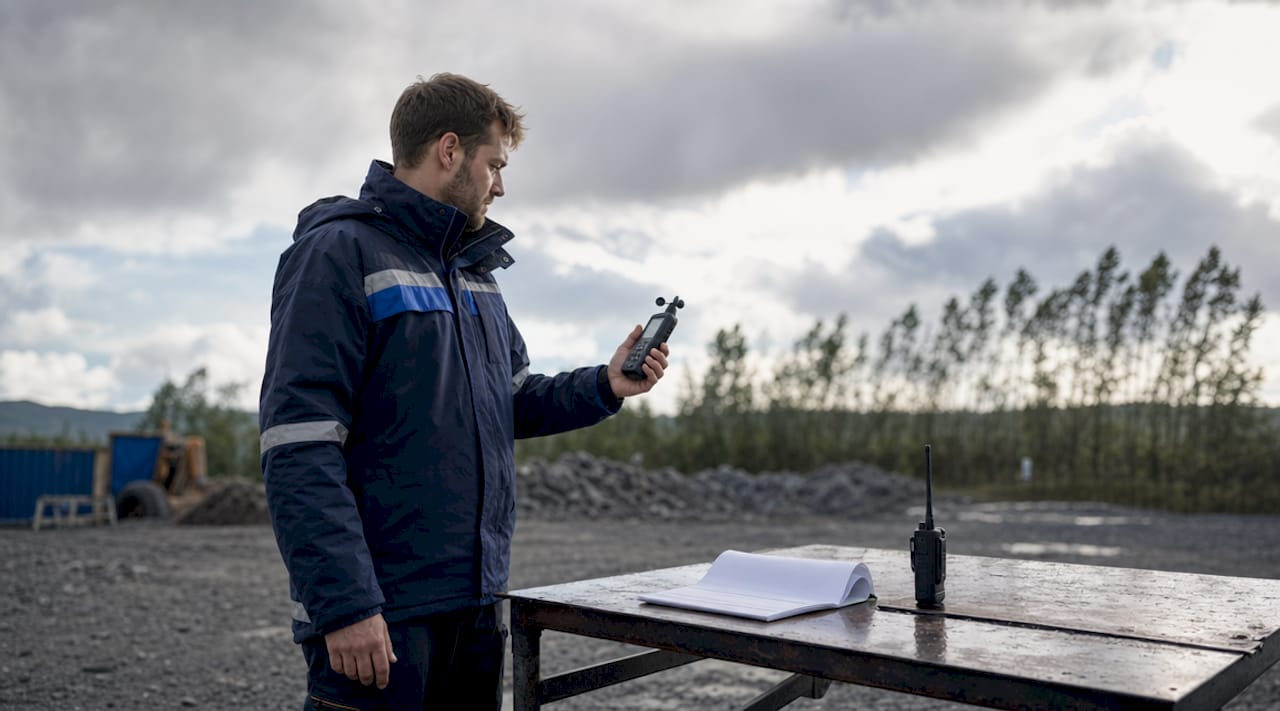
Your plan must specify which tools your team uses to track storm development. Options include the National Weather Service (NWS) alert system, dedicated lightning detection apps such as WeatherBug or Earth Networks, and on-site lightning detection equipment. The plan must also state how alerts reach every worker on site, including subcontractors.
4. Shelter identification and evacuation routes
Every worksite needs pre-mapped routes to approved shelters, with timing verified during onboarding drills. Evacuation plans must ensure workers can reach approved shelters within 30 seconds of flash-to-bang time. That is not a guideline. It is a design constraint that forces you to map and time every route before a storm arrives.
5. Post-storm all-clear procedures
The plan must define who issues the all-clear, based on what criteria, and how that decision is communicated. Without a formal all-clear process, workers often return to outdoor positions too early.
Pro Tip:Write your protocol as a series of if-this-then-that decision rules. Pre-written conditional rules reduce decision fatigue during storms and speed up evacuation decisions when seconds matter.
How do you assign clear authority to act during a lightning threat?
Many OSHA citations arise from unclear authority structures where workers waited for a project manager or site supervisor to approve a work stoppage. That delay is the single most preventable cause of lightning fatalities on worksites. Assigning authority correctly requires four deliberate steps.
Name the competent person for every shift in writing. The plan must list the role, not just the individual. When a named person is absent, a backup must be designated automatically. Do not leave this to verbal handoffs.
Train each competent person on the 30-30 rule. The 30-30 rule requires suspending work when lightning is detected within 6 miles and waiting 30 minutes after the last strike before resuming. Flash-to-bang time under 30 seconds means the storm is within 6 miles. Every competent person must be able to calculate this without tools.
Document stop-work authority in the written plan. The phrase “competent person has authority to stop work immediately without managerial approval” must appear verbatim in your LSP. This protects the worker legally and removes hesitation.
Extend reporting rights to all workers. Any crew member who observes lightning or hears thunder must be empowered to report it without fear of pushback. Safety culture that punishes false alarms creates the conditions for real casualties.
Pro Tip:During onboarding, run a tabletop exercise where the competent person practices calling a work stoppage over a simulated objection from a supervisor. This rehearsal removes the social friction that delays real decisions.
What shelter criteria and evacuation procedures does OSHA require?
Shelter selection is where many lightning safety procedures fail in practice. Facilities often designate tents, open-sided sheds, or portable toilets as shelter points. None of these qualify. Only substantial enclosed buildings with wiring and plumbing, or fully enclosed metal-topped vehicles, satisfy OSHA-NOAA shelter criteria. This distinction matters because it directly affects your site layout and evacuation route design.
Comparing approved vs. non-approved shelter types
| Shelter type | OSHA-NOAA compliant? | Notes |
|---|---|---|
| Enclosed building with wiring and plumbing | Yes | Best option; interior rooms away from windows preferred |
| Fully enclosed metal-topped vehicle | Yes | Windows must be fully closed |
| Open-sided shed or canopy | No | Provides no protection from side flash |
| Tent or temporary structure | No | Increases risk; metal poles attract strikes |
| Portable toilet | No | Non-compliant regardless of material |
| Picnic shelter or pavilion | No | Open sides create lethal exposure |
Once you confirm compliant shelter locations, map evacuation routes with measured walking times. Routes must account for the full crew size, including contractors and visitors. Bottlenecks at doorways or gates must be identified and resolved before a storm event.
Communication systems are equally critical to shelter procedures. Two-way radios and mass-text alerts are the standard for site-wide notification. Cell phones alone are unreliable during severe weather because network congestion and signal interference reduce their effectiveness precisely when you need them most. Test all communication systems monthly and document the results.
For multi-contractor sites, a unified protocol is mandatory. Each subcontractor’s crew must follow the same shelter locations, the same alert signals, and the same all-clear process. Separate protocols for different crews on the same site create dangerous confusion during an actual event.
How to conduct lightning safety training, drills, and documentation
Lightning safety training is not a one-time orientation item. It is a recurring program with specific timing, content, and documentation requirements that OSHA auditors will examine directly.
Deliver site-specific, scenario-based training at onboarding. Generic online courses do not satisfy the site-specific requirement. Training must reference your actual shelter locations, your specific communication tools, and the names of your designated competent persons. Workers must be able to describe the evacuation route from their assigned work area.
Schedule annual refresher training before storm season. Training documentation must be retained for at least 3 years. Refresher timing is regional: February or March for Gulf Coast operations, April for Northeast sites. Conduct refreshers before the first high-risk month, not after the first close call.
Run quarterly surprise evacuation drills. Quarterly surprise drills reveal bottlenecks and embed lightning response behaviors more effectively than announced exercises. A drill where workers know the time and date in advance measures compliance theater, not actual preparedness.
Conduct after-action reviews within 24 hours of every drill. Document what worked, what failed, and what changes the plan requires. These reviews are the mechanism by which your protocol improves over time.
Maintain a training log with dates, attendees, and content summaries. The log must be accessible for OSHA inspection. Digital records stored in a safety management system such as Intelex or SafetyCulture are acceptable, provided they can be produced on demand.
Pro Tip:Photograph your shelter routes and embed the images directly in the written plan. Visual documentation accelerates onboarding and gives OSHA auditors immediate evidence of site-specific planning.
How to implement post-storm resumption and equipment safety protocols
Resuming work after a lightning storm is as regulated as stopping it. The 30-minute waiting period after the last observed strike is the minimum standard, and it is non-negotiable regardless of production pressure or schedule constraints.
Post-storm resumption requires a structured sequence of steps before any outdoor work restarts:
- Confirm the 30-minute all-clear window has elapsed since the last observed lightning strike or thunder. The competent person logs the time of the last strike and the time of the all-clear decision.
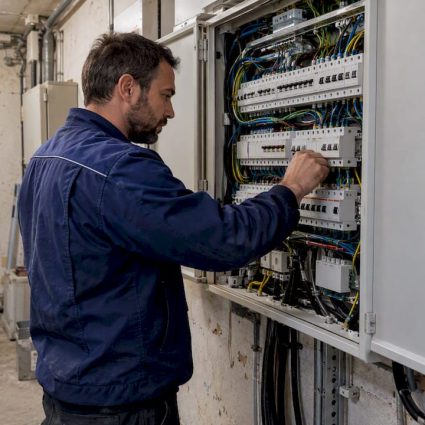
- Inspect electrical equipment and surge protection devices before restarting. Post-storm inspections must address surge protection devices and infrastructure earthing to prevent damage from delayed electrical surges that may not be immediately visible.
- Check for physical damage to structures, equipment, and grounding connections before restoring power or resuming operations.
- Log any near-miss events or unusual observations from the storm period. Near-miss logs are the foundation of incident review and protocol improvement.
| Post-storm action | Responsible party | Timing |
|---|---|---|
| Confirm 30-minute all-clear | Competent person | Before any outdoor work resumes |
| Inspect surge protection devices | Electrical safety officer | Before equipment restart |
| Check grounding and earthing connections | Maintenance team | Before power restoration |
| Log near-miss events | Competent person | Within 1 hour of all-clear |
| Submit incident review report | Safety manager | Within 24 hours |
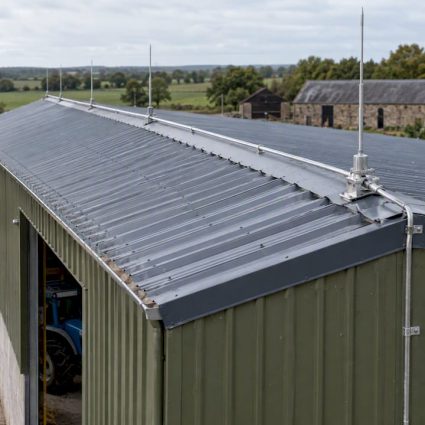
Surge protection maintenance is integral to post-lightning safety, not a separate infrastructure concern. Facilities that treat physical lightning protection as disconnected from their emergency protocols create gaps that neither the safety team nor the maintenance team owns. Integrating both into a single review process closes that gap.
Key takeaways
Effective lightning emergency protocols require a written plan, named authority, compliant shelters, regular drills, and a formal post-storm resumption process to satisfy OSHA requirements and protect personnel.
| Point | Details |
|---|---|
| Written plan is mandatory | OSHA requires a documented LSP for outdoor sites with more than 10 employees; verbal plans are non-compliant. |
| Authority must be pre-granted | Competent persons must have documented stop-work authority without needing managerial approval. |
| Shelter criteria are strict | Only enclosed buildings with wiring and plumbing, or fully enclosed metal-topped vehicles, qualify under OSHA-NOAA standards. |
| Training records must be retained | Keep documentation for at least 3 years and conduct annual refreshers before storm season begins. |
| Post-storm resumption is regulated | The 30-minute all-clear rule applies without exception; inspect surge protection before restarting any equipment. |
What most lightning protocols get wrong, from Indelec’s perspective
After decades of working with industrial facilities, energy infrastructure operators, and construction managers across multiple continents, Indelec has observed one pattern that explains the majority of protocol failures: organizations treat lightning safety as a paperwork exercise rather than an operational system.
The written plan exists. The shelter locations are listed. The training records are filed. But when a storm develops faster than forecast on a Tuesday afternoon, the competent person hesitates because no one ever told them they could stop a $2 million pour without a phone call to the project director. That hesitation is the gap between a compliant document and a functioning protocol.
The second pattern Indelec sees consistently is the disconnect between the emergency response plan and the physical infrastructure. A facility can have a perfect LSP and still suffer significant equipment damage or personnel risk because its lightning protection system has not been inspected since installation, or because surge protection devices were never integrated into the post-storm checklist. Lightning risk management is not complete until the physical protection layer and the procedural layer are designed to work together.
The protocols that actually protect people are the ones where frontline workers know the rules, believe they have the authority to act, and can reach a compliant shelter before the count reaches 30. Everything else is documentation.
— Indelec
How Indelec supports your lightning emergency protocols

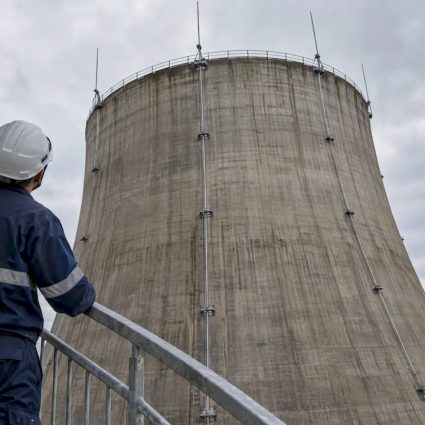
Building a compliant lightning emergency protocol requires more than a written plan. It requires physical infrastructure that performs when the storm arrives. Indelec’s Prevectron3 lightning rods use patented OptiMax technology to extend the protection radius of your facility’s lightning protection system, reducing the risk of direct strikes to structures and equipment. For safety professionals developing or auditing their site’s full protection posture, Indelec also provides risk assessment and installation services that align physical infrastructure with OSHA and IEC 62305 compliance requirements. Contact Indelec to request a site assessment and confirm your facility’s protection meets current standards.
FAQ
What is the 30-30 rule in lightning safety procedures?
The 30-30 rule requires stopping all outdoor work when lightning is detected within 6 miles, calculated by a flash-to-bang time under 30 seconds, and waiting 30 minutes after the last observed strike before resuming. This rule is the operational core of any OSHA-compliant lightning emergency protocol.
Does OSHA require a written lightning safety plan?
OSHA mandates a written lightning safety plan for outdoor worksites with more than 10 employees under the General Duty Clause (29 CFR § 5(a)(1)). Verbal-only plans are non-compliant and expose employers to citations and liability.
What shelters are approved for lightning safety under OSHA-NOAA guidelines?
Only substantial enclosed buildings with both wiring and plumbing, or fully enclosed metal-topped vehicles with windows closed, qualify as approved shelters. Tents, open sheds, picnic shelters, and portable toilets do not meet compliance standards.
How long must lightning safety training records be retained?
Training documentation must be retained for at least 3 years and must be available for OSHA inspection on demand. Annual refresher training should be completed before the start of regional storm season.
How do you integrate physical lightning protection with emergency protocols?
Post-storm resumption procedures must include inspection of surge protection devices and grounding connections before restarting equipment. Facilities should align their lightning protection standards with their written LSP to create a single, unified safety system.