Why Regular Maintenance Matters for Facility Managers
TL;DR:
- Regular maintenance proactively prevents costly equipment failures, enhances safety, and extends asset lifespan. It also reduces energy consumption, supports regulatory compliance, and aligns with sustainability goals. Effective programs depend on clear inspection standards, digital recordkeeping, and appropriate approach selection based on asset criticality.
Regular maintenance is the proactive process of scheduled inspections, cleaning, lubrication, and targeted repairs designed to keep infrastructure and equipment safe, efficient, and durable. Facility managers who treat upkeep as a strategic priority rather than a reactive chore consistently outperform those who wait for failures to force their hand. Inadequate maintenance reduces production capacity by roughly 20%, a figure that translates directly into lost revenue and compromised safety. Understanding why regular maintenance is non-negotiable starts with recognizing it as risk management, not just housekeeping.
Why regular maintenance prevents costly failures and downtime
Preventive maintenance works by catching small problems before they compound into expensive emergencies. A fouled heat exchanger, a loose electrical connection, or a worn bearing each costs relatively little to address during a scheduled visit. Left unattended, each one can trigger cascading failures that shut down entire systems for days.
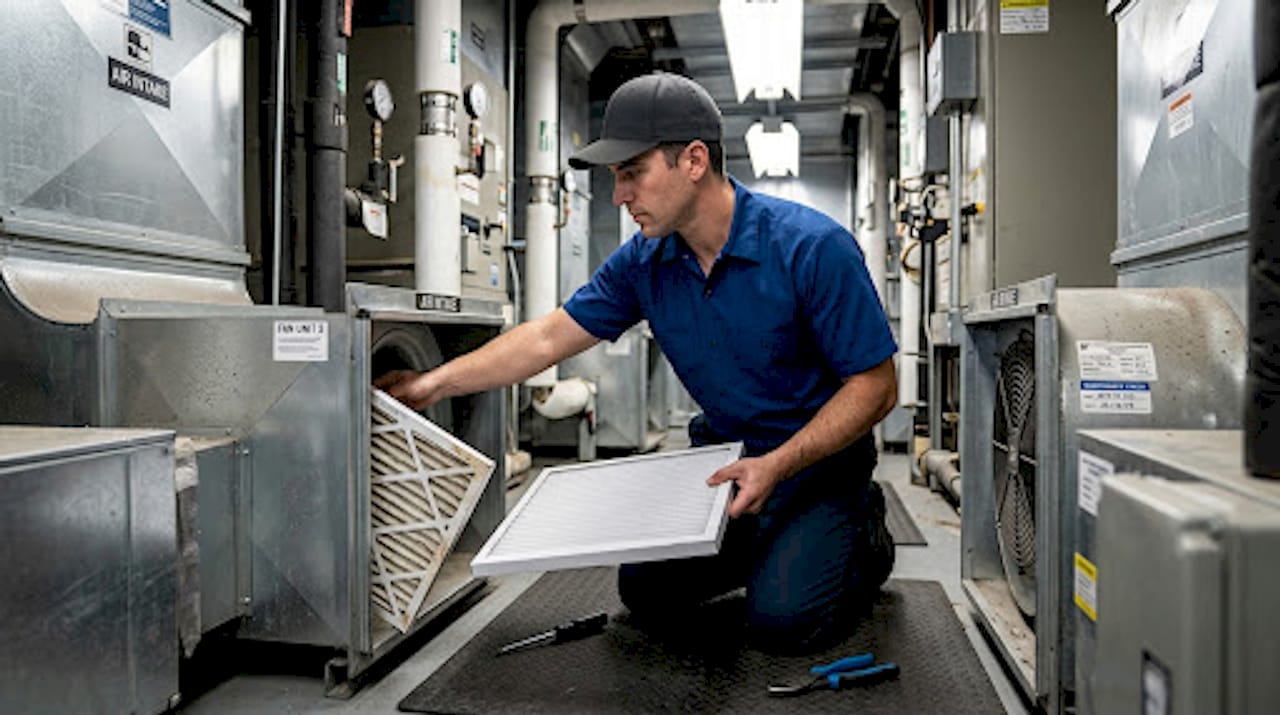
The financial math is stark. Unplanned HVAC shutdowns cost four to eight times more than the equivalent preventive work. That multiplier applies across virtually every building system, from fire suppression to electrical distribution. Structured preventive programs also extend major equipment life by 30 to 40%, which directly delays capital replacement expenditures.
Common failure causes that routine upkeep eliminates or reduces include:
- Lubrication breakdown in rotating equipment, leading to bearing seizure
- Fouled filters and coils that force motors to overwork and overheat
- Corrosion on electrical contacts that increases resistance and creates fire risk
- Calibration drift in sensors and controls that distorts system behavior
- Accumulated debris in drainage and ventilation paths that causes blockages
Pro Tip:Schedule lubrication and filter replacement on a fixed calendar interval, then adjust frequency based on actual condition data collected over two or three cycles. This prevents both under-maintenance and unnecessary labor.
Routine maintenance activities are typically scheduled during planned downtime windows to protect productivity. The goal is not simply to perform tasks but to verify that systems meet defined performance thresholds before returning them to service. That verification step is what separates genuine upkeep from checkbox compliance.
How maintenance protects safety and supports regulatory compliance
Safety is the most direct and non-negotiable benefit of regular upkeep. Physical asset degradation is the origin point of most facility accidents, from electrical fires to structural failures to chemical releases. EHS issues frequently originate in asset conditions, which means maintenance programs are, by definition, safety programs.
Regulatory frameworks reinforce this connection. NFPA 25, the standard governing water-based fire protection systems, mandates specific inspection and testing frequencies precisely because fire sprinkler failures often trace back to control valve degradation that routine inspection would have detected. Silent failures in life-safety systems are the most dangerous category of maintenance neglect because they remain invisible until the moment they are needed most.
Documented maintenance records serve a dual purpose. They demonstrate regulatory compliance during audits and function as a risk control mechanism in their own right. Digital checklists with versioned sign-offs create traceable evidence that inspections occurred, defects were logged, and corrective actions were completed. Without that paper trail, a facility manager has no defense when an incident triggers an OSHA investigation.
Key safety outcomes that structured maintenance programs deliver:
- Reduced probability of equipment-related injuries and fatalities
- Documented compliance with NFPA, OSHA, and local building codes
- Early detection of fire, electrical, and structural hazards
- Verified operability of life-safety systems before emergencies occur
Pro Tip:Integrate your maintenance management system with your EHS platform so that every defect flagged during an inspection automatically generates a corrective action record. This closes the loop between detection and resolution and eliminates the risk of a finding being noted but never addressed.
The importance of maintenance to safety extends beyond physical hazards. Facilities with strong maintenance cultures also tend to have stronger overall safety cultures, because the discipline of systematic inspection trains workers to notice and report anomalies across all operational areas.
Does regular maintenance improve efficiency and sustainability?
The answer is unambiguous: yes, and the scale of the opportunity is larger than most facility managers realize. Failing to maintain infrastructure well contributes to roughly 25 to 30% of global greenhouse gas emissions and costs between $1 trillion and $3 trillion annually. That figure from the World Economic Forum reframes the maintenance gap as a climate and economic crisis, not merely an operational inconvenience.
At the building level, the connection between upkeep and energy performance is direct and measurable. HVAC systems with fouled coils, dirty filters, or miscalibrated controls consume significantly more energy to deliver the same output. Seasonal scheduling combined with performance verification, a practice grounded in HVAC maintenance best practices, catches these inefficiencies before they inflate utility bills for an entire quarter.
Sustainability benefits of a structured maintenance program include:
- Lower energy consumption through optimized equipment performance
- Reduced refrigerant and fluid leaks that contribute to emissions
- Extended asset lifespan that delays manufacturing demand for replacement equipment
- Fewer emergency repairs that generate waste materials and unplanned chemical disposal
- Alignment with ESG reporting requirements by demonstrating operational stewardship
Facility managers pursuing sustainability certifications such as LEED or BREEAM will find that maintenance records are often required evidence for energy and water efficiency credits. The link between scheduled maintenance and ESG performance is not theoretical. It shows up directly in certification audits and investor-facing sustainability disclosures.
The business case for regular maintenance advantages in this context is straightforward. Every dollar invested in preventive upkeep reduces both operating costs and carbon output simultaneously, which satisfies financial, regulatory, and reputational objectives at once.
What does an effective maintenance program actually look like?
Most facilities have maintenance checklists. Far fewer have maintenance programs that reliably produce results. The distinction matters because maintenance theater occurs when checklists exist but effective execution and problem resolution triggers are missing. A technician who inspects a component, notes a deficiency, and moves on without triggering a corrective action has performed theater, not maintenance.
Effective programs are built around three structural elements: documented inspection results with defined acceptance criteria, condition-based thresholds that trigger escalation, and clear escalation pathways that route defects to resolution. Without all three, the program produces records but not outcomes.
The table below compares the three primary maintenance approaches facility managers use:
| Approach | Trigger | Cost profile | Best suited for |
|---|---|---|---|
| Reactive (run-to-failure) | Equipment failure | High emergency repair costs | Non-critical, easily replaced assets |
| Preventive | Fixed schedule | Predictable, moderate cost | Most building systems |
| Predictive | Condition data | Higher upfront, lower total cost | High-value or high-risk equipment |
Predictive maintenance uses sensor data, vibration analysis, and thermal imaging to identify degradation before it reaches a failure threshold. It complements preventive work rather than replacing it. A generator fuel maintenance program is a practical example of scheduled preventive work that prevents the kind of fuel degradation that causes startup failures during power outages, exactly when backup generation is most critical.
Digital tools have made scheduling and recordkeeping far more manageable. Computerized Maintenance Management Systems (CMMS) platforms automate work order generation, track completion rates, and flag overdue tasks. They also produce the audit-ready documentation that regulatory compliance demands.
Pro Tip:Define acceptance criteria for every inspection item before you deploy a checklist. “Inspect belt condition” is theater. “Inspect belt for cracking, fraying, or glazing; replace if any defect is present” is a maintenance standard.
Key takeaways
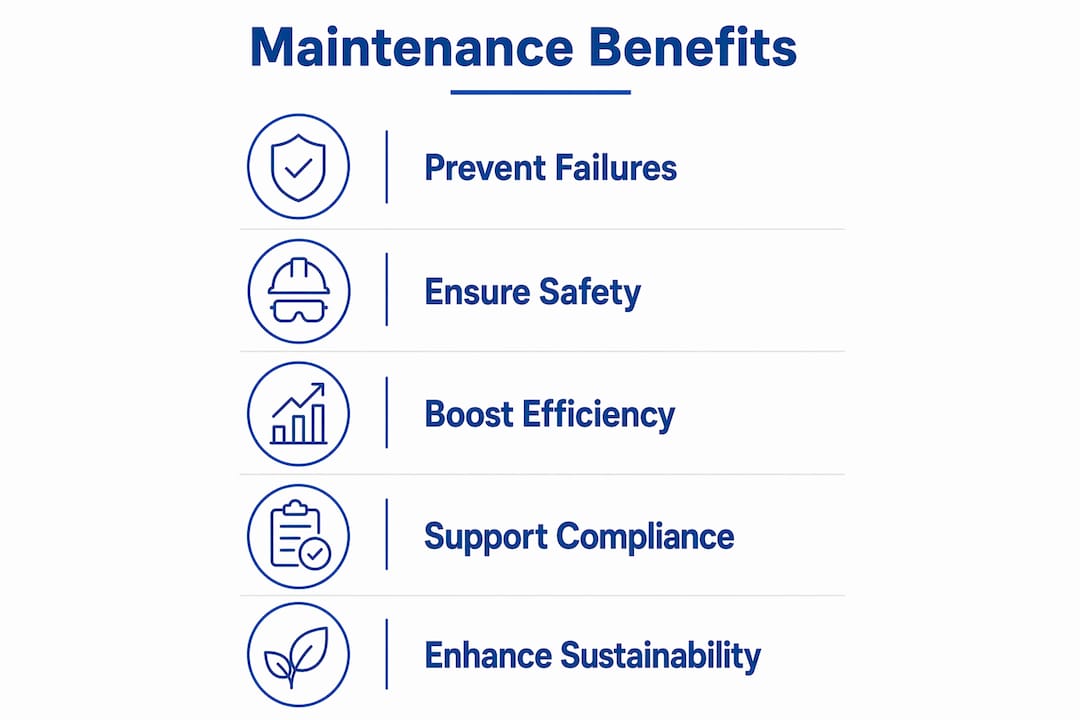
Regular maintenance is the single most cost-effective strategy for protecting facility safety, operational efficiency, and long-term asset value simultaneously.
| Point | Details |
|---|---|
| Prevent failures proactively | Routine inspections catch small defects before they trigger costly shutdowns or safety incidents. |
| Safety and compliance are linked | Documented maintenance records satisfy NFPA, OSHA, and building code requirements while reducing accident risk. |
| Maintenance drives sustainability | Closing the maintenance gap reduces energy waste and supports ESG and emissions reduction targets. |
| Avoid maintenance theater | Checklists without acceptance criteria and escalation paths produce records, not results. |
| Match approach to asset risk | Use preventive schedules for most systems and predictive tools for high-value or high-risk equipment. |
Maintenance as strategy, not overhead
At Indelec, we have spent decades working with facility managers and building owners who treat lightning protection as a one-time installation rather than an ongoing system. That mindset is the same one that allows corroded grounding connections, degraded air terminals, and compromised bonding conductors to persist undetected for years. By the time a strike reveals the failure, the damage to equipment, data, and operations far exceeds what a scheduled inspection would have cost.
The broader lesson applies to every building system. Maintenance is not overhead. It is the mechanism by which the value embedded in physical assets is preserved and the risks those assets carry are managed. Facility managers who frame maintenance as a cost center will always struggle to justify the budget. Those who frame it as risk management and value protection will find the conversation with ownership and finance far easier.
The challenge we see most often is not a lack of intent but a lack of structure. Maintenance programs that lack defined thresholds, escalation paths, and digital recordkeeping tend to degrade over time into the theater described earlier. The fix is not more checklists. It is better program design, with accountability built into the workflow from the start.
Aligning maintenance schedules with sustainability reporting cycles is one practical step that delivers immediate organizational value. When your maintenance data feeds directly into your ESG disclosures, upkeep stops being invisible and starts being a measurable contribution to business objectives. That visibility changes how leadership perceives and funds the function.
— Indelec
How Indelec supports your facility maintenance strategy
Lightning protection systems are life-safety infrastructure, and like every other building system, they require scheduled inspection, testing, and certification to remain reliable. Indelec has delivered lightning protection solutions to industrial, commercial, and infrastructure clients since 1955, combining certified installation with structured maintenance and compliance documentation. Our maintenance programs include condition assessments, grounding continuity verification, and air terminal performance checks, all documented to meet international standards. If your facility’s lightning protection system has not been inspected within the past 12 months, the risk exposure is real. Explore Indelec’s protection maintenance services to understand what a compliant, audit-ready program looks like for your infrastructure.
FAQ
Why is regular maintenance necessary for facilities?
Regular maintenance prevents equipment failures, reduces safety hazards, and keeps building systems operating at designed efficiency. Inadequate maintenance can reduce production capacity by roughly 20% and significantly increases the risk of unplanned downtime.
How does maintenance impact energy efficiency?
Well-maintained HVAC and electrical systems consume less energy because fouled components and miscalibrated controls force equipment to work harder than necessary. Structured preventive programs directly lower utility costs and reduce a facility’s carbon output.
What is the difference between preventive and predictive maintenance?
Preventive maintenance follows a fixed schedule regardless of equipment condition, while predictive maintenance uses sensor data and condition monitoring to trigger work only when degradation reaches a defined threshold. Most facilities benefit from using both approaches, with predictive tools reserved for high-value or high-risk assets.
How do maintenance records support regulatory compliance?
Documented inspection results with versioned sign-offs provide traceable evidence that required checks occurred and defects were resolved. NFPA 25, OSHA, and most local building codes require this documentation as proof of due diligence during audits and incident investigations.
Is regular maintenance necessary for lightning protection systems?
Lightning protection systems degrade over time through corrosion, physical damage, and grounding resistance changes that are invisible without testing. Scheduled inspections verify that air terminals, conductors, and grounding systems meet performance standards and remain compliant with applicable codes.