The Role of Technical Expertise in Protection Systems

TL;DR:
- Technical expertise is essential for designing, assessing, and maintaining protection systems aligned with standards and site risks. Soft skills like communication and collaboration are vital to ensure knowledge transfer and effective implementation within organizations. Continuous learning and organizational leadership drive resilience, innovation, and compliance in high-consequence infrastructure protection.
Technical expertise sits at the foundation of every effective protection system, yet the role of technical expertise in protection is frequently misunderstood. Many organizations assume that hiring technically skilled personnel is sufficient. It is not. The complexity of modern infrastructure protection, particularly for systems exposed to high-consequence risks like lightning strikes, demands something more integrated. This article breaks down what genuine technical expertise looks like in protection contexts, how it drives compliance and risk mitigation, and why it must be paired with leadership and communication to deliver results that last.
Table of Contents
- Key takeaways
- The role of technical expertise in protection systems
- How expertise drives risk mitigation and compliance
- Technical expertise and soft skills working together
- Applying technical expertise to lightning protection
- Building protection systems through continuous learning
- What I’ve learned about expertise and protection after decades in the field
- How Indelec supports technical excellence in protection
- FAQ
Key takeaways
| Point | Details |
|---|---|
| Technical expertise is foundational | Expert knowledge in risk assessment, system design, and standards compliance forms the base of any protection framework. |
| Soft skills amplify technical value | Employers value communication and adaptability equally alongside technical proficiency in safety-critical fields. |
| Proactive strategies outperform reactive ones | Maturity models and leading indicators allow technical experts to prevent incidents before they occur. |
| Lightning protection demands specialized depth | Navigating evolving standards and myths in lightning protection requires continuously updated technical knowledge. |
| Continuous training sustains system integrity | Ongoing education and mentorship keep technical expertise aligned with emerging risks and technology. |
The role of technical expertise in protection systems
Before you can assess why expertise matters, you need a clear picture of what it actually includes. In protection contexts, technical expertise is not simply the ability to operate equipment or recall standards from memory. It is the capacity to apply knowledge to real conditions, adapt when those conditions change, and recognize when a system’s design is no longer adequate.
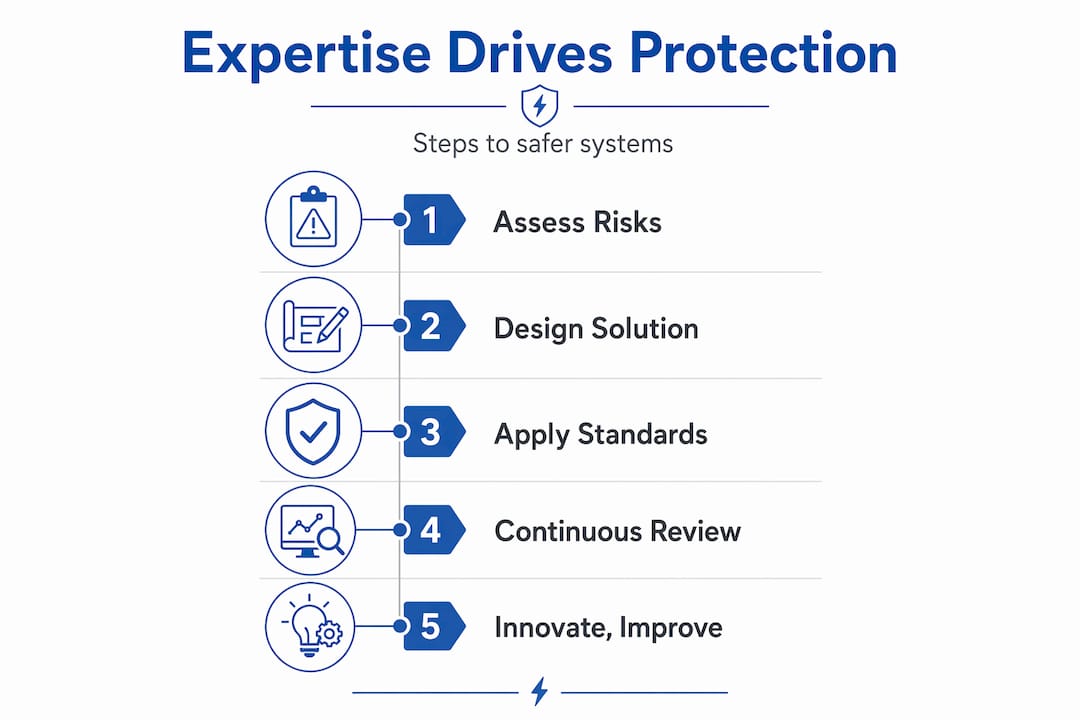
In the specific domain of lightning protection, that expertise spans several interconnected disciplines:
- Risk assessment: Identifying and quantifying lightning risk based on geographic data, structural characteristics, and occupancy type
- System design: Selecting appropriate lightning protection levels, placing air termination systems correctly, and sizing ground termination networks
- Standards compliance: Interpreting and applying relevant national and international standards such as IEC 62305, NFC 17-102, and local equivalents
- Installation oversight: Supervising installation to confirm that design intent is carried through to physical reality
- Maintenance and inspection: Conducting periodic checks that confirm system continuity and identify degradation before it becomes a failure
What separates a technically expert practitioner from a competent technician is systems thinking. A technician completes tasks. An expert understands how each task connects to the protection outcome and can identify where the system is vulnerable even when everything appears to function correctly. That distinction is what makes the importance of technical skills so pronounced in high-stakes infrastructure work.
It is also worth noting that technical expertise in protection is not confined to lightning systems. The same depth of knowledge is required in power quality protection, surge suppression, and the protection of highly sensitive installations such as data centers, hospitals, and industrial control facilities.
How expertise drives risk mitigation and compliance
The connection between technical knowledge and risk mitigation is direct and measurable. The UK Health and Safety Executive conducted over 13,200 inspections in 2024/25, representing a 47% increase from prior years. That level of regulatory scrutiny means organizations without documented, expert-led safety processes face real legal and operational exposure. Technical knowledge in protection is not just operationally valuable. It is legally necessary.
The more sophisticated dimension of this is the shift toward proactive risk management. The development of Safety Maturity Index and Cultural Maturity Index frameworks has given technical leaders a structured way to measure where their organizations stand before incidents occur. This is a departure from the traditional model of reacting to near-misses or failures after the fact.
| Risk management approach | What it requires | Outcome |
|---|---|---|
| Reactive (post-incident analysis) | Basic documentation, incident reports | Corrects known failures; misses systemic gaps |
| Preventive (scheduled inspections) | Compliance knowledge, maintenance schedules | Reduces repeat failures; still event-dependent |
| Proactive (maturity model-driven) | Deep technical expertise, systems thinking | Prevents failures before they manifest |
The table above captures why technical proficiency in safety is not a single threshold you cross once. It is a practice that evolves. Complex security ecosystems require diverse analytical frameworks maintained by technical experts. Adding more data without the expertise to interpret it creates noise rather than clarity.
Pro Tip:When building a compliance program for lightning protection, do not treat standards documents as checklists. Treat them as minimum thresholds. A technically skilled engineer will use standards to define the floor, then assess site-specific risks to determine what the actual protection level should be.
For organizations managing climate adaptation strategies in their electrical protection design, this proactive mindset is especially relevant. Climate-driven shifts in lightning frequency and intensity are already affecting risk calculations in regions that previously had low exposure.
Technical expertise and soft skills working together
Here is a gap that shows up repeatedly in protection engineering: a technically brilliant system design that fails in the field because no one communicated the installation requirements clearly. Or a rigorous inspection protocol that gets bypassed because the technician responsible did not understand why it mattered. Technical knowledge in protection creates the framework. Soft skills determine whether that framework gets executed.
Soft skills like communication, adaptability, and emotional intelligence are not peripheral to technical protection roles. They are what allows expertise to move from one person’s knowledge into an organization’s operating practice. Without them, even the most well-designed protection system can be undermined by human factors.
The practical consequences of this gap are significant:
- A poorly communicated maintenance schedule means inspections get deferred until a failure occurs
- A technical report written for engineers but reviewed by a facilities manager leads to misaligned decisions about investment in protection upgrades
- Cross-disciplinary projects, such as integrating lightning protection with building management systems, stall when electrical engineers and IT teams cannot establish a shared vocabulary
Strategies for closing this gap include structured technical briefings for non-specialist stakeholders, collaborative design reviews that include operations personnel alongside engineers, and mentorship programs that explicitly pair communication development with technical training.
Pro Tip:When presenting a lightning protection risk assessment to a client or internal stakeholder who is not a technical specialist, lead with the consequence of non-compliance, not the technical detail. Show the risk in operational terms first, then walk backward to the technical solution. Comprehension goes up significantly.
The significance of technical know-how is multiplied when the person who holds that knowledge can also translate it. That is the practitioner profile protection projects actually need.
Applying technical expertise to lightning protection
Lightning protection is a domain where the gap between adequate and expert matters considerably. The complexity of lightning standards and the rate at which green technologies are entering the market means that practitioners who rely on knowledge from five years ago are already operating with an outdated picture.
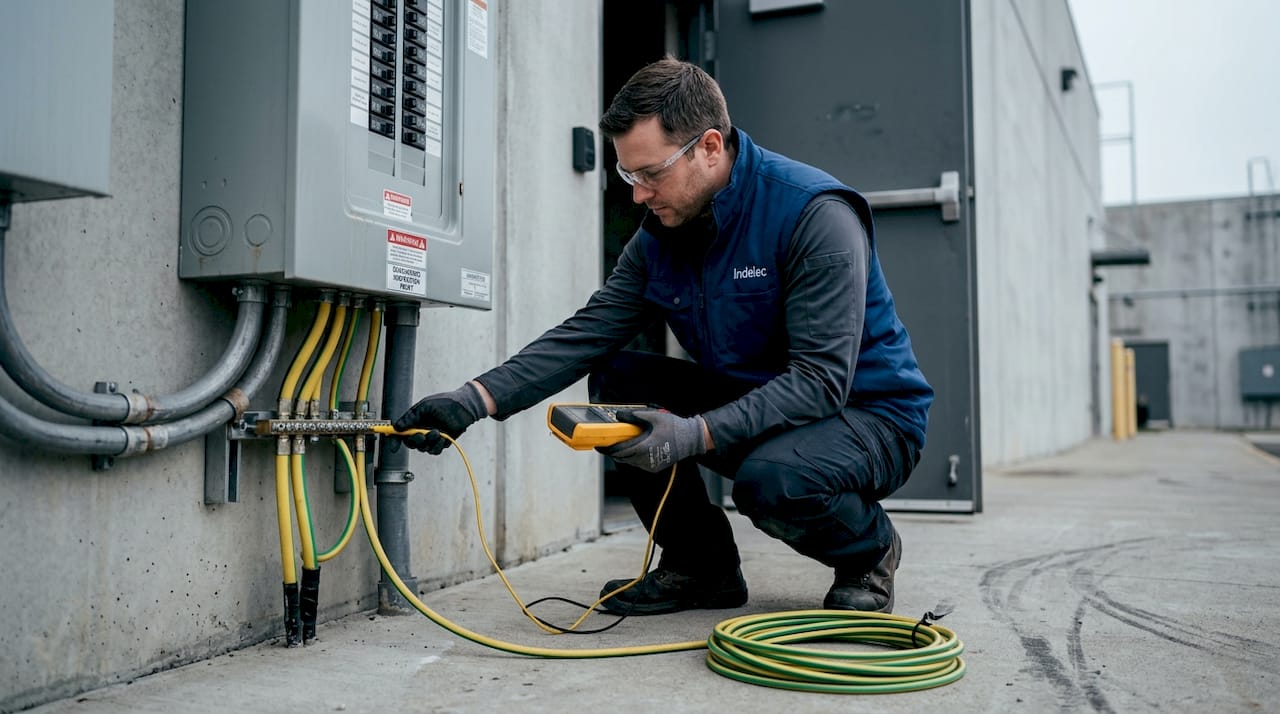
The most common technical failure in lightning protection is not ignorance of standards. It is overconfidence in simplified rules. Myths around direct strike protection persist even among experienced practitioners. For example, the belief that a taller structure always requires a higher protection level ignores site-specific factors including soil resistivity, nearby structures, and the type of equipment housed inside. Applying expert knowledge in direct strike protection avoids costly and ineffective implementations that pass a superficial inspection but leave real vulnerabilities in place.
| Protection approach | Without technical expertise | With technical expertise |
|---|---|---|
| Risk level determination | Default to highest protection class | Site-specific calculation using IEC 62305 methodology |
| Air termination placement | Follow generic geometry rules | Optimize placement based on structure type and content risk |
| Grounding system design | Standard rod depth and count | Soil resistivity testing, equipotential bonding verification |
| System maintenance | Annual visual inspection only | Continuity testing, impedance measurement, documentation trail |
Technical leadership also drives innovation in this field. The move toward environmentally responsible protection solutions, including systems designed with reduced material footprints and compatibility with renewable energy infrastructure, requires expertise that spans both traditional lightning protection physics and newer sustainability standards. Organizations that treat lightning protection as a static discipline will fall behind both technically and competitively.
Building protection systems through continuous learning
Protection systems do not maintain themselves. Neither does the technical expertise required to manage them. The third dimension of how expertise enhances protection is organizational: building the structures that allow expert knowledge to grow, transfer, and adapt.
- Invest in structured technical training programs.Technical training programs that integrate evolving lightning protection standards with hands-on application keep practitioners current in a way that self-directed learning rarely achieves.
- Build mentorship into project workflows. Pairing junior engineers with experienced practitioners on real protection assessments accelerates skill development more than classroom instruction alone.
- Use maturity assessments to identify knowledge gaps. Applying maturity models at the team level, not just the system level, reveals where technical depth is concentrated and where it is thin.
- Institutionalize knowledge through documentation. Detailed records of risk assessments, design decisions, and inspection findings create an organizational memory that survives personnel turnover.
- Track industry developments proactively. Standards bodies update requirements, new technologies create new risk profiles, and climate data is shifting baseline assumptions about lightning exposure in many geographies.
Modern engineers who lead protection programs effectively combine technical skills with project management and risk mitigation capabilities. Technical expertise without organizational leadership produces knowledge that stays siloed. Leadership without technical depth produces process without substance. The organizations that build the most resilient protection cultures are the ones that develop both.
What I’ve learned about expertise and protection after decades in the field
In my experience, the most persistent mistake organizations make is treating technical expertise as a credential rather than a practice. They hire a qualified engineer, point to the certification on the wall, and consider the expertise question answered. What I’ve seen repeatedly is that credentials create a starting point. They do not sustain a protection system.
What I find most undervalued in this industry is the willingness to challenge an existing design. The impact of skills in defense is not just building new systems correctly. It’s the ability to look at a system that has been in place for years, ask whether it would still be designed the same way today, and make a clear-eyed recommendation when the answer is no. That takes technical depth, yes. But it also takes the confidence to say something unpopular.
The shift toward proactive, maturity-based safety strategies is one of the most significant developments I’ve observed. It is moving the conversation from “did anything go wrong?” to “what is the probability that something will go wrong, and what are we doing to change that probability?” That is precisely where technical expertise creates its highest value. Not in diagnosing failures after the fact, but in designing conditions where failures become far less likely.
My advice to any protection professional is this: do not let technical mastery become a comfort zone. The most effective practitioners I know are also the most curious. They attend standards committee meetings, they test new grounding materials, and they read failure analyses from industries adjacent to their own. That kind of intellectual restlessness is what keeps technical expertise current.
— Indelec
How Indelec supports technical excellence in protection
Indelec has spent nearly seven decades developing the kind of technical depth that protection systems demand. If you are evaluating whether your current lightning protection infrastructure reflects today’s risk environment and standards, the starting point is a thorough assessment by specialists who understand both the physics and the compliance landscape.
Indelec’s lightning protection system application services cover the full lifecycle, from initial risk assessment and design through installation, maintenance, and certification. For organizations focused on building internal capability, Indelec’s technical training programs are designed to develop practitioners who can apply standards correctly and adapt as the field evolves. And for those working in sectors where environmental responsibility is part of the brief, Indelec’s green lightning protection solutions demonstrate that technical leadership and sustainability are not competing priorities.
FAQ
What does the role of technical expertise in protection actually mean?
It refers to the applied capacity to design, assess, install, and maintain protection systems in accordance with current standards and site-specific risks. Technical expertise goes beyond credential holding. It requires active application and continuous updating as standards and risk environments change.
Why are soft skills relevant in technical protection roles?
Because technical knowledge only creates value when it is communicated, understood, and acted on by others. Research shows that employers weight soft skills alongside technical proficiency in safety-critical fields, as failures in communication can directly compromise protection outcomes.
How does technical expertise improve lightning protection compliance?
Expert practitioners interpret standards not as static checklists but as frameworks requiring site-specific application. This approach produces systems that meet regulatory requirements and address actual risk, reducing both compliance exposure and the probability of system failure.
What is the benefit of proactive versus reactive protection strategies?
Proactive strategies use maturity models and leading safety indicators to identify and address risks before incidents occur. Reactive strategies correct known failures after the fact, which is costlier and leaves organizations exposed during the gap between incident and correction.
How often should lightning protection systems be re-evaluated by technical experts?
Re-evaluation should occur at regular inspection intervals per applicable standards, and additionally when structures are modified, when new equipment with higher sensitivity is introduced, or when regional climate data indicates a change in lightning exposure. Technical expertise determines whether a standard inspection cycle is adequate or whether a full design review is warranted.