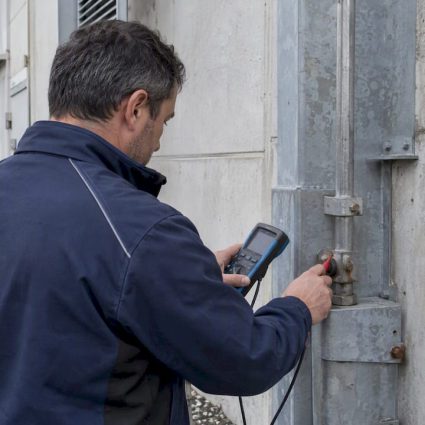
Direct strike protection: Standards, myths, and best practices
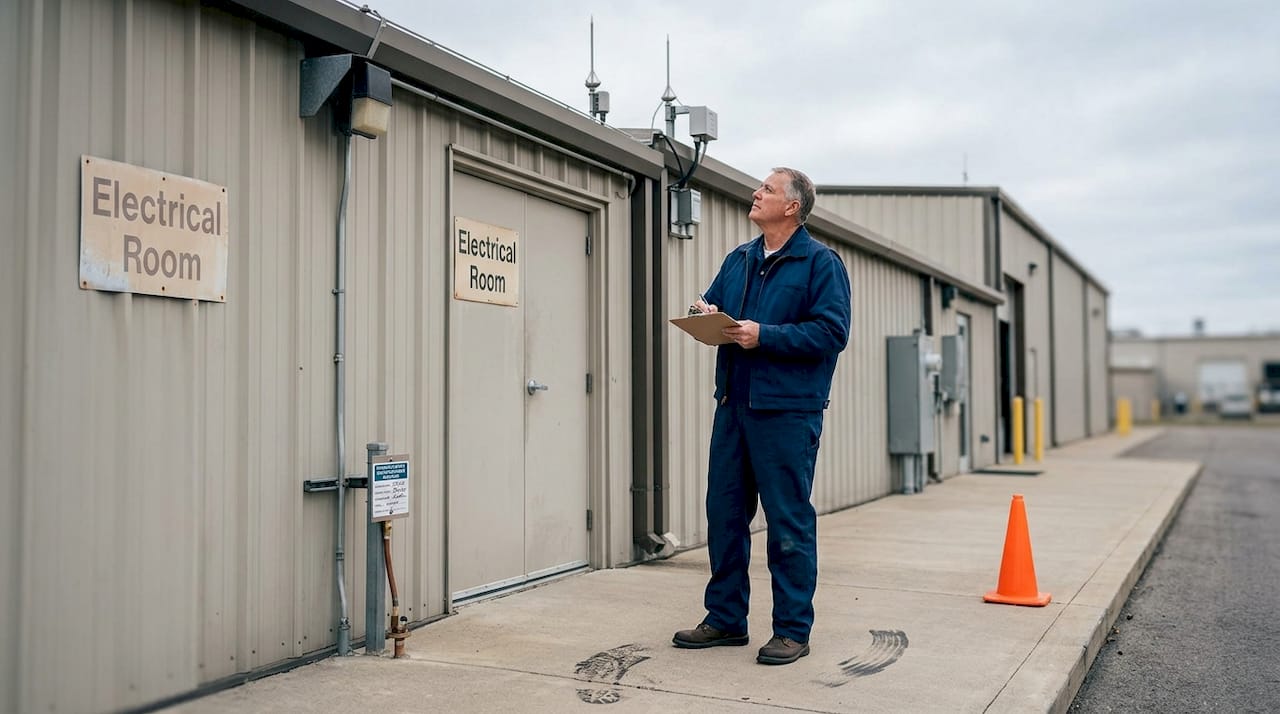
TL;DR:
- Proper lightning protection involves engineered systems that intercept and safely conduct lightning energy, not just grounded metal rods. Standards like NFPA 780 and IEC 62305 guide compliant design, emphasizing risk assessment, component quality, and regular inspections. Myth-busting shows that scientifically unproven dissipation systems do not replace proven conduction-based LPS, which are essential for safety and insurance compliance.
Lightning protection is one of those fields where confident-sounding marketing often drowns out the engineering science. Many facility managers assume that any grounded metal rod on the roofline counts as compliant protection. That assumption can be dangerously wrong. Relying on non-compliant or scientifically unproven systems exposes your facility to structural fire, equipment loss, liability, and real danger to personnel. This guide cuts through the noise, defining direct strike protection precisely, comparing the two dominant standards, dismantling persistent myths, and giving you a practical compliance roadmap.
Table of Contents
- Defining direct strike protection: The fundamentals
- Industry standards: NFPA 780 vs. IEC 62305 explained
- Debunking myths: Dissipation systems vs. traditional methods
- Best practices and compliance: Protecting industrial and commercial facilities
- What most facility managers get wrong about direct strike protection
- Get expert help with direct strike protection
- Frequently asked questions
Key Takeaways
| Point | Details |
|---|---|
| Standard-driven safety | Relying on NFPA 780 or IEC 62305 ensures protection that is proven and insurable for industrial facilities. |
| Beware unproven claims | Dissipation systems are not backed by scientific consensus and do not meet US or international standards. |
| Total system approach | True direct strike protection integrates air terminals, conductors, and expert grounding for safety and compliance. |
| Ongoing compliance matters | Annual professional inspection and documentation are essential for operational and regulatory assurance. |
Defining direct strike protection: The fundamentals
Direct strike protection is specifically about intercepting the full energy of a lightning channel before it can terminate on an uncontrolled part of your structure. This is different from surge protection, which manages the secondary electrical transients that travel through wiring after a strike. Confusing the two is one of the most common and costly errors in facility planning.
A properly engineered direct strike protection system has four core components working together:
- Air terminals (lightning rods): Elevated conductive points positioned to intercept the lightning channel. NFPA 780 specifies a minimum air terminal height of 10 inches above the surface being protected.
- Down conductors: Heavy-gauge cables that carry the intercepted current from the air terminal to the grounding system without arcing to building structure.
- Grounding electrodes: Buried conductors that dissipate the current harmlessly into the earth.
- Bonding connections: Equipotential bonds that tie together all metalwork, preventing dangerous side flashes between the LPS (lightning protection system) and other conductive building elements.
Understanding electrical protection standards is the first step in recognizing why each of these components must meet specific material, sizing, and spacing requirements. Omitting or undersizing any single element breaks the protection chain.
| Component | Primary function | Common failure point |
|---|---|---|
| Air terminal | Intercept strike | Incorrect height or spacing |
| Down conductor | Conduct current safely | Inadequate gauge, improper routing |
| Ground electrode | Dissipate energy to earth | High soil resistivity, poor depth |
| Bonding | Equalize potentials | Missing connections to HVAC, pipework |
Conventional air terminals work through the principle of controlled interception. They do not attract more lightning overall; they ensure that when a strike does occur, it terminates on a known, engineered point rather than on your roof membrane, exhaust stack, or control room. Alternative approaches claim to work differently, a point we will address in detail later. For now, the key takeaway is that facility lightning safety is always grounded in physics, not marketing language.
Industry standards: NFPA 780 vs. IEC 62305 explained
Understanding direct strike protection means knowing the frameworks that define and validate it. The two main standards are NFPA 780 and IEC 62305, and choosing the right one for your facility is not simply a geographic decision.
NFPA 780 is the dominant US standard. It is prescriptive by design, meaning it tells installers exactly what to do: minimum air terminal heights, conductor sizing tables, ground electrode configurations, and inspection intervals. This approach reduces design ambiguity and simplifies third-party verification. For most US-based industrial and commercial facilities, NFPA 780 compliance is the baseline expectation from insurers and authorities having jurisdiction (AHJs).
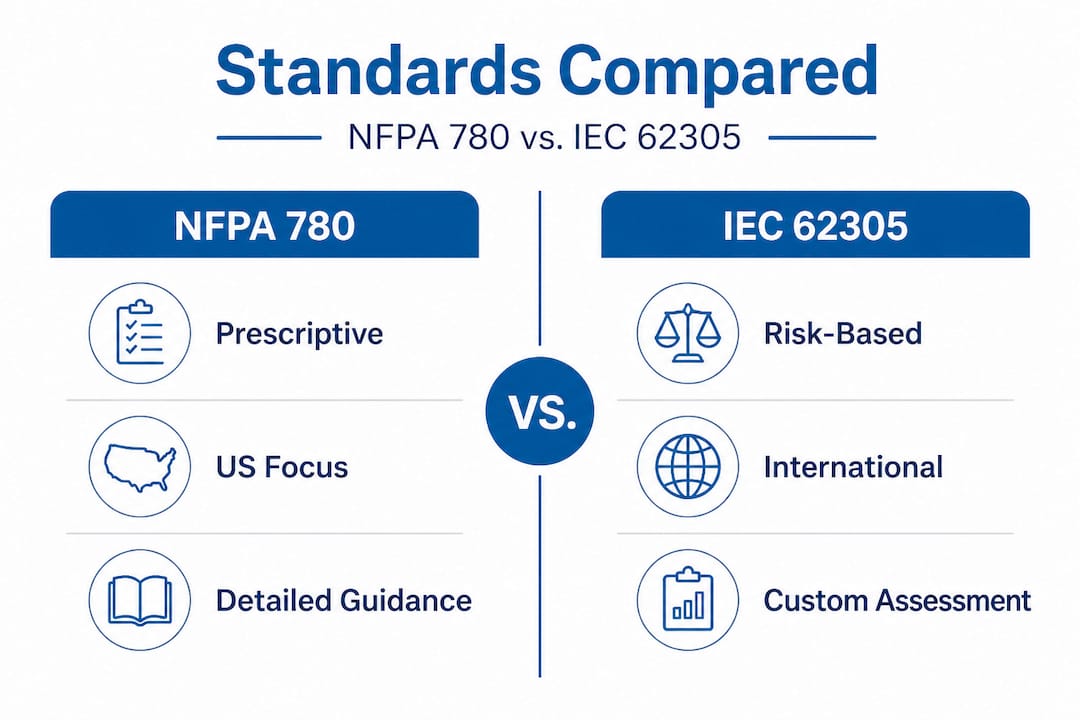
IEC 62305 takes a risk-based approach. Rather than prescribing a single solution, it requires a formal risk assessment that results in classifying your facility into one of four Lightning Protection Levels (LPLs). LPL I handles the most severe scenarios, rated to withstand peak currents up to 200 kA, while LPL IV covers lower-risk applications rated to 100 kA. This tiered system means a petrochemical refinery and a small warehouse will not be designed identically, which is more efficient but demands more rigorous upfront engineering.
| Factor | NFPA 780 | IEC 62305 |
|---|---|---|
| Approach | Prescriptive | Risk-based |
| Geographic scope | United States | International |
| Protection levels | Not tiered by risk | LPL I to IV |
| Peak current design | Not explicitly tiered | 200 kA (I) to 100 kA (IV) |
| Risk assessment | Optional | Mandatory |
| Documentation depth | Moderate | Extensive |
Here is the practical compliance checklist for either standard:
- Conduct a formal site risk assessment to identify structures, occupants, and sensitive equipment.
- Select the appropriate protection level based on the risk analysis (mandatory under IEC 62305, recommended best practice under NFPA 780).
- Engage a qualified designer who can specify components meeting material and geometry requirements.
- Verify installer credentials and require as-built documentation on completion.
- Schedule initial inspection within 12 months of installation.
- Maintain a compliance file including drawings, test records, and inspection reports for insurance and regulatory purposes.
Compliance with recognized international lightning standards also pays tangible business dividends. Insurers regularly require evidence of NFPA 780 or IEC 62305 compliance before underwriting high-value industrial properties. Facilities without documented compliance face policy exclusions for lightning-related losses, a fact that changes the cost-benefit calculation dramatically when you price in a single major strike event.
Pro Tip: Even if your facility sits in a low-flash-density region, IEC 62305’s risk assessment may reveal that your consequence of loss (sensitive electronics, flammable materials, irreplaceable records) pushes your risk score into a higher protection level. Always let the numbers drive the design, not the geography alone.
Debunking myths: Dissipation systems vs. traditional methods
With standards in mind, it is important to address the growing marketing of “prevention” and alternative technologies versus proven methods. This is where facility managers are most often misled, and where the financial and safety stakes are highest.
Traditional LPS design intercepts and conducts. An engineered array of air terminals, connected by properly rated conductors to a low-resistance ground system, provides a defined low-impedance path for the lightning current. This approach has over a century of empirical validation and forms the basis of every recognized standard globally. It does not eliminate the lightning event; it controls where and how the energy enters and exits your structure.

Dissipation array systems (DAS) and similar charge-transfer technologies claim to work on a different principle: reducing the local electric field charge at the structure to the point where a lightning strike simply will not initiate. The marketing is compelling. Who would not prefer prevention over interception?
The problem is the evidence. Dissipation systems lack the peer-reviewed, independently replicated scientific consensus that would be required to validate that claim. The physics of lightning formation across a multi-kilometer channel is not meaningfully influenced by charge redistribution at the structure tip. More critically, NFPA 780 does not recognize these systems as compliant direct strike protection. Installing a DAS and removing your conventional LPS leaves you both scientifically unprotected and contractually exposed.
“Prevention claims from DAS technologies offer warranties but remain unproven scientifically, while traditional conduction-based systems are empirically validated. For high-value assets, risk-based design using recognized standards is the defensible choice.”
Let’s be clear about the trade-offs:
- Traditional LPS (NFPA 780 / IEC 62305 compliant): Proven interception and conduction, insurable, legally defensible, independently verifiable, century of deployment data.
- Dissipation/DAS systems: Unproven prevention claim, not NFPA compliant, warranties from manufacturer only, no independent scientific consensus, may void insurance coverage.
Pro Tip: If a vendor claims their system “prevents” strikes, ask for peer-reviewed third-party test data, not manufacturer-funded studies. Then ask your insurer if the system satisfies your policy’s lightning protection requirements. Both questions will quickly clarify the value proposition.
The one scenario where a DAS might be considered as a supplemental device, not a replacement, is at a facility where proven LPS design is already fully installed and compliant. Even then, the supplemental benefit remains scientifically unverified. Your budget is better directed at proper bonding, updated surge protection device (SPD) coordination, or system inspection.
Best practices and compliance: Protecting industrial and commercial facilities
Once the facts are straight and standards are clear, it is time to focus on what facility managers and compliance officers should actually do to ensure effective protection. Compliance is not a one-time event; it is a managed process with defined stages.
Step-by-step compliance framework:
- Commission a formal risk assessment. Use IEC 62305-2 methodology or equivalent to quantify risk for each structure and system. This output drives every subsequent design decision and is your documented defense if a loss event occurs.
- Engage a certified designer. Lightning protection design is a specialized discipline. Errors in air terminal placement, conductor routing, or ground electrode configuration can create side-flash hazards that are worse than having no system at all.
- Specify compliant components. Every air terminal, conductor, clamp, and ground rod must meet the material and dimensional requirements of the applicable standard. Substituting cheaper or non-rated components is a common source of non-compliance.
- Require complete documentation on installation. As-built drawings, material certificates, and ground resistance test results must be on file before the system is considered operational.
- Schedule annual inspections. Per NFPA 780 guidance, annual inspections ensure ongoing compliance and catch physical degradation before it creates a gap in protection.
- Integrate surge protection devices (SPDs). A direct strike on or near your facility induces large transients on every cable entering the building. SPDs at the service entrance, distribution boards, and critical equipment panels are the second line of defense. Without them, even a perfect external LPS will not prevent equipment damage from conducted surges.
Common mistakes that facilities teams make:
- Assuming the original installation is still compliant after structural modifications, roof replacements, or new rooftop equipment.
- Failing to bond new metalwork (HVAC additions, solar arrays, communication masts) into the existing LPS.
- Skipping ground resistance testing, which can reveal soil drying or electrode corrosion that dramatically increases system impedance.
- Treating inspection as a checkbox rather than a technical review with measurement data.
A well-managed risk assessment and installation process, backed by regular inspection, does more than satisfy the auditor. It demonstrably reduces your facility’s risk of fire, equipment loss, and operational downtime. For industrial sites where a single unplanned outage can cost tens of thousands of dollars per hour, the ROI on a fully compliant LPS program is rarely questioned by finance teams once they see the numbers.
Pro Tip: After any significant weather event that produces lightning within your facility’s lightning protection zone, conduct a visual inspection and document it. Even if no damage is visible, a record showing proactive post-strike inspection significantly strengthens your position in any subsequent insurance or liability discussion.
What most facility managers get wrong about direct strike protection
Experience in industrial lightning protection delivers one hard lesson repeatedly: decision-makers underestimate the engineering depth required and overestimate the protection provided by incomplete or non-standard systems. The most expensive mistakes we see are not the result of ignorance. They are the result of confidence in the wrong information.
The first error is trusting vendor marketing over independent standards. A salesperson offering a guaranteed “no-strike” outcome is making a claim that goes well beyond what physics supports. Standards bodies like NFPA and IEC do not make prevention claims because none can be substantiated. A system that conducts 200 kA safely to ground is a proven, measurable engineering achievement. A system that promises a strike will not happen is not.
The second error is treating installation as the finish line. Lightning protection is a maintained system, not a permanent fixture. Bonding connections corrode. Ground electrodes in dry or chemically aggressive soils lose conductivity. New rooftop equipment creates unprotected points. Facilities that install a system and never revisit it are often technically non-compliant within five years, without realizing it.
The third error is siloing lightning protection from the broader electrical safety program. For highly sensitive facilities such as data centers, hospitals, and process control environments, the integration of external LPS, internal bonding, and SPD coordination is not optional. These are interdependent layers. A gap in any one layer degrades the entire system’s effectiveness.
The uncomfortable truth is that standard-based, properly maintained direct strike protection is not exciting. It does not come with a compelling story about ionic fields or charge dissipation. What it comes with is a century of deployment data, clear engineering specifications, third-party verifiability, and the backing of every major insurer and regulatory authority in the world. For facility managers and compliance officers, that track record should be the most compelling pitch of all.
Get expert help with direct strike protection
Knowing the standards is one thing. Designing and maintaining a system that meets them for your specific facility is another challenge entirely.

At Indelec, we have been engineering standards-based lightning protection systems since 1955, across industrial, commercial, and infrastructure sectors worldwide. Whether you need a new installation aligned with NFPA 780 or IEC 62305, a risk assessment to determine your protection level, or an inspection program for an existing system, our team brings both the technical depth and the global field experience to get it right. Explore our full range of lightning protection solutions, including our advanced air terminals, and learn how our approach ensures compliance with lightning standards at every project stage.
Frequently asked questions
What is the difference between direct strike protection and surge protection devices?
Direct strike protection safeguards a structure from the full energy of a direct lightning hit using air terminals, conductors, and grounding systems, while surge protection devices (SPDs) handle the secondary electrical transients that travel through wiring and cable systems after a strike event. Both layers are needed for complete facility protection.
Does the NFPA 780 standard permit dissipation/charge transfer systems (DAS)?
No. NFPA 780 does not recognize dissipation or charge transfer systems as compliant direct strike protection, primarily because these technologies lack the empirical validation required for inclusion in the standard.
What are the main components of a direct strike protection system?
A compliant direct strike protection system includes air terminals of minimum specified height, down conductors, ground electrodes, and equipotential bonding connections that tie together all significant metalwork in the structure for a continuous, low-impedance current path.
How often should direct strike protection systems be inspected?
Annual inspections are recommended by NFPA 780 and represent industry best practice, ensuring that ground resistance, bonding integrity, and physical condition of all components remain within compliance thresholds.