Farm Hangar Lightning Protection in France: When ARF Applies
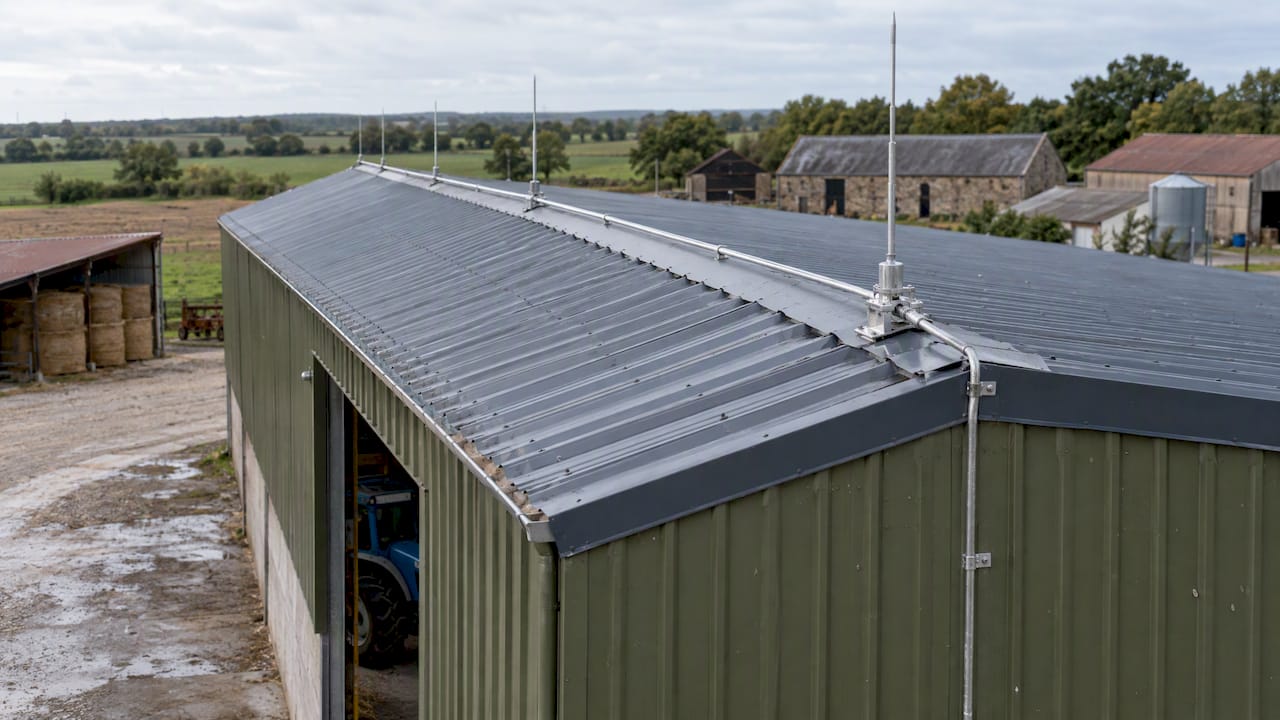
For an agricultural hangar, the strongest defense is a combined package: an external lightning protection system with an air terminal, equipotential bonding and grounding, and surge protection devices, all backed by a maintenance regime. We design protection systems, and a formal lightning risk assessment (ARF) is required where lightning could cause major harm. At Indelec, we help owners decide where to start.
TL;DR:
- For grain storage sites classified as regulated industrial installations, commission the required lightning risk assessment before buying equipment; specified protections are due within two years.
- Coordinate Type 1 devices at the service entrance, Type 2 at distribution boards, and Type 3 beside sensitive equipment with bonding across metalwork.
- Inspect visually every year, arrange a full verification every two years, and check surge devices after each recorded strike, even without visible damage.
- If funds are limited, prioritize bonding and surge protection while planning external protection, but recognize that the hangar remains vulnerable to a direct strike.
Table of Contents
- Which protections does a hangar need first?
- How do air terminals, grounding and surge protectors work together?
- When is a lightning risk assessment legally required?
- How do you inspect and maintain the system?
- How does lightning protection fit with fire and explosion prevention?
- Where owners usually compromise, and what we recommend
- How we help with your hangar’s protection
- FAQ
- Sources
Which protections does a hangar need first?
Think of protection as several layers. If you are briefing a contractor or ranking quick wins, this is the order we use.
- External protection: an air terminal (a lightning rod, or paratonnerre) or a meshed conductor network on the roof ridge and exposed corners, connected to down conductors.
- Grounding and equipotential bonding: one earthing system tying together the building frame, metal cladding, door tracks, and any connected silos, augers or conveyors.
- Surge protection: Type 1 devices at the service entrance, Type 2 at distribution boards, and Type 3 near sensitive loads such as milking controllers, grain dryers, cameras and irrigation controls.
- Documentation: commission an ARF when regulatory thresholds are met, and keep a logbook of studies, verifications, strikes and repairs.
Pro Tip:If budget is tight, start with bonding and surge protection. They limit damage to electrical equipment and sparking between metal parts while you plan the full external system.
How do air terminals, grounding and surge protectors work together?
A direct strike needs a controlled path. The air terminal intercepts the discharge, the down conductors carry it along the building, and the grounding system disperses it into the soil. On a hangar, large metal roof surfaces and long, exposed ridges mean placement and conductor routing matter more than the number of components. Down conductors should run direct and outside, away from stored hay, grain dust and electrical cabinets.
Soil decides the grounding design. Shallow grids and ring electrodes work in conductive soil, while sandy, stony or dry ground with high resistivity often calls for deep earth electrodes to reach moister layers. Measure before you choose, and keep the measurement in the file.
Surge protection works in tiers, and the tiers must be coordinated:
- Type 1: handles the heavy transient current from a direct or nearby strike, installed where power enters the building.
- Type 2: limits residual surges at distribution boards.
- Type 3: protects individual sensitive equipment at the point of use.
Equipotential bonding is the piece owners skip most often. Without it, a silo, a feed line and the building earth can sit at different potentials during a strike, which causes secondary sparking across gaps. When you request quotes, ask installers how they will bond metalwork, how they will handle high-resistivity soil, and how the surge protection tiers are coordinated. Our lightning protection system application page shows how this is applied to buildings.
When is a lightning risk assessment legally required?
Not every barn needs a formal study, but some sites do. For installations classified as ICPE, such as grain storage under rubrique 2160, an ARF based on NF EN 62305-2 is required, and it must be updated after substantial changes, as set out in Article 2 of the 2011 arrêté. The assessment informs a technical study that specifies the measures. The study is carried out by a competent body.
The deadlines follow the general requirements for rubrique 2160 installations:
- Protection measures defined by the technical study are implemented within two years after the ARF.
- A distinct competent body verifies the installation within the required period.
- Visual checks are carried out every year, and a full verification every two years.
- Strike records and maintenance logs stay available for inspection.
The rule of thumb: the ARF starts the clock, so commission it before you buy hardware, not after.
If your hangar is not classified as an ICPE, check whether an ARF is required under the applicable rules. We still recommend a standards-based design. Our lightning standards page explains how NF EN 62305 is interpreted.
How do you inspect and maintain the system?
A system that is installed and forgotten loses protection quietly. Corrosion, loose clamps and aging surge devices are the usual culprits. Follow this sequence:
- Inspect visually every year: air terminals, conductors, clamps and bonding points.
- Run a full verification every two years through a competent organisation.
- Inspect after any recorded strike, and check surge devices even if nothing looks damaged.
- Test down conductor continuity and earth resistance, and add thermographic checks on electrical panels.
- Repair defects found during verification, then record the fix.
Your logbook should hold the ARF, the technical study, verification reports, strike records and repairs. A lightning strike counter makes strike records objective rather than guesswork.
Pro Tip:Photograph each bonding point and clamp at installation. Comparing photos during later inspections makes corrosion and tampering obvious.
How does lightning protection fit with fire and explosion prevention?
Grain stores and dusty buildings turn a spark into a fire or explosion risk. INRS recommends layered prevention for fire and explosion, and lightning protection belongs in that design from the start rather than as an add-on. Dust deposits also create ATEX zones, where equipment categories and proper grounding and bonding matter, as INRS explains in its guidance on dust explosion prevention.
- Maintain electrical installations and run thermographic checks.
- Bond silos, dust-handling equipment and metalwork to one earthing system.
- Route conductors and keep antennas and cables outside hazardous zones, and make sure no device aggravates an ATEX zone.
- Coordinate lightning work with dust control, vents, explosion mitigation and maintained firefighting equipment.
Safety planning at a broader level also helps. A warehouse safety approach such as this checklist of key safety points shows how storage and site protocols fit together.
Where owners usually compromise, and what we recommend
When budget is limited, owners often ask what to do first. In our experience, the sensible sequence is bonding and surge protection first, then the full external system on a planned schedule. The trade-off is that the building itself stays exposed to a direct strike in the meantime, so we do not treat this as a permanent answer.

Site realities shape cost more than people expect. Roofing material, the distance to silos and soil resistivity change the design, and deep earth electrodes can cost more than a shallow ring. That is why we start with measurements instead of a catalog.
We work on lightning protection and run a dedicated R&D center, which is why we are comfortable advising on ARFs and installations. Cutting corners on the study usually costs more later, in rework, failed verifications or damaged equipment.
— INDELEC
How we help with your hangar’s protection

If your site meets the regulatory triggers, or you simply want a design built on the standard, we can take it from assessment to maintenance:
- Lightning risk assessment (ARF) and technical study
- Design and installation of lightning rods and grounding systems
- Surge protection devices
- Verification and maintenance programs
Everything sits on our lightning protection services page. Get in touch to book an assessment of your hangar.
FAQ
Is a lightning rod mandatory on a farm hangar?
Not for every hangar. A formal ARF is required for ICPE-classified installations where lightning could cause major harm, such as certain grain storage sites. For other buildings, protection is a risk decision, and we recommend a standards-based design.
How often should lightning protection be checked?
Visual checks are done annually, and a full verification every two years by a competent organisation. Inspect after any recorded strike.
Is a surge protector effective on a barn?
Yes, when it is the right type and coordinated in tiers. Type 1 at the service entrance, Type 2 at distribution boards and Type 3 at sensitive equipment limit damage from surges. They work best alongside bonding and external protection.
Can lightning protection reduce fire risk in grain stores?
It is one layer of fire and explosion prevention. INRS recommends combining it with electrical maintenance, compartmentalization and firefighting readiness.
Sources
- Article 2 – Arrêté du 19 juillet 2011 modifiant l’arrêté du 4 octobre 2010 relatif à la prévention des risques accidentels au sein des installations classées pour la protection de l’environnement soumises à autorisation – Légifrance
- INCENDIE / EXPLOSION en milieu de travail